Walrus
Arctic's Tusked Giant
Odobenus rosmarus
Meet Arctic giants reaching 3.6 meters and 2,000 kilograms—massive pinnipeds with meter-long tusks and 700 sensitive whiskers dwelling in frigid Arctic seas. Their tusks haul enormous bodies onto ice while establishing dominance and breaking breathing holes. Whisker arrays detect 2-millimeter prey through sediment while documented 500-meter dives demonstrate unexpected deep-diving capabilities.
Meet the Arctic GiantWhat Makes Them Special
Arctic Giants
Males reach 3.6 meters and 2,000 kilograms ranking among largest pinnipeds after elephant seals
Whisker Sensors
700 sensitive whiskers detect prey vibrations locating 2-millimeter clams beneath sediment layers
Tusk Functions
Meter-long tusks haul massive bodies onto ice break breathing holes and establish dominance hierarchies
Deep Diving
Documented diving to 500 meters for 30 minutes far exceeding typical 80-meter feeding depths
Clam Consumption
Consume up to 6,000 clams per session extracting soft tissues through powerful suction
Arctic Resilience
15-centimeter blubber and specialized oxygen storage enable survival in extreme sub-zero Arctic conditions
First Encounter
Tusked Giants of the Ice Edge
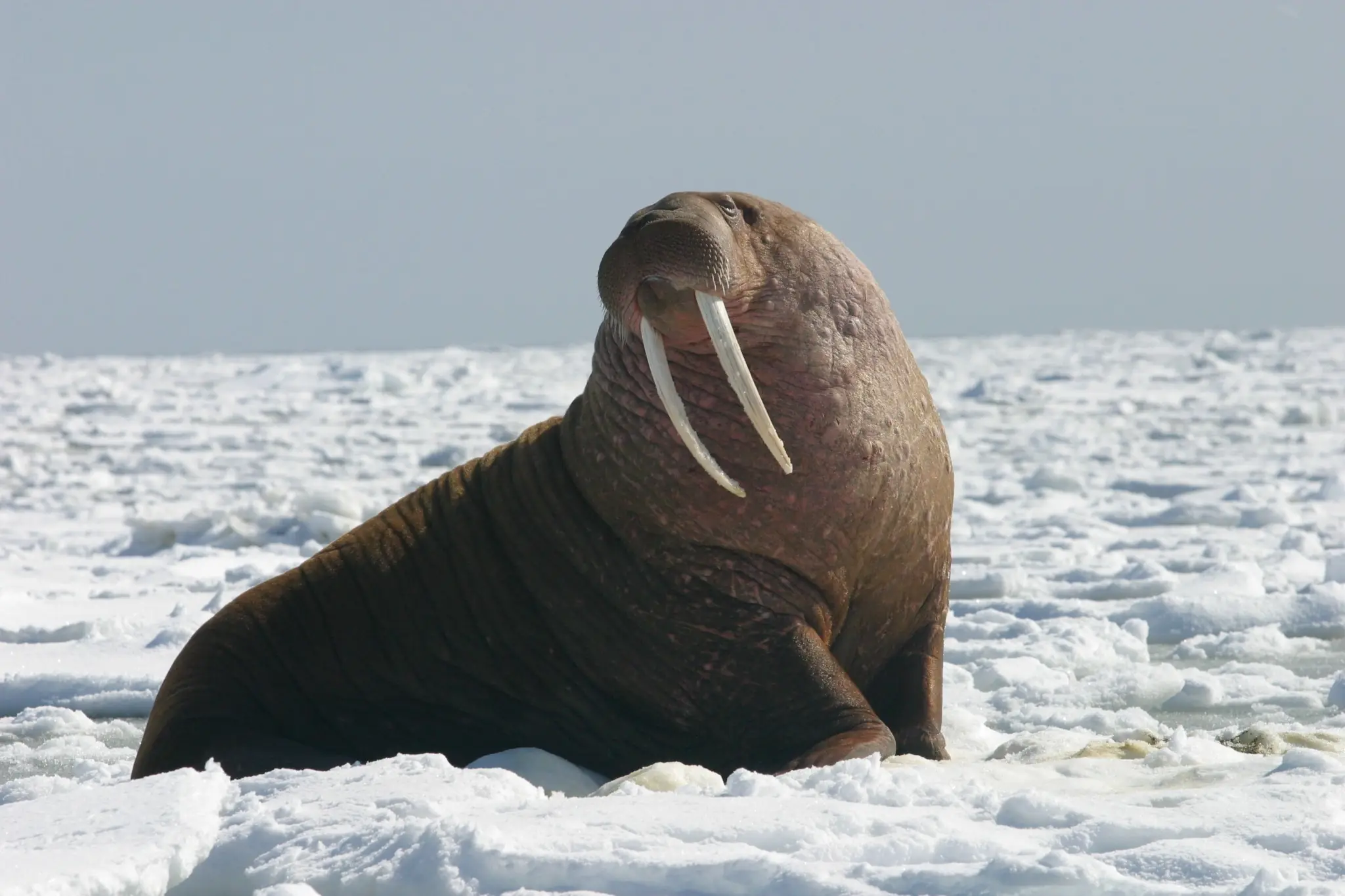
Walruses command attention through sheer size. Pacific males reach 3.6 meters and 2,000 kilograms while females average 2.6 meters and 1,200 kilograms. Their wrinkled skin stretches across massive bodies protected by 15-centimeter blubber.
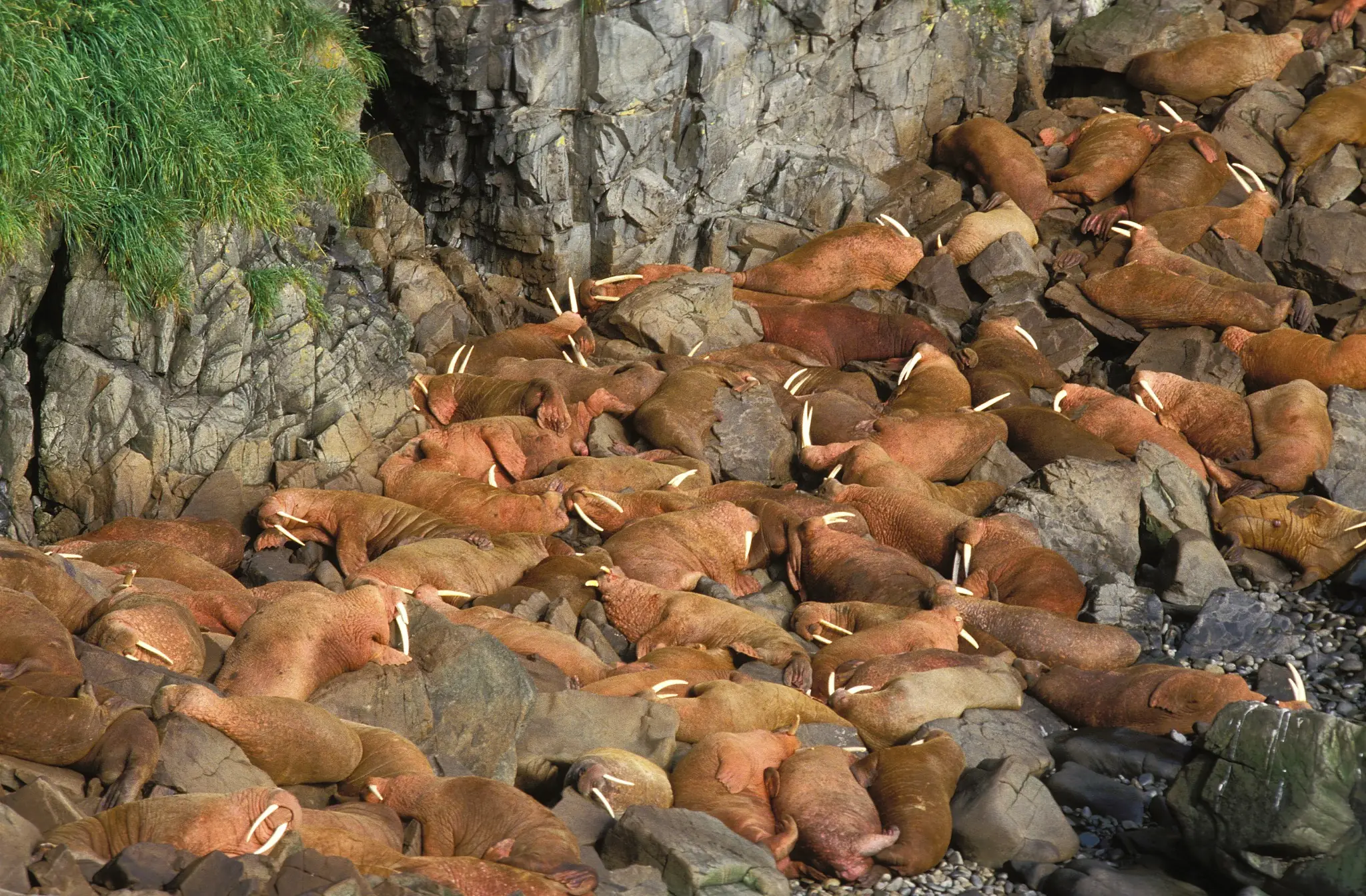
Prominent meter-long tusks project downward from mouths flanked by dense moustaches containing 400-700 stiff whiskers. These Arctic giants congregate in massive haul-outs sometimes numbering thousands gathered on ice or beaches creating unforgettable spectacles. Photo: USFWS/Joel Garlich-Miller
"When a walrus dives to 500 meters, its heart rate can drop to just 5 beats per minute—less than 5% of its resting rate—while myoglobin in its muscles stores 20 times more oxygen than terrestrial mammals."
— Dr. Mads Peter Heide-Jørgensen, Greenland Institute of Natural Resources
Whisker Sensing
Tactile Prey Detection System
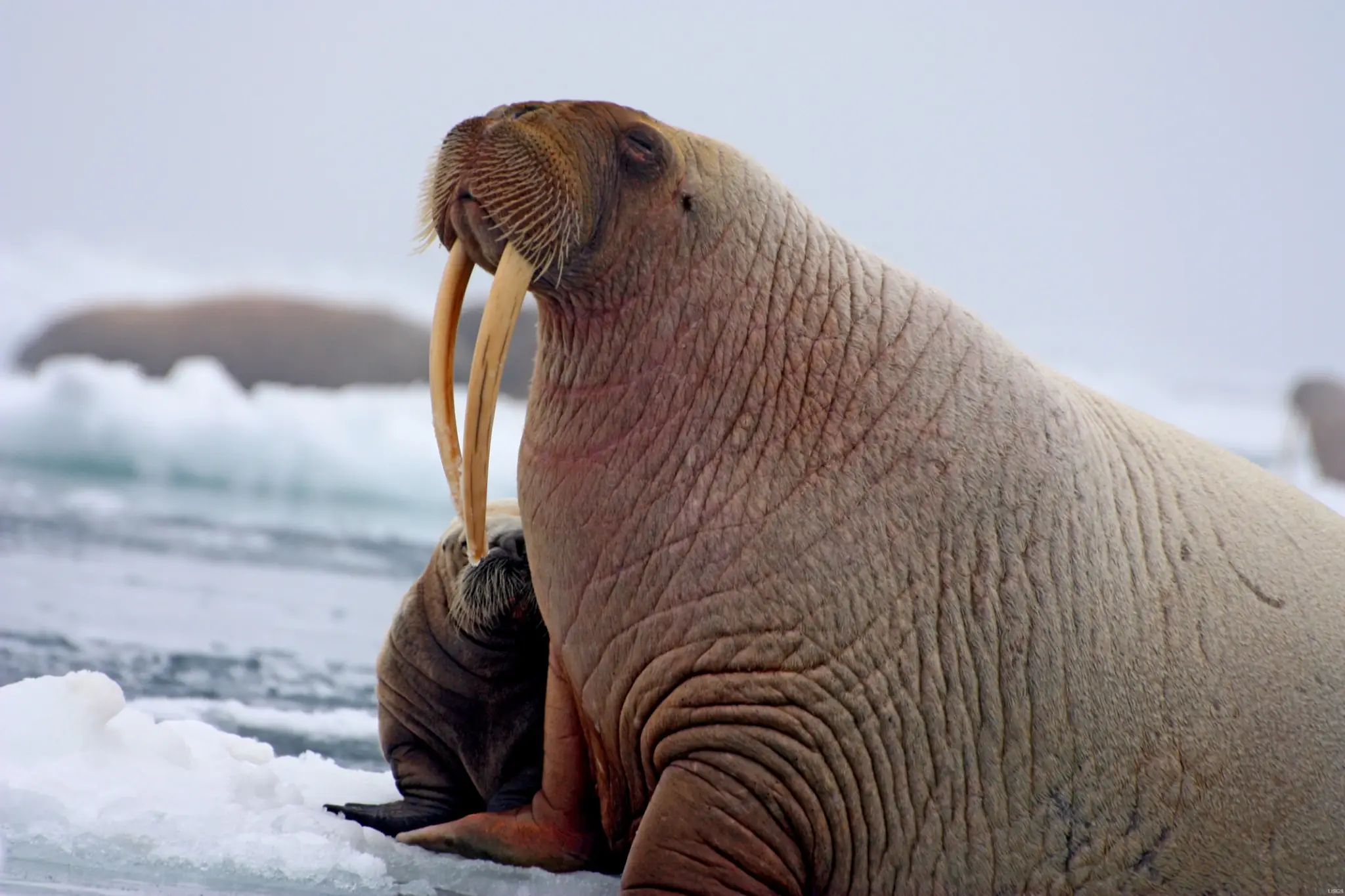
Walrus moustaches contain 400-700 highly sensitive vibrissae arranged in 13-15 rows. Each whisker connects to dense nerve networks detecting water pressure changes and vibrations. These tactile sensors locate prey as small as 2 millimeters.
Swimming above seafloors, walruses sweep whiskers across sediment detecting clam siphons buried beneath. They identify prey shape and texture through touch alone enabling benthic feeding in complete darkness where vision fails in Arctic waters. Photo: Sarah A Sonsthagen.
Deep Diving Champions
Unexpected Depth Specialists
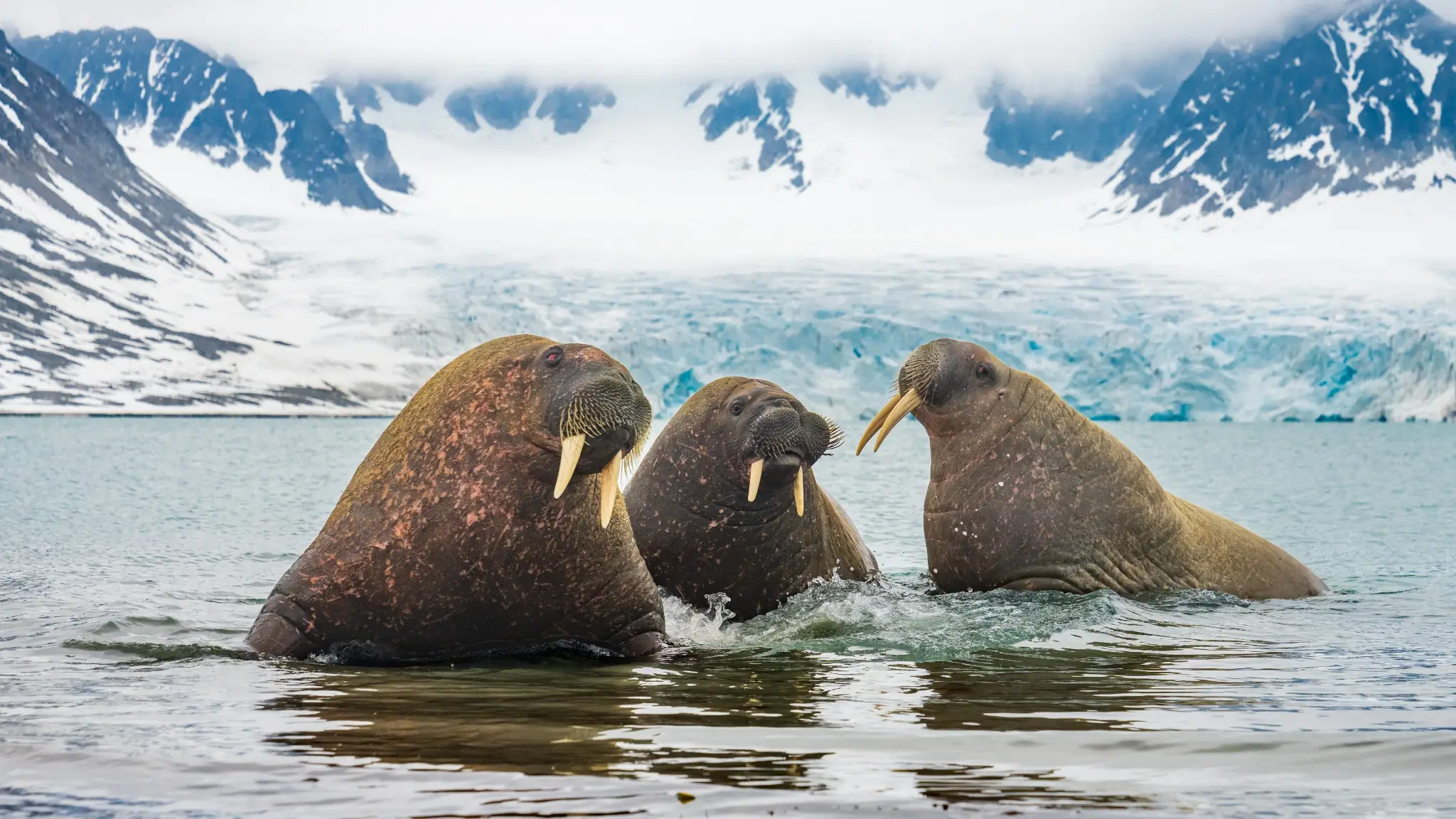
Walruses typically feed in shallow waters below 80 meters. However, satellite tracking documented four dives exceeding 500 meters—deeper than most seals. One female descended 500 meters remaining submerged 13 minutes before surfacing.
During dives, heart rates plummet from 100 to 5 beats per minute while blood shunts toward heart and brain. Muscle myoglobin concentrations reach 20 times terrestrial mammal levels storing massive oxygen reserves enabling prolonged submersion without breathing. Photo: Risto Raunio
"We assumed the transmitter malfunctioned when it recorded a 500-meter dive. But then we documented three more for a total of four. These walruses are diving deeper than almost all seals—we completely underestimated them."
— Arctic Diving Behavior Study, 2013
Tusk Mastery
Multi-Purpose Arctic Tools
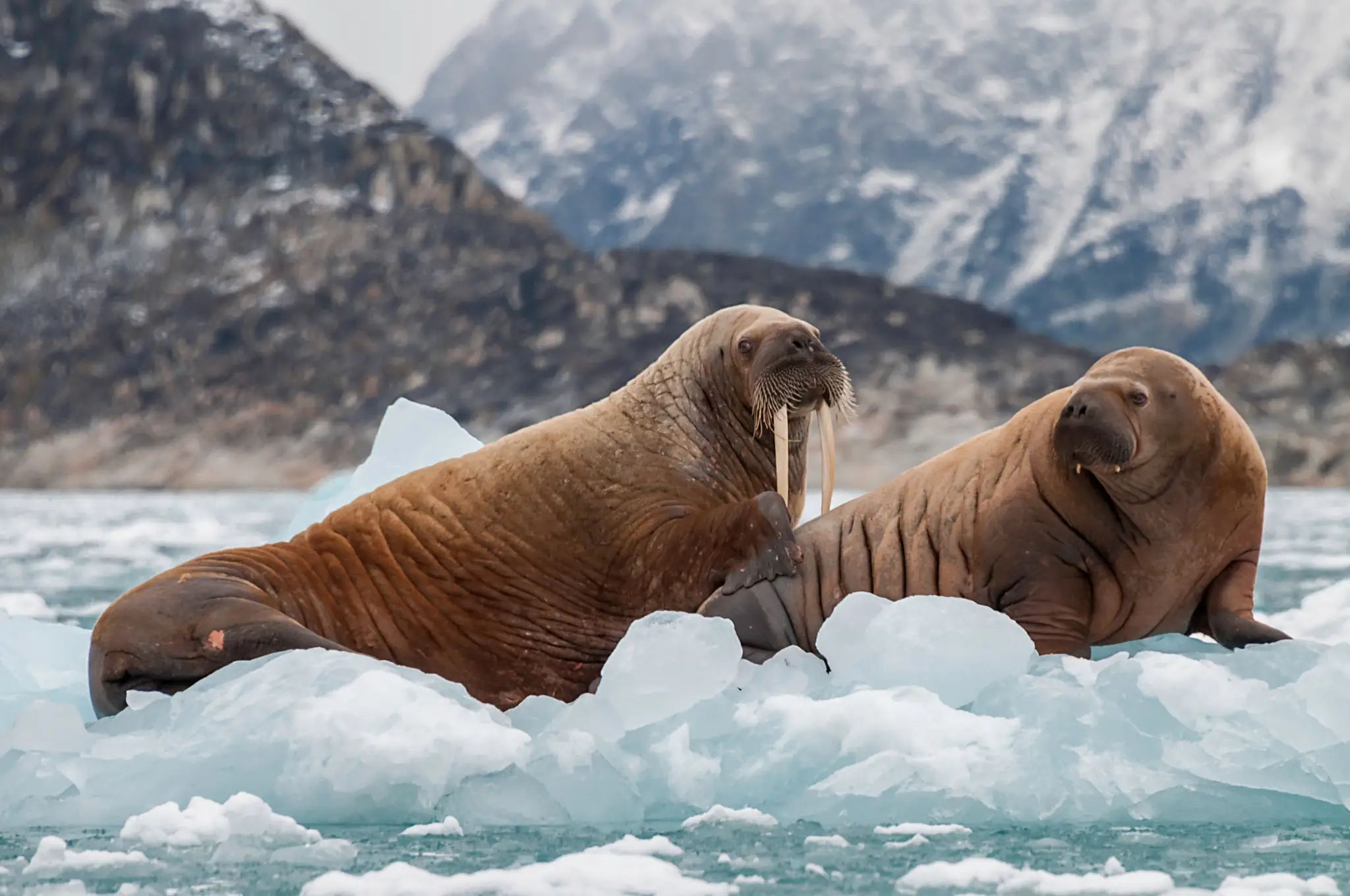
Both sexes possess elongated upper canines growing throughout life reaching 1 meter in males. Walruses plant tusks on ice edges hauling 2,000-kilogram bodies from water. This behavior inspired their scientific name Odobenus meaning tooth-walking seahorse.
Tusks punch breathing holes through thick ice preventing entrapment beneath frozen surfaces. During breeding season males display tusks establishing dominance hierarchies. Larger tusks signal age and status reducing physical confrontations while defending against polar bears. Photo: Wildestanimal.
Arctic Social Life
Gregarious Haul-Out Communities
Walruses display remarkable social behavior forming massive aggregations. Haul-outs can contain thousands of individuals packed tightly creating warmth through collective body heat. Males and females with calves typically separate except during breeding season establishing distinct groups.
Underwater males produce elaborate vocalizations including bell-like sounds and clicking patterns attracting females during winter breeding. Mothers nurse calves over one year maintaining close bonds for two years. Social cohesion and group coordination characterize these Arctic communities. Photo: Slowmotiongli
Climate Challenge
Sea Ice Dependency in Warming Arctic
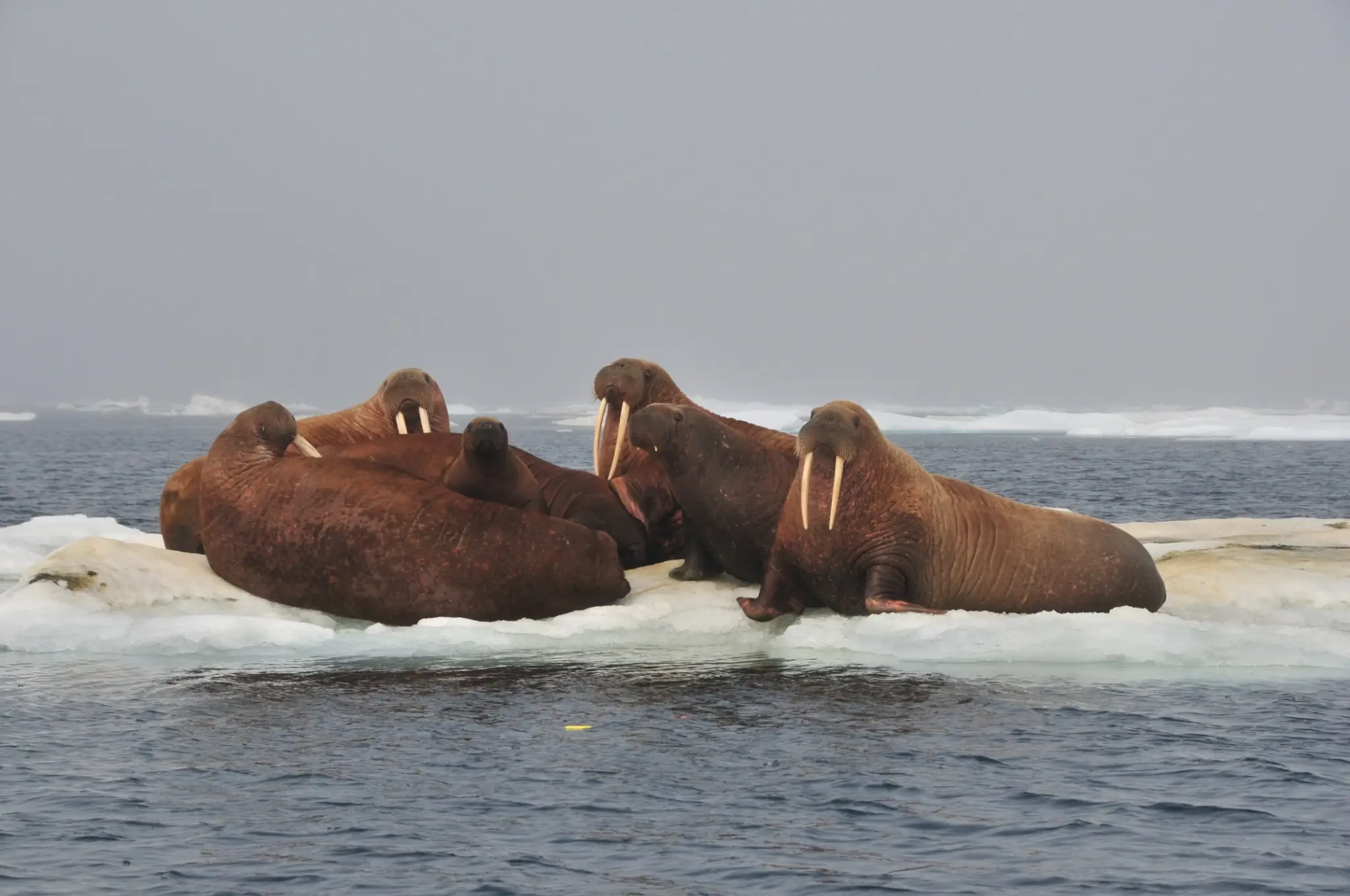
Walruses face conservation concerns as climate change melts Arctic sea ice. They depend on ice platforms for resting between feeding dives and calving. Declining summer ice forces longer swims to feeding grounds increasing energy expenditure threatening populations.
Historic hunting nearly eradicated populations but protection enabled recovery. Svalbard walruses rebounded after 60 years of conservation demonstrating resilience potential. Current efforts focus on protecting haul-out sites monitoring populations and Arctic climate action addressing root causes. Photo: USGS.
Science & Discovery
Greenland Institute 2013 satellite tracking documented four 500-meter walrus dives revolutionizing understanding of pinniped diving capabilities demonstrating Atlantic walruses rank among deepest-diving seals contrary to century-old assumptions.
Pacific walrus vibrissae studies revealed 400-700 whiskers with dense nerve networks detect prey vibrations inspiring tactile sensor technology for underwater robotics requiring benthic navigation in zero-visibility conditions.
NOAA bioenergetic models project Pacific walrus energy expenditure significantly increases by mid-century as melting sea ice forces longer swims to feeding grounds informing Arctic conservation prioritization and climate impact assessments.
In our delightful oceans, walruses bioturbate Arctic seafloors redistributing nutrients by two orders of magnitude. Their 700-whisker arrays detect 2-millimeter clams through tactile mechanoreception surpassing vision. Svalbard populations recovered after 60+ years protection demonstrating marine mammal resilience potential.