Beluga Whale
Ocean's Vocal Virtuoso
Delphinapterus leucas
Meet ocean's vocal virtuosos—Arctic whales reaching 5 meters (16 feet) and 1,500 kilograms with pure white coloration and bulbous foreheads. They produce over 50 distinct vocalizations earning the nickname "canaries of the sea." Flexible necks enable exceptional lateral head rotation unique among cetaceans. Shapeable melon organs focus sound beams creating acoustic images in ice-covered waters.
Hear Their Arctic SymphonyWhat Makes Them Special
Vocal Repertoire
Produce over 50 distinct vocalizations including whistles clicks chirps and bells earning recognition as canaries of the sea
Flexible Neck
Unfused cervical vertebrae enable exceptional lateral head rotation and nodding movements unique among whales for ice navigation
Shapeable Melon
Muscularly controlled melon organ focuses sound beams adjusting acoustic lens properties for echolocation in turbid Arctic waters
Social Intelligence
Form pods of 10-25 individuals with sophisticated hierarchies cooperative hunting and cultural transmission of migratory knowledge
Pure White Coloration
Adults develop brilliant white skin providing ice camouflage after seven years transitioning from dark gray calves
Population Recovery
Cook Inlet population stabilized at 331 individuals in 2022 showing first increase after 20 years of decline
First Encounter
Arctic's White Ambassadors
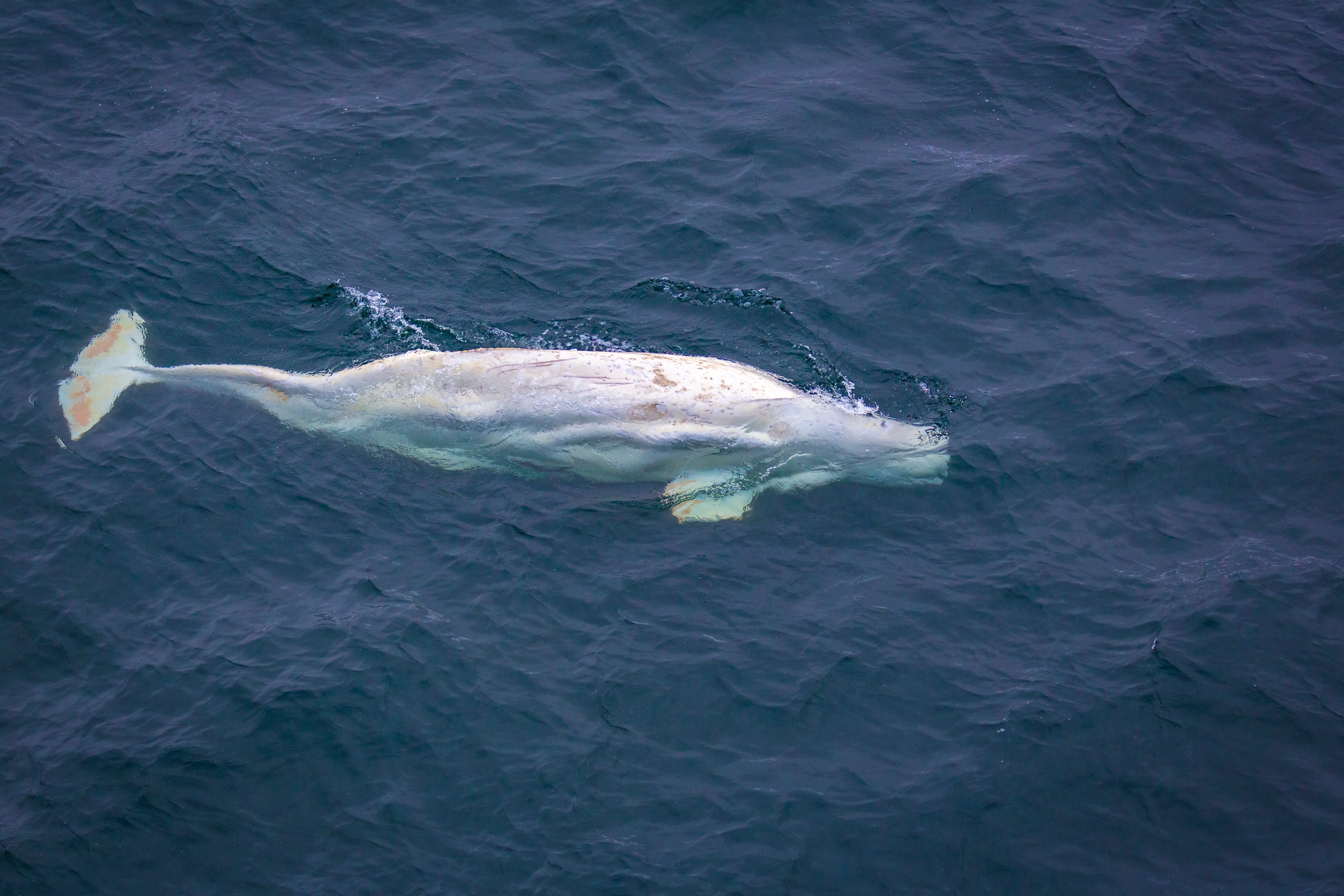
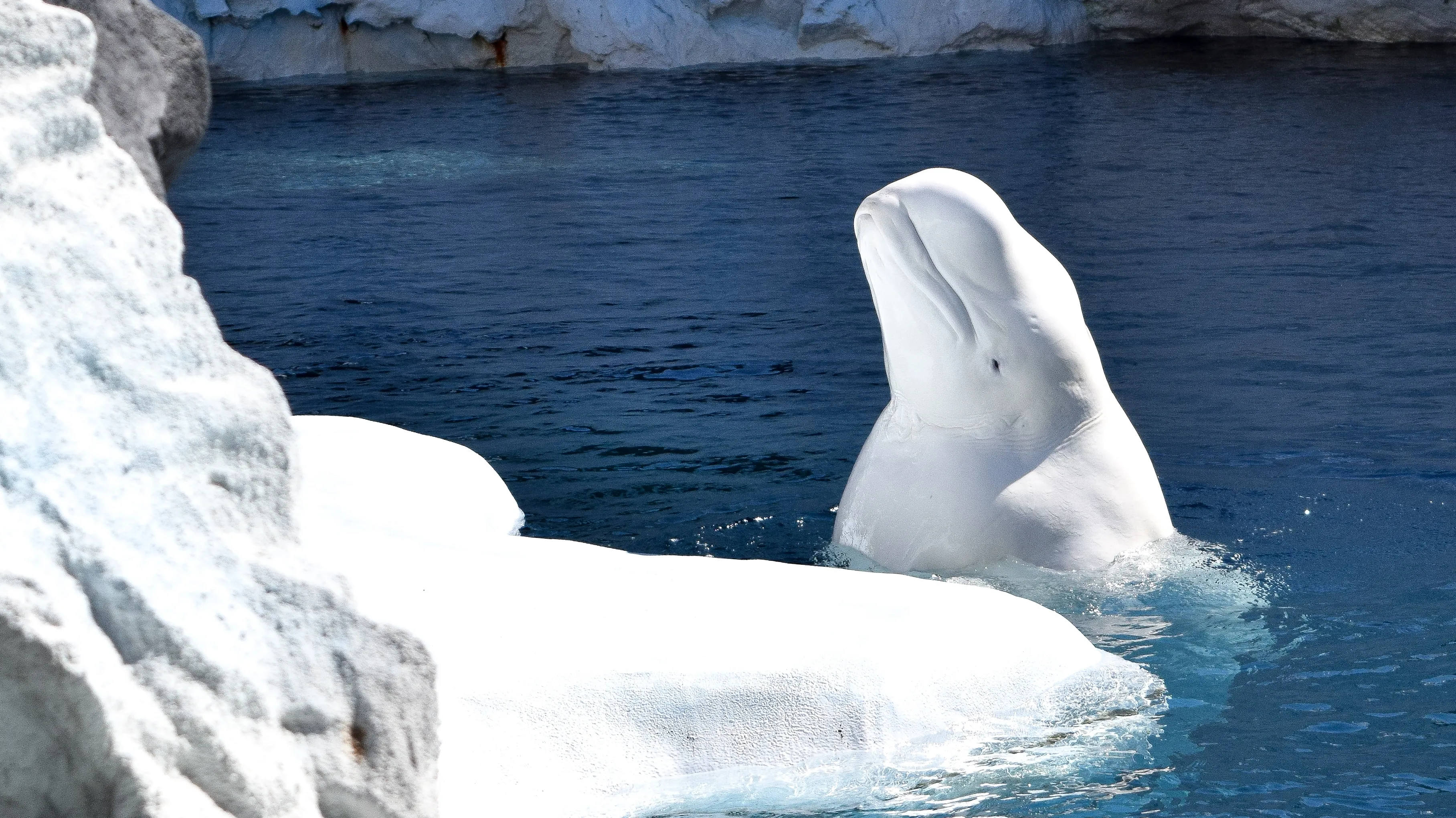
Pure white whales surface through Arctic leads reaching 5 meters and 1,500 kilograms with stocky bodies adapted for heat retention. Adult coloration achieves brilliant white after seven years while newborn calves emerge dark gray gradually lightening through adolescence.
Prominent rounded foreheads called melons house sophisticated echolocation apparatus enabling navigation through ice-covered seas. Unlike most whales they display remarkable neck flexibility turning heads side-to-side and nodding impossible for relatives. They lack dorsal fins featuring tough ridges preventing injury when surfacing. Photo: Johannes Rigg
"The first time you hear belugas underwater is unforgettable—chirps, whistles, bell-like tones creating an ethereal chorus that feels more like encountering an alien intelligence than meeting fellow mammals."
— Dr. Valeria Vergara, Marine Mammal Acoustics Researcher
Canaries of the Sea
Extraordinary Vocal Range
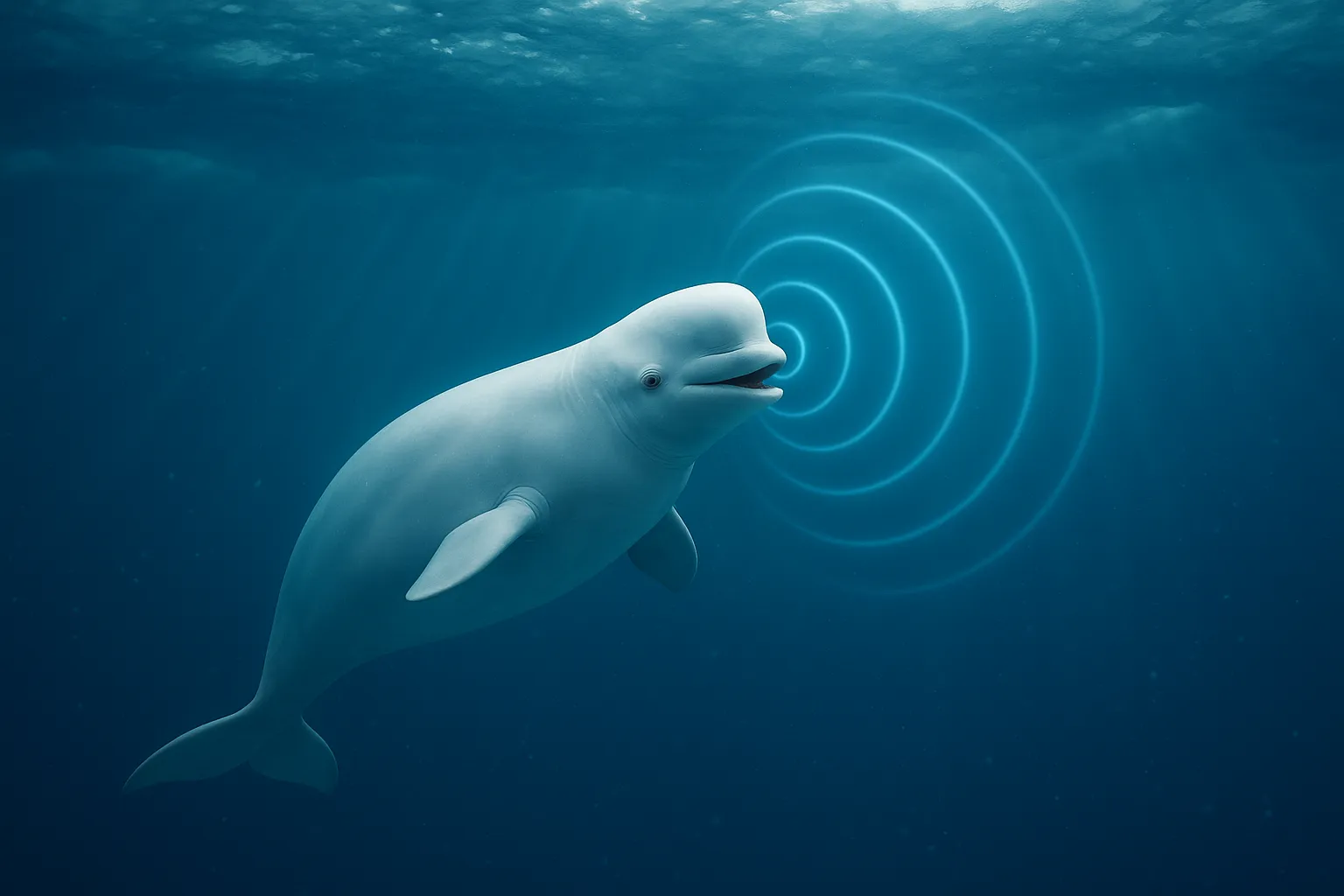
Belugas produce over 50 vocalization types including whistles rapid click trains chirps squeals and bell-like tones spanning 0.1 to 120 kHz. Echolocation clicks probe environments while social calls maintain pod cohesion coordinate hunting and facilitate mother-calf bonding.
Calves develop signature contact calls recognizable to mothers across hundreds of meters enabling individual identification. Adults modify vocalizations based on context increasing frequency in noisy environments. Populations develop unique vocal signatures transmitted culturally across generations creating regional dialects. Photo: Illustrated
Anatomical Adaptations
Engineered for Ice Navigation
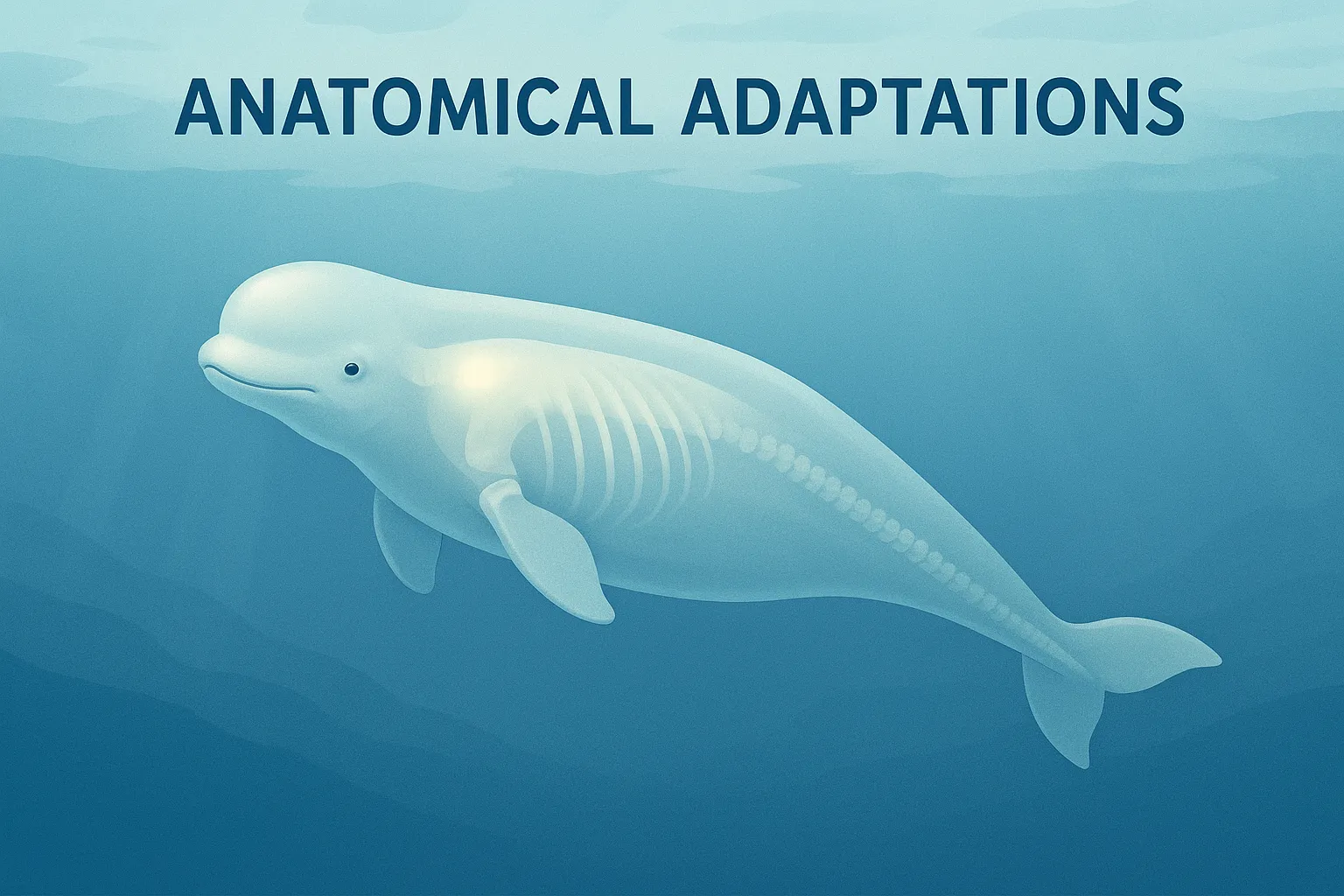
Unfused cervical vertebrae enable exceptional neck mobility allowing 90-degree lateral rotation and vertical nodding unmatched by other cetaceans. This flexibility proves essential navigating beneath ice sheets hunting prey in shallow waters and scanning complex three-dimensional environments.
Oil-filled melon organs contain specialized lipids focusing echolocation beams with remarkable precision. Belugas actively shape melons through muscular control adjusting acoustic properties. They produce click trains exceeding 200 pulses per second constructing detailed acoustic images through echo analysis. Photo: Illustrated.
"Watching belugas change the shape of their melon in real-time while echolocating is like seeing them adjust a biological telephoto lens—they're actively tuning their acoustic vision moment by moment."
— Dr. Whitlow Au, Echolocation Specialist
Social Intelligence
Complex Cooperative Behavior
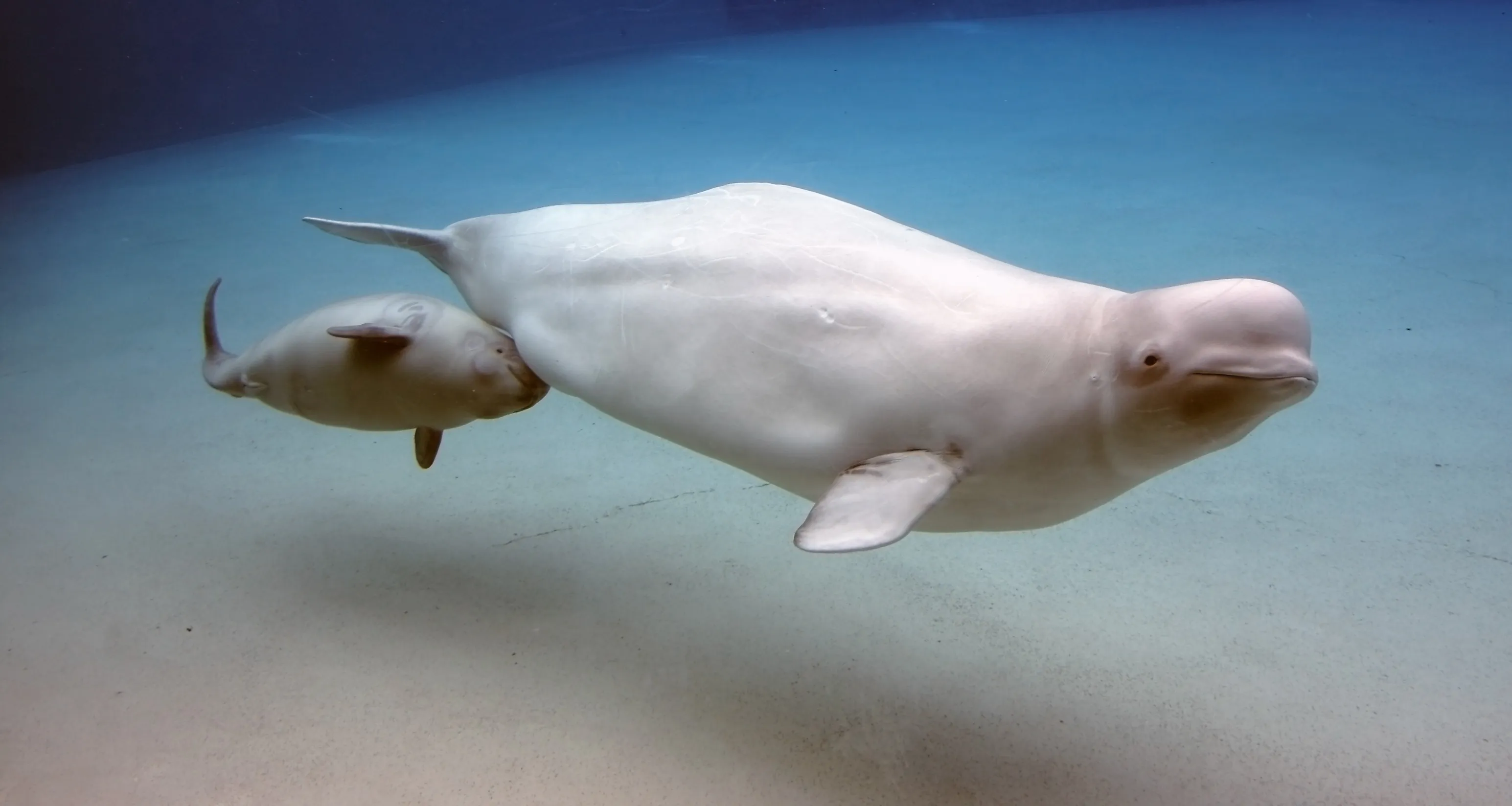
Stable pods comprise 10-25 individuals including adult females offspring and subadult males with relationships spanning decades. Individuals engage in cooperative behaviors including synchronized hunting where pods coordinate movements herding fish into tight concentrations demonstrating sophisticated social coordination.
Belugas return to traditional summering estuaries using routes learned from elder members demonstrating cultural transmission. They display alloparental care with non-mothers assisting calf protection. Play behavior remains common with individuals engaging in social games manipulating objects and performing synchronized acrobatics. Photo: Christopher Meder.
Echolocation Mastery
Acoustic Vision Systems
Beluga echolocation produces broad-spectrum clicks spanning 40-120 kHz with individuals adjusting frequency and repetition rate based on conditions. Melons focus sounds into beams narrow as 5 degrees providing detailed spatial information about distant objects through focused acoustic imaging.
Their echolocation performs remarkably in challenging Arctic conditions where ice creates complex acoustic environments. Belugas distinguish prey echoes from background clutter detecting fish beneath ice locating breathing holes from 15 kilometers and navigating narrow leads during polar winter with exceptional precision. Photo: Illustrated.

Conservation & Legacy
Protecting Arctic Voices
Global beluga populations number approximately 150,000 individuals though many subpopulations face significant threats. Cook Inlet population numbered 279 in 2018 but increased to 331 by 2022 representing first stabilization after two decades demonstrating recovery potential with strong protection measures.
Underwater noise pollution from shipping traffic seismic surveys and military sonar interferes with echolocation and communication. Conservation requires protecting critical habitats including river estuaries for calving establishing marine protected areas limiting industrial activity and reducing contaminant inputs. Photo: Jakob Rippe.
Science & Discovery
University of St Andrews 2020 research revealed belugas produce echolocation clicks with right phonic lips and communication signals from left inspiring biomimetic sonar systems requiring precise directional acoustic control.
PLOS One 2021 Bristol Bay tagging study documented 129 hours foraging behavior revealing intense echolocation at shallow depths informing acoustic monitoring programs for endangered Cook Inlet population conservation.
NOAA Fisheries 2022 Cook Inlet survey estimated 331 individuals up from 279 in 2018 demonstrating marine protected areas reduce noise pollution enabling recovery for critically endangered populations.
In our delightful oceans, belugas navigate ice-covered seas using shapeable melon organs focusing echolocation with remarkable precision. Their 50+ vocalizations enable sophisticated communication maintaining pod cohesion across generations. Cook Inlet population increased to 331 by 2022 proving marine protected areas enable recovery.