Northern Elephant Seal
Ocean's Deep Diving Champion
Mirounga angustirostris
Meet the ocean's deep diving champions—massive pinnipeds reaching 5 meters (16 feet) and 2,300 kilograms whose record 1,735-meter dives spend up to 90% of ocean time submerged. Proboscis-amplified vocalizations establish breeding hierarchies controlling harems of 50+ females during 21,000-kilometer migrations between Arctic feeding grounds and California beaches. Recovered from estimated 20-100 individuals in 1890s to over 200,000 today.
Meet the Diving ChampionWhat Makes Them Special
Record Diving Depths
Dive to 1,735 meters spending up to 90% of ocean time submerged during continuous foraging journeys
Extreme Size Dimorphism
Males reach 2,300 kilograms—twice the 900-kilogram female weight representing pinnipeds' most pronounced size difference
Proboscis Vocalization
Produce diesel-engine calls amplified through inflatable proboscis carrying across breeding beaches for territory establishment
Breeding Hierarchies
Alpha males control harems of 50+ females through acoustic displays during 3-month breeding fasts
Epic Migrations
Complete 21,000-kilometer roundtrip journeys between California beaches and Arctic feeding grounds with precise navigation
Conservation Triumph
Recovered from bottleneck of estimated 20-100 individuals in 1890s to over 200,000 today—pinnipeds' greatest conservation success
First Encounter
North America's Largest Pinniped with 5-Meter (16-Foot) Bulls
Northern elephant seals reach 5 meters (16 feet) in length with bulls weighing 2,300 kilograms compared to 900-kilogram females. Males display inflatable proboscis trunks and pink chest shields scarred from territorial battles.
This extreme sexual dimorphism represents the most pronounced size difference among marine mammals. Scientists call this "polygynous system"—dominant males control large harems while achieving record diving depths between Arctic feeding and California breeding. Photo: Picchu productions.
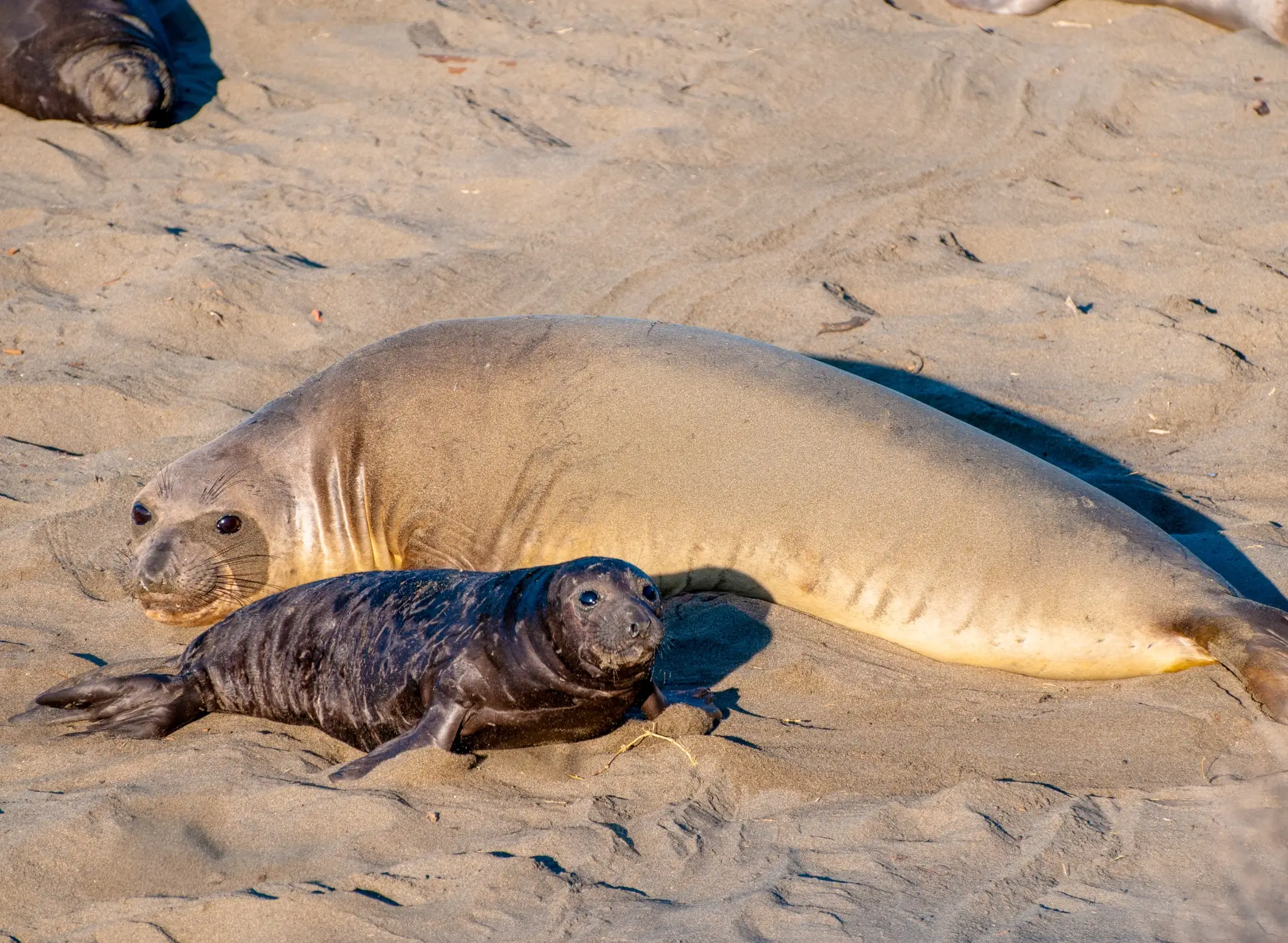
"Northern elephant seals achieve diving records of 1,735 meters (5,692 feet) while spending up to 90% of their ocean time submerged during continuous 2.5-month foraging journeys."
— Dr. Burney Le Boeuf, UC Santa Cruz Diving Physiology Research
Extreme Diving Physiology
Record 1,735-Meter Dives with 2-Hour Duration
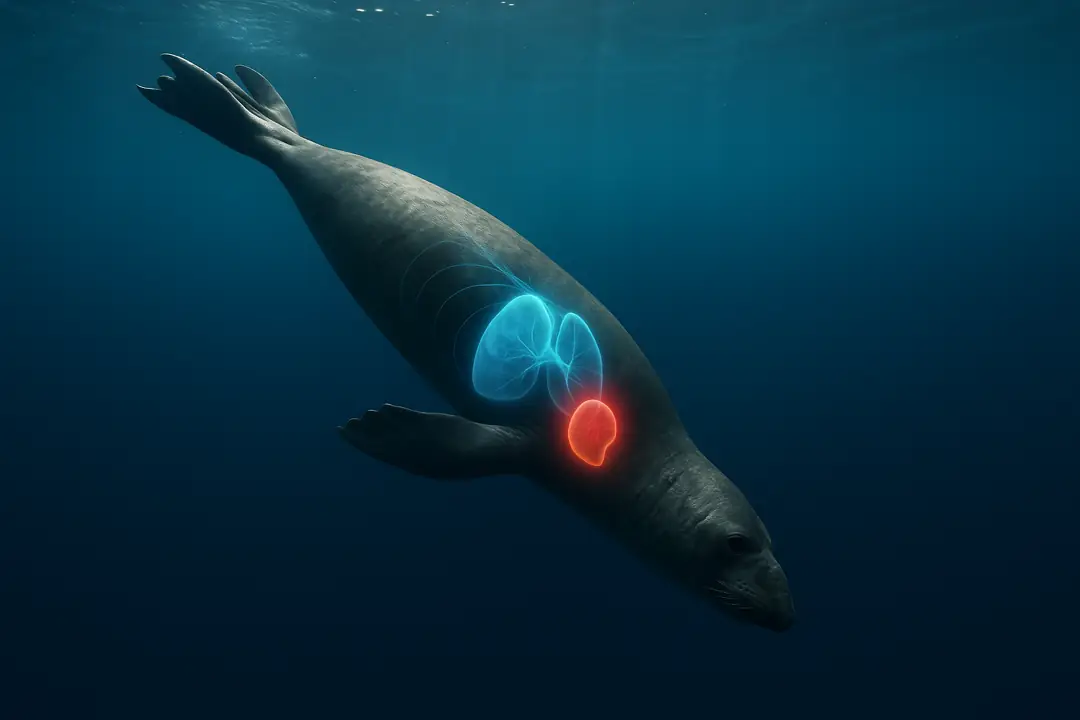
Northern elephant seals dive to documented depths of 1,735 meters (5,692 feet) while averaging 800-meter (2,625-foot) depths during routine foraging. Individual dives last up to 2 hours through extreme physiological adaptations.
Blood oxygen capacity exceeds terrestrial mammals by 250% through increased myoglobin concentrations enabling prolonged submersion. Heart rates plummet from 60-70 beats per minute at surface to as low as 4-15 beats per minute during dives conserving oxygen while hunting deep-sea squid and fish. Photo: Illustration.
Proboscis Vocalization
Diesel-Engine Calls for Territory Control
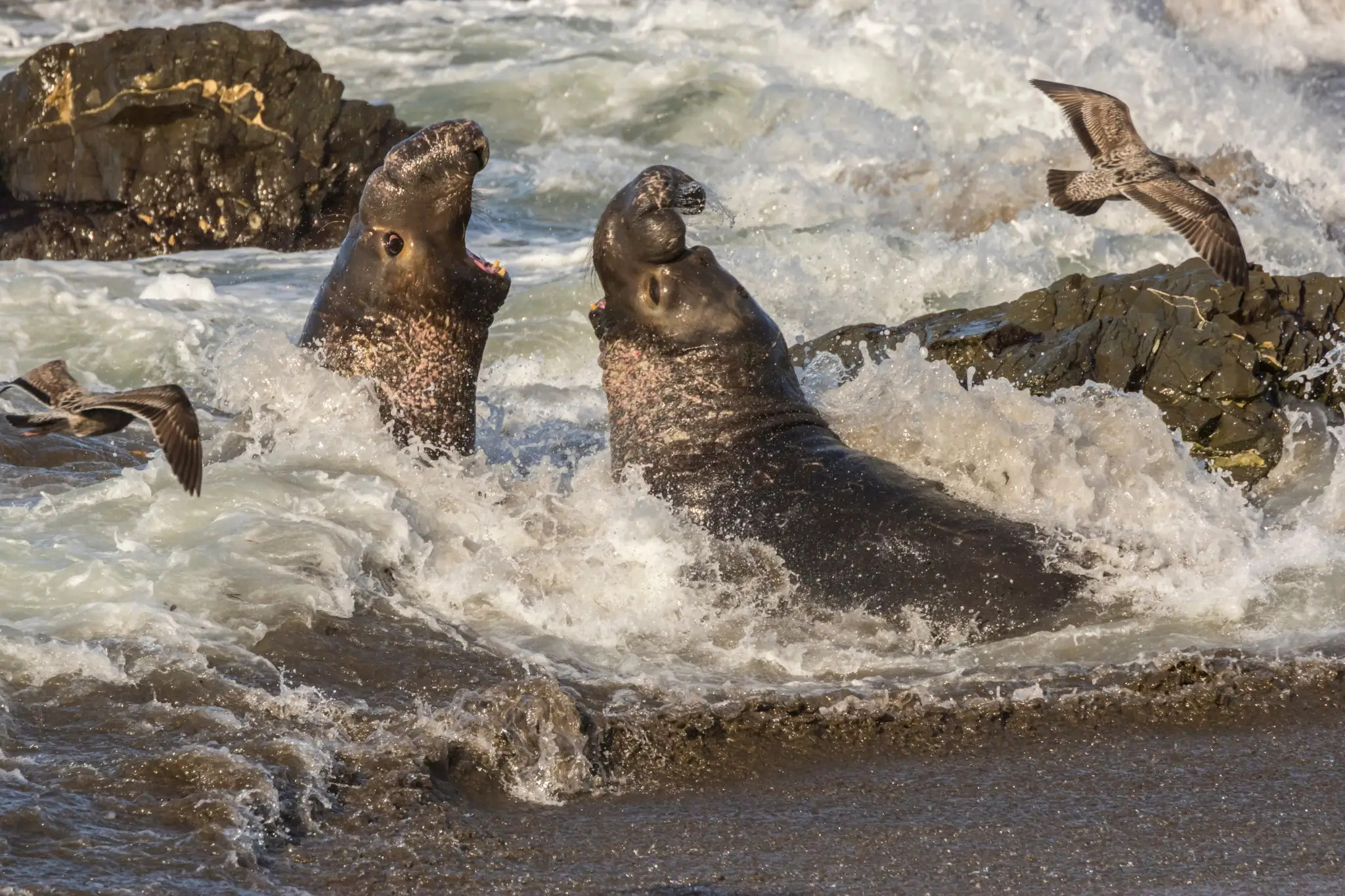
Male proboscis amplifies clap-threat vocalizations resembling diesel engines that carry across breeding beaches. Each male produces unique acoustic signatures enabling individual recognition without physical confrontation.
Research confirms males learn and recognize rival calls responding aggressively to subordinates while retreating from dominant vocalizations. This acoustic system conserves energy during 3-month fasting periods when males lose 36% of body weight. Photo: Danita Delimont.
Breeding Hierarchy
Alpha Male Harems with 50+ Females
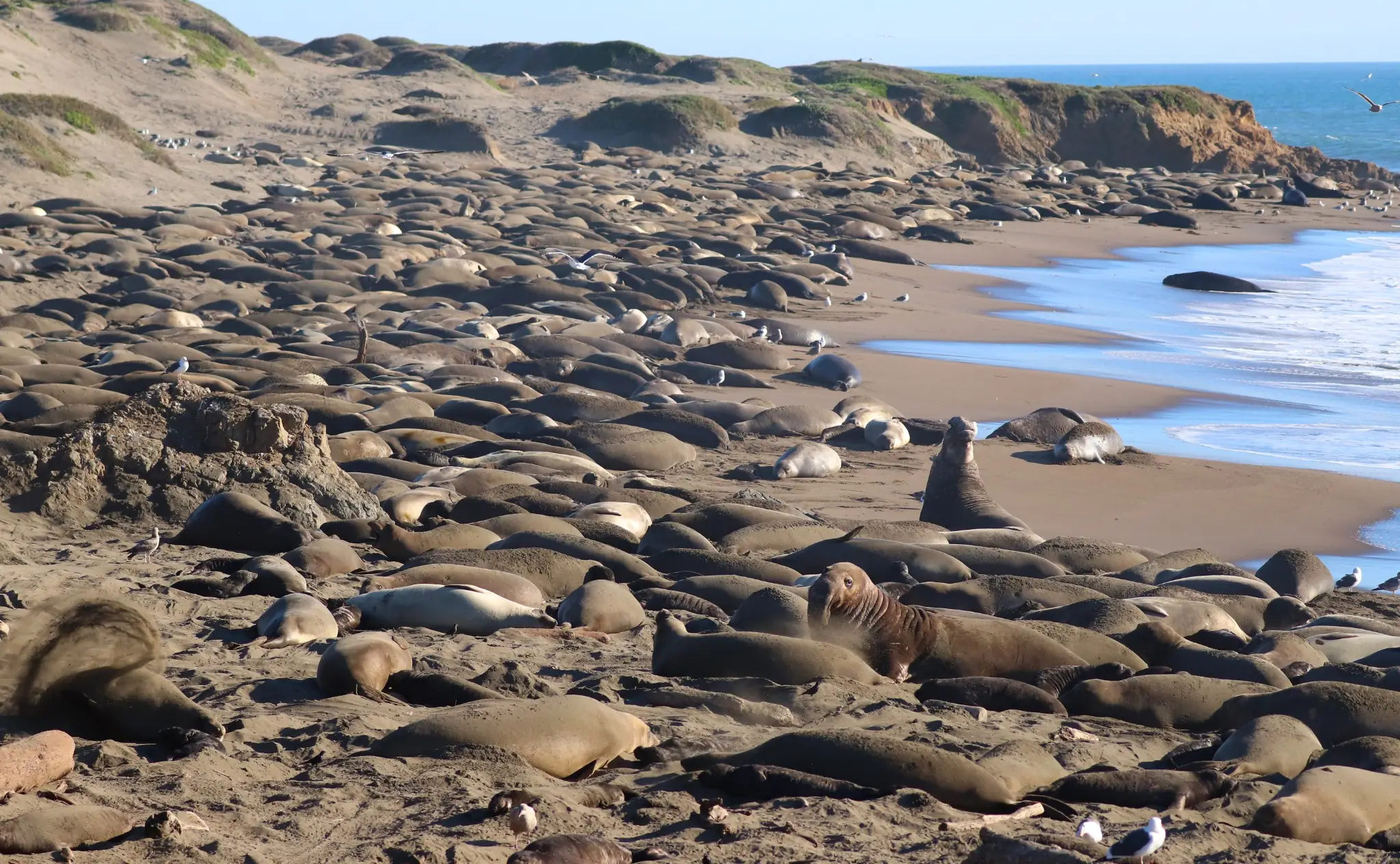
Dominant alpha males control harems of 50+ females through linear hierarchies established via vocalizations and ritualized combat. Single successful males may father entire harem offspring during breeding season.
Physical confrontations occur in less than 2% of male interactions with most disputes resolved through acoustic displays. Scientists call this "polygynous mating system"—extreme competition driving the 4:1 male-to-female size ratio among pinnipeds. Photo: Sean Lema.
Foraging Migration
21,000-Kilometer (13,000-Mile) Ocean Journeys
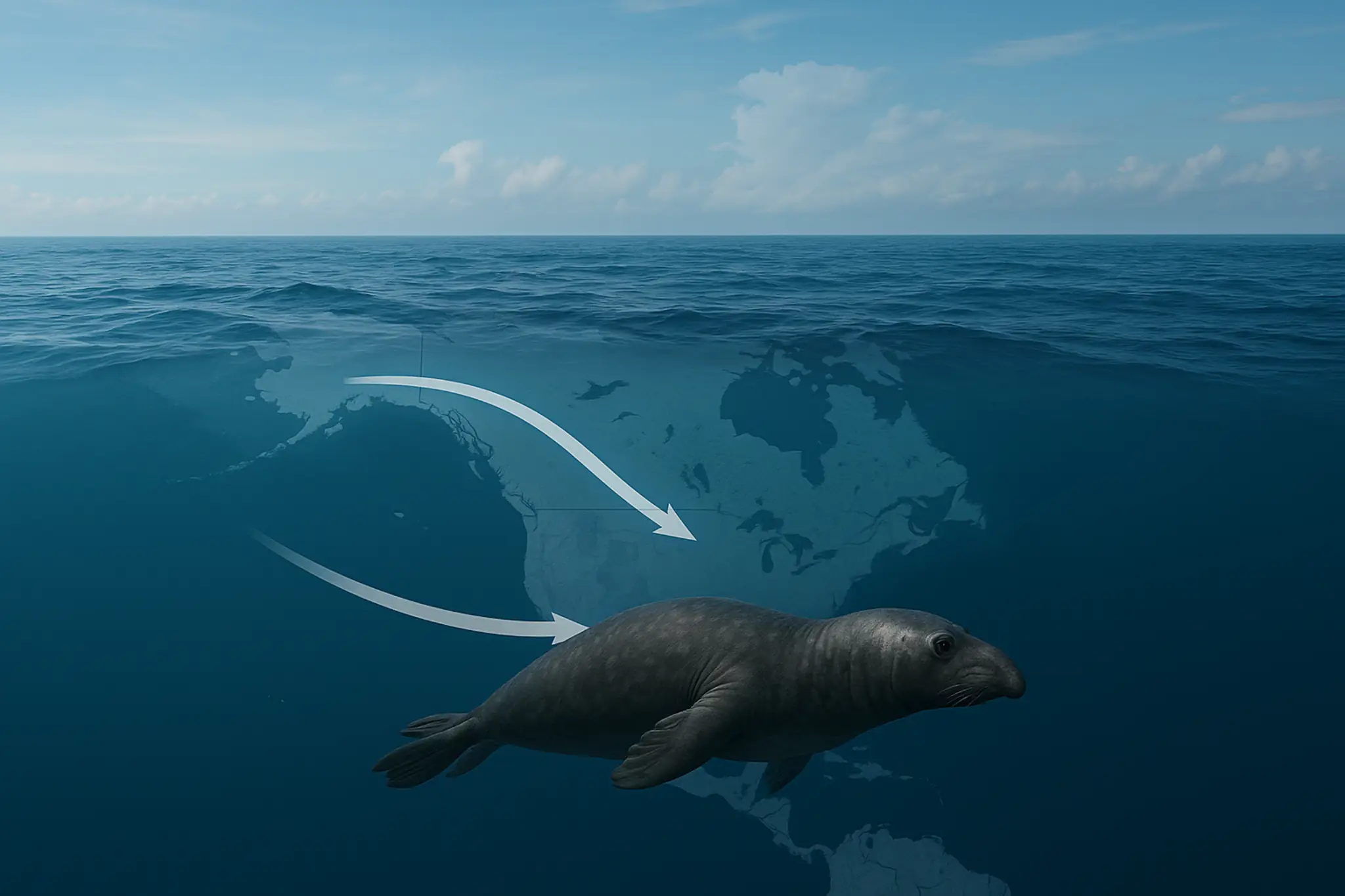
Northern elephant seals complete 21,000-kilometer (13,000-mile) roundtrip migrations with females foraging in open Pacific while males travel to Aleutian Islands. Satellite tracking reveals precise navigation across ocean basins.
During oceanic phases lasting 7-9 months depending on sex, seals spend up to 90% of time submerged diving continuously to 800-meter average depths. Scientists call this "innate navigation system"—genetic programming triggers precisely timed returns for breeding cycles. Photo: Illustration.
Conservation Success
Recovery from Near-Extinction to 200,000+
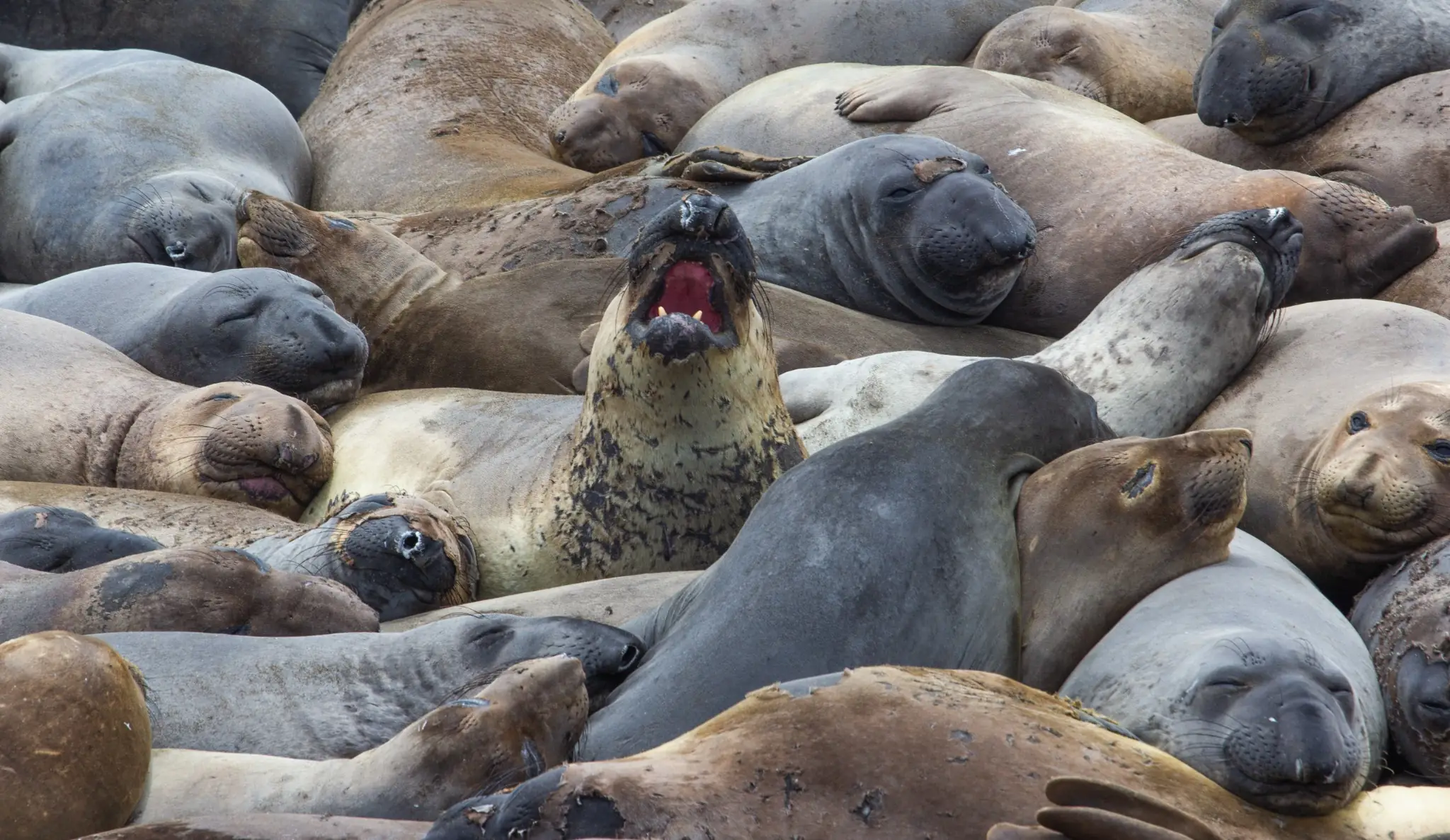
Northern elephant seals recovered from genetic bottleneck of estimated 20-100 individuals on Guadalupe Island in 1890s to current populations exceeding 200,000 through Mexico-U.S. hunting bans implemented in 1922.
Marine Mammal Protection Act provides ongoing federal protection while Point Reyes National Seashore monitoring tracks population dynamics and climate impacts. Current IUCN Least Concern status represents conservation's greatest pinniped recovery achievement. Photo: Iryna Savina.
Science & Discovery
Stanford University 2023 physiology research revealed elephant seal lung surfactant proteins similar to humans improving premature infant respiratory treatments through understanding extreme pressure-tolerance mechanisms at crushing ocean depths.
UC Santa Cruz 2024 genetic analyses confirmed entire population descended from 20 individuals showing minimal diversity yet remarkable fitness revealing species recovery from severe bottlenecks through phenotypic plasticity.
NOAA satellite telemetry documented continuous diving patterns with seals surfacing 2-3 minutes between dives during foraging trips revolutionizing understanding of marine mammal metabolic efficiency and oxygen conservation.
In our delightful oceans, elephant seals master 1,735-meter record dives spending up to 90% of time submerged during 21,000-kilometer migrations. Lung surfactant proteins inspire premature infant respiratory treatments. Populations recovered from estimated 20-100 individuals in 1890s to over 200,000 today—pinnipeds' greatest conservation triumph.