Mandarin Fish
Nature's Living Artwork
Synchiropus splendidus
Meet nature's living artwork—miniature reef jewels reaching 8 centimeters whose electric blue patterns emerge from revolutionary cyanophore cells producing Earth's rare vertebrate true blue pigment. They walk across coral on enlarged pelvic fins, secrete toxic mucus for defense, and perform precisely-timed sunset mating dances within twenty-minute twilight windows.
Discover Nature's MasterpieceWhat Makes Them Special
Rare True Blue Vertebrate
Produce genuine cellular blue pigment through revolutionary cyanophore cells—unique among Earth's vertebrates.
Psychedelic Colors
Display swirling electric blue patterns with bright orange bands creating the ocean's most vibrant color combinations.
Toxic Defense
Lack scales entirely, instead secreting thick poisonous mucus coating that repels predators and prevents parasitic infections.
Walking Behavior
Use enlarged pelvic fins to walk across coral surfaces rather than swim, enabling precise navigation through reef structures.
Sunset Mating Dance
Perform elaborate courtship displays within precise twenty-minute windows at twilight, ascending in belly-to-belly spirals.
Miniature Marvels
Reach maximum size of 8 centimeters (3 inches), proving spectacular biology emerges in tiny packages.
First Encounter
Living Jewels of Tropical Reefs
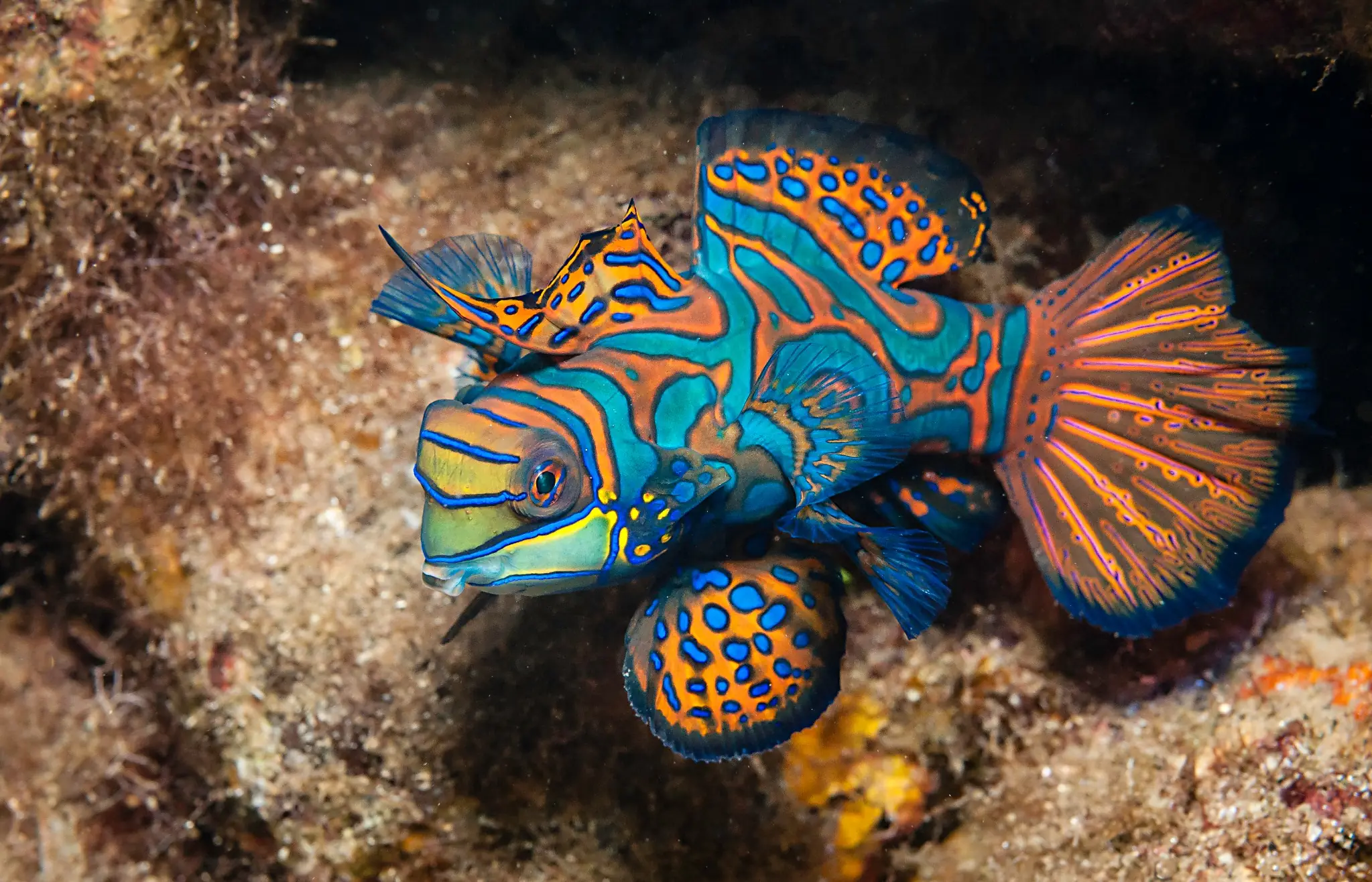
Mandarin fish reach only 8 centimeters (3 inches) in length but display the ocean's most vibrant color combinations. Electric blue patterns swirl with bright orange bands across their small bodies, creating psychedelic designs unmatched in marine life—colors so intense they seem impossible, yet entirely natural.
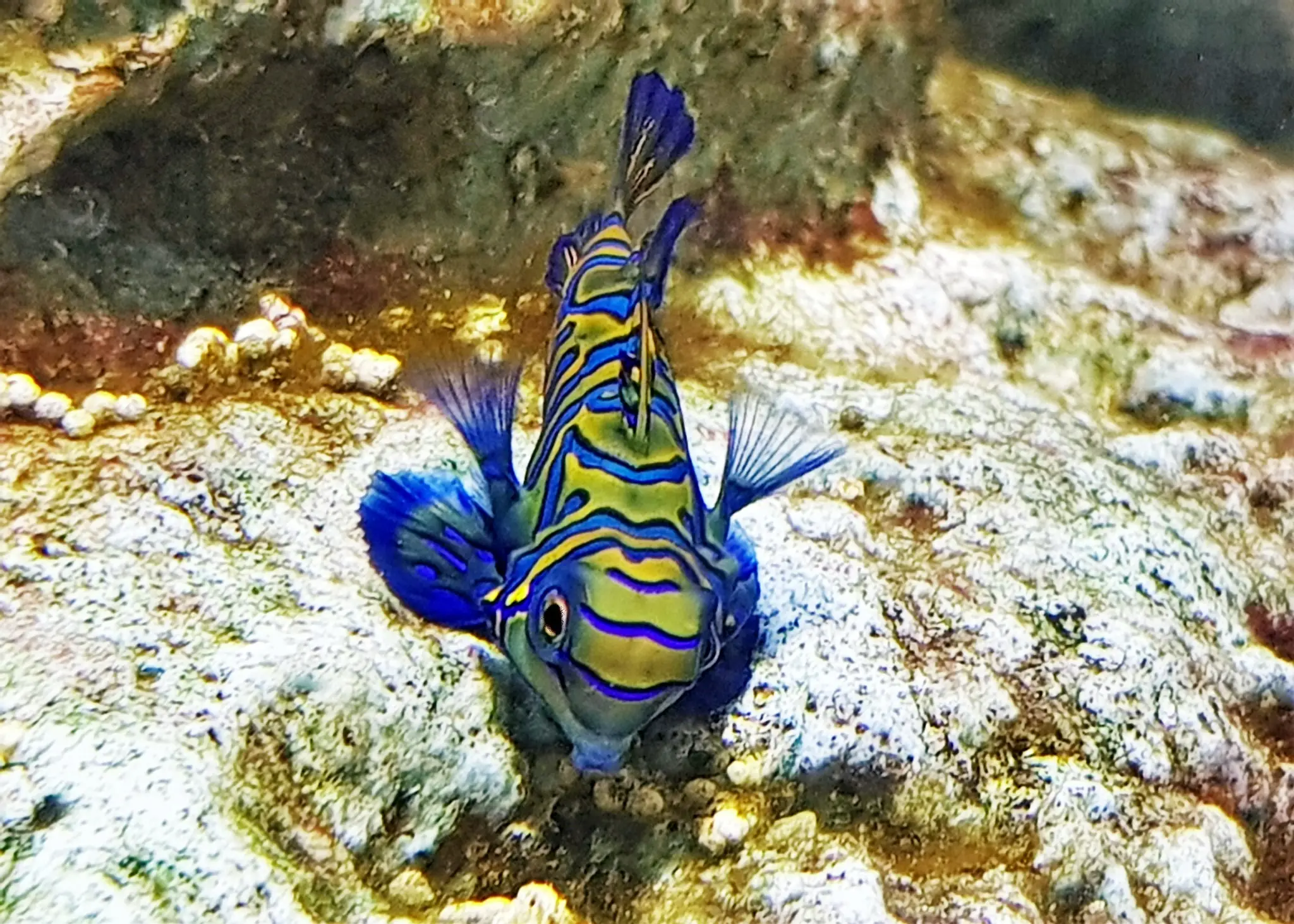
Large pelvic fins enable these reef fish to walk across coral surfaces rather than swim continuously. Scientists call this "benthic locomotion"—specialized movement for navigating complex branching coral systems during daytime feeding, making them appear to hop delicately from perch to perch. Photo: Wildestanimal.
"Mandarin fish produce true blue through cyanophore cells—one of very few vertebrates on Earth with genuine blue cellular pigment rather than structural color reflection."
— Dr. Michiaki Goda, Cyanophore Research Pioneer
True Blue Pigment
Revolutionary Cyanophore Discovery
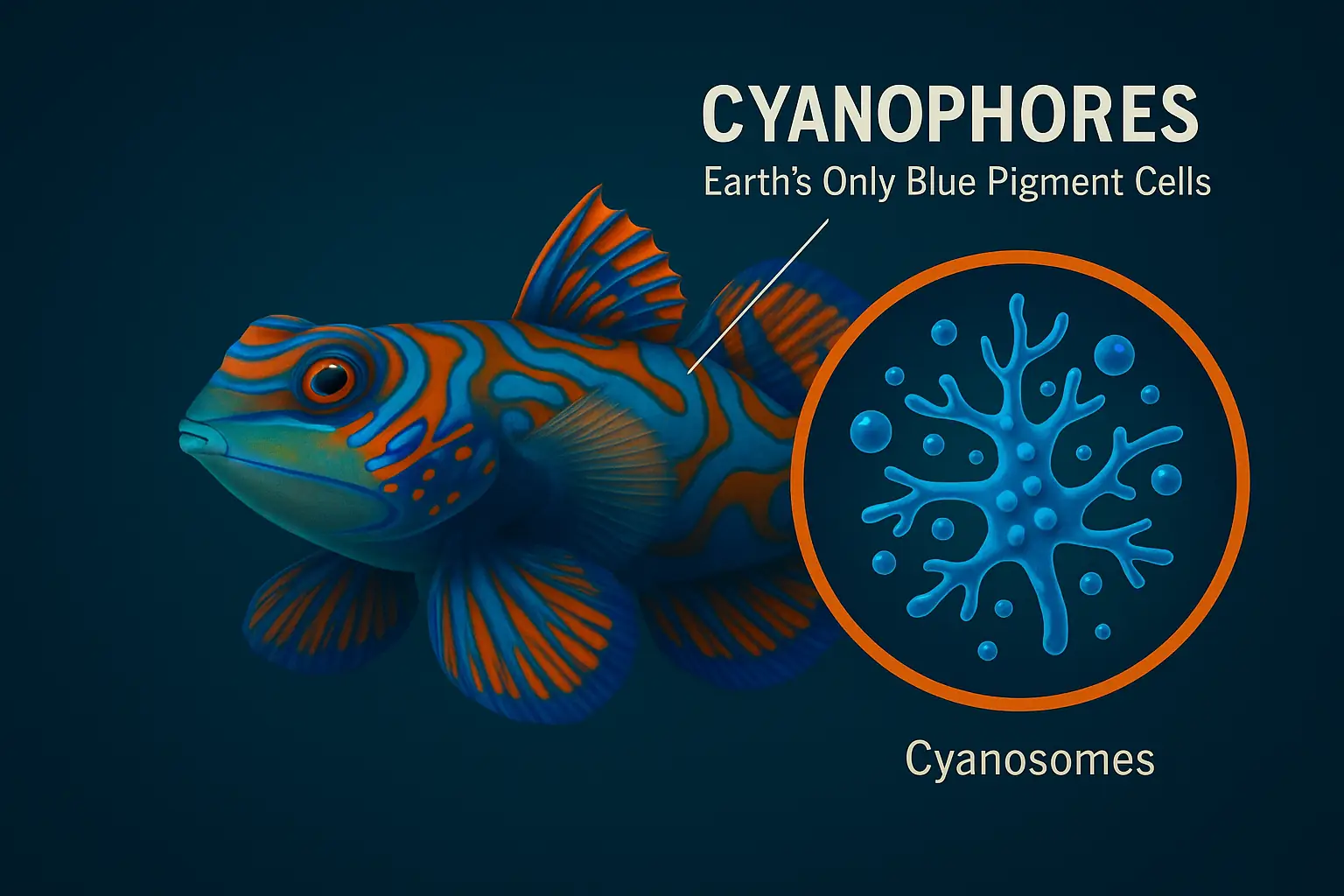
Mandarin fish create true blue through revolutionary cyanophore cells containing blue pigment-filled organelles called cyanosomes. Every other blue animal on Earth—from butterflies to peacocks to other fish—uses structural tricks involving light reflection and refraction, not actual blue pigment molecules.
Dendritic cyanophores respond to environmental stimuli by dispersing blue cyanosomes throughout cell branches, creating dynamic color displays. This 2021 genomic discovery (building on cyanophore observations first made in the 1970s) established mandarin fish as exceptionally rare among Earth's vertebrates, revealing entirely new pathways for biological color production. Photo: Illustration.
Toxic Defense System
Scaleless Protection Through Poisonous Mucus
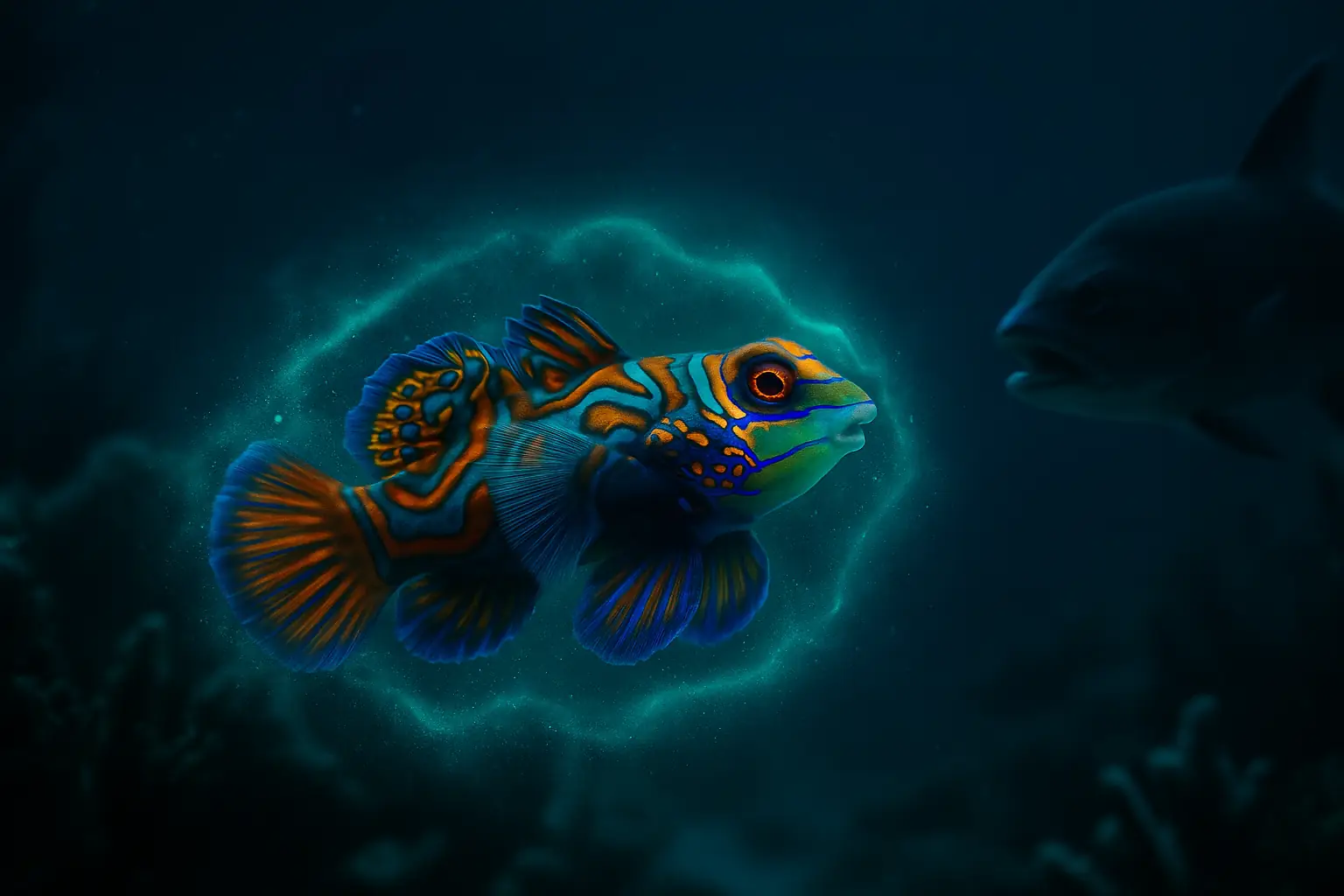
Mandarin fish have tiny, embedded scales but appear scaleless due to their thick mucus coating, instead secreting thick toxic mucus that coats their entire bodies. This foul-tasting, bitter slime effectively repels predators while preventing parasitic infections and marine diseases—a chemical shield replacing traditional armor.
Bright warning colors signal danger to potential threats through aposematic coloration—nature's universal "don't eat me" advertisement. Predators like large scorpionfish, groupers, and some wrasses may attempt to eat them, but most learn quickly to avoid these beautiful but toxic reef inhabitants. Photo: Illustration.
"Every evening, mandarin fish emerge for precisely twenty minutes of synchronized mating dances, timing their reproduction to minimize predation risk during vulnerable spawning."
— Dr. Yvonne Sadovy, Reproductive Behavior Specialist
Sunset Mating Choreography
Twenty-Minute Twilight Window
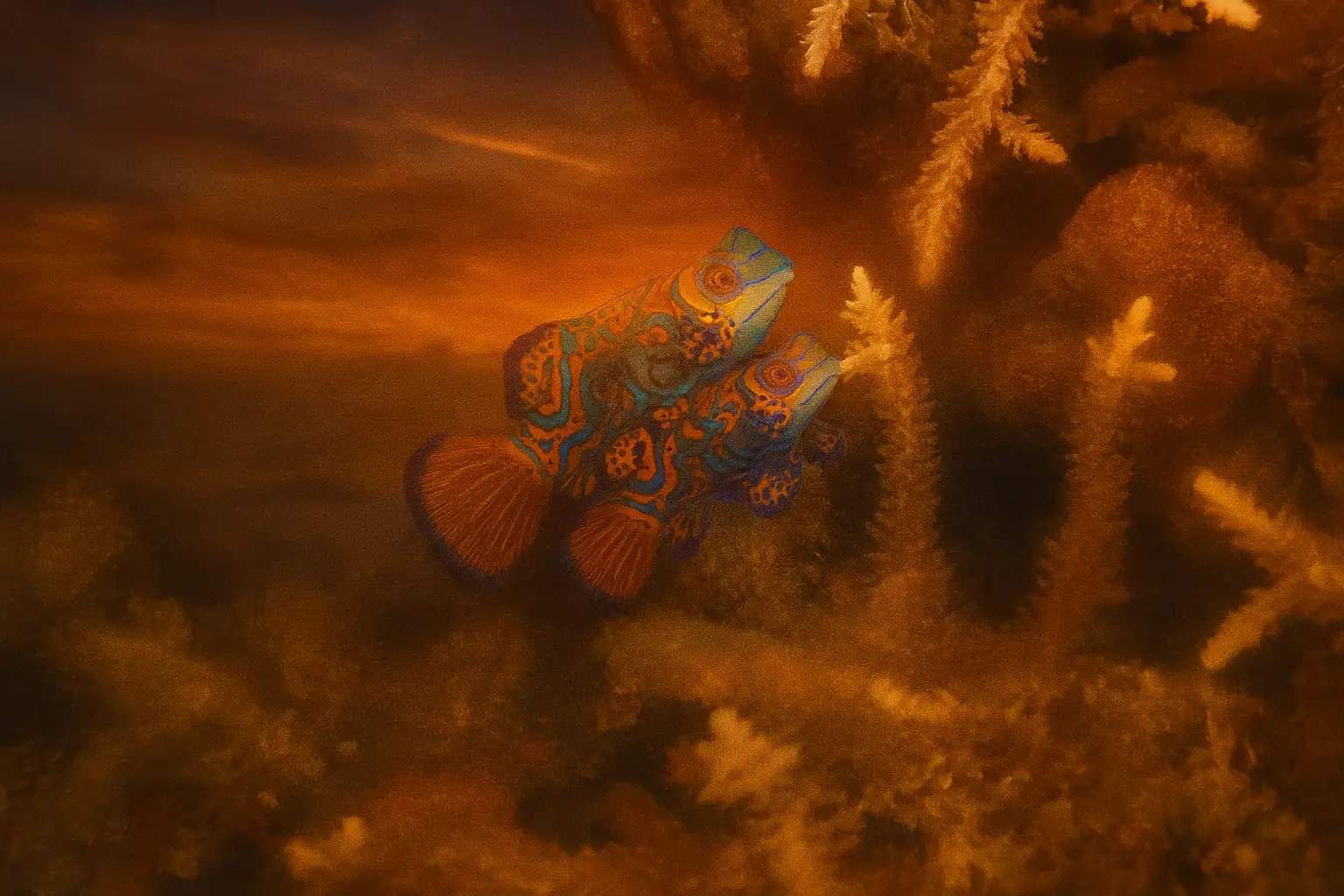
Males establish territories within coral branches and perform elaborate courtship displays during a brief window at dusk, often around sunset. Females select partners based on size, territory quality, and fin display intensity—choosing only the most fit males for reproduction.
Paired fish ascend together in belly-to-belly spirals, releasing clouds of eggs and sperm above reef safety zones. This synchronized reproduction occurs nightly during breeding seasons, maximizing fertilization success while minimizing predation exposure through precise temporal coordination. Photo: Illustration.
Walking Behavior
Coral Navigation Through Modified Fins
Enlarged pelvic fins enable mandarin fish to walk across coral surfaces while hunting copepods, amphipods, and small invertebrates. This unique locomotion allows precise navigation through complex branching coral structures—moving deliberately rather than swimming continuously.
Continuous daytime feeding through methodical coral exploration helps them locate microscopic prey trapped in reef substrate. Their specialized walking behavior distinguishes them from typical fish swimming patterns, creating a distinctive hopping motion as they patrol extensive home ranges.Photo: Arunee Rodloy.
Conservation Status
Stable Populations With Aquarium Trade Pressures
Mandarin fish populations remain stable across Western Pacific ranges spanning the Philippines, Indonesia, and northern Australia, though aquarium collection creates localized pressure on accessible reef populations. Their specialized dietary requirements—feeding exclusively on tiny live copepods—challenge captive breeding programs.
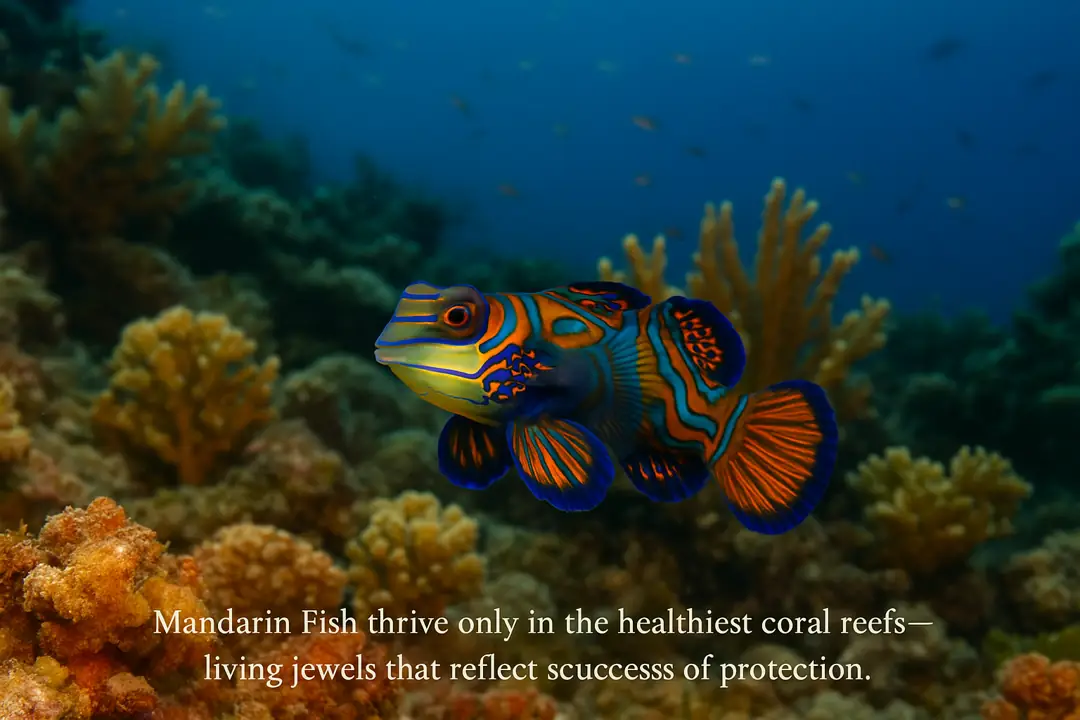
Marine protected areas effectively preserve their coral habitat while research advances sustainable aquaculture techniques. Recent successes in captive breeding offer hope for reducing wild collection. These living jewels demonstrate that protecting coral reef ecosystems preserves the ocean's most spectacular evolutionary innovations in color, behavior, and biochemistry. Photo: Illustration.
Science & Discovery
National Institute for Basic Biology 2021 genomic research identified the genetic mechanisms controlling cyanophore development, revealing novel pigment synthesis pathways with potential applications in biotechnology and synthetic biology for creating blue pigments.
University of Hawaii 2023 studies isolated bioactive compounds from mandarin fish mucus showing antimicrobial properties against drug-resistant bacteria, inspiring pharmaceutical research into novel antibiotic alternatives from marine sources.
Marine Biological Laboratory 2024 behavioral tracking revealed mandarin fish maintain territories spanning 50 square meters, with individuals showing site fidelity for years, advancing understanding of reef fish spatial ecology and habitat requirements.
In our delightful oceans, mandarin fish demonstrate cellular pigment innovation creating biological color through pathways distinct from structural reflection. Their chemical defense systems enable survival without traditional armor. Protecting coral reef ecosystems preserves these unique evolutionary adaptations found nowhere else on Earth.