Manta Ray
Ocean's Underwater Acrobat
Mobula birostris
Meet the ocean's graceful giants—manta rays gliding with 8-meter wingspans and Earth's largest fish brains relative to body size. They execute perfect barrel rolls filtering plankton while research suggests mirror self-recognition abilities. Their wing mechanics inspire underwater robotics through documented biomimetic applications.
Dive Into Their StoryWhat Makes Them Special
Largest Fish Brain
Possess Earth's largest fish brain relative to body size enabling exceptionally advanced cognitive abilities
8-Meter Wingspan
Glide with massive 8-meter wingspans creating elegant underwater ballet through tropical waters
Perfect Acrobatics
Execute barrel rolls engineered for optimal water flow maximizing plankton filtering efficiency
Mirror Self-Recognition
Research evidence suggests possible mirror self-recognition abilities challenging traditional understanding of fish cognition
Biomimetic Blueprint
Wing mechanics inspire underwater soft robots and autonomous vehicles revolutionizing marine exploration technology
Conservation Success
Protected under CITES Appendix II with U.S. NOAA 2024 Draft Recovery Plan coordinating international conservation
First Encounter
Submarine Ballet at Dawn
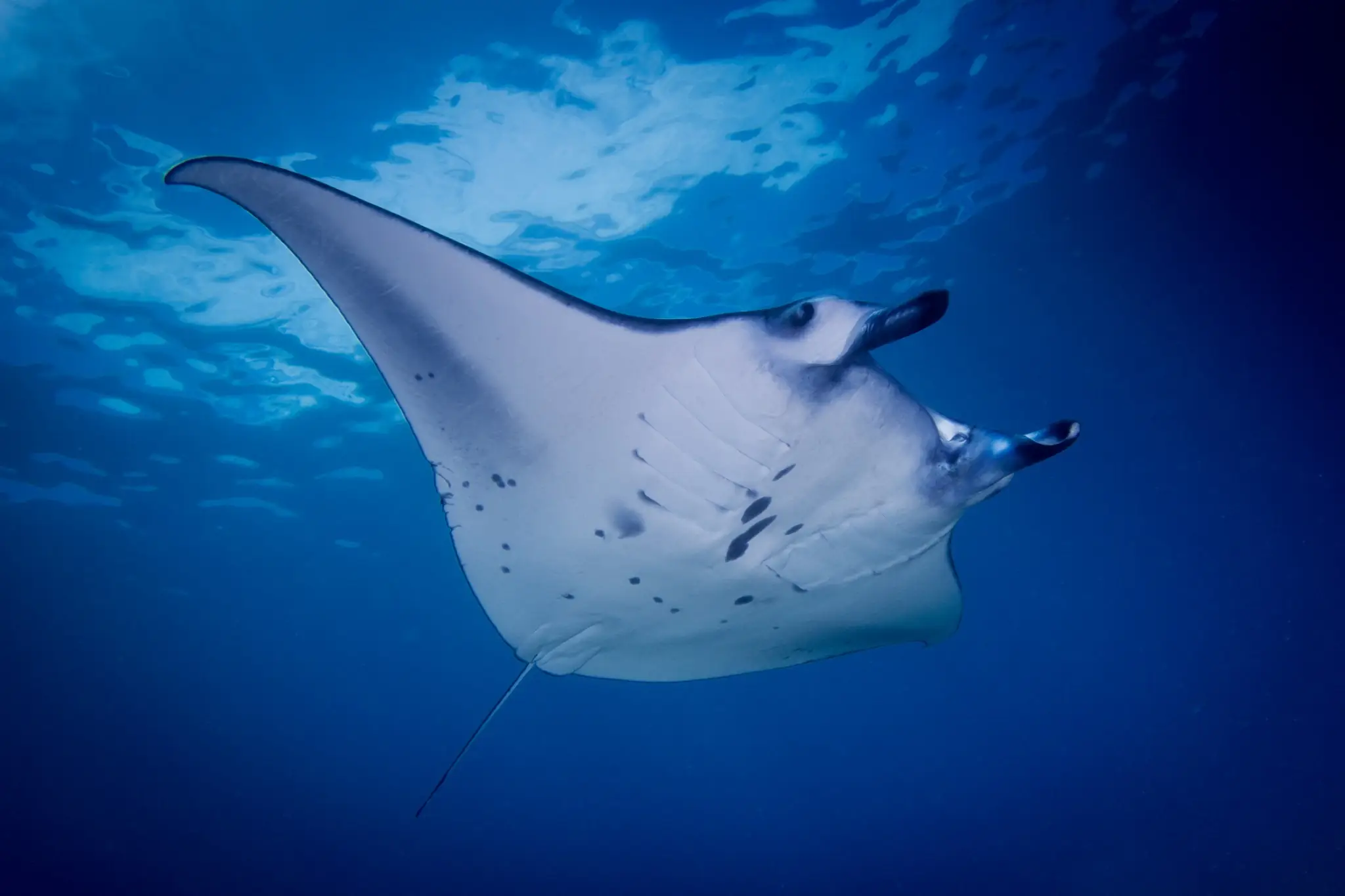
Dawn breaks over tropical reefs as oceanic giants emerge—manta rays executing synchronized underwater ballet. These creatures glide through plankton-rich currents with 8-meter wingspans creating living performance art against morning light.
Each encounter reveals engineering perfection refined over millions of years: wing-like pectoral fins generating forward thrust while cephalic fins funnel microscopic prey. Their massive scale combined with effortless grace demonstrates evolution's ability to unite size with underwater agility. Photo: Nickeverett1981
"Manta rays possess the largest brain-to-body ratio of any fish species, with specialized neural regions for complex social cognition that rival marine mammals—challenging our fundamental understanding of intelligence in aquatic vertebrates."
— Dr. Csilla Ari, Marine Neuroscience Researcher
Largest Fish Brain
Oceanic Intelligence Champion
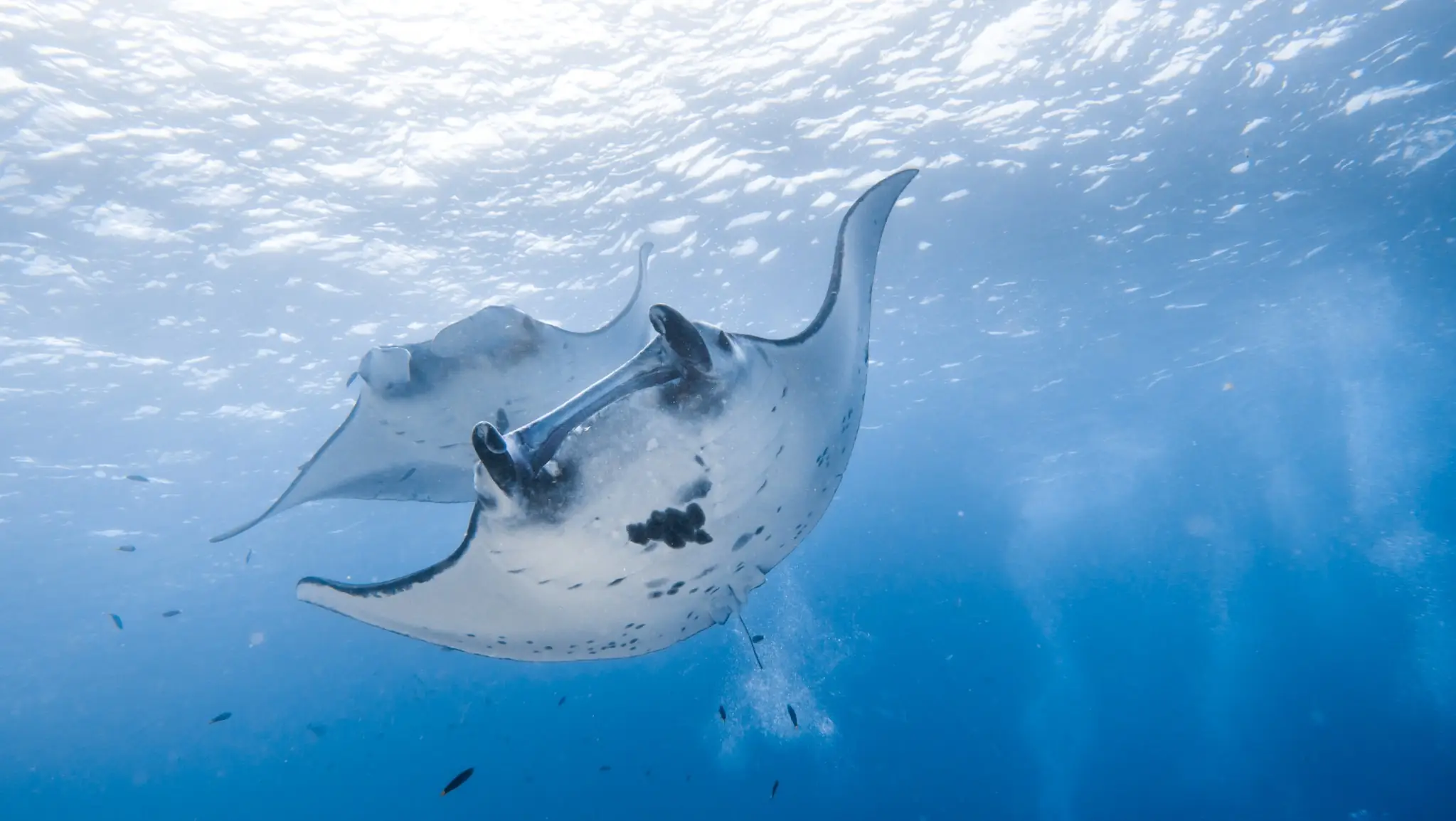
Manta rays possess Earth's largest brain among fish species—relative to body size their neural development surpasses expectations. This remarkable cranial capacity supports advanced cognitive functions including spatial memory social learning and problem-solving abilities.
Brain structure reveals specialized regions for processing complex visual information and coordinating social interactions. These neural adaptations enable mantas to navigate vast ocean territories while maintaining individual recognition within social networks. Photo: Lea Kari.
Barrel Roll Engineering
Physics of Perfect Acrobatics
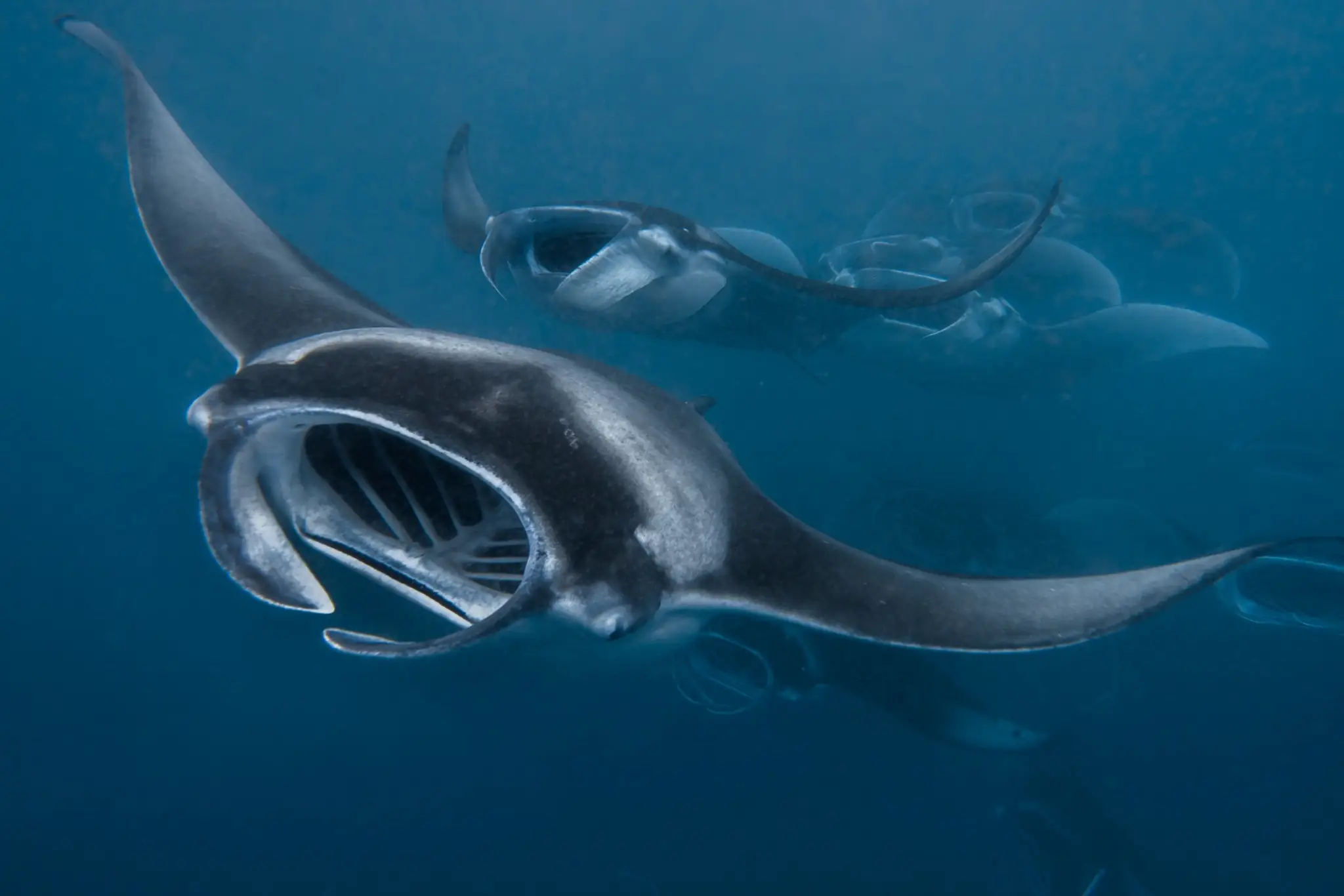
Watch a manta execute barrel rolls—their signature feeding maneuver reveals engineering perfection. Wing-like fins maintain precise angles during rotation while cephalic fins funnel plankton with maximum efficiency. Each 360-degree revolution demonstrates fluid dynamics mastery refined across evolutionary time.
Recent research confirms these acrobatic movements optimize water flow patterns creating concentrated feeding zones while minimizing energy expenditure. Their underwater choreography combines grace with mathematical precision—each rotation calculated for maximum nutritional gain. Photo: Lea Kari.
"Manta ray wing mechanics inspire underwater robots achieving unprecedented maneuverability—their 400-million-year evolutionary design outperforms our most advanced engineering, proving that nature's solutions remain unmatched in fluid dynamics."
— Dr. Hilary Bart-Smith, Biomimetic Robotics Engineering
Biomimetic Technology
Nature's Blueprint for Innovation
Manta rays inspire revolutionary underwater robotics. Their elegant wing mechanics translate into soft robots achieving 6.8 body lengths per second. Engineers decode fin articulation patterns while aerospace researchers study efficient propulsion systems for next-generation underwater vehicles.
From ocean exploration drones to surgical instruments requiring precise maneuverability manta-inspired designs reshape multiple industries. Their evolutionary engineering solutions provide blueprints for human technological advancement—proof that nature remains our greatest innovation teacher. Photo: Nick Utchin.
Mirror Self-Recognition
Research Evidence of Possible Self-Awareness
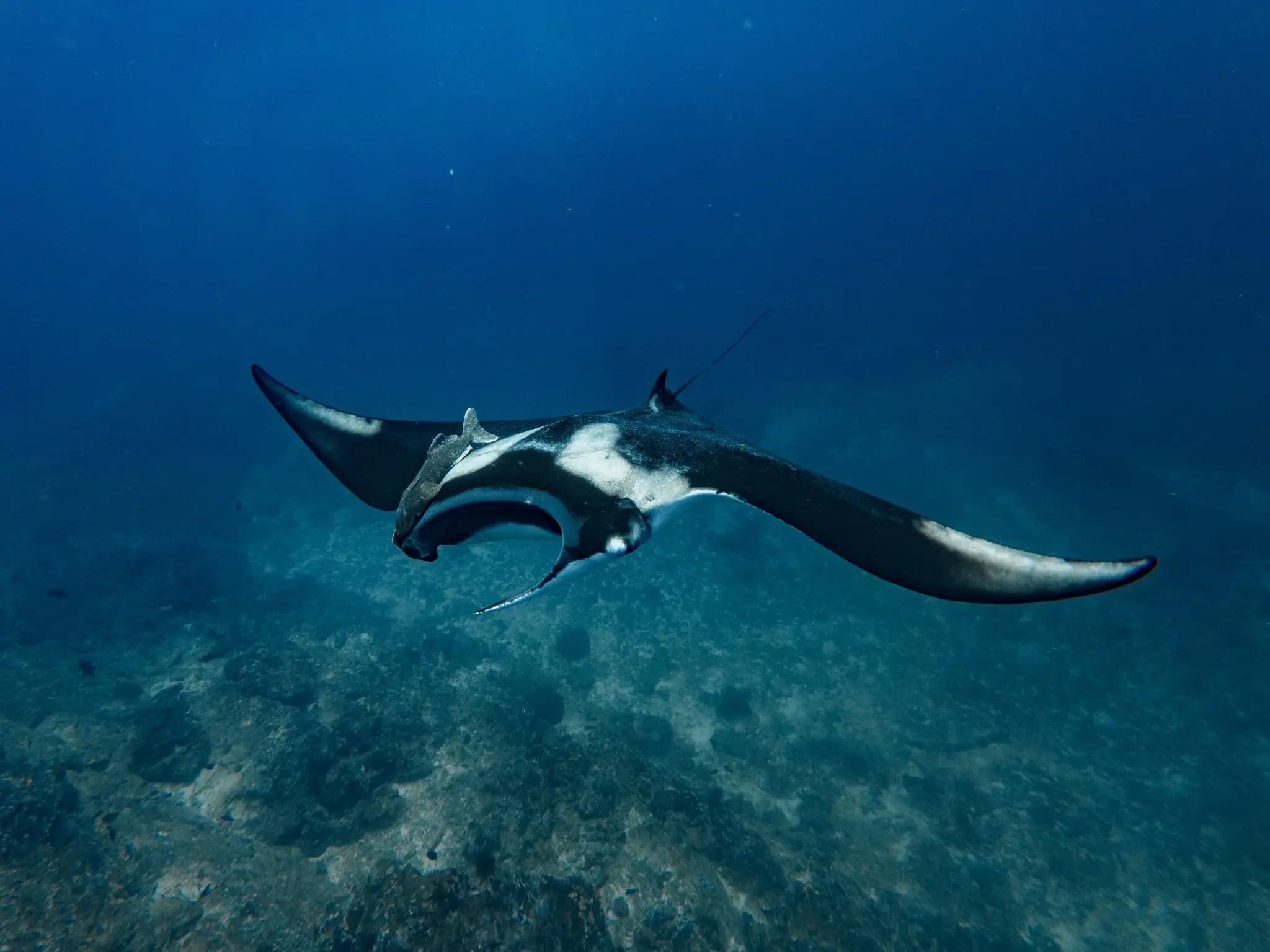
Research suggests manta rays may exhibit self-awareness through mirror tests—performing repetitive movements and exposing body parts only visible in reflections. This cognitive ability if confirmed would represent remarkable intelligence among fish species.
Advanced spatial memory enables precise navigation to feeding sites across thousands of kilometers. Problem-solving abilities and social learning suggest intelligence levels approaching those of marine mammals in cognitive complexity. Photo: Divedog.
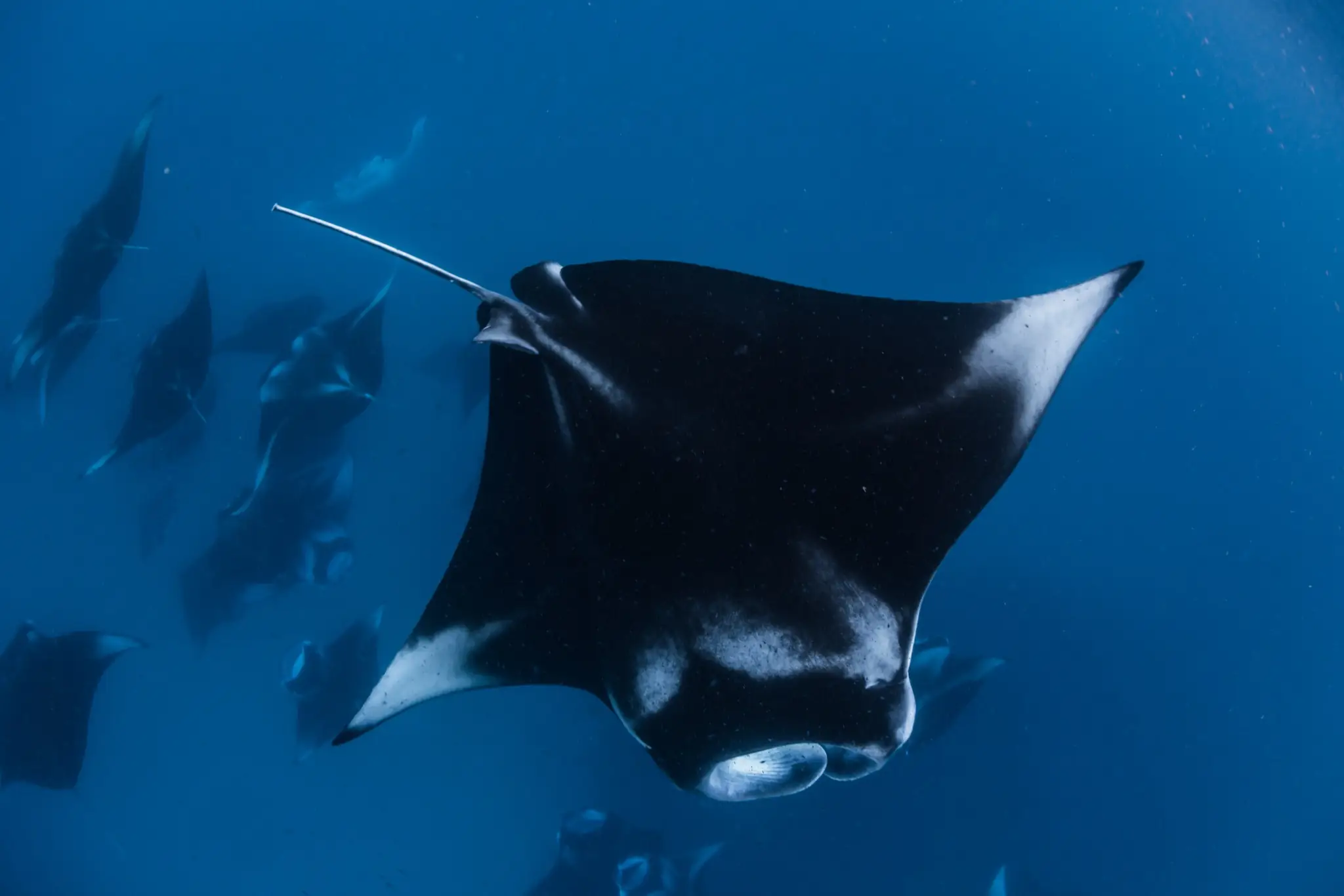
Conservation Success
Global Protection Networks for Intelligent Giants
Giant manta rays received endangered species protection under comprehensive international frameworks. Recent Draft Recovery Plan coordinates protection across migration routes spanning multiple countries and ocean basins.
Marine protected areas safeguard critical feeding and cleaning station habitats while sustainable tourism guidelines ensure responsible encounters. These conservation successes protect not just individual species but ocean intelligence itself. Photo: Leonardo Gonzalez
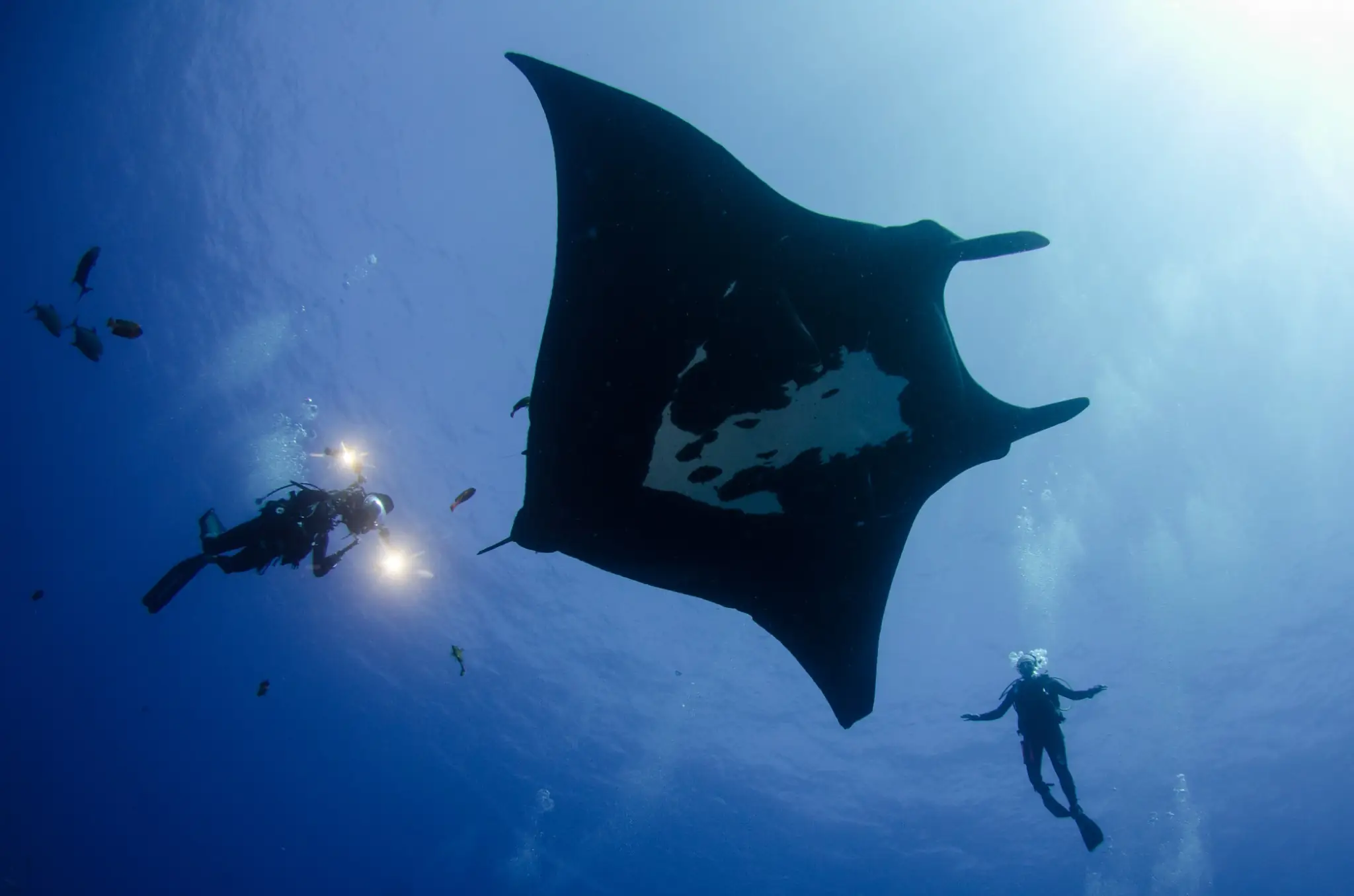
Science & Discovery
University of South Florida Dr. Csilla Ari 2016 mirror self-recognition research revealed evidence suggesting possible cognitive abilities challenging traditional understanding of fish consciousness expanding scientific debate on animal self-awareness
University of Virginia Dr. Hilary Bart-Smith biomimetic research showed manta fin mechanics inspire highly maneuverable soft robots revolutionizing underwater robotics and autonomous vehicle design enabling efficient propulsion systems
Marine Megafauna Foundation acoustic monitoring studies revealed complex social communication patterns and advanced spatial memory enabling precise navigation across thousands of kilometers demonstrating remarkable cognitive abilities
In our delightful oceans, manta rays possess Earth's largest fish brains relative to body size with research suggesting possible mirror self-recognition abilities. Their wing mechanics inspire revolutionary underwater soft robotics and autonomous vehicles. CITES Appendix II protection and U.S. NOAA 2024 Draft Recovery Plan coordinate international conservation efforts.