Mako Shark
Ocean's Speed Titan
Isurus oxyrinchus
Meet ocean's speed titans—apex predators reaching 4 meters (13 feet) achieving explosive 80 km/h (50 mph) bursts making them Earth's fastest sharks. They possess the highest brain-to-body ratio among sharks enabling visual hunting mastery. Spectacular 6-meter (20-foot) breaching displays demonstrate velocity while endothermic physiology maintains body temperatures 4-5°C above surrounding water.
Witness Their VelocityWhat Makes Them Special
Fastest Shark
Achieve burst speeds of 80 km/h with sustained cruising at 35 km/h making them Earth's fastest sharks
Highest Intelligence
Possess the largest brain-to-body ratio among all shark species with advanced cognitive capabilities for complex problem-solving
Visual Hunters
Hunt primarily through sight using enhanced retinal structure with tapetum lucidum for exceptional low-light vision
Warm-Blooded
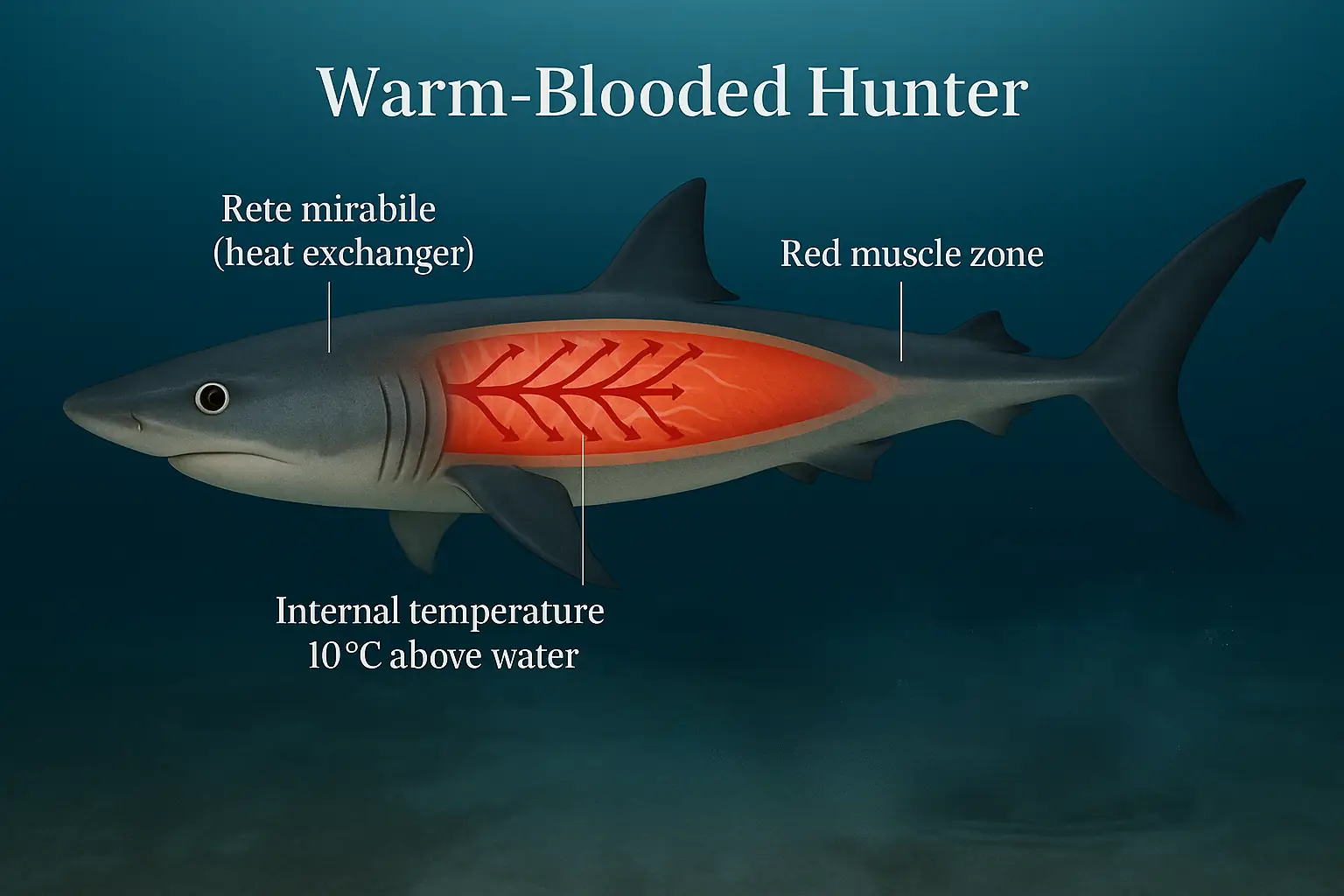
Maintain body temperatures 4-5°C above water temperature through specialized counter-current heat exchange systems
Spectacular Breaches
Launch several meters above the water surface during high-speed hunting attacks, with some breaches reaching exceptional heights
Powerful Bite
Generate 13,000 newtons of bite force enabling capture of large fast-swimming prey like tuna and billfish
First Encounter
Metallic Blue Torpedoes Built for Speed
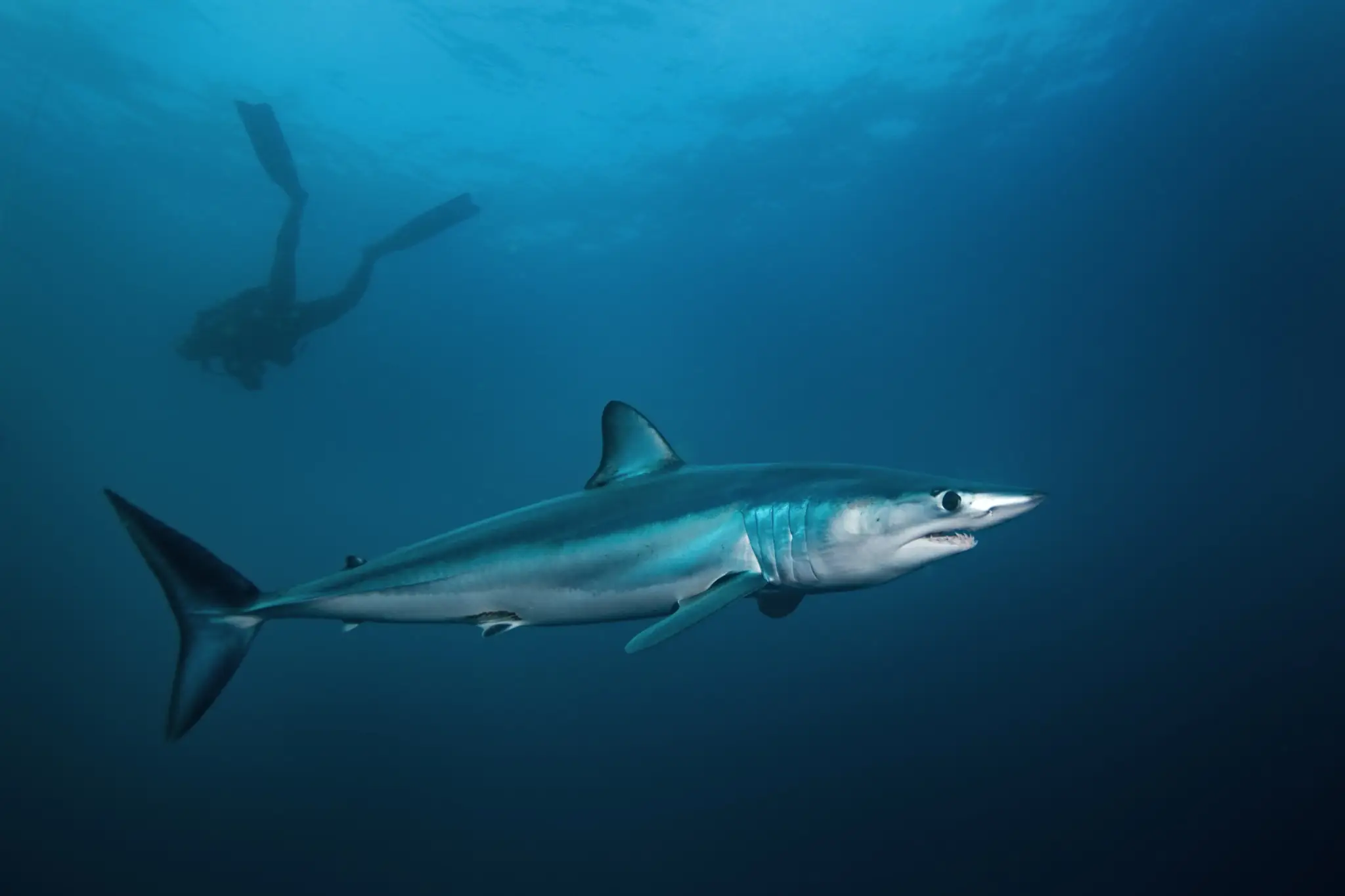
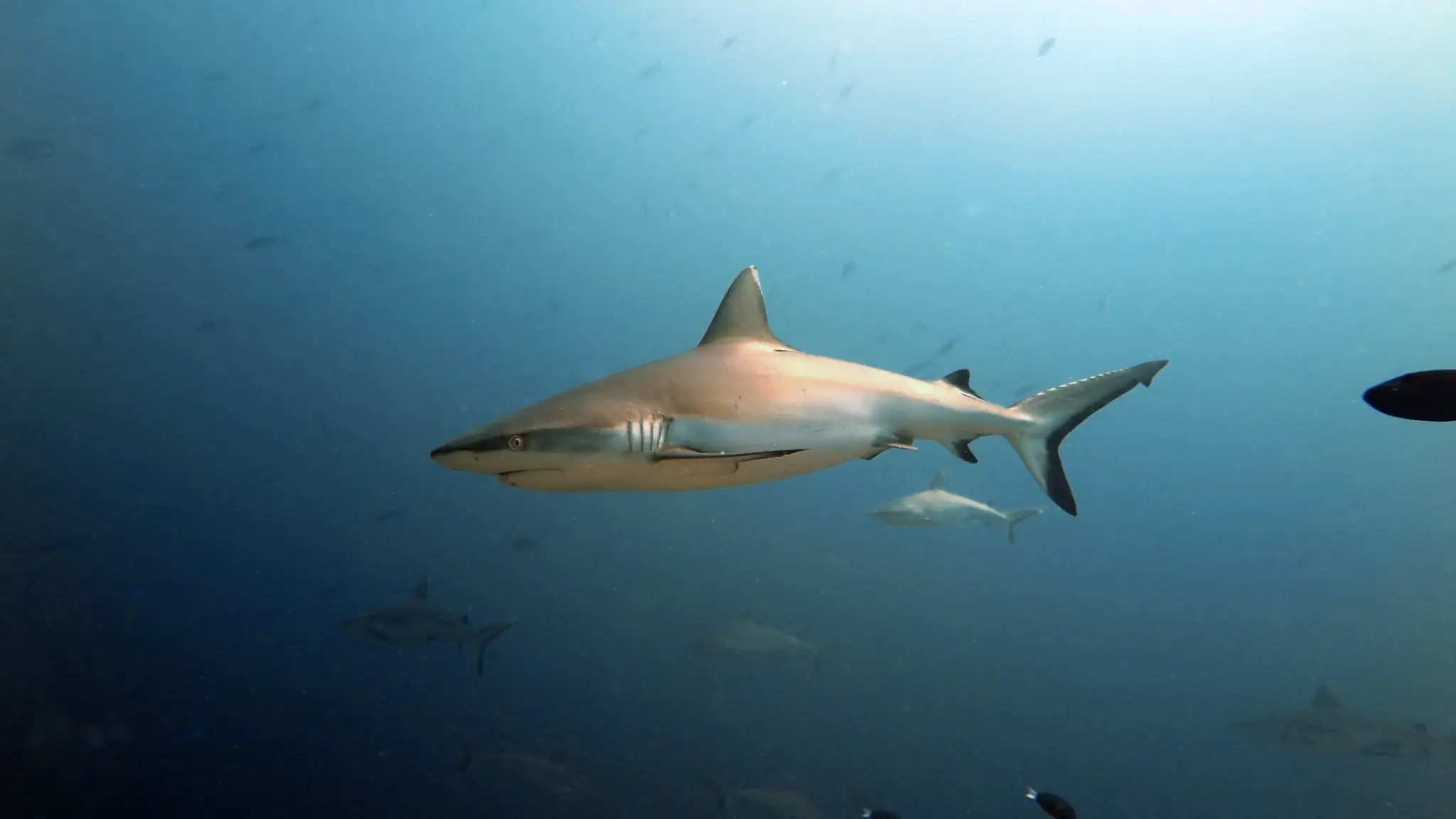
Mako sharks reach 4 meters (13 feet) in length with brilliant metallic blue dorsal surfaces contrasting sharply with bright white undersides. Pointed snouts and crescent-shaped tails create perfect torpedo-shaped hydrodynamic efficiency unmatched among marine predators.
These shortfin makos represent the fastest sharks on Earth combining record-breaking speed with remarkable intelligence. Their distinctive coloration provides countershading camouflage while their powerful build demonstrates evolutionary refinement for velocity and precision hunting. Photo: Martin Prochazkacz.
"Mako sharks demonstrate the most spectacular aerial displays of any shark species—their high-velocity breaches represent the pinnacle of predatory evolution in open ocean ecosystems."
— Dr. Diego Cárdenas, Pelagic Predator Research Institute
Velocity Records
80 Kilometers Per Hour with Aerial Breaching
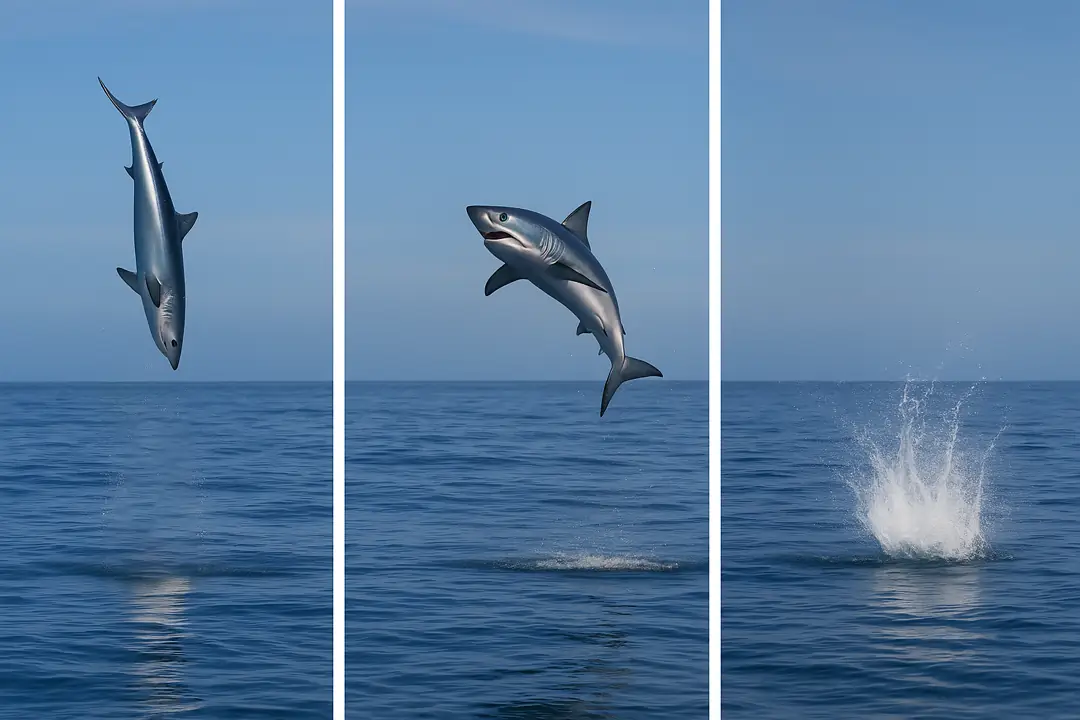
Mako sharks achieve 80 km/h (50 mph) in explosive burst speeds making them the fastest sharks on Earth. Scientists call this "ballistic swimming"—sustained 35 km/h cruising punctuated by rocket-like acceleration enabling pursuit of the ocean's fastest prey.
High-speed capabilities enable spectacular breaching behavior, launching several meters above the surface during hunting attacks. This velocity allows pursuit of fast-swimming tuna and billfish demonstrating predatory efficiency unmatched among cartilaginous fish. Photo: Illustration.
Cognitive Supremacy
Highest Shark Brain-to-Body Ratio
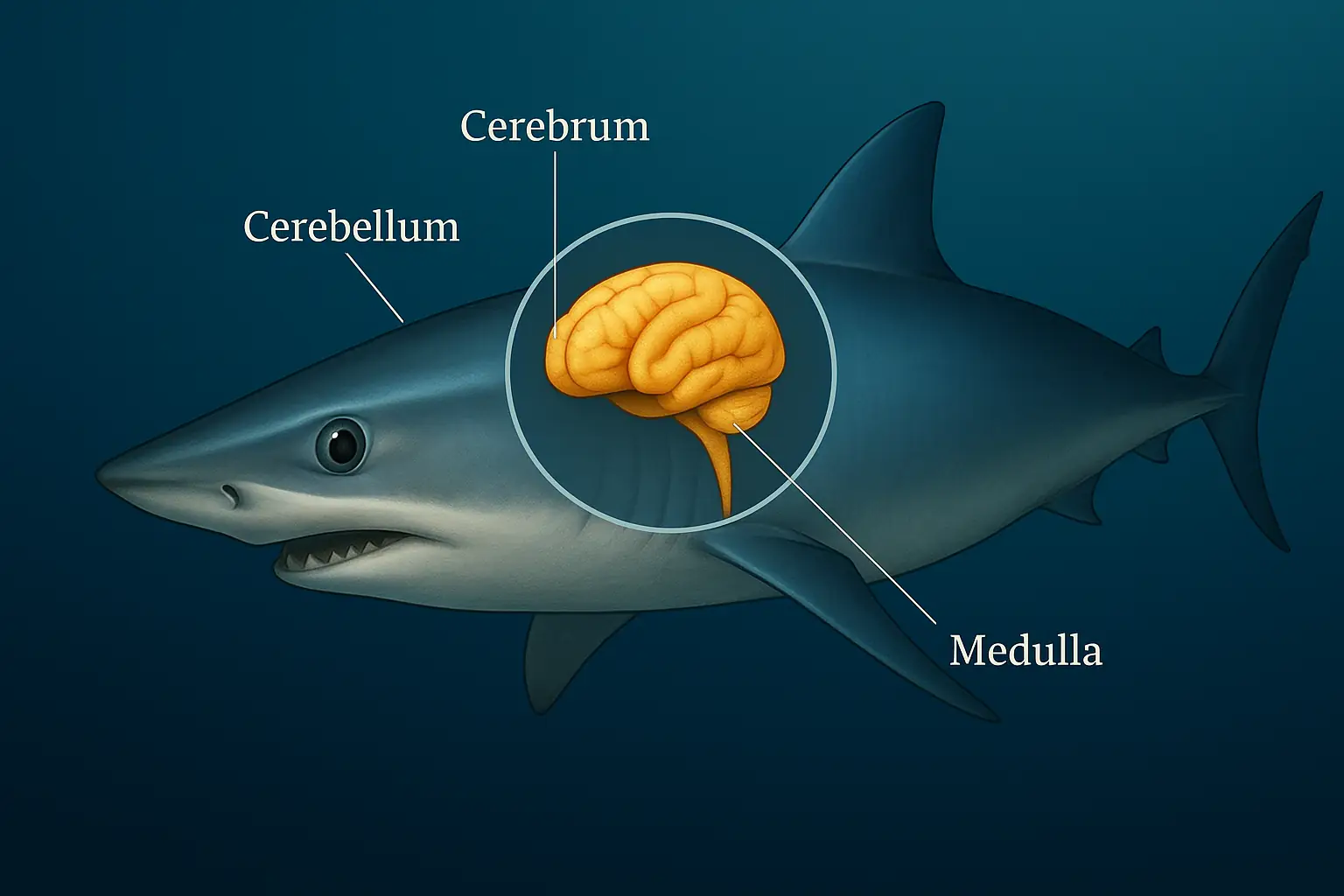
Mako sharks possess the highest brain-to-body ratio among all shark species with encephalization quotients that are remarkable for cartilaginous fish. Advanced cerebellum development supports complex spatial reasoning, route learning, and problem-solving behaviors distinguishing them from most other sharks.
Research demonstrates remarkable learning abilities including shape recognition, individual identification, and memory formation lasting months. This cognitive advancement reveals parallel evolution of intelligence in fast-swimming predators from dolphins to makos. Photo: Illustration.
"Unlike most sharks that rely primarily on electroreception, makos hunt through vision—their retinal structure rivals that of open-ocean predatory fish like tuna. "
— Dr. Samuel Gruber, Shark Sensory Biology
Visual Hunting Mastery
Sight-Based Predation Strategy
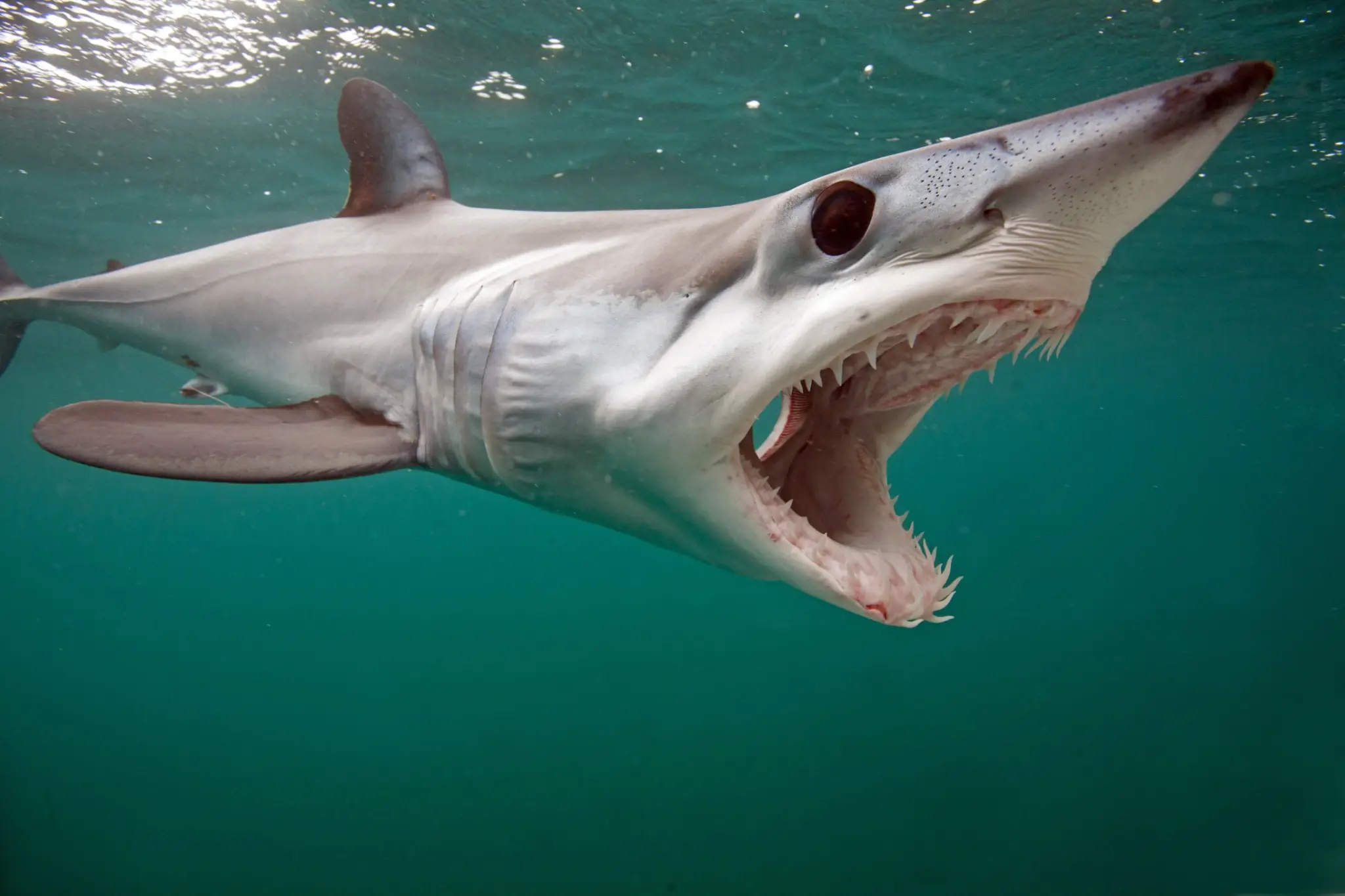
Unlike most sharks relying heavily on electroreception, makos hunt primarily through vision. Enhanced retinal structure with tapetum lucidum improves low-light sensitivity for tracking fast-moving prey across vast distances in open ocean environments.
Specialized eye placement provides binocular vision for accurate depth perception during high-speed pursuits exceeding 70 km/h. This visual hunting strategy enables precise targeting of tuna, swordfish, and other velocity-adapted prey dominating pelagic ecosystems. Photo: Jessica Heim.
Endothermic Physiology
Counter-Current Heat Exchange
Mako sharks maintain core body temperatures 4-5°C above ambient water through specialized rete mirabile systems—networks of blood vessels that recapture metabolic heat. Scientists call this "regional endothermy"—warm-bloodedness limited to specific body regions including swimming muscles and brain.
This warm-body physiology enhances muscle performance, brain function, and digestive efficiency by 30-40% compared to cold-bodied sharks. Endothermic capability enables sustained high-speed activity in cold waters while optimizing predatory effectiveness across diverse oceanic temperature zones. Photo: Illustration.
Conservation Challenges
International Protection and Recovery Efforts
Mako sharks face severe population declines prompting 2022 US commercial landing prohibitions and CITES Appendix II protections requiring international trade regulation. ICCAT fishing quotas establish management plans addressing overfishing across Atlantic populations while Pacific populations remain critically threatened.
Marine protected areas and satellite tagging programs monitor recovery trajectories while research advances understanding of their cognitive complexity and ecological roles. Protecting these intelligent speed champions requires coordinated global conservation recognizing their importance as apex predators maintaining healthy ocean ecosystems. Photo: Emkeymark.
Science & Discovery
University of Western Australia 2023 research revealed mako cerebellum structure contains neural complexity comparable to dolphins demonstrating convergent evolution of intelligence in fast-swimming oceanic predators across different vertebrate classes.
MIT biomechanics studies analyzed mako skin structure discovering dermal denticles create micro-vortices reducing drag by 8% inspiring low-drag surface coatings for submarines and competitive swimsuits used in Olympic competitions.
Woods Hole Oceanographic Institution 2024 tracking revealed makos perform deep dives to 500 meters while maintaining elevated muscle temperatures demonstrating thermoregulatory capabilities previously unknown in ectothermic cartilaginous fish.
In our delightful oceans, mako sharks achieve 80 km/h through dermal denticles reducing drag by 8%. Regional endothermy maintains muscle temperatures 4-5°C above water enabling sustained high-speed pursuit. CITES Appendix II protections and recent fishing regulations work to safeguard these intelligent predators.