Leafy Sea Dragon
Ocean's Living Artwork
Phycodurus eques
Meet ocean's living artwork—fish reaching 35 centimeters (14 inches) with hundreds of leaf-shaped appendages creating evolution's most sophisticated camouflage. Independent eye control, transparent 25-hertz fins, male pregnancy carrying 250 exposed eggs, and exclusive Australian kelp forest habitat make them nature's camouflage masterpiece.
Meet the Living ArtworkWhat Makes Them Special
Living Artwork
Hundreds of leaf-shaped appendages create perfect camouflage—evolution's most ornate structural mimicry among fish
Independent Eyes
Each eye moves independently enabling simultaneous multi-directional surveillance for predator detection and prey tracking
Stealth Propulsion
Transparent fins oscillate at 25-30 hertz creating invisible, stealthy movement through their kelp forest habitat
Male Pregnancy
Males carry up to 250 bright red eggs on exposed brood patches for 8 weeks
Australian Endemic
Found exclusively in southern Australian waters representing unique evolutionary lineage found nowhere else on Earth
Protected Species
Complete legal protection since 1987 with fines up to AU$200,000 showing stable populations in protected zones
First Encounter
35-Centimeter Living Seaweed with Ornate Appendages
Leafy sea dragons reach 35 centimeters (14 inches) in length with elaborate leaf-shaped appendages covering their entire body. These ornate structures create perfect camouflage among Australia's kelp forests and seagrass beds.
Found exclusively in southern Australian waters, they represent the most ornate camouflage adaptation among marine fish. Golden-brown coloration with transparent fins enables precise movement through dense vegetation while remaining virtually invisible. Photo: Andrea Izzotti.
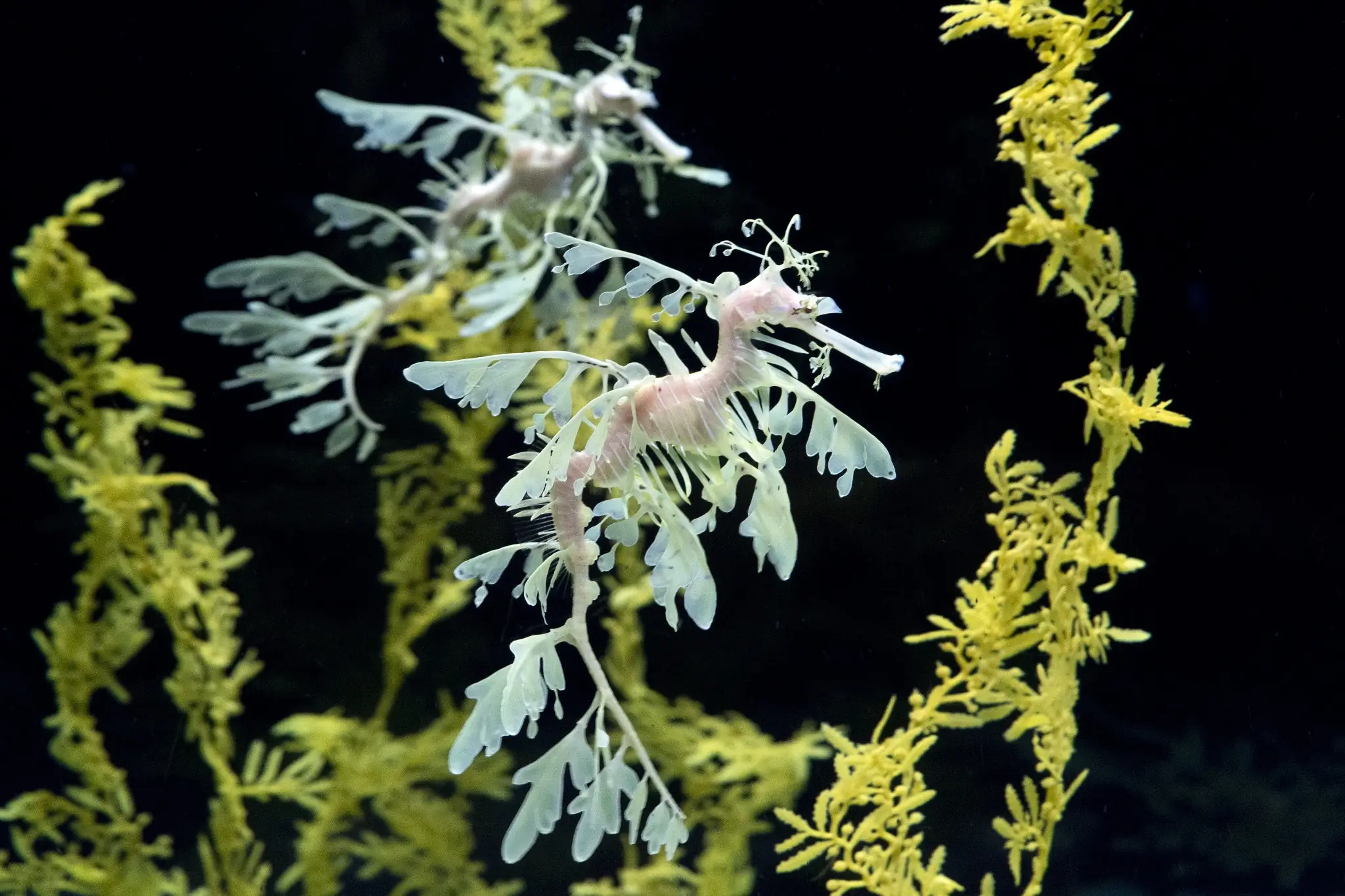
"Leafy sea dragons possess hundreds of leaf-shaped appendages—each individually crafted by evolution to mimic specific seaweed species in their Australian habitat."
— Dr. Greg Rouse, Marine Biology Research
Camouflage Mastery
Hundreds of Leaf Appendages with Zero Locomotion Function
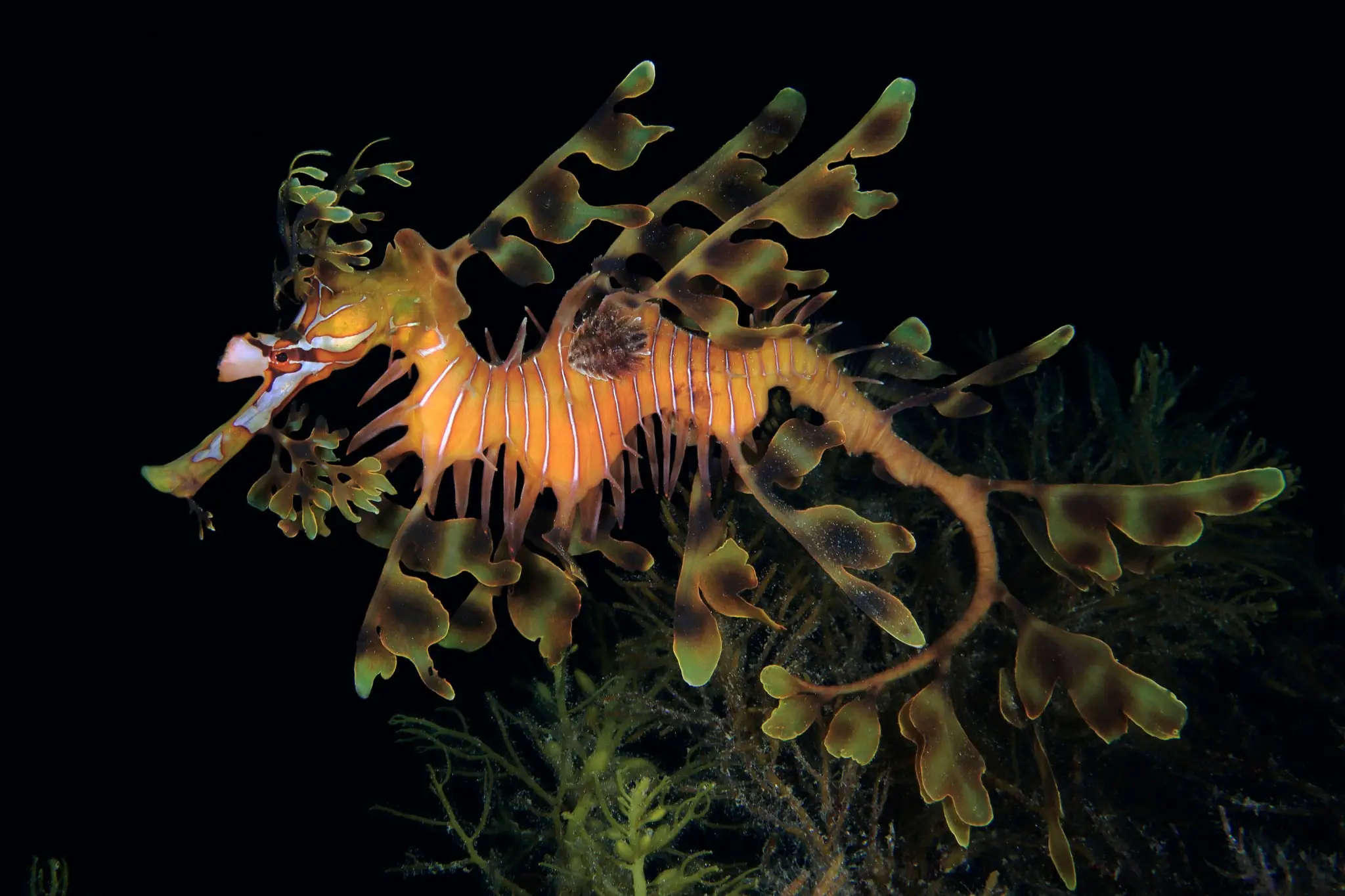
Leafy sea dragons possess hundreds of dermal flaps that serve exclusively for camouflage—these appendages contain no muscle tissue and provide zero assistance with movement. Scientists call this "structural mimicry"—physical forms that replicate environmental objects.
Specialized chromatophores enable color adaptation to surrounding vegetation while appendage patterns match local kelp species. This represents evolution's most elaborate structural camouflage system, surpassing even stick insects and leaf-mimic butterflies. Photo: Thierry Eidenweil.
Independent Eye Movement
Chameleon-Like Vision Scanning Multiple Directions
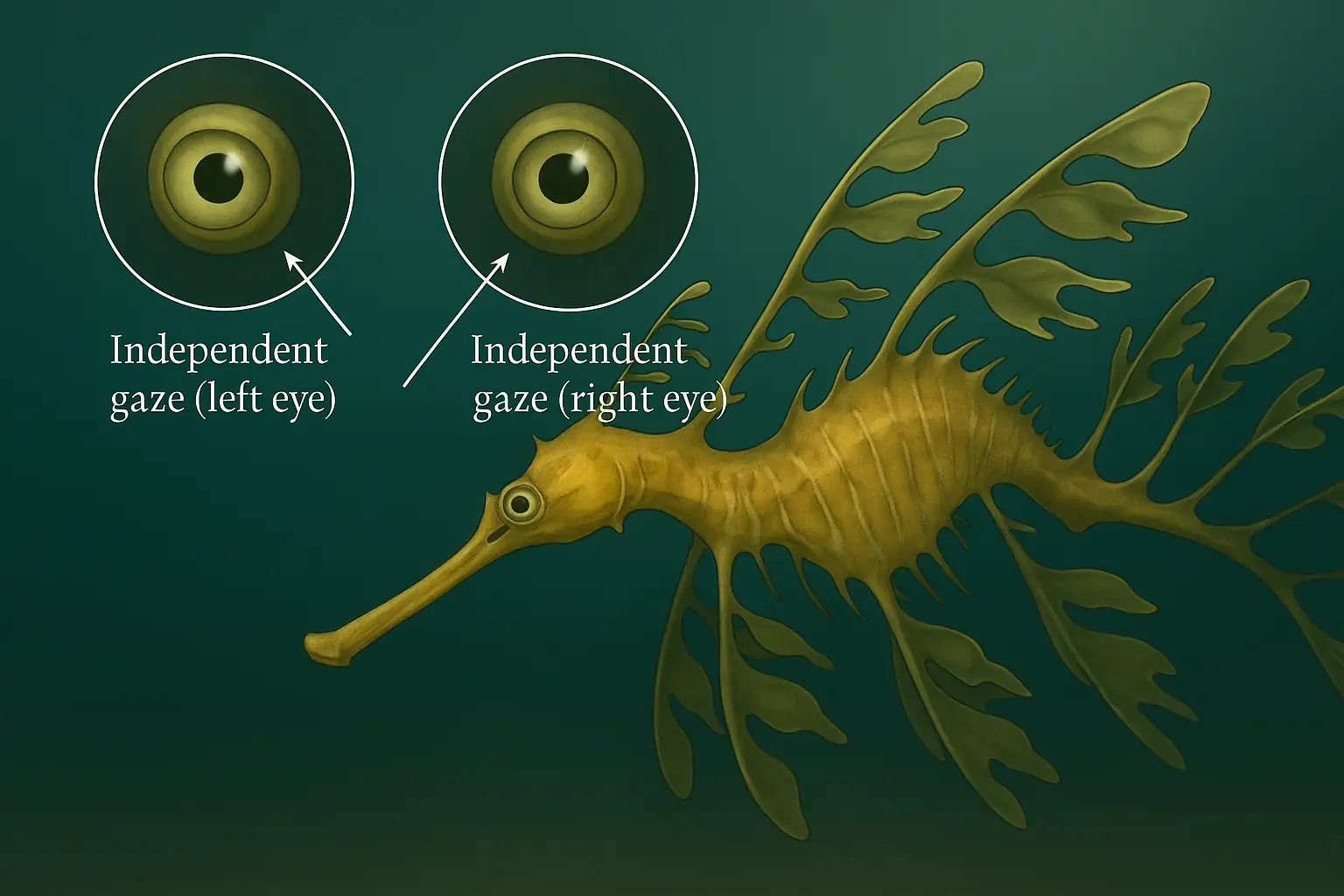
Leafy sea dragons control each eye independently, enabling simultaneous multi-directional surveillance—one eye monitors for threats while the other searches for microscopic zooplankton prey. This chameleon-like adaptation is rare among fish species.
Independent ocular movement allows constant environmental scanning while maintaining perfect camouflage position. They detect tiny copepods and mysid shrimp at distances up to 30 centimeters (12 inches) without revealing their location to predators. Photo: Illustration.
"Male leafy sea dragons carry up to 250 eggs attached to specialized brood patches—the only fish species where males become pregnant without protective pouches."
— Dr. Nerida Wilson, Australian Museum Research
Male Pregnancy System
250-Egg Exposed Pregnancy Without Protective Pouches
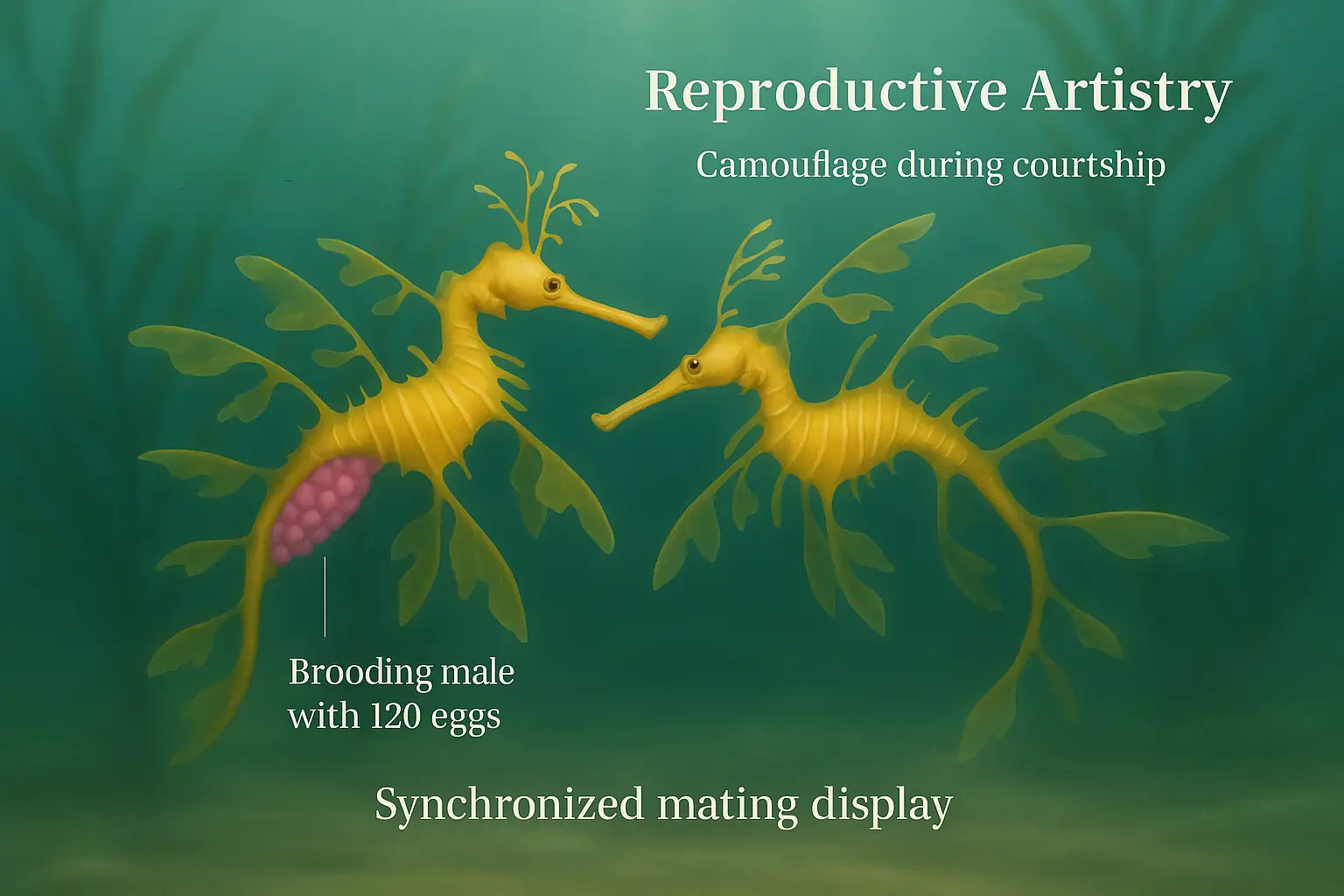
Male leafy sea dragons carry up to 250 bright red eggs attached to specialized brood patches on their ventral surface. Unlike seahorse pouches, these eggs remain completely exposed throughout 8-week development periods.
Vascularized brood tissue provides oxygen and nutrients directly to developing embryos. This exposed pregnancy system requires constant parental vigilance and represents unique reproductive adaptation among all vertebrate species worldwide. Photo: Illustration.
Transparent Fin Propulsion
25-Hertz Fin Oscillations for Stealth Movement
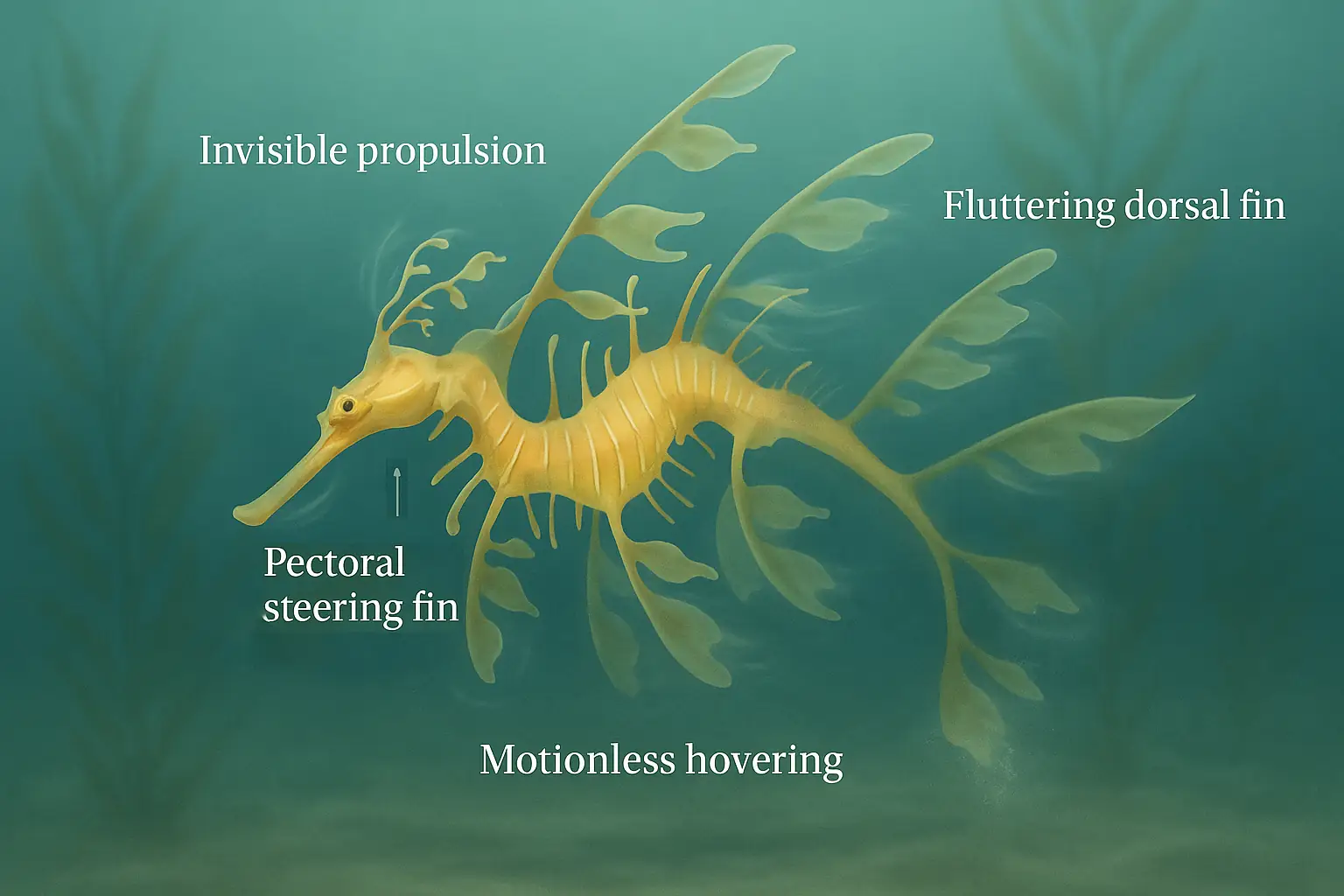
Leafy sea dragons propel through water using transparent dorsal and pectoral fins oscillating at 25-30 hertz—this high-frequency movement remains nearly invisible, maintaining perfect camouflage during travel between feeding areas.
The ornate, leaf-like appendages aid in stability and camouflage while the transparent pectoral and dorsal fins generate all propulsion. This stealth locomotion system enables movement speeds up to 150 meters (500 feet) per hour without compromising concealment among kelp fronds. Photo: Illustration.
Conservation Success
Australian Protection Laws Ensuring Species Survival
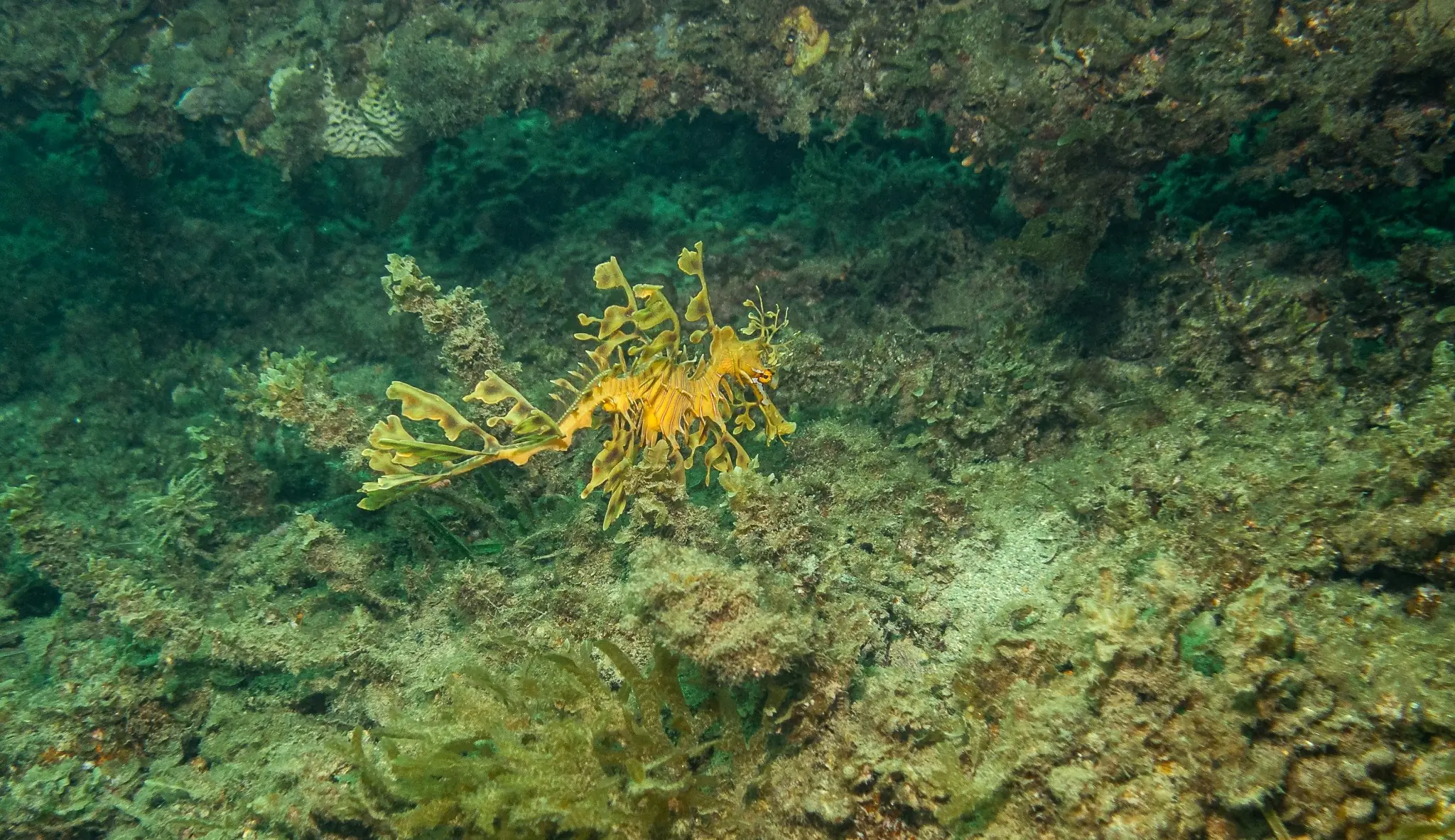
Leafy sea dragons receive complete protection under Australian law since 1987—collection or export carries severe penalties including fines up to AU$200,000. Research permits are extremely restrictive, with strict quotas on the collection of individuals for scientific study, reflecting their high conservation status.
Marine protected areas preserve critical kelp forest habitats while citizen science programs monitor population health. Recent studies show stable populations in protected zones, demonstrating that strong legal protection enables these living artworks to thrive in their endemic range. Photo: dvlcom - www.dvlcom.co.uk.
Science & Discovery
University of Adelaide's 2023 research mapped appendage development revealing genetic controls for structural mimicry now inspiring adaptive camouflage materials for military applications and underwater robotics.
MIT engineers studied transparent fin propulsion discovering the 25-30 hertz frequency creates silent thrust now applied to developing stealth underwater vehicles for marine research.
Monash University's 2024 genetic study revealed leafy sea dragons diverged from weedy sea dragons 5 million years ago demonstrating how isolated populations evolve extreme specialization informing conservation strategies.
In our delightful oceans, leafy sea dragons demonstrate evolution creates living artwork through structural mimicry, that camouflage reaches ultimate sophistication in isolated populations, and that protecting endemic Australian treasures preserves nature's most elaborate concealment specialists—masterpieces crafted by millions of years of evolutionary artistry.