Blue Marlin
Ocean Speed Champion
Makaira nigricans
Meet ocean's speed champions—metallic-blue giants reaching 4 meters (13 feet) and 800 kilograms whose cranial endothermy warms brains 14°C above surrounding water. Their specialized heater organs enable deep dives to 984 meters through thermal adaptation. Explosive burst speeds exceeding 110 km/h combine with slash-stun bill strikes delivering baseball-bat force, while trans-oceanic migrations demonstrate navigation prowess spanning entire ocean basins.
Meet the Speed ChampionWhat Makes Them Special
Cranial Endothermy
Specialized heater organs maintain brain temperatures 14°C above ambient water enabling deep-water hunting
Explosive Speed
High-energy white muscle fibers generate 80-110 km/h burst acceleration during pursuit hunting strikes
Slash-Stun Feeding
Elongated bills deliver baseball-bat force impacts stunning multiple prey fish simultaneously through lateral strikes
Trans-Oceanic Migration
Satellite tracking documents 9,000+ mile journeys spanning entire ocean basins across international waters
Massive Billfish
Reach 4 meters and 800 kilograms with bills extending 25% of body length
Conservation Status
ICCAT 2024 assessment projects recovery with 2,250 t annual catches coordinated across international boundaries
First Encounter
Ocean's Largest Billfish with Commanding Presence
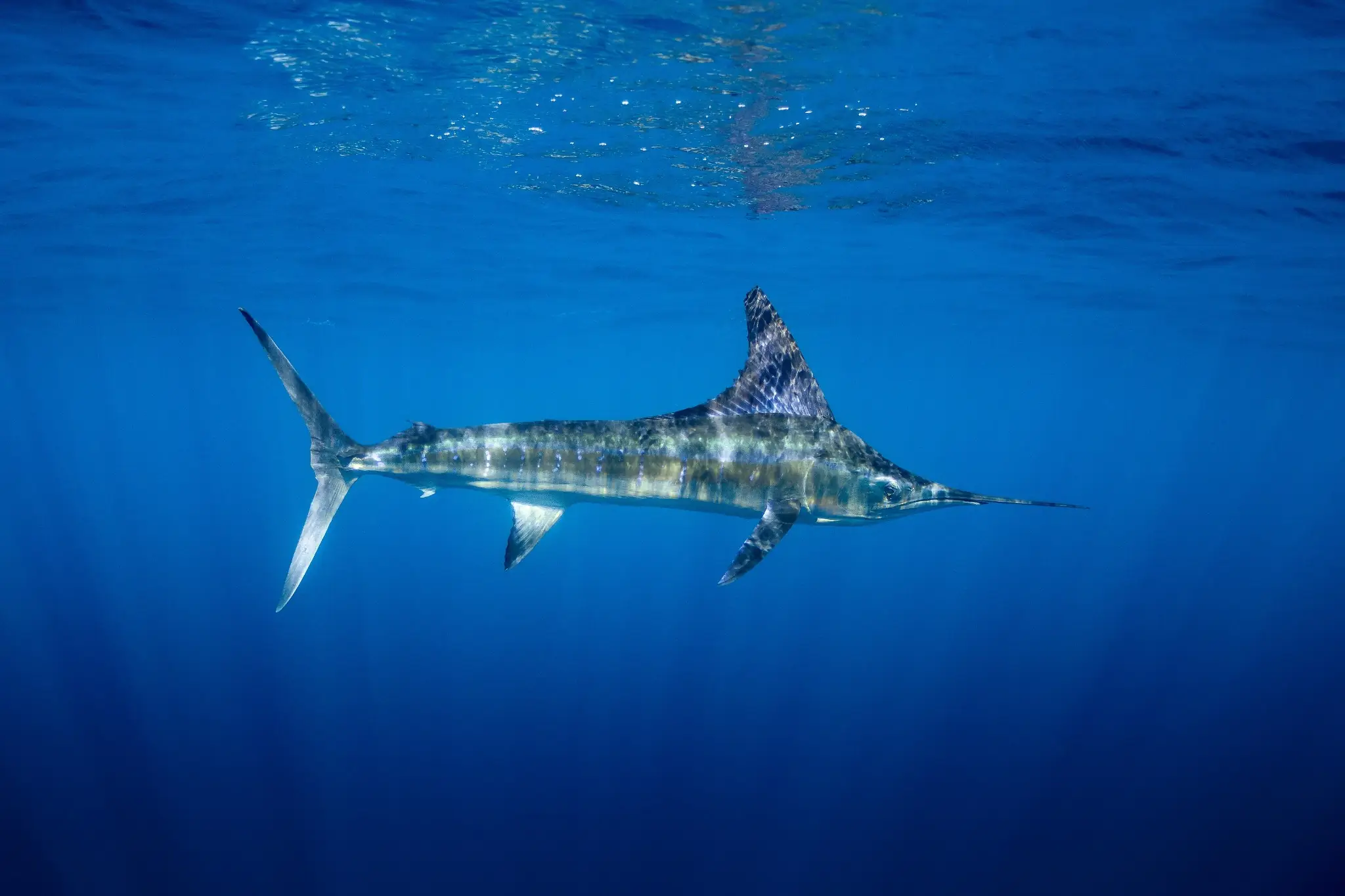
Blue marlin are metallic-blue giants reaching 4 meters in length and 800 kilograms. Their distinctive round pointed bills extend 25% of total body length while massive crescent-shaped tails generate explosive propulsion.
These apex predators display cobalt-blue dorsal coloration fading to silver-white undersides through perfect countershading. Streamlined torpedo bodies combined with retractable fins create flawless hydrodynamic forms. Photo: Subphoto.com
"Blue marlin heater organs warm their brains and eyes up to 14°C above ambient water temperature using specialized thermogenic tissue derived from extraocular muscle with extensive calcium-ATPase pumps—enabling superior visual processing in cold deep waters."
— Dr. Barbara Block, Stanford University Marine Endothermy Research
Cranial Endothermy
Brain Heating for Deep-Water Hunting Excellence
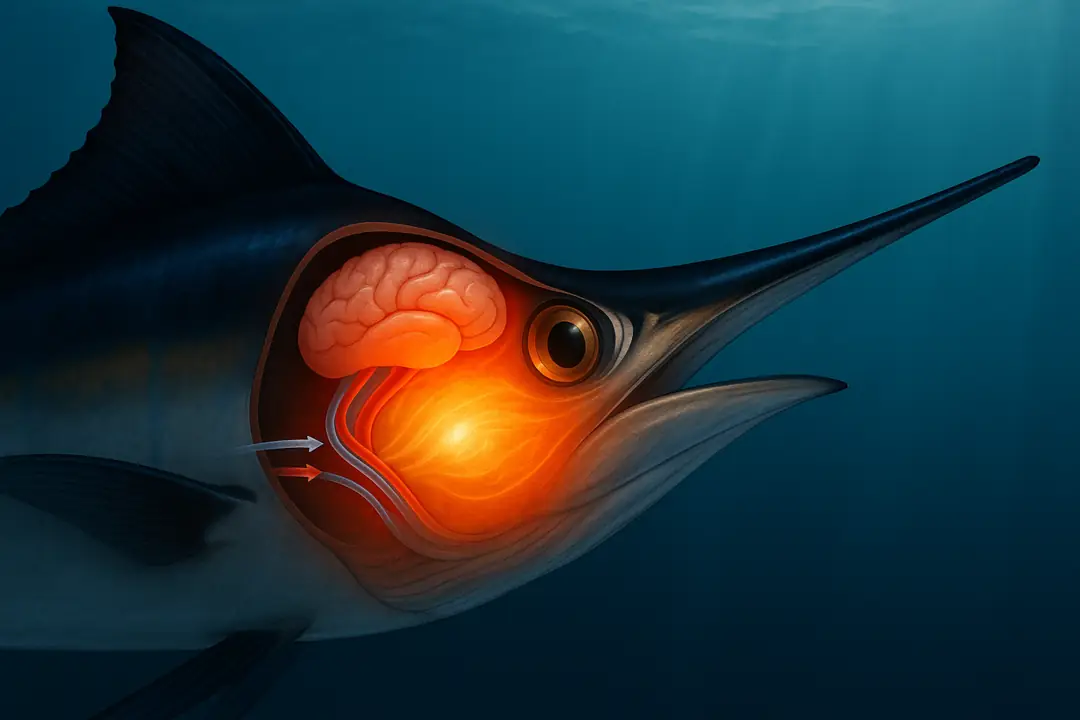
Blue marlin possess specialized heater organs beneath their brains generating warmth through rapid calcium cycling. Modified muscle tissue packed with mitochondria maintains temperatures 14°C above surrounding water.
Sophisticated countercurrent heat exchangers prevent thermal loss during deep dives reaching 984 meters. This remarkable adaptation provides enhanced neural processing speed and superior visual acuity in temperature-stratified ocean environments. Photo: Illustration.
Slash-Stun Feeding
Bill-Based Predation with Devastating Impact
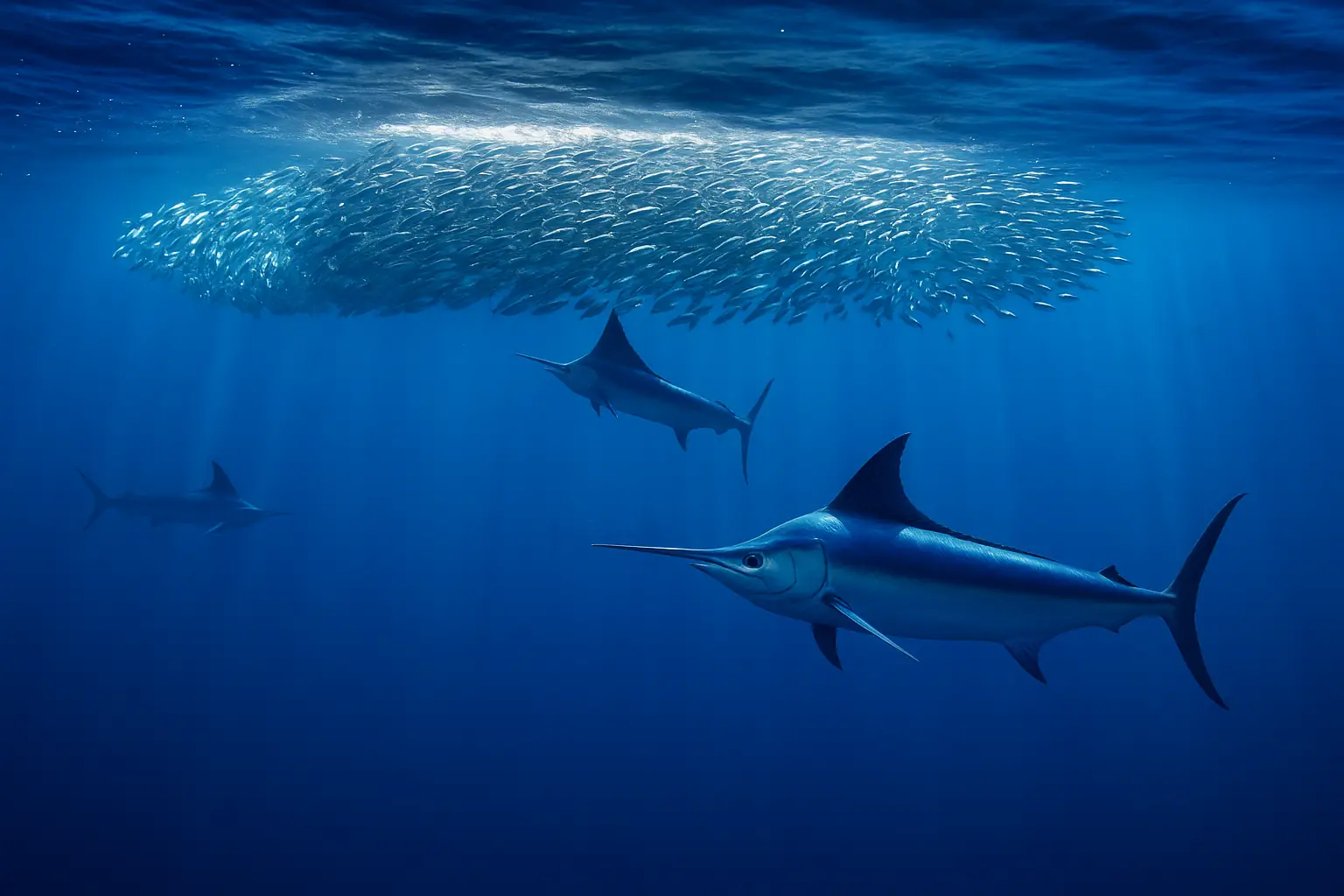
Blue marlin employ specialized slash-stun feeding where elongated bills slash through fish schools delivering forces comparable to baseball bats. This technique delivers blunt force trauma stunning multiple prey simultaneously.
After initial slashing passes disable prey schools marlin circle back methodically consuming stunned fish headfirst. This devastating feeding strategy enables capture of substantial prey including 15-kilogram yellowfin tuna. Photo: Illustration.
"IGFA satellite tags reveal blue marlin complete extraordinary 9,254-mile trans-oceanic migrations from Delaware to Mauritius—spanning entire ocean basins while crossing multiple international fishing boundaries, demonstrating navigation capabilities we're only beginning to understand."
— Dr. Samantha Andrzejaczek, Stanford University Tagging Research
Trans-Oceanic Migration
Basin-Spanning Journeys Across Thousands of Miles
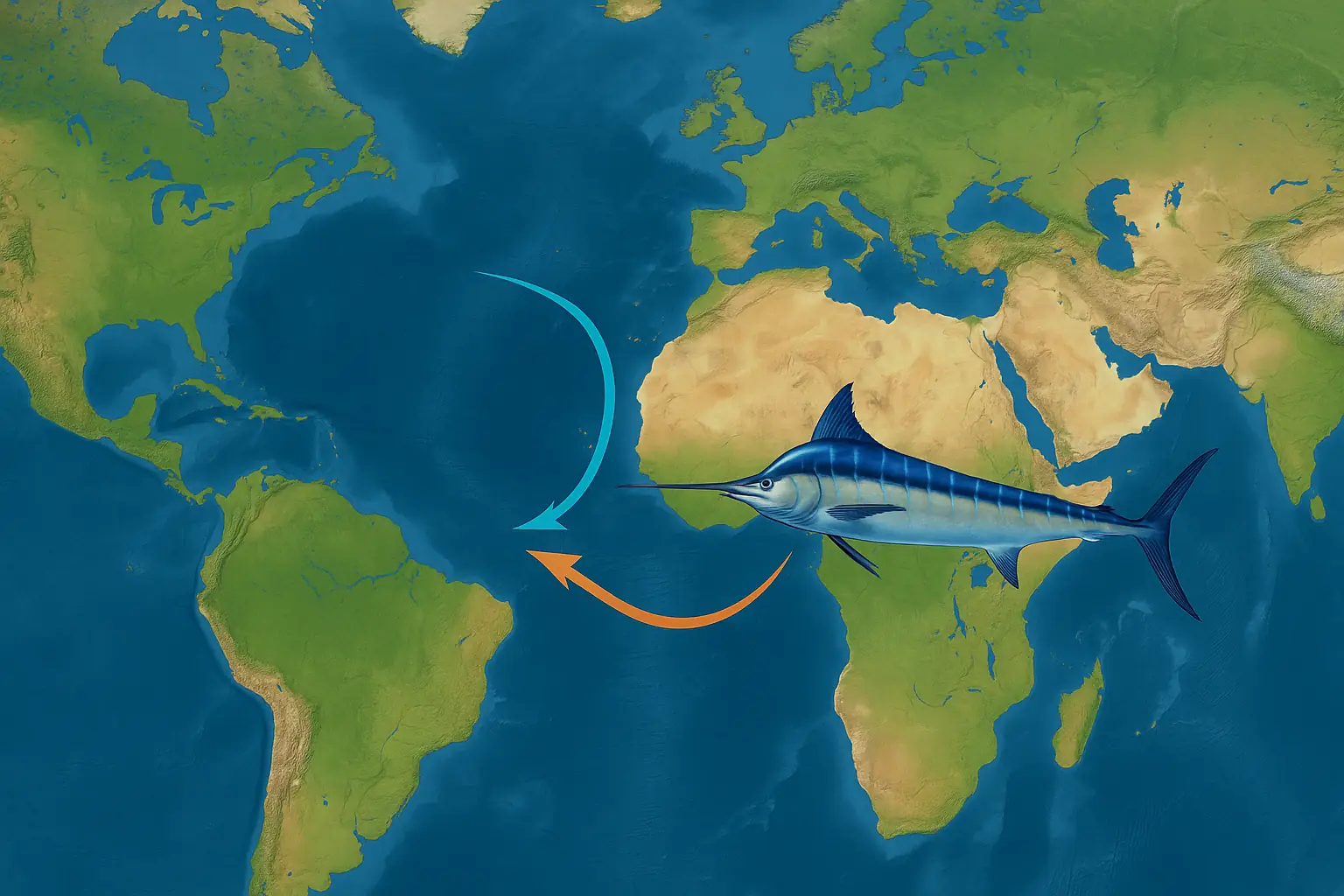
Satellite tracking documents remarkable migrations spanning thousands of miles across ocean basins demonstrating extraordinary navigation capabilities. Recent tags recorded long-distance journeys completed over several months following optimal thermal conditions.
These epic movements connect productive feeding areas with distant spawning grounds following sea surface temperatures consistently above 22°C. Migration patterns reveal seasonal movements toward equatorial waters during cooler months. Photo: Illustration.
Speed Performance Systems
Explosive 110 km/h Burst Capabilities
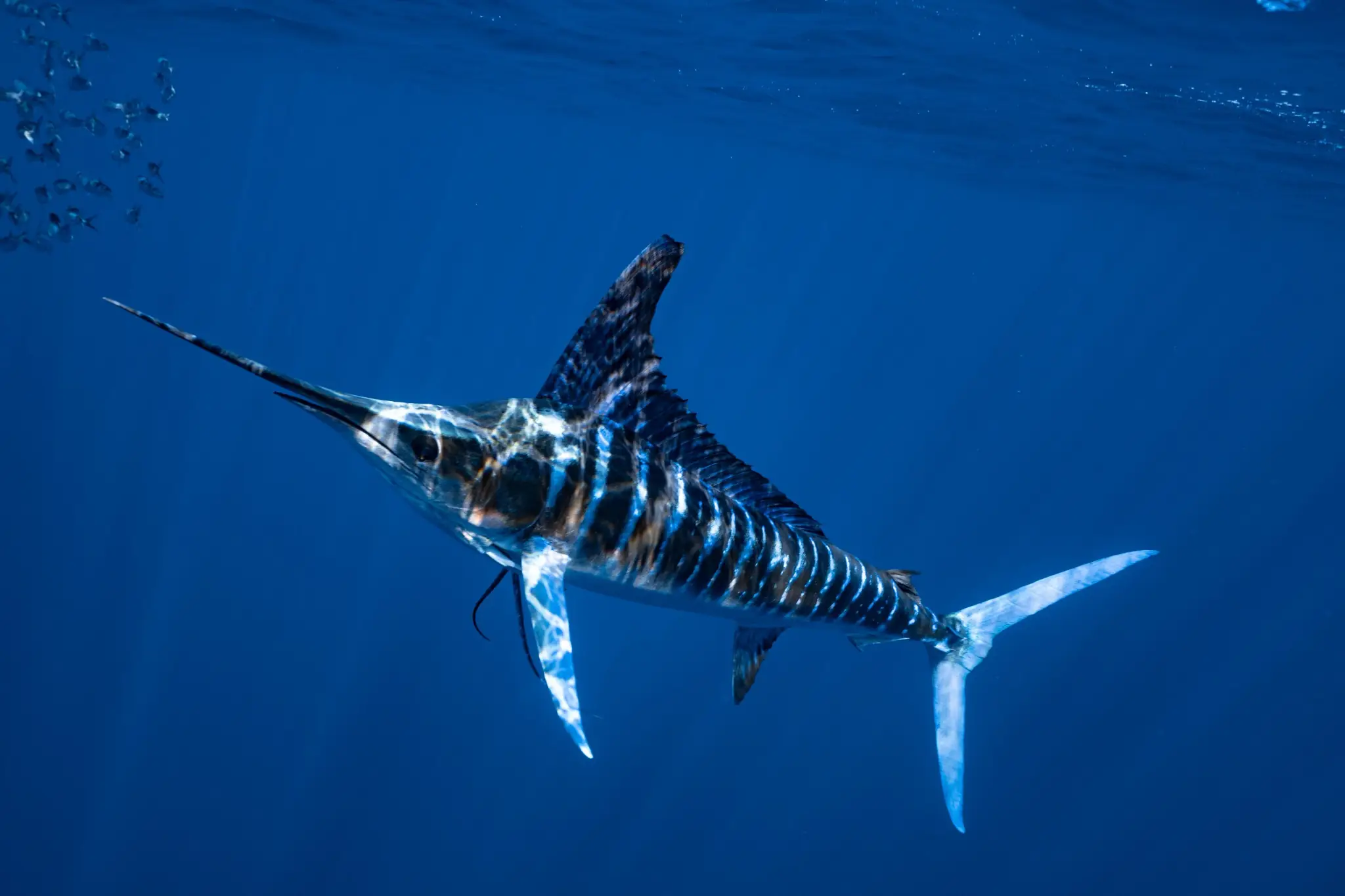
High-energy white muscle fibers generate explosive burst speeds exceeding 110 km/h during pursuit hunting. Streamlined bodies featuring retractable fins minimize drag dramatically while deeply forked caudal fins provide maximum thrust.
Acoustic telemetry reveals sustained swimming speeds of 80-120 centimeters per second during normal activity with spectacular bursts reaching 225 centimeters per second. Most feeding occurs at moderate speeds near surface waters. Photo: Earth theater
Conservation Challenges
International Cooperation Driving Recovery
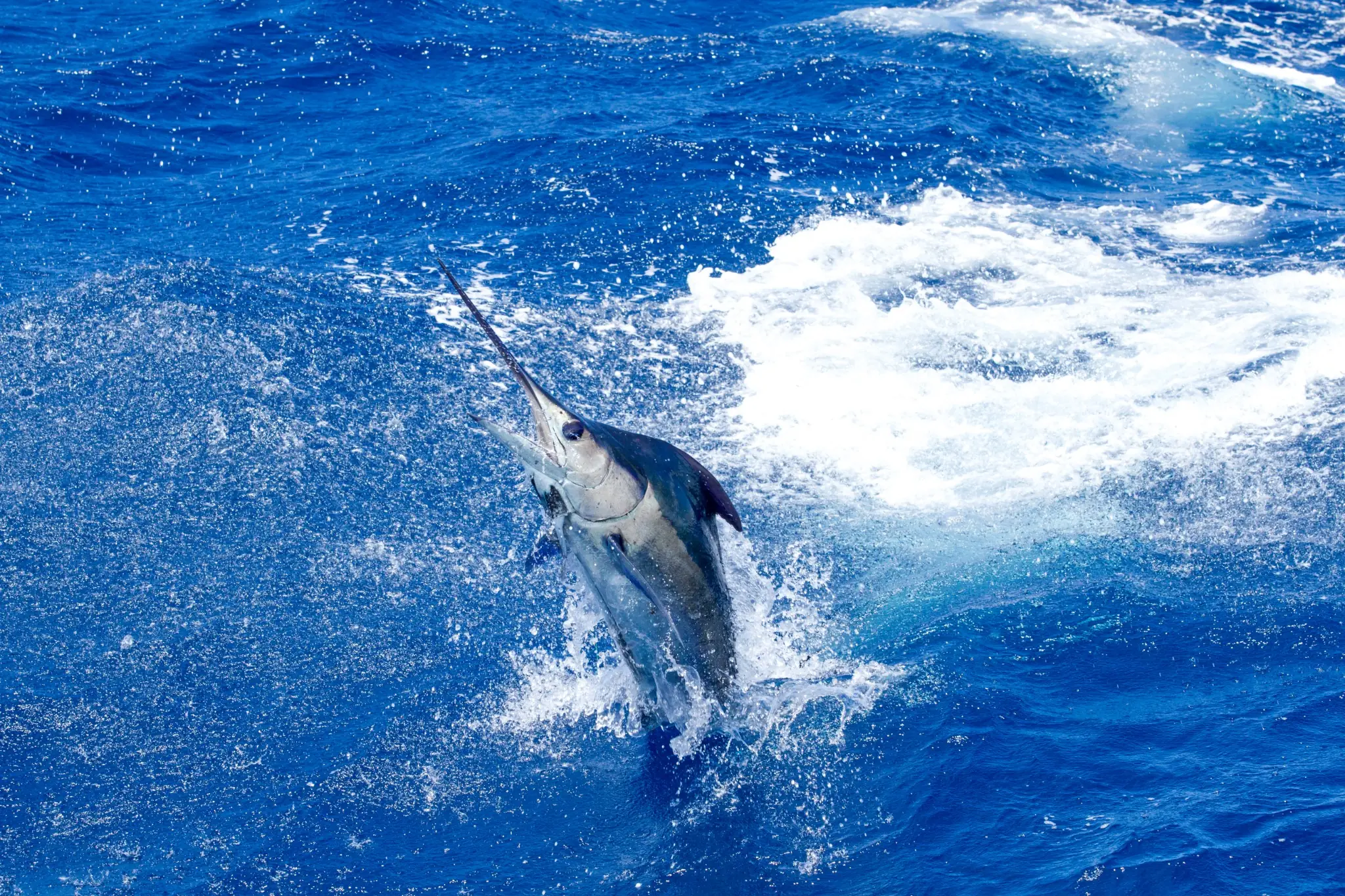
Blue marlin maintain Vulnerable status with populations declining from longline fishing pressure but 2024 ICCAT assessment projects recovery with 2,250 t annual catches. The 2012 U.S. Billfish Conservation Act bans marlin importation reducing market demand.
IGFA Great Marlin Race provides crucial migration data from 700+ satellite deployments informing international management strategies. Circle hook mandates in Brazil Canada Mexico and USA dramatically reduce mortality rates demonstrating coordinated conservation effectiveness. Photo: kelldallfall
Science & Discovery
IGFA Great Marlin Race satellite tagging program generated over 700 deployments creating the world's largest billfish movement database revolutionizing understanding of trans-oceanic migration patterns informing dynamic ocean management strategies.
Stanford University cranial endothermy research on calcium-ATPase pump mechanisms inspires biomimetic heating systems for autonomous underwater vehicles operating in temperature-stratified environments advancing deep-sea exploration technology.
Hydrodynamic analysis of marlin body design and retractable fin systems influences high-speed underwater vehicle engineering optimizing drag reduction and burst-speed capabilities in marine robotics development.
In our delightful oceans, blue marlin warm brains 14°C above ambient water through specialized heater organs confirmed by Stanford calcium-cycling research enabling 984-meter deep dives. Their 110 km/h burst speeds and slash-stun feeding strategies demonstrate apex predatory excellence. ICCAT 2024 assessment projects recovery with 2,250 t annual catches while 700+ IGFA satellite deployments inform coordinated international management across ocean basins.