Bowhead Whale
Arctic's Living Time Capsule
Balaena mysticetus
Meet Arctic's ultimate survivalists—18-meter giants reaching 200-year lifespans through CIRBP protein 100-fold higher than other mammals enabling superior DNA repair. Reinforced skulls crack through 60-centimeter ice while 50-centimeter blubber armor sustains year-round polar residence. Their continuously evolving songs and 1,500-kilometer migrations demonstrate remarkable behavioral flexibility adapting to climate change.
Meet the Time CapsuleWhat Makes Them Special
200-Year Lifespan
CIRBP protein 100-fold higher than other mammals enables exceptional DNA repair across two centuries
18-Meter Giants
Massive bow-shaped heads comprise 40% of body length with 4-meter baleen filtering 100 tonnes annually
Ice-Breaking Power
Reinforced skulls crack through 60-centimeter Arctic ice creating breathing holes when seas freeze solid
Arctic Jazz Singers
Compose entirely new songs each season throughout 6-month winters demonstrating remarkable vocal creativity
50-Centimeter Blubber
Thickest insulation of any marine mammal enabling year-round Arctic survival in sub-zero waters
Conservation Triumph
Western Arctic population recovered from 3,000 to 12,505 individuals representing remarkable cetacean success story
First Encounter
Arctic Giants with Record-Breaking Proportions
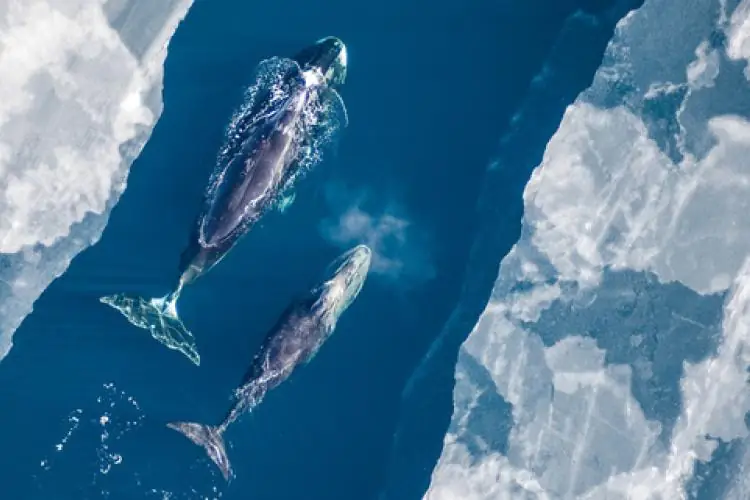
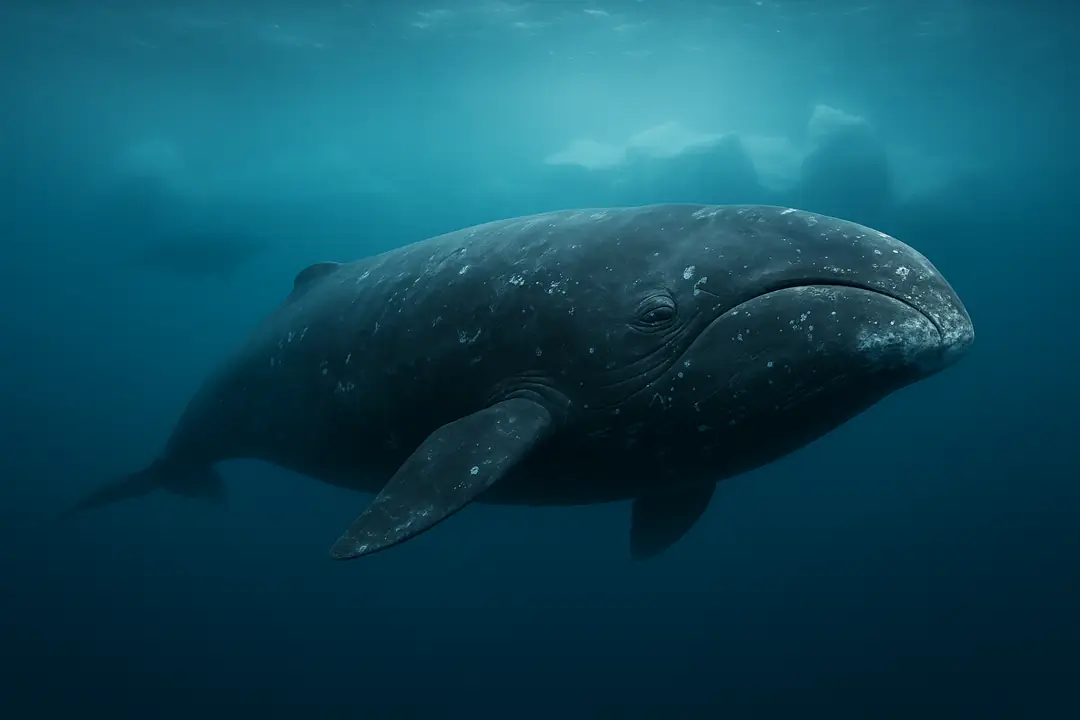
Bowhead whales emerge as 18-meter leviathans weighing 100 tonnes with massive bow-shaped heads comprising 40% of body length. This distinctive profile marks them as possessing the largest proportional head of any whale species.
Black skin punctuated by white chin patches creates stark contrast against ice floes. Four-meter baleen plates frame cavernous mouths while complete absence of dorsal fins distinguishes them as uniquely ice-adapted specialists. Photo: NOAA.
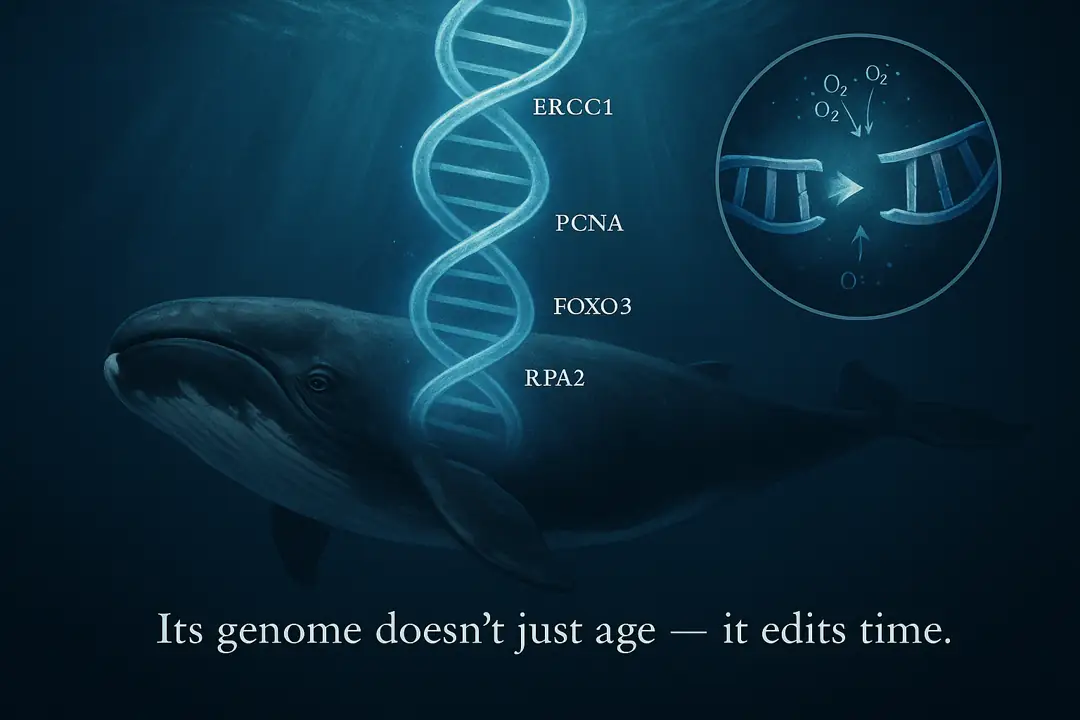
"Bowhead whales possess CIRBP protein at 100-fold higher levels than other mammals—this cold-inducible protein enables remarkably accurate DNA repair across 200-year lifespans by enhancing double-strand break fidelity through elevated RPA2 downstream signaling."
— Dr. Vera Gorbunova, University of Rochester Longevity Research (Nature 2025)
Longevity Mechanisms
200-Year Lifespans Through Cellular Mastery
Bowhead whales achieve lifespans exceeding 200 years through CIRBP protein present at 100-fold higher levels enabling superior DNA double-strand break repair. Enhanced RPA2 proteins guard genomic integrity against age-related damage throughout centuries of Arctic life.
Stone harpoon tips from 1880s whaling recovered in living whales provide physical proof of multi-century survival. These genetic adaptations unlock evolutionary secrets to cancer resistance making bowheads living laboratories for human longevity research. Photo: Illustration.
Arctic Adaptations
50-Centimeter Blubber Armor with Ice-Breaking Power
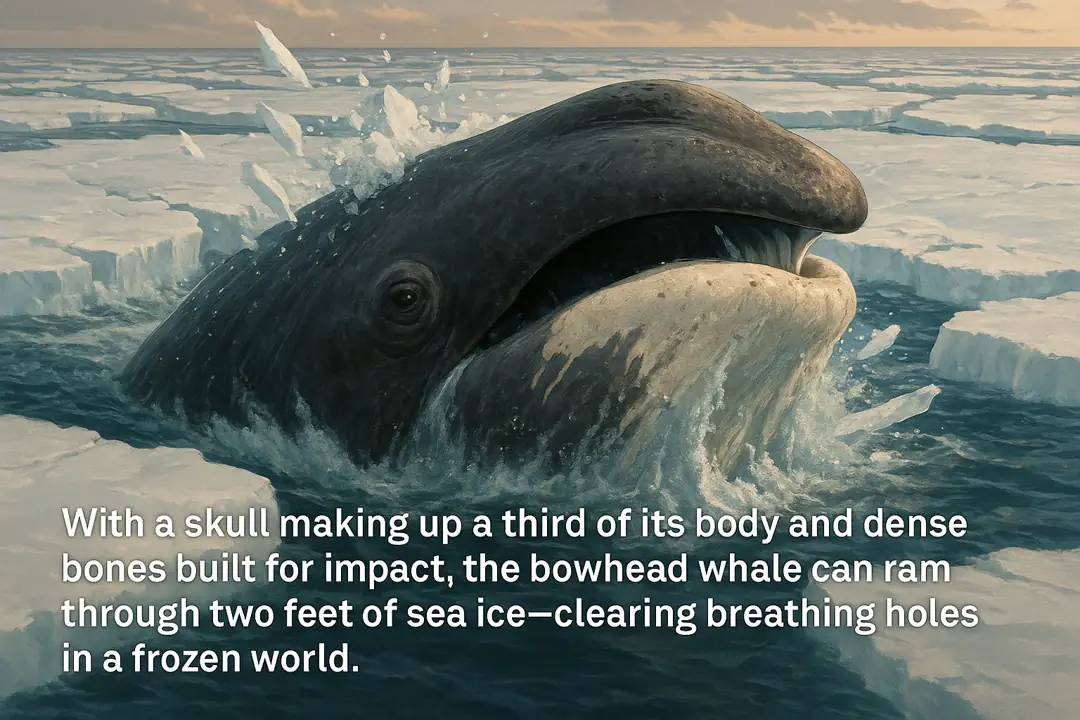
Blubber layers reaching 50 centimeters create the most substantial insulation of any marine mammal enabling year-round Arctic residence. Reinforced skulls break through 60-centimeter sea ice to access breathing holes when frozen seas lock out other species.
Specialized thermoregulation systems including corpus cavernosum maxillaris cooling mechanisms support continuous Arctic habitation unlike any other large whale. These adaptations make bowheads true ice-water specialists thriving where others cannot survive. Photo: Illustration.
"Acoustic monitoring reveals bowhead whales shifted fall departure 45 days later over 12 years—demonstrating remarkable behavioral flexibility responding to Arctic sea ice changes after 4 million years of evolution."
— Dr. Angela Szesciorka, Alaska Fisheries Science Center (Geophysical Research Letters 2024)
Communication Systems
Arctic Jazz: Complex Songs Reimagined Each Season
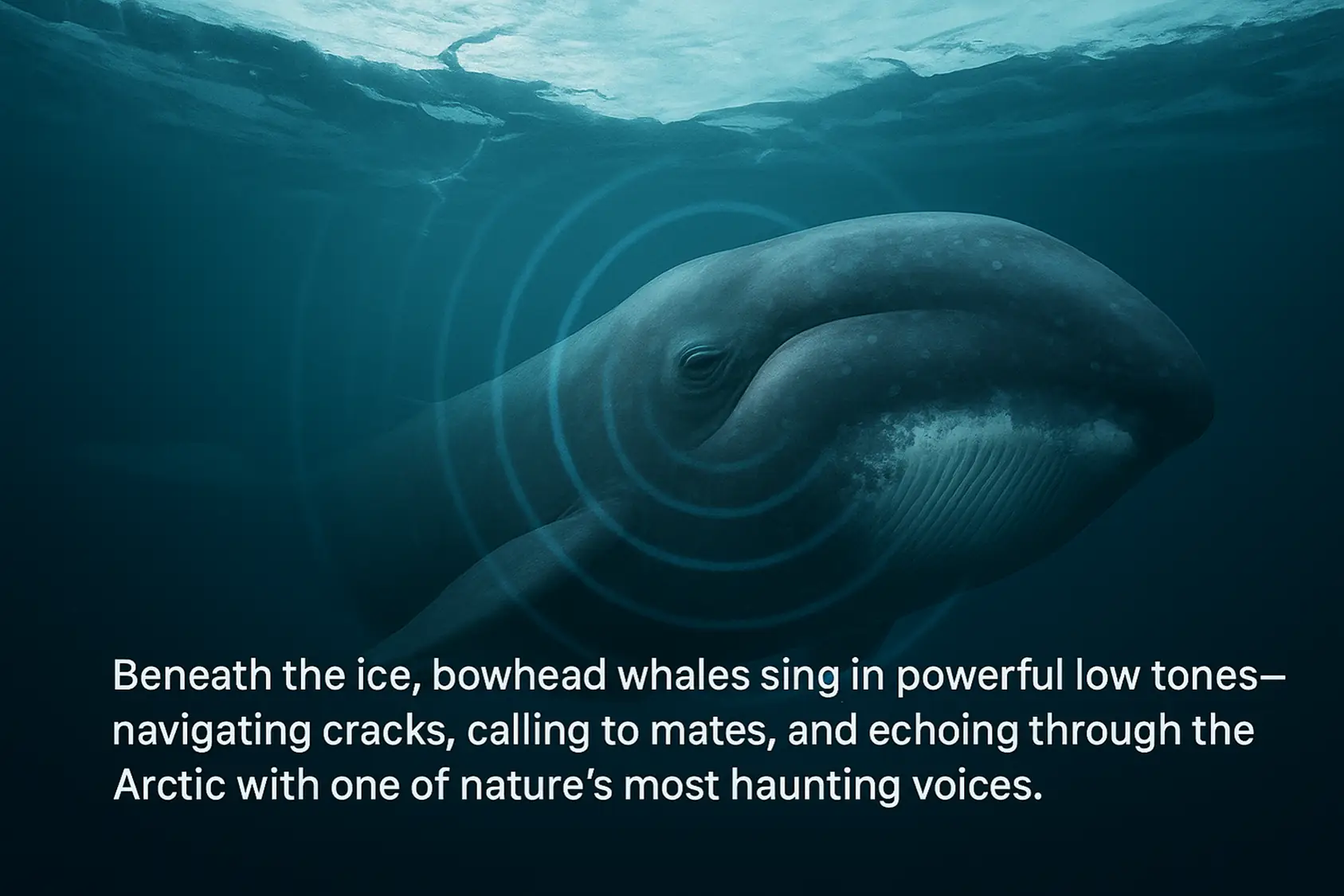
Bowhead whales compose entirely new songs each breeding season earning recognition as Arctic jazz singers for improvisational complexity. Males vocalize continuously throughout 6-month winters creating acoustic landscapes shifting annually with remarkable creativity.
Multi-year hydrophone deployments reveal sophisticated coordination across 1,500-kilometer migration routes. Vocal frequencies overlap with shipping noise creating acoustic interference during critical breeding periods challenging these ancient communication systems. Photo: Illustration.
Feeding Strategies
Baleen Engineering: 100 Tonnes Processed Annually
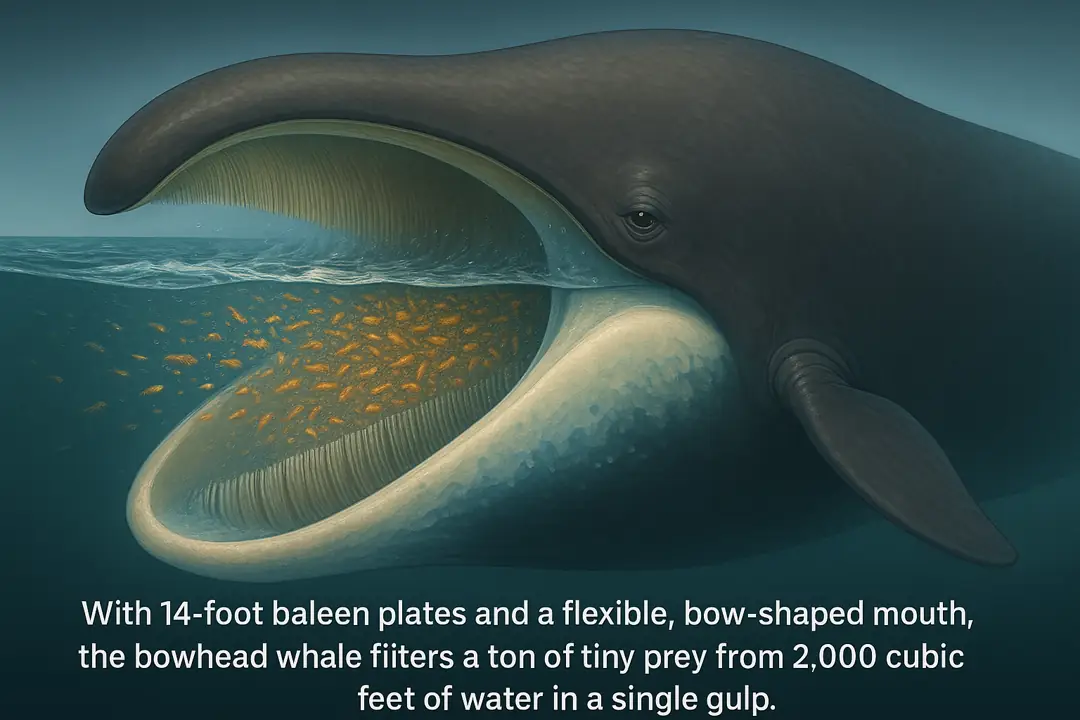
Four-meter baleen plates filter 100 tonnes of zooplankton annually through surface skimming, column feeding, and sea-floor foraging. Each feeding mode optimizes capture efficiency for different Arctic prey distributions throughout seasonal cycles.
Arctic productivity cycles drive seasonal feeding intensity with peak consumption during summer plankton blooms. Energy-efficient filtration supports massive body maintenance while building critical blubber reserves sustaining these giants through lean winter months. Photo: Illustration.
Conservation Status
Triumph: From 3,000 to 12,505 Individuals
Western Arctic populations achieved remarkable recovery climbing from fewer than 3,000 individuals to 12,505 whales by 2019 surveys. This sustained growth represents marine conservation's most dramatic cetacean success story in modern history.
Alaska Eskimo Whaling Commission co-management ensures sustainable Indigenous harvest traditions recognized as gold standard in wildlife conservation. International cooperation addresses emerging threats: shipping expansion, acoustic pollution, and climate-driven habitat shifts challenging Arctic specialists. Photo: Illustration.
Science & Discovery
University of Rochester 2024 Nature study revealed CIRBP protein at 100-fold higher levels enabling superior DNA double-strand break repair inspiring human aging research and cancer resistance therapies through enhanced genomic stability mechanisms.
Alaska Fisheries Science Center 2024 acoustic monitoring documented 45-day migration timing shifts responding to Arctic sea ice changes demonstrating remarkable behavioral flexibility informing climate adaptation models for polar species conservation strategies.
NOAA-AEWC cooperative agreement established 1981 combines Indigenous knowledge with modern science achieving internationally recognized gold standard in wildlife co-management enabling sustainable subsistence harvest while ensuring population recovery from near-extinction.
In our delightful oceans, bowhead whales achieve 200-year lifespans through CIRBP protein 100-fold higher than other mammals enabling exceptional DNA repair confirmed by University of Rochester research published in Nature 2024. Western Arctic populations recovered from 3,000 to 12,505 individuals representing cetacean conservation's greatest success. NOAA-AEWC gold standard co-management balances Indigenous traditions with scientific monitoring ensuring sustainable futures for Arctic's longest-lived mammals.