Narwhal
Ocean's Arctic Unicorn
Monodon monoceros
Meet ocean's Arctic unicorns—whales reaching 4-5 meters (13-16 feet) and 1,600 kilograms with males sporting 3-meter spiral tusks containing 10 million nerve endings. Tusks detect temperature, salinity, and pressure changes while sophisticated echolocation enables ice navigation. Diving 1,500 meters deep, they demonstrate Earth's most mythical-looking creatures inhabit its harshest marine environment.
Explore the Arctic DepthsWhat Makes Them Special
Spiral Tusk
Males grow a left canine tooth spiraling 3 meters—elongated tooth, not a horn
Sensory Superorgan
Tusks pack 10 million nerve endings detecting temperature, salinity, and pressure like living sensors
Extreme Arctic Adaptation
Thrive below freezing using counter-current circulation and 10-centimeter blubber engineered for polar survival
Deep Diving Capability
Dive beyond 1,500 meters for 25 minutes hunting Greenland halibut beneath Arctic ice
Sophisticated Echolocation
Produce clicks, whistles, and trumpeting calls navigating ice-covered seas where visual cues vanish
Climate Vulnerability
Arctic sea ice declines 13% per decade, turning their specialized adaptations into survival liabilities
First Encounter
Unicorns of Frozen Seas
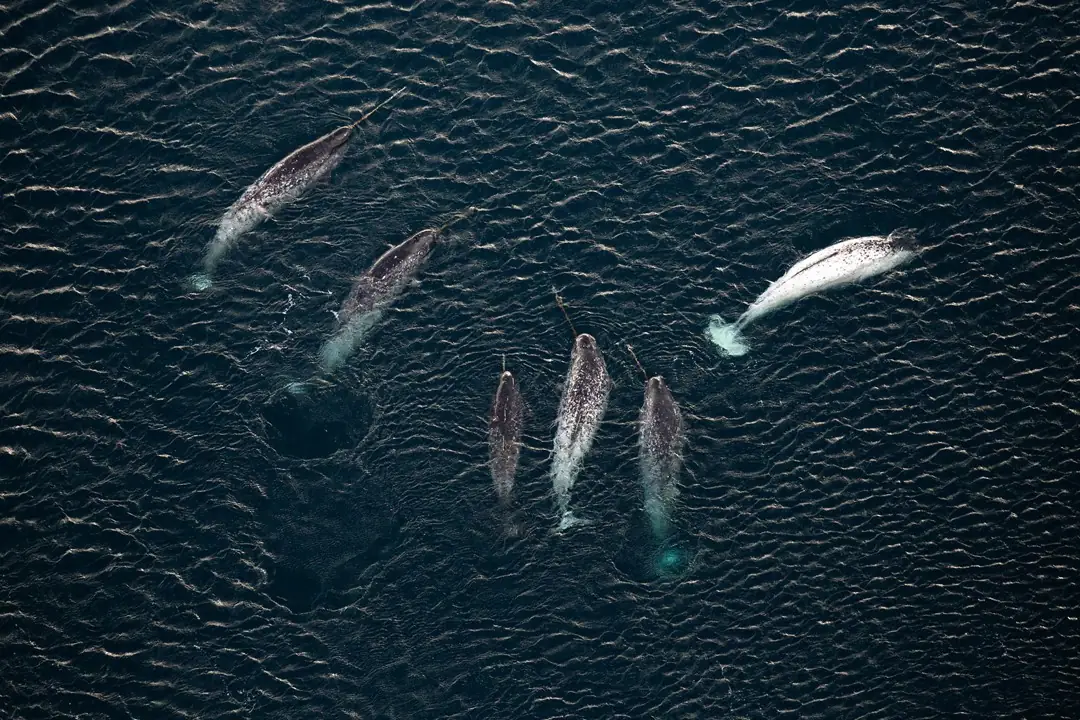
Mottled gray whales surface through Arctic leads, exhaling twin plumes into frigid air. Reaching 4-5 meters (13-16 feet) and 1,600 kilograms, males bear the spiraling 3-meter tusk giving narwhals their mythical look.
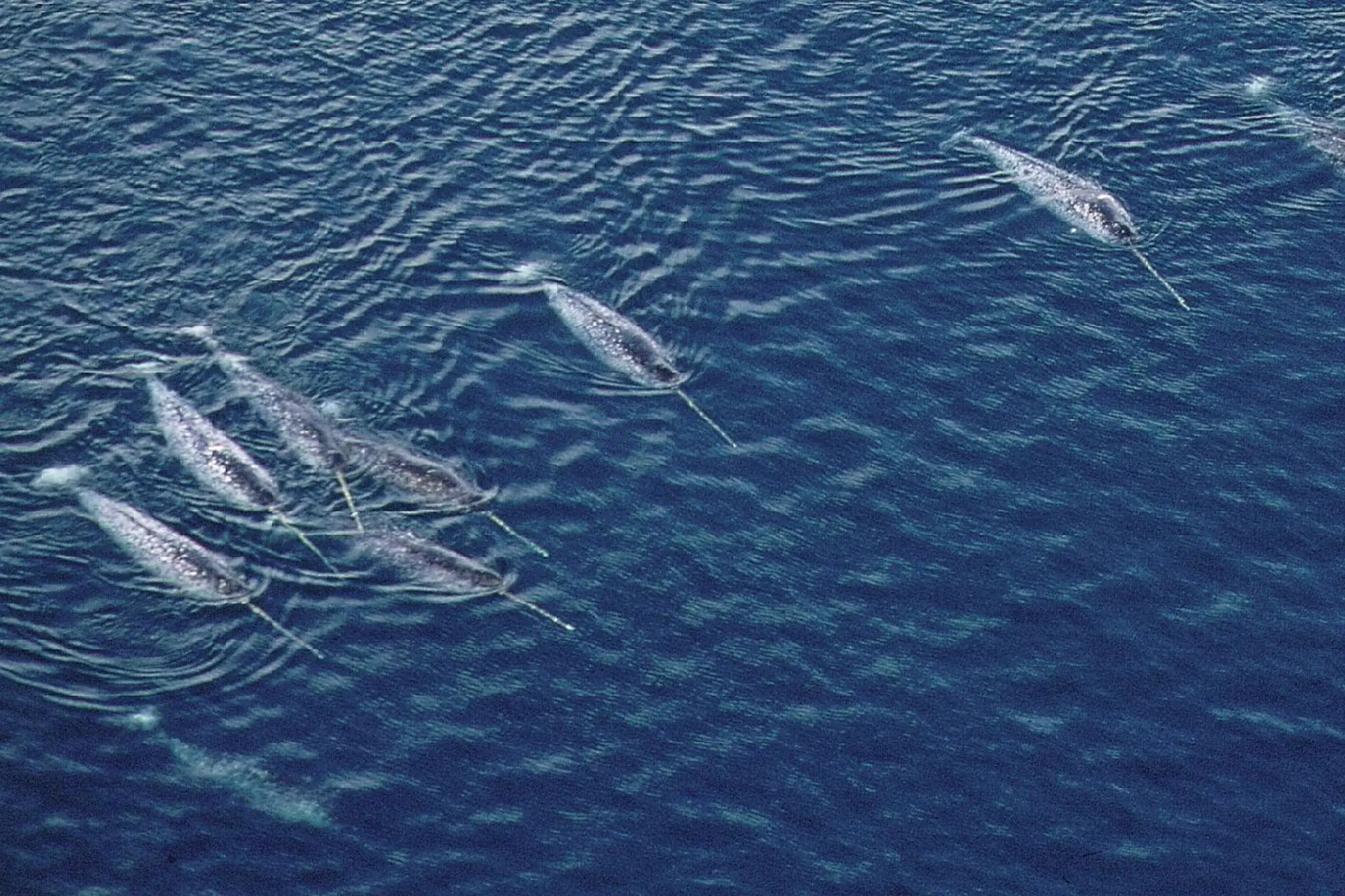
These cetaceans live year-round in Arctic waters off Canada, Greenland, Norway, and Russia. They travel in pods of 10-100, occasionally forming summer aggregations exceeding 1,000 animals along shifting ice edges. Photo: Illustrated
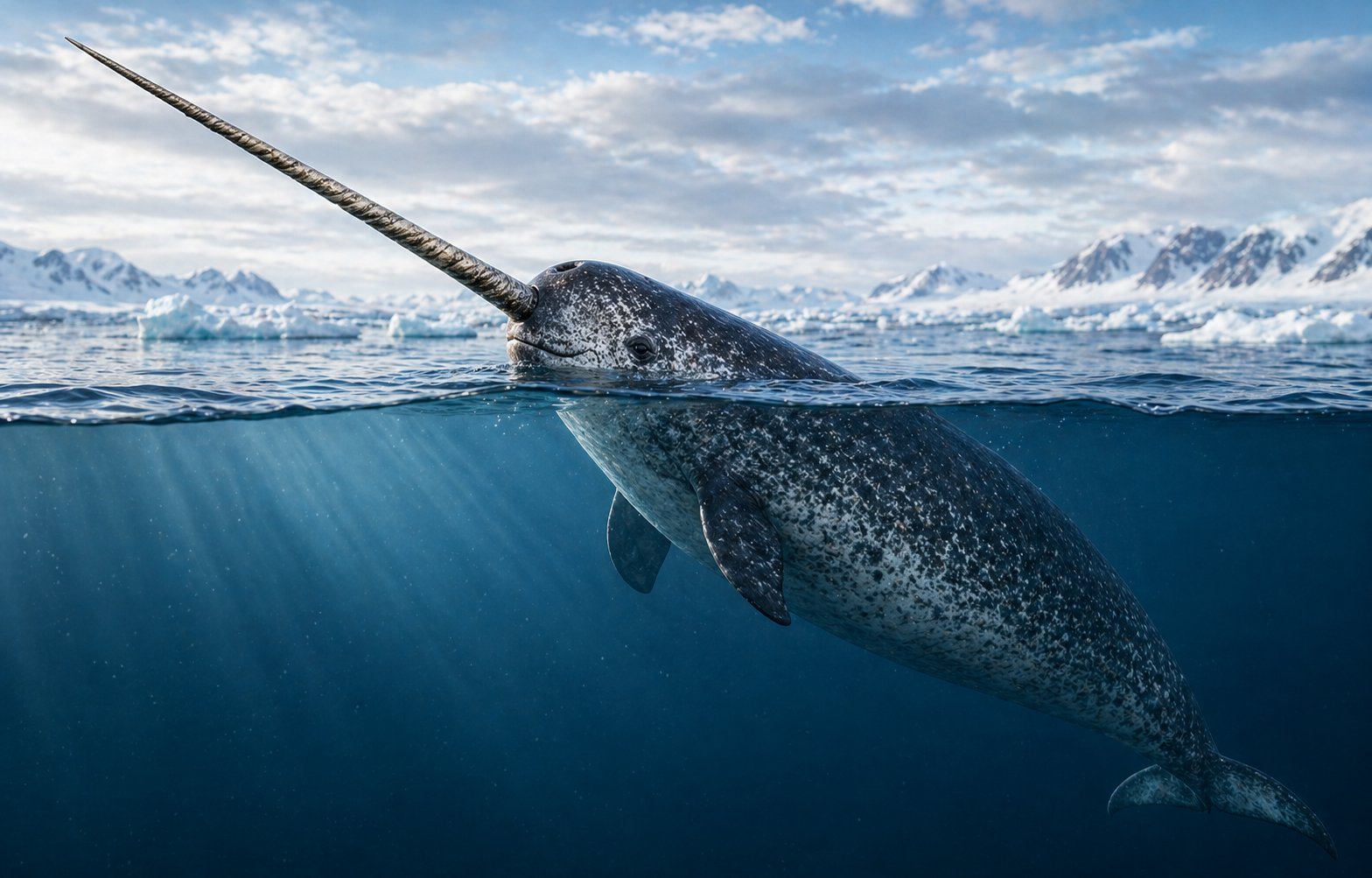
"Encountering narwhals in the wild Arctic feels like witnessing medieval legends come to life—their spiral tusks breaking through ice, echoing calls resonating through frozen waters, living proof that reality can be stranger and more beautiful than myth."
— Dr. Kristin Laidre, Polar Ecologist
The Tusk
Sensory Superorgan
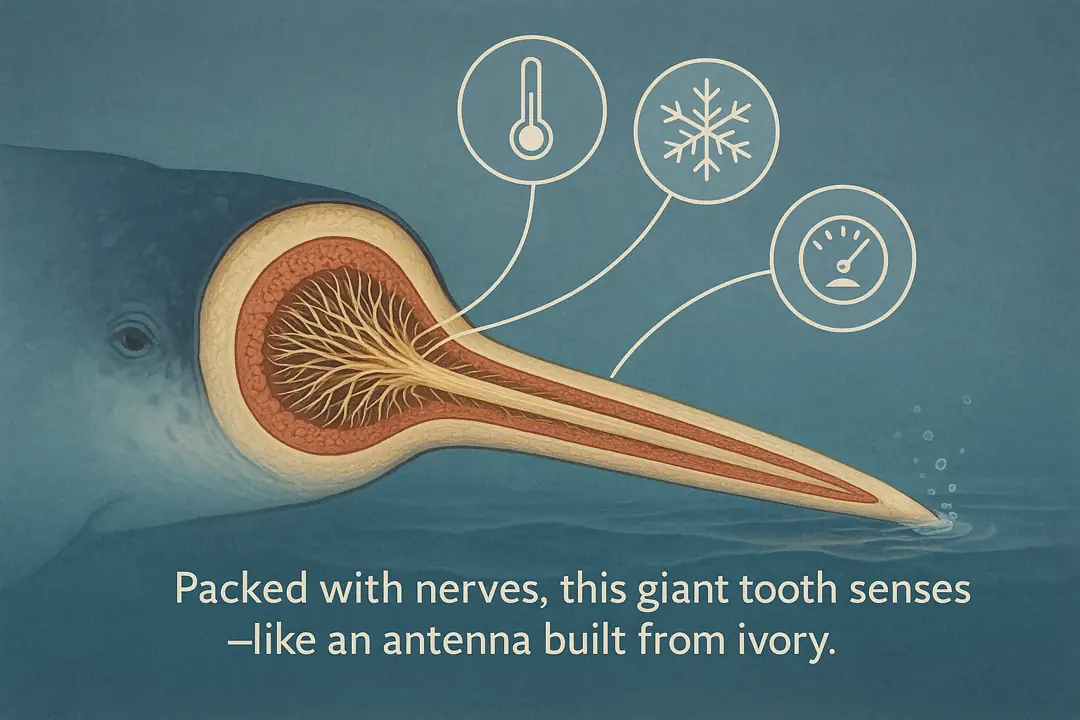
The tusk is an elongated left canine spiraling through the upper lip in left-handed geometry. It can exceed 3 meters and 10 kilograms, with roughly 1 in 500 males growing two tusks.
Rather than a weapon, the tusk works as a sensory organ. Its porous surface channels seawater to millions of nerves, detecting temperature, salinity, and pressure shifts that signal productive feeding zones. Photo: Illustrated.
Deep Diving Mastery
Hunting the Abyss
Narwhals rank among the ocean's deepest divers, descending beyond 1,500 meters (4,900 feet)—deeper than most submarines. Satellite tags record up to 25 dives daily, each lasting around 25 minutes in crushing darkness.
Collapsible lungs and flexible ribs resist pressure, while oxygen-rich blood and muscle sustain long dives. They echolocate prey in darkness, then suction-feed on Greenland halibut, polar cod, and squid near the seafloor. Photo: NOAA.
"Narwhals dive deeper than nuclear submarines, hunt in crushing darkness beneath Arctic ice, and return to breathe through narrow leads in the frozen surface—they navigate a three-dimensional labyrinth that would instantly kill most marine mammals."
— Dr. Mads Peter Heide-Jørgensen, Arctic Marine Mammal Researcher
Arctic Adaptation
Engineered for Extreme Cold
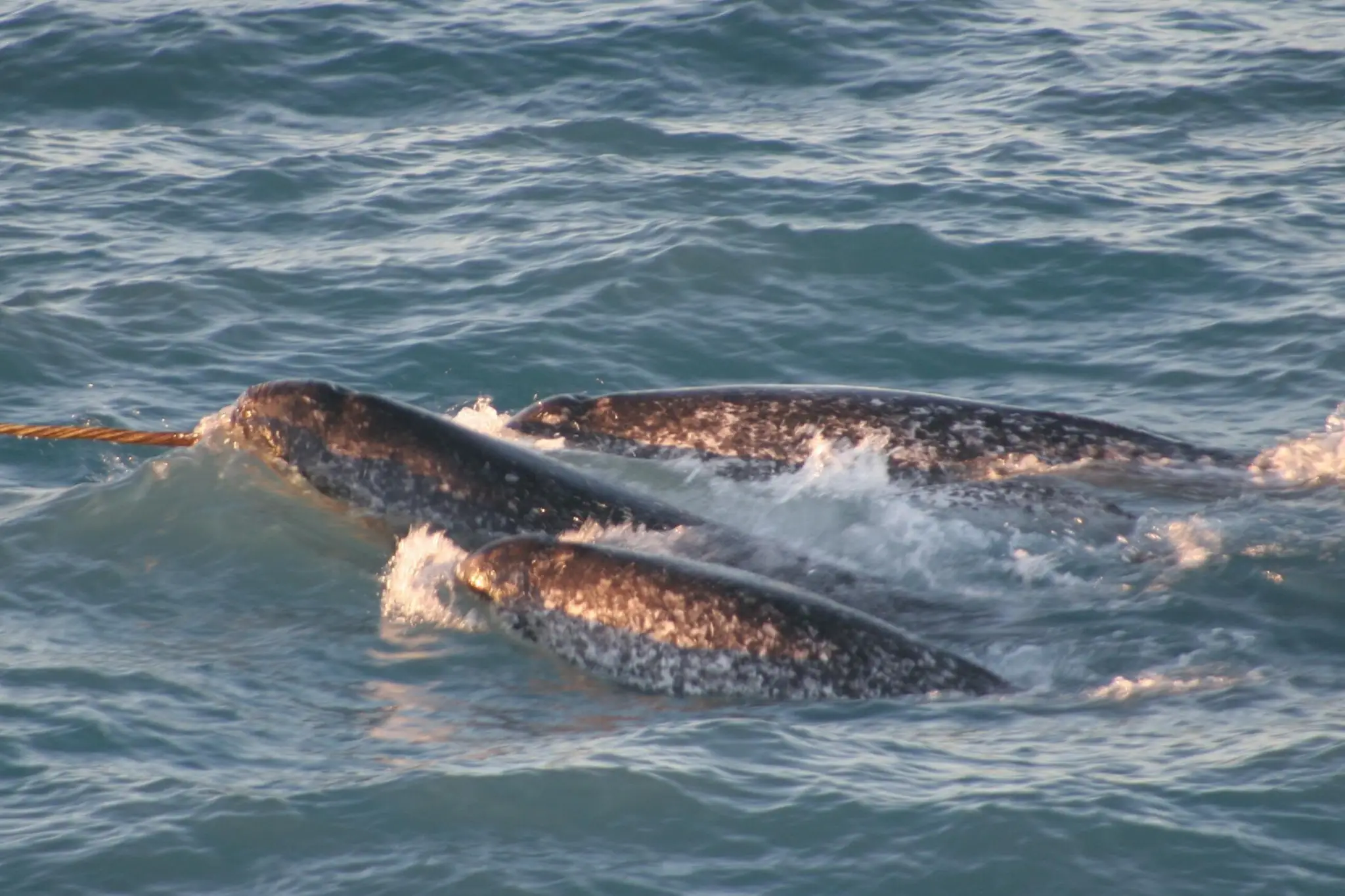
Narwhals thrive near -1.8°C (28.8°F), seawater's freezing point. Blubber up to 10 centimeters insulates them, while counter-current heat exchange in flippers and flukes warms returning blood before it reaches core organs.
Seasonal movements track sea ice precisely: summers in coastal fjords, winters in offshore polynyas beneath 95% ice cover. Decades-long site fidelity suggests cultural transmission—and leaves them vulnerable as the Arctic transforms. Photo: NOAA.
Echolocation & Communication
Acoustic Navigation Systems
Narwhal clicks span 15-75 kHz, peaking near 40-50 kHz to detect fish. During final prey approach, click trains exceed 1,000 pulses per second, building acoustic images in total darkness beneath ice.
Whistles, buzzes, and trumpeting pulsed calls coordinate pods through shifting ice, synchronizing breathing at scarce leads. Mothers and calves stay in constant acoustic contact through the dark polar winter when visibility vanishes. Photo: NOAA.
Conservation & Legacy
Arctic Sentinels at Risk
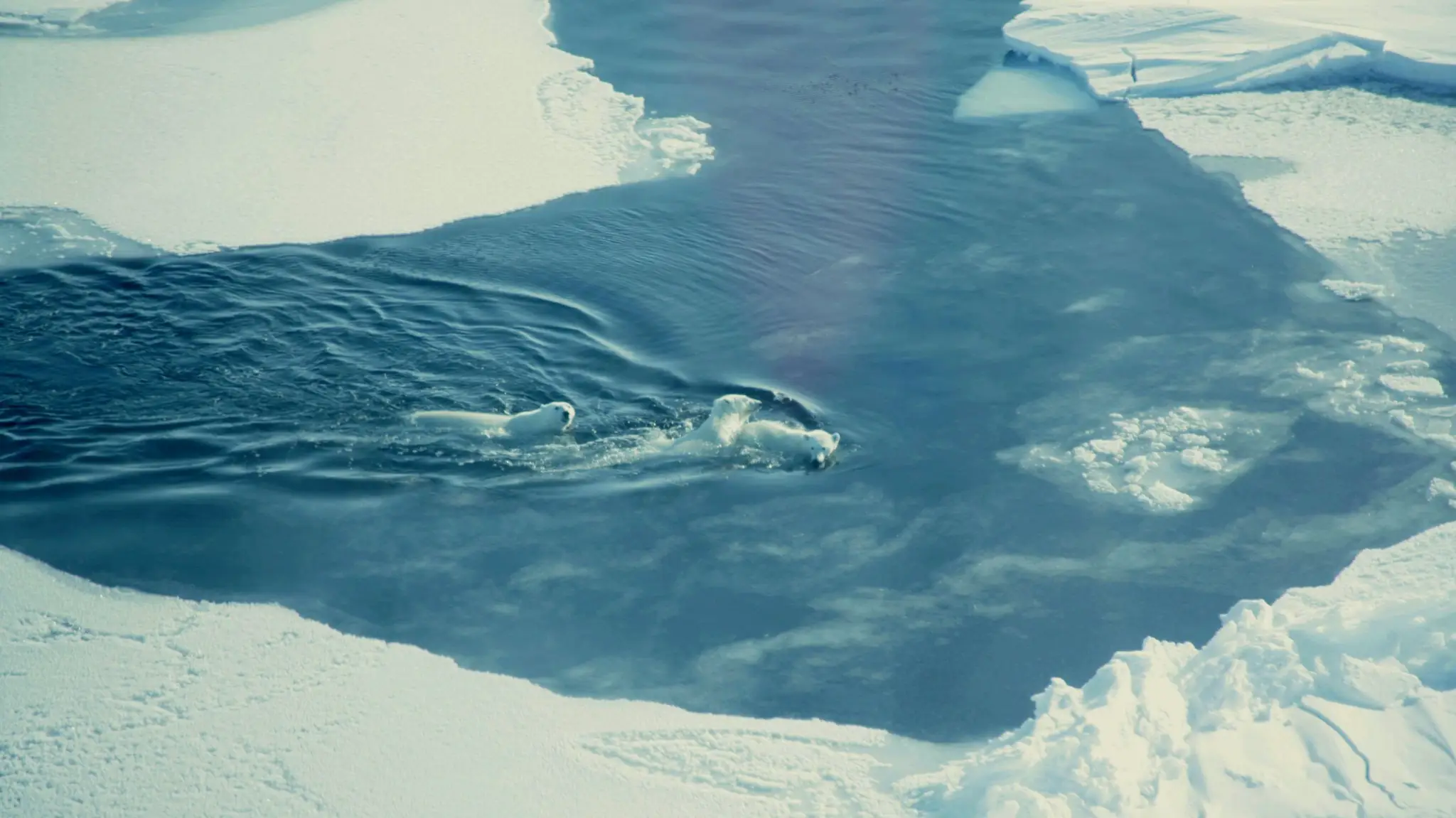
Climate change is the narwhal's gravest threat: sea ice declining 13% per decade disrupts habitat, exposes them to killer whales, and shifts prey. Shipping and industrial noise increasingly interfere with echolocation.
Roughly 170,000 narwhals remain, about 80% in Canadian waters, listed Least Concern by the IUCN. Protecting them demands international cooperation managing shipping lanes, industrial activity, and sustainable Inuit harvests across the Arctic. Photo: NOAA.
Science & Discovery
Harvard School of Dental Medicine's 2014 study mapped 10 million tusk nerve endings detecting salinity and temperature, transforming scientific understanding from weapon hypothesis to confirmed sensory organ.
University of Washington's 2015 satellite tracking revealed precise site fidelity to wintering grounds, while tag sensors collected ocean temperature profiles from ice-covered depths inaccessible to research vessels.
UC Santa Cruz's 2017 Science study found disturbed narwhals' escape dives consume 97% of oxygen reserves as heart rates crash, revealing acute vulnerability to expanding Arctic human activity.
In our delightful oceans, narwhals sense their world through tusks holding 10 million nerve endings. They dive beyond 1,500 meters and endure -1.8°C seas through specialized circulation. NAMMCO harvest quotas and international shipping-lane management safeguard these Arctic sentinels.