Whale shark
Ocean's Gentle Giant
Rhincodon typus
Meet Earth's largest fish whose filter-feeding system, unique spot patterns, 12,000-kilometer migrations, and century lifespan demonstrate that massive size thrives on microscopic prey.
Discover Their Gentle MasteryWhat Makes Them Special
Largest Fish
Reaching 18 meters (60 feet) and 20 tons—Earth's biggest fish
Filter-Feeding Power
Processing 6,000 liters hourly through specialized gill rakers capturing plankton and organisms
Unique Spot Patterns
Individual spot patterns like fingerprints enable lifetime identification and tracking
Century Lifespan
Living beyond 100 years with slow maturation—among the longest-lived fish
Epic Migrations
Traveling 12,000 kilometers annually between feeding aggregations with remarkable navigational precision
Conservation Progress
Endangered but ecotourism generating $42 million annually creates protection incentives
First Encounter
Meeting Earth's Largest Fish
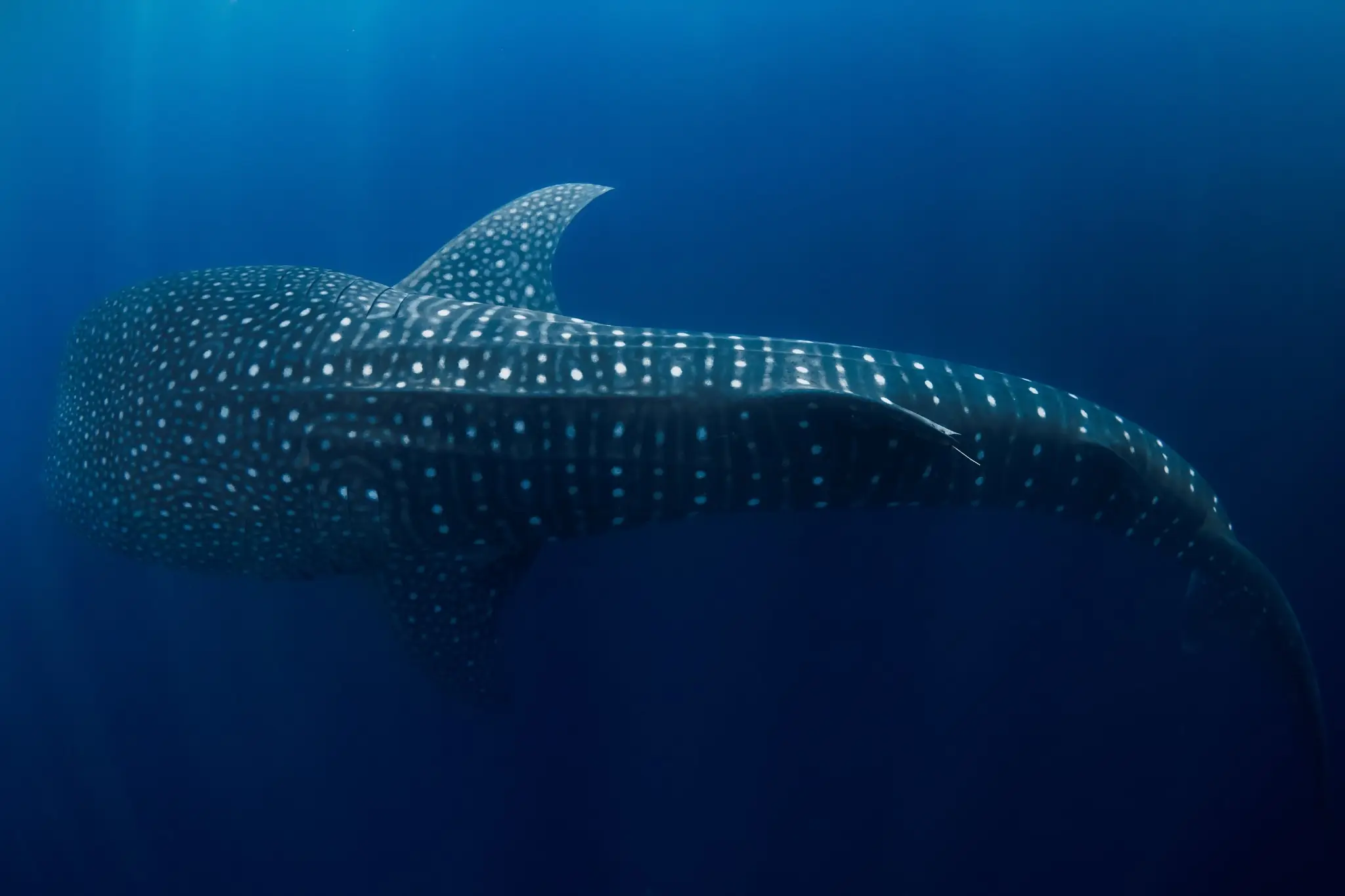
A fish longer than a school bus glides through tropical waters. Whale sharks reach 18 meters (60 feet) and 20,000 kilograms (44,000 pounds)—Earth's largest fish with distinctive checkerboard patterns unique to each individual.
Despite enormous size, whale sharks display remarkable docility. Five massive gill slits process thousands of liters daily, extracting microscopic plankton—living proof Earth's largest animals rely on the planet's smallest organisms. Photo: Wildestanimal.
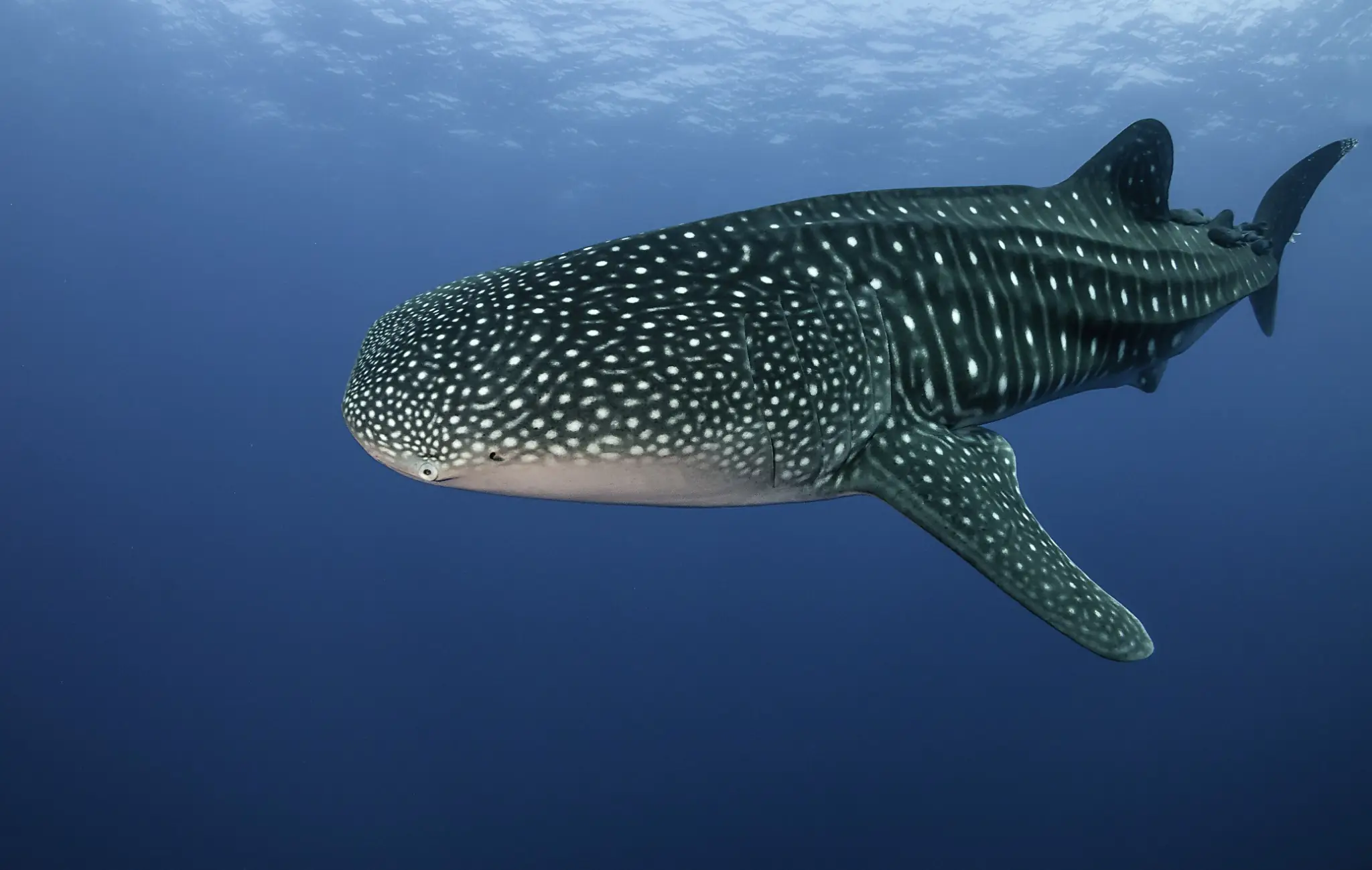
"Swimming beside a whale shark is like encountering a living constellation—their spotted patterns shift in the filtered sunlight as this massive, gentle creature acknowledges your presence with ancient, knowing eyes."
— — Dr. Simon Pierce, Marine Megafauna Foundation
Filter-Feeding Engineering
Processing Thousands of Liters Hourly
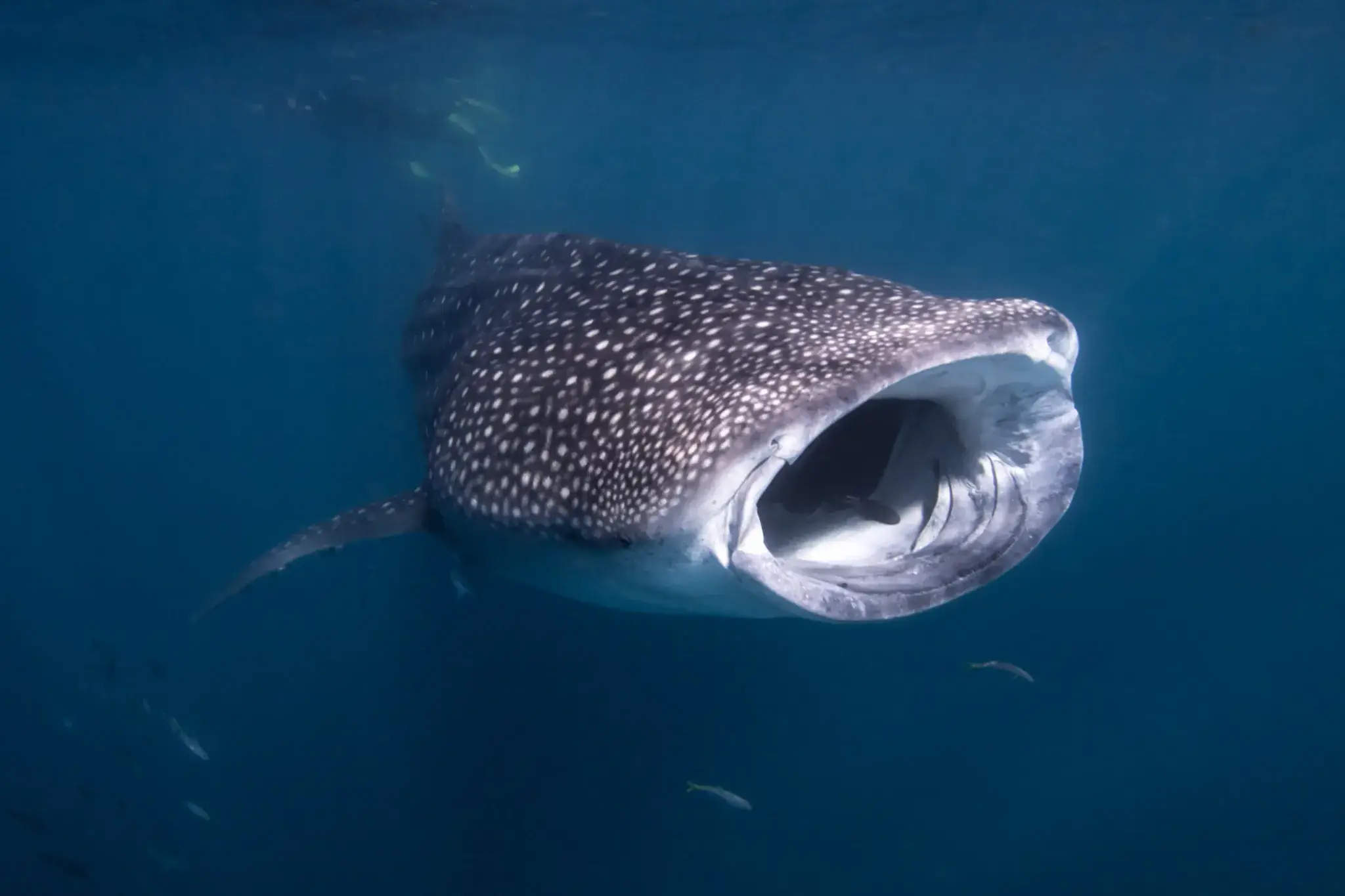
Whale sharks possess nature's most sophisticated filtering systems. Specialized gill rakers spaced 2-3 millimeters apart trap plankton as water floods through at 6,000 liters per hour through five massive gill slits.
Whale sharks employ vertical feeding—positioning perpendicular to the surface with mouths agape. Combined with suction feeding, each shark filters approximately 3,600 cubic meters daily—among the ocean's most efficient biological systems. Photo: Sean Steininger.
Spot Pattern Identity
Nature's Fingerprint System
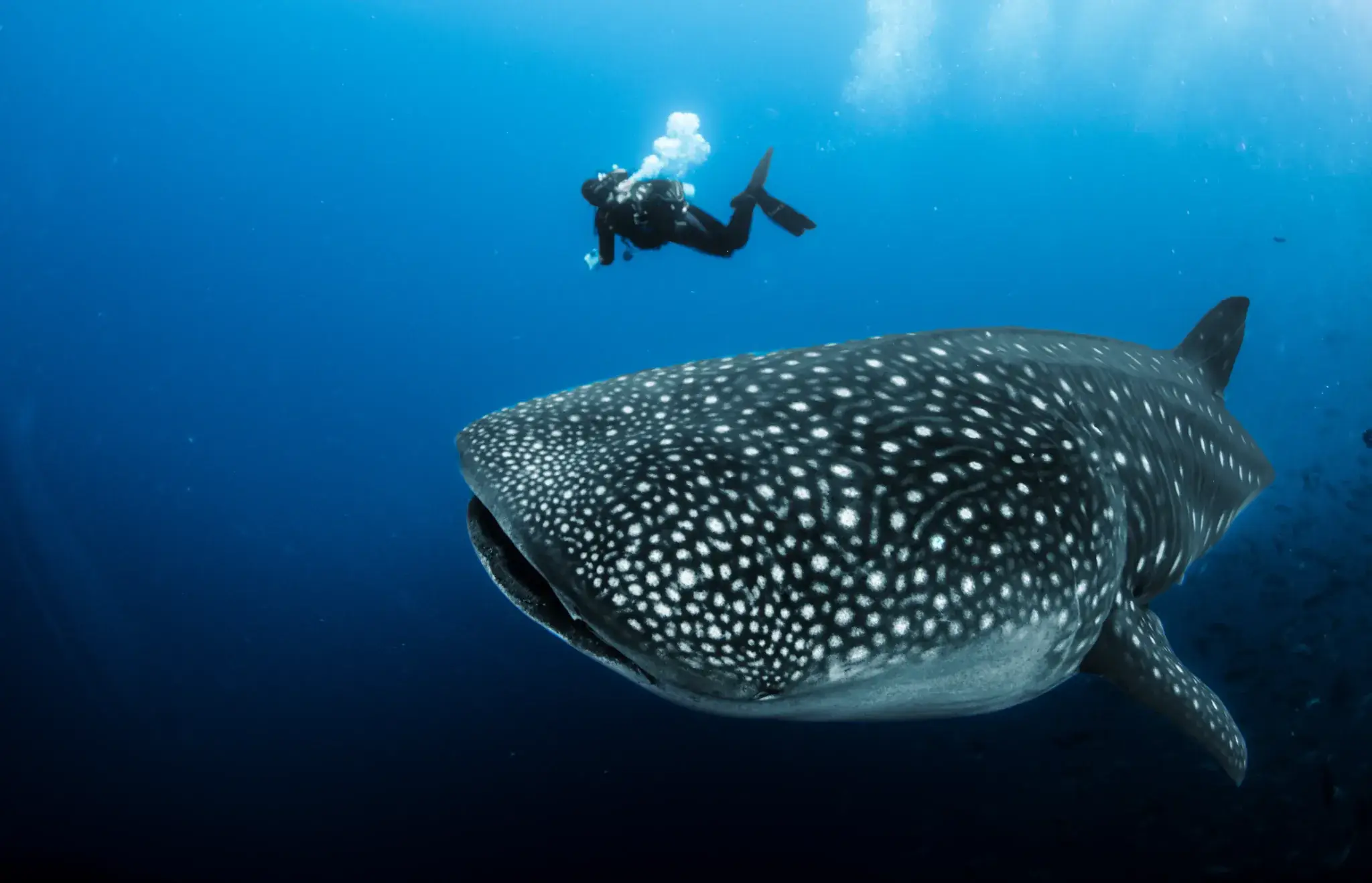
Each whale shark carries unique spot patterns—markings as distinctive as human fingerprints remaining stable throughout their lives. Hundreds of spots arranged in never-repeating patterns enable researchers to track individuals across decades and ocean basins.
Scientists employ algorithms adapted from NASA's Hubble Telescope star-mapping software to match spots. Through citizen science, divers contributed photographs identifying over 75,000 individual whale sharks worldwide, revealing migration routes spanning ocean basins. Photo: Lindsey Lu.
"When we discovered that whale sharks carry unique spot patterns, it transformed our understanding—suddenly, these mysterious ocean wanderers became individuals we could recognize, track, and ultimately protect through knowledge of their secret migration routes. "
— — Dr. Brad Norman, Founder of Wildbook for Whale Sharks
Migration Mysteries
Crossing Ocean Basins
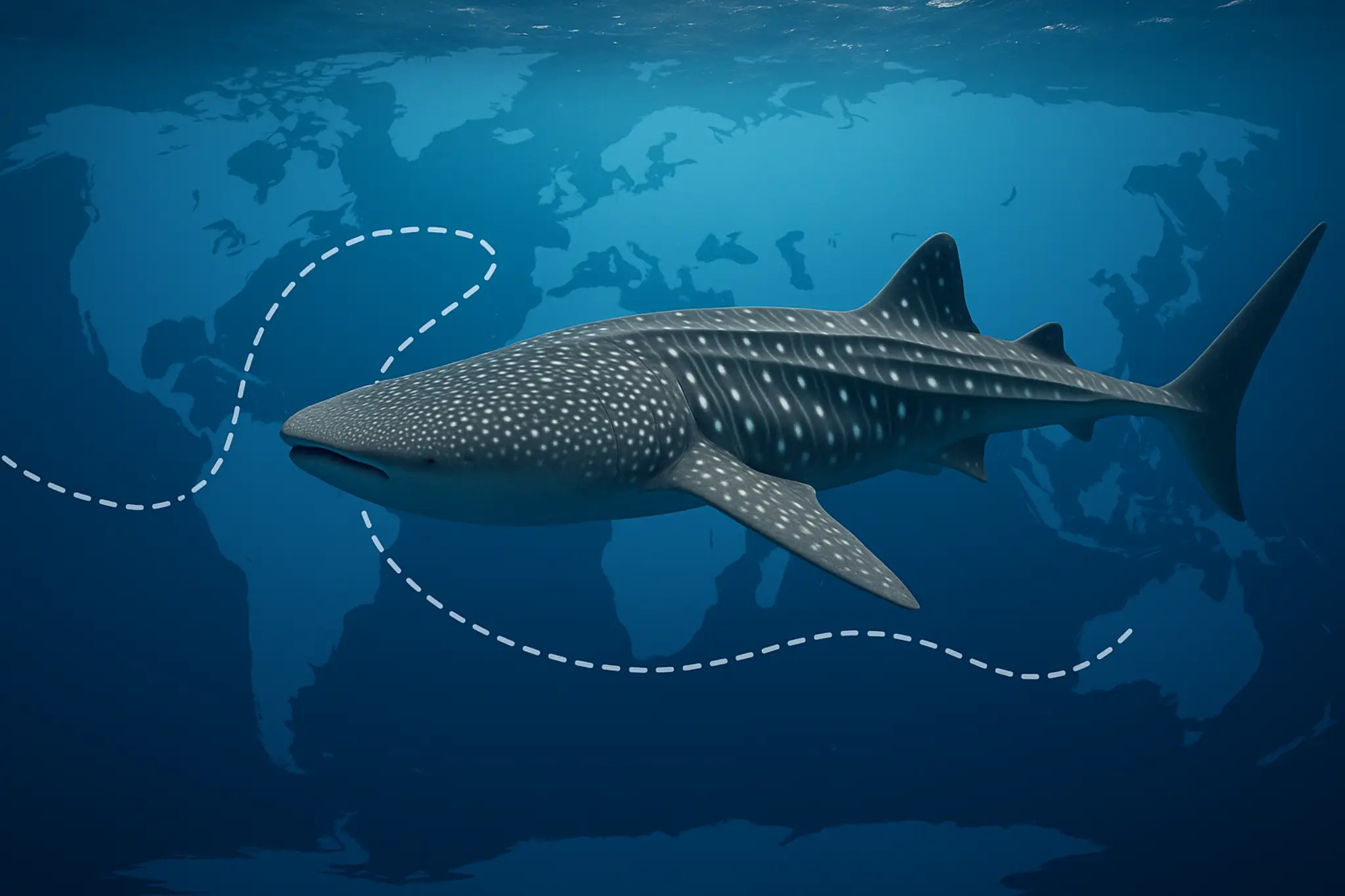
Whale sharks undertake 12,000-kilometer migrations annually between tropical feeding aggregations. Satellite tagging reveals these giants cross entire ocean basins following plankton blooms and coral spawning events with remarkable site fidelity.
Migration routes coincide with biological events—coral spawning attracts hundreds to Ningaloo Reef while Mexican upwelling creates plankton-rich waters. Navigation methods remain puzzling despite tracking data showing occasional 1,900-meter (6,200-foot) dives. Photo: Illustration.
Deep Diving Capability
Descending into the Twilight Zone
Whale sharks regularly dive beyond 1,900 meters (6,200 feet) where pressure reaches 190 atmospheres. V-shaped dive profiles suggest thermoregulation, accessing deep organisms, or navigation—purposes remaining partially mysterious.
Whale sharks possess no swim bladder, relying on oil-rich livers for buoyancy. Massive bulk provides thermal inertia during deep excursions. These dives may coincide with vertical migration of deep-sea organisms throughout the water column. Photo: Wonderful Nature.
Conservation & Legacy
Protecting Gentle Giants
Whale sharks face endangered status globally from ship strikes, targeted fishing, and bycatch. Slow reproduction compounds challenges—females mature at 25-30 years producing relatively few offspring despite containing up to 300 embryos at various development stages.
Ecotourism transforms whale shark value—individual sharks generate $250,000-2 million through sustainable tourism exceeding fishing value. This drove protective legislation across 16 countries. As climate alters ocean conditions, unique spot patterns enable research transforming anonymous wanderers into individually known conservation ambassadors. Photo: Jan Finsterbusch.

Science & Discovery
Genetic research reveals whale sharks diverged 75 million years ago. DNA shows surprisingly low global diversity, suggesting historical population bottlenecks raising concerns about environmental adaptability.
Satellite tracking shows whale sharks time movements to biological events with precision. They arrive at coral spawning within 48-hour windows, suggesting sophisticated environmental sensing capabilities.
AI analysis reveals population structure differs between ocean basins. Indo-Pacific shows distinct genetic signatures from Atlantic sharks—critical information for designing effective conservation strategies.
In our delightful oceans, whale sharks demonstrate Earth's largest fish thrives on smallest organisms through filter-feeding engineering, that unique spot patterns enable global tracking, and that protecting these giants requires international cooperation recognizing their transoceanic migrations.