Pufferfish
Ocean's Ultimate Defense Artist
Tetraodontidae
Meet ocean's ultimate defense artists—tropical specialists reaching 60 centimeters (24 inches) whose rapid inflation transforms them into inedible spiky spheres at 4x body size. Their tetrodotoxin is approximately 1,200 times more lethal than cyanide with no known antidote. Males construct precise 2-meter (6.5-foot) geometric sand patterns working 7 days straight, while four-tooth beaks crush shellfish across 190 species demonstrating multi-layered survival mastery.
Meet the Defense ArtistWhat Makes Them Special
Rapid Inflation
Transform to 4x body size through elastic stomachs, creating inedible spheres deterring all predators
Lethal Toxin
Tetrodotoxin is approximately 1,200 times more toxic than cyanide, with no antidote to protect against chemical warfare
Geometric Artistry
Males create 2-meter diameter sand patterns working 7 days straight attracting mates
Four-Tooth Beak
Fused dental structure continuously replaces creating ever-sharp crushing surfaces for shellfish
Species Diversity
190 species ranging from 2.5-centimeter pygmies to 60-centimeter giants across tropical reefs
Defense Evolution
89-million-year adaptation from simple behaviors into sophisticated multi-layered anti-predator mechanisms
First Encounter
190 Species with Four-Tooth Beaks
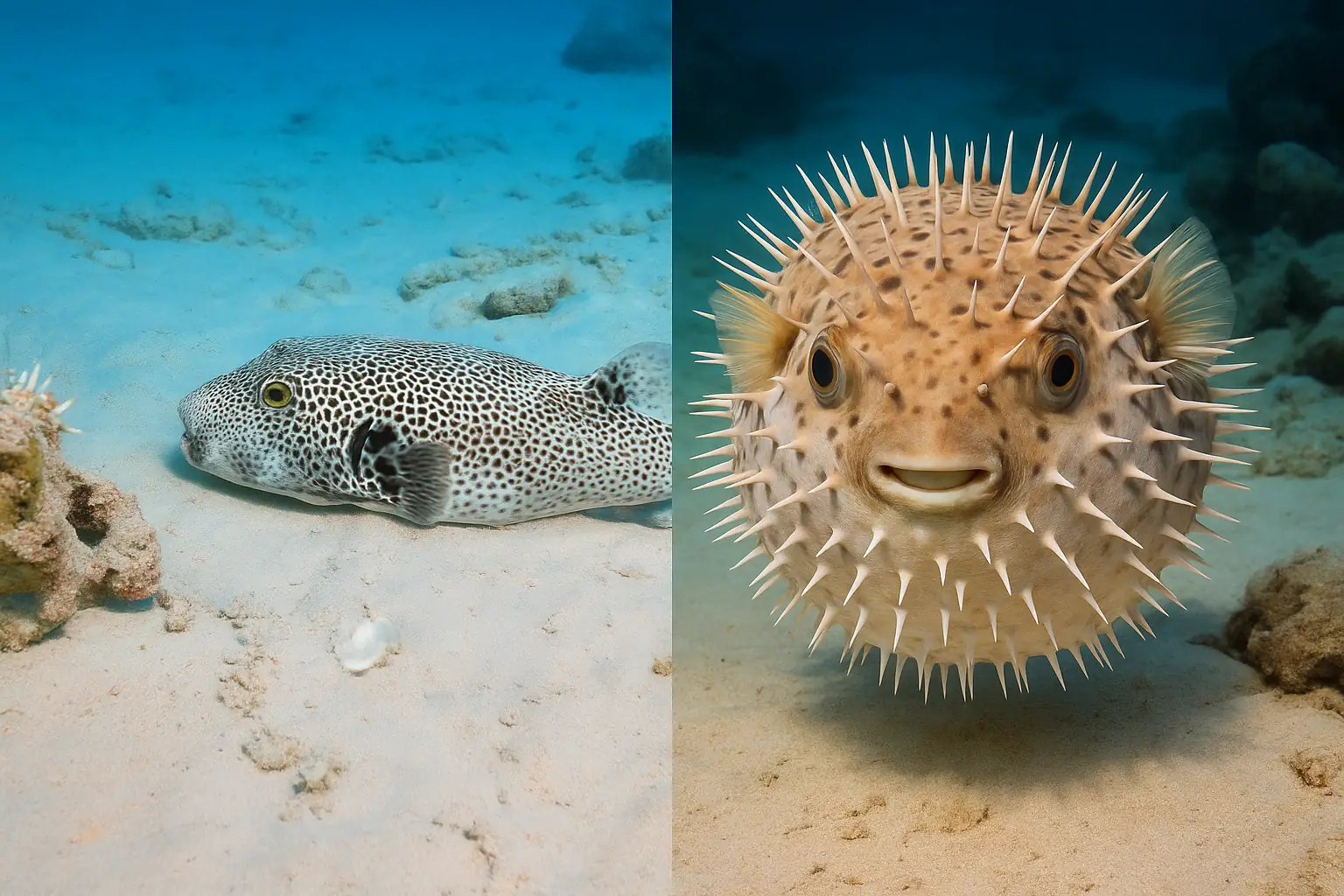
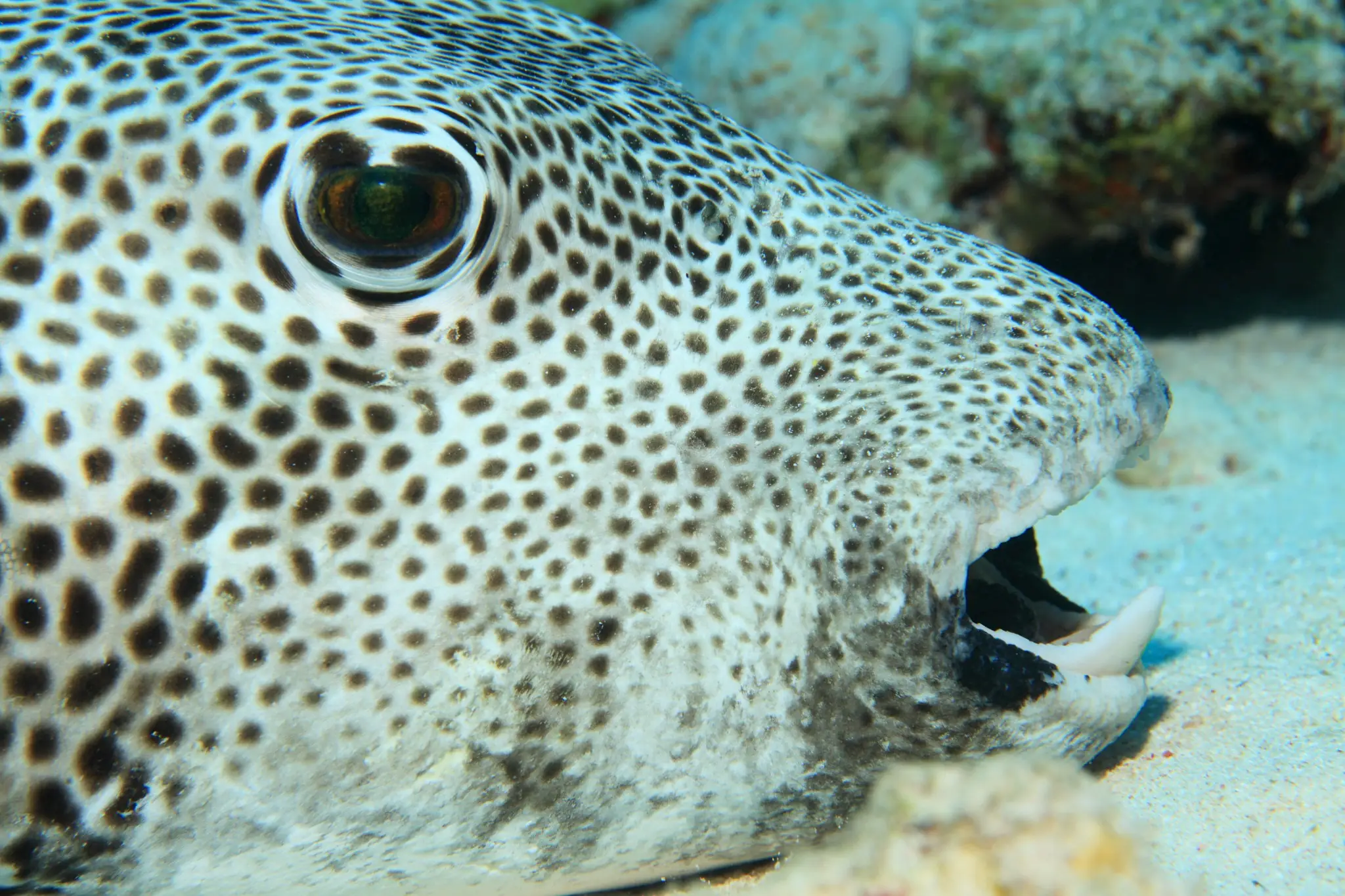
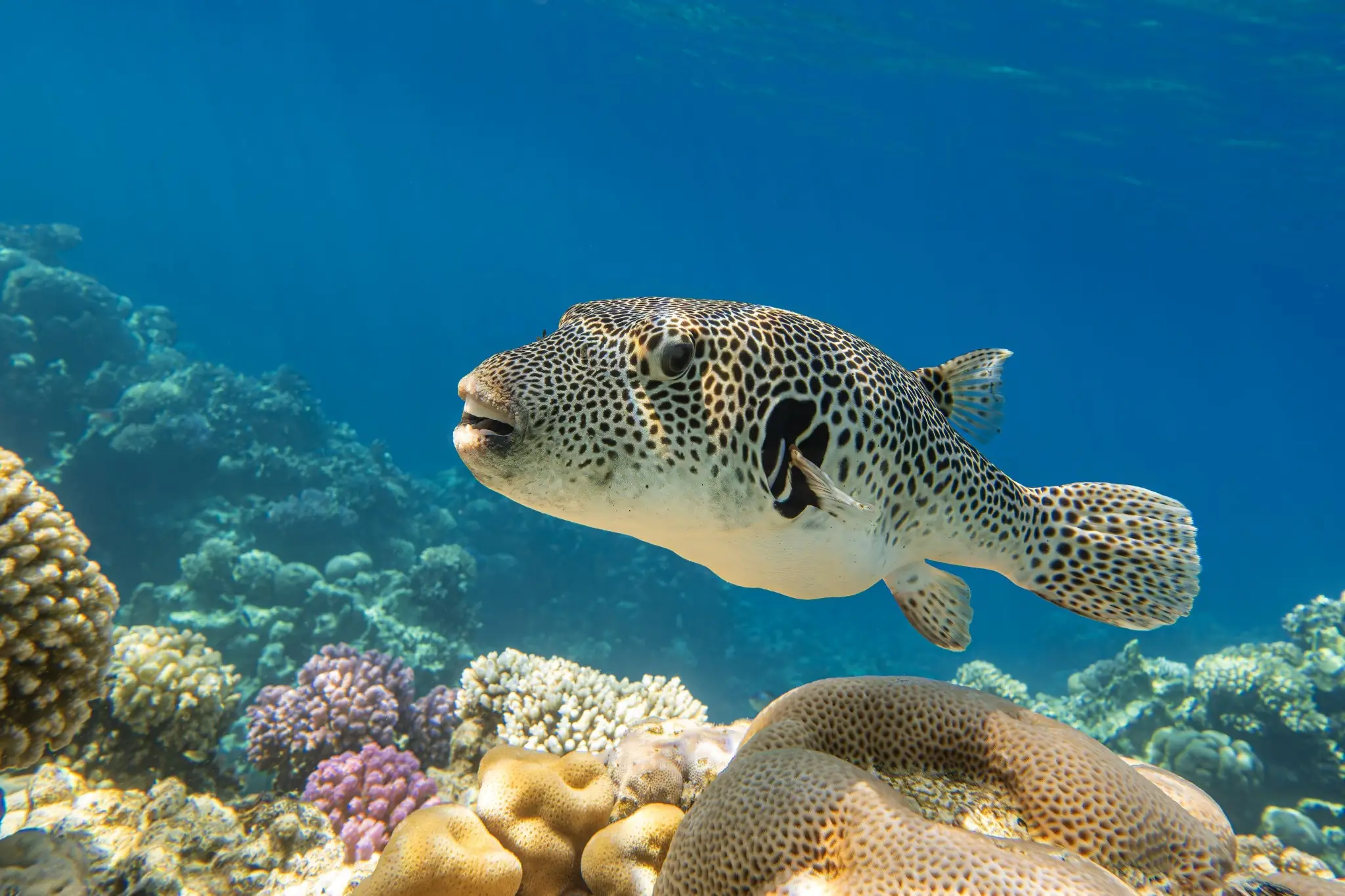
Pufferfish inhabit tropical reefs as slow-swimming specialists with parrot-like beaks that transform instantly into spiky, inedible spheres. Over 190 species range from 2.5-centimeter (1-inch) pygmy puffers to 60-centimetre (24-inch) giants.
These slow-swimming specialists combine deliberate movement with lethal chemistry and architectural abilities. Multi-layered creative defense mechanisms succeed where speed and aggression fail, demonstrating sophisticated survival strategies across diverse marine environments. Photo: KT photo.
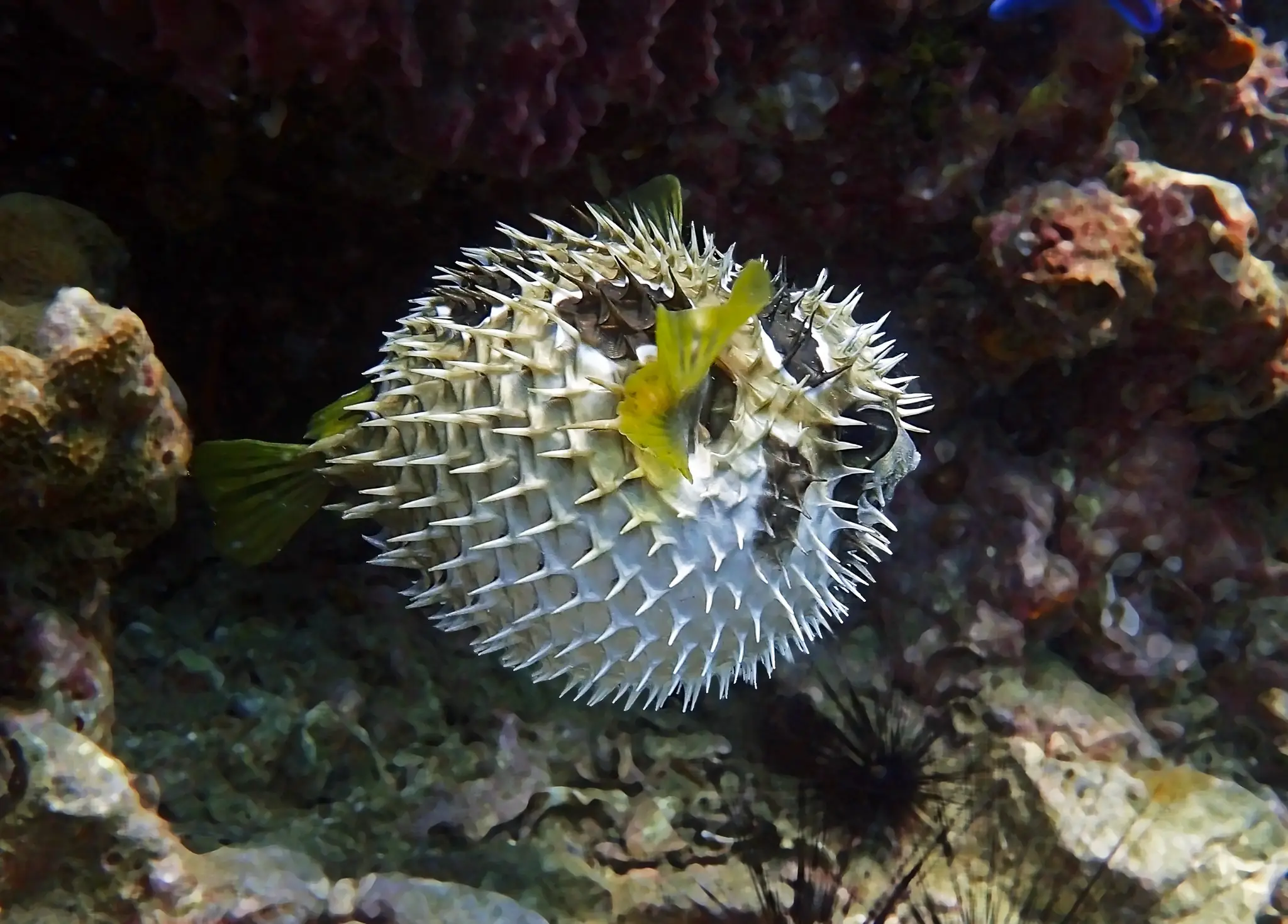
"Pufferfish achieve 4x body size expansion in seconds through modified head muscles and elastic stomachs—creating inedible spiky spheres that deter all predators."
— Marine Defense Systems Research
Rapid Inflation Mastery
4x Size Expansion Through Elastic Stomachs
Pufferfish achieve rapid transformation through modified head muscles linking mouth depression to buccal cavity expansion. Elastic stomachs gulp water or air creating spiky spheres reaching 4x normal size within seconds through specialized pressure-controlling muscles.
Reduced ribs and absent pelvic bones allow dramatic expansion, though vertebral and cranial structures limit maximum inflation to prevent fatal overexpansion. This evolutionary innovation developed over millions of years transformed simple behaviors into sophisticated anti-predator mechanisms requiring precise neuromuscular coordination. Photo: Aquapix
Tetrodotoxin Chemistry
Approximately 1,200 Times More Toxic Than Cyanide
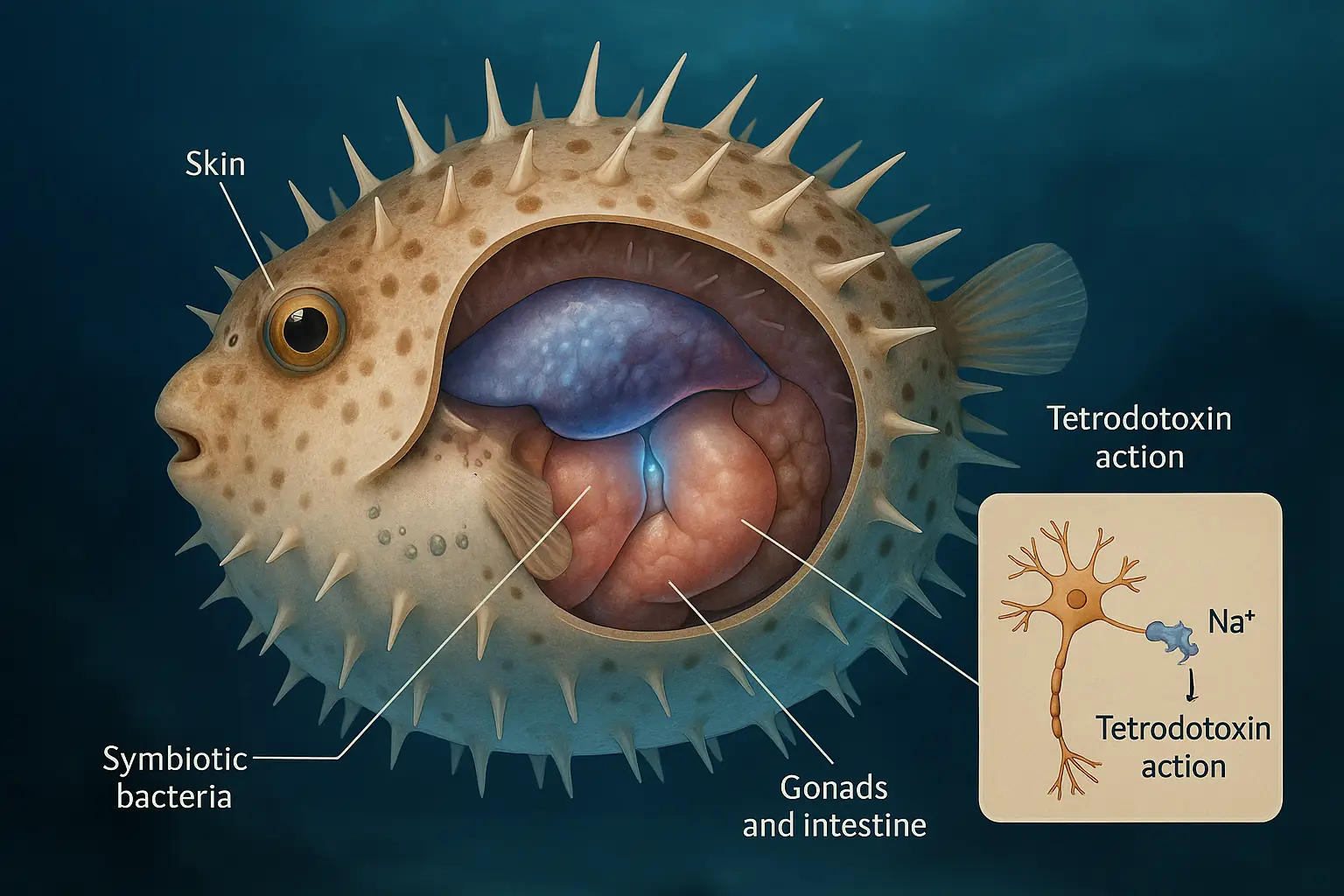
Pufferfish concentrate tetrodotoxin in liver and ovaries through bacterial partnerships with Vibrio species. This sodium channel blocker paralyzes predators within minutes while many species have evolved genetic mutations in sodium channel proteins that reduce self-intoxication risk, though resistance levels vary across the family.
Heat-stable toxin survives cooking making fugu preparation require specialized three-year training and licensing. A single adult of highly toxic species (like Takifugu rubripes) can contain enough tetrodotoxin to kill 30 adult humans, with no known antidote—treatment requires respiratory support. Photo: Illustration.
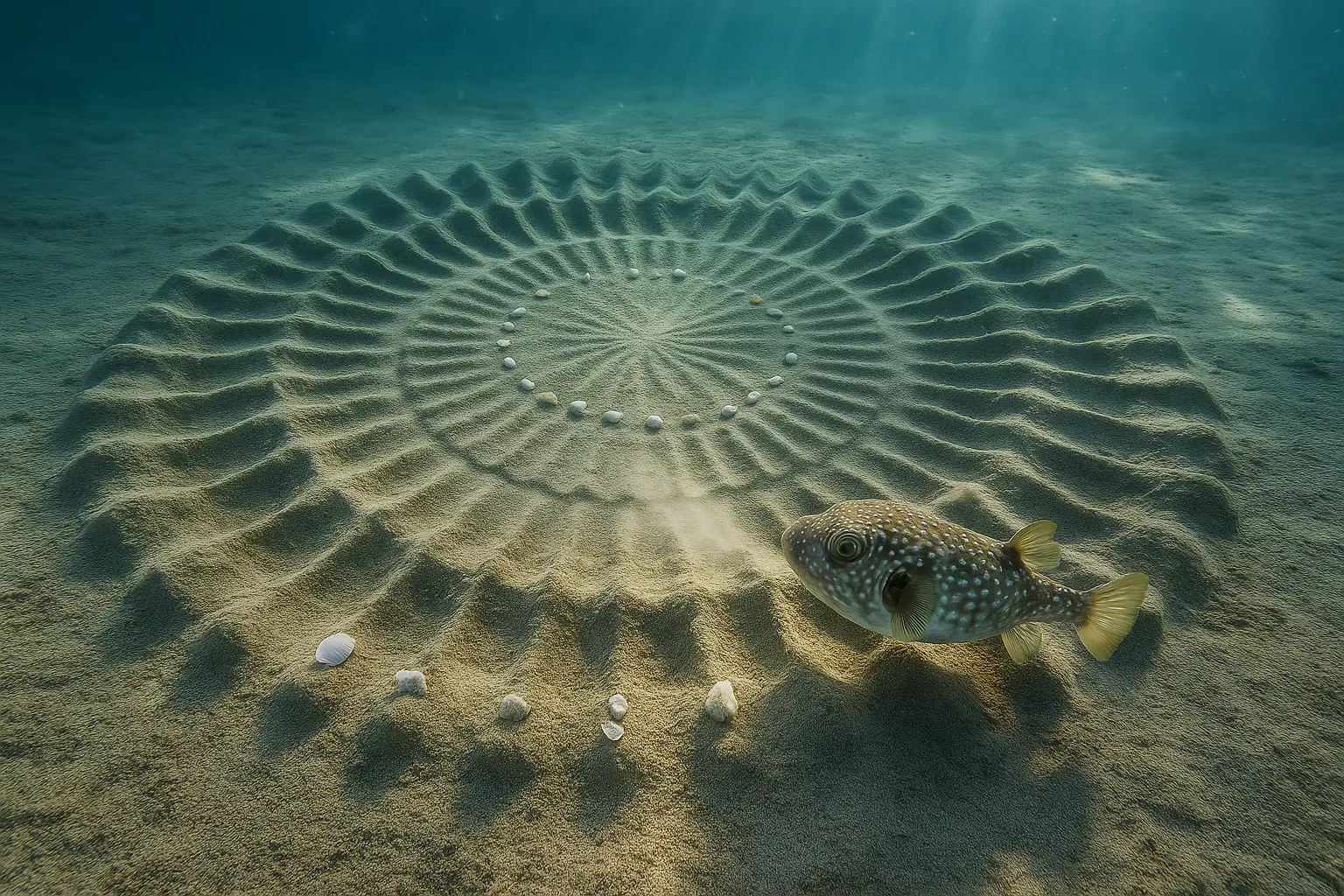
"Male pufferfish create 2-meter geometric sand circles in 7 days—working continuously to construct perfect symmetrical patterns for mate attraction."
— Dr. Hiroshi Kawase, Geometric Pattern Research
Geometric Sand Patterns
2-Meter Diameter Patterns Created in 7 Days
Male pufferfish of the Torquigener genus (discovered in 2014) create precise geometric patterns spanning 2 meters with radial valleys and maze-like centers. Working continuously for 7 days they construct perfect symmetry using fin movements sculpting sand into elaborate courtship displays.
These underwater patterns function as sophisticated nests gathering fine sand particles crucial for egg protection. Research indicates water flow can slow significantly in pattern centers (up to 25% in studied species), creating calmer areas where eggs develop. This sand artistry is observed only in specific species like Torquigener albomaculosus, not all pufferfish. Photo: Illustration.
Four-Tooth Beak System
Fused Dental Structure with Continuous Replacement
Pufferfish possess unique four-tooth beaks consisting of fused upper and lower teeth with visible divisions. These parrot-like structures continuously replace through stacked dentine bands creating ever-sharp edges enabling specialized crushing of mollusks and crustaceans.
Starting from normal larval teeth only four positions continue replacement forming crushing basins perfect for shellfish diets. This 400-million-year-old developmental pattern enables diverse dietary specializations from coral grazers to hard-shelled mollusk specialists. Photo: Aquapix
Defense Specialists
Stable Populations Through Multi-Layered Survival
Many pufferfish species maintain stable populations despite habitat loss and pollution through effective defense strategies, though some face significant threats from commercial fugu harvesting. Some species like the Chinese pufferfish (Takifugu chinensis, listed as Vulnerable by IUCN) have experienced dramatic declines due to overfishing, requiring urgent protection.
Scientists protect these specialists through habitat conservation and sustainable fishery regulations. DNA barcoding identifies species diversity while ongoing research reveals applications in soft robotics pain management and bio-inspired architectural design maintaining reef ecosystem balance. Photo: Illustration.
Science & Discovery
Frontiers in Microbiology 2024 research advanced tetrodotoxin detection methods developing ultrasensitive fluorescence biosensors achieving picogram-level sensitivity inspiring pharmaceutical research into non-opioid pain management applications and bacterial toxin production mechanisms.
Scientific Reports 2018 study analyzed male pufferfish geometric construction revealing simple behavioral rules generate complex patterns inspiring bio-inspired algorithms for architectural design fluid dynamics modeling and computational optimization strategies.
Marine Drugs 2023 toxicology research established tetrodotoxin equivalency factors advancing monitoring programs while biomimetic engineers study inflation mechanics for developing adaptive underwater vehicles flexible gripping technologies and pneumatic soft robotics systems.
In our delightful oceans, pufferfish demonstrate multi-layered defense enabling survival without speed advantages, with many species maintaining stable populations. Their tetrodotoxin provides lethal protection approximately 1,200 times more potent than cyanide while rapid inflation creates physical deterrence. Sustainable fishery regulations and habitat conservation now protect these defense specialists inspiring biomimetic innovations.