Parrotfish
Ocean's Reef Ecosystem Engineer
Subfamily Scarinae (Labridae family)
Meet the ocean's reef ecosystem engineers—vibrant grazers reaching 1.2 meters with distinctive beak-like teeth scraping algae from coral surfaces. Large parrotfish produce 380 kilograms of sand annually through coral processing—creating the majority of beach sand (up to 70-85%) on many Caribbean and Hawaiian islands. They spend 90% of their time grazing preventing coral suffocation while maintaining reef health.
Meet the Ecosystem EngineerWhat Makes Them Special
Powerful Beak Teeth
Generate extreme bite force through fused teeth harder than copper scraping algae from coral
Sand Production
Large parrotfish produce 380 kilograms (840 pounds) annual sand creating up to 85% of beach sand on many Caribbean islands
Intensive Grazing
Spend majority of daylight hours actively grazing across reef territories preventing coral suffocation and algal overgrowth.
Sequential Hermaphroditism
Change sex multiple times based on social dynamics optimizing reproductive success through flexibility
Vibrant Coloration
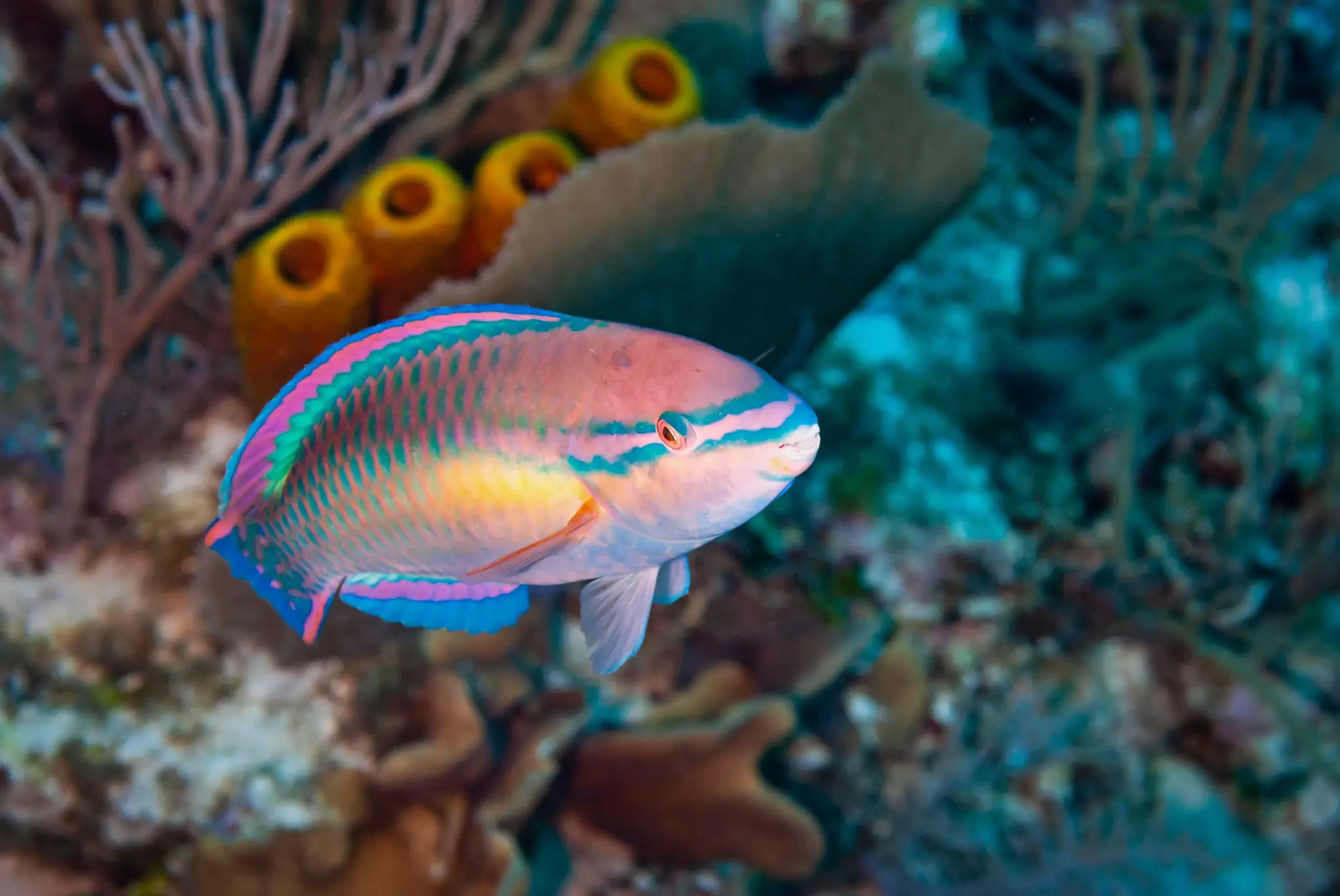
Display brilliant turquoise, pink, and green patterns—with coloration changing dramatically during sex transitions.
Ecosystem Engineering
Process 5-6 tons coral carbonate annually directly reshaping reef structure through daily feeding.
First Encounter
1.2-Meter Reef Architects with 45-Kilogram Body Mass
Parrotfish reach 1.2 meters (4 feet) and 45 kilograms with vibrant turquoise and pink coloration. Their distinctive beak-like mouths actively scrape algae while constantly reshaping reef ecosystems through feeding activities.
Scientists call this "ecosystem engineering"—daily feeding processes tons of coral material annually, transforming reef structure into fine white sand. Each individual parrotfish directly contributes to tropical beach formation through specialized digestive systems. Photo: Rich Carey
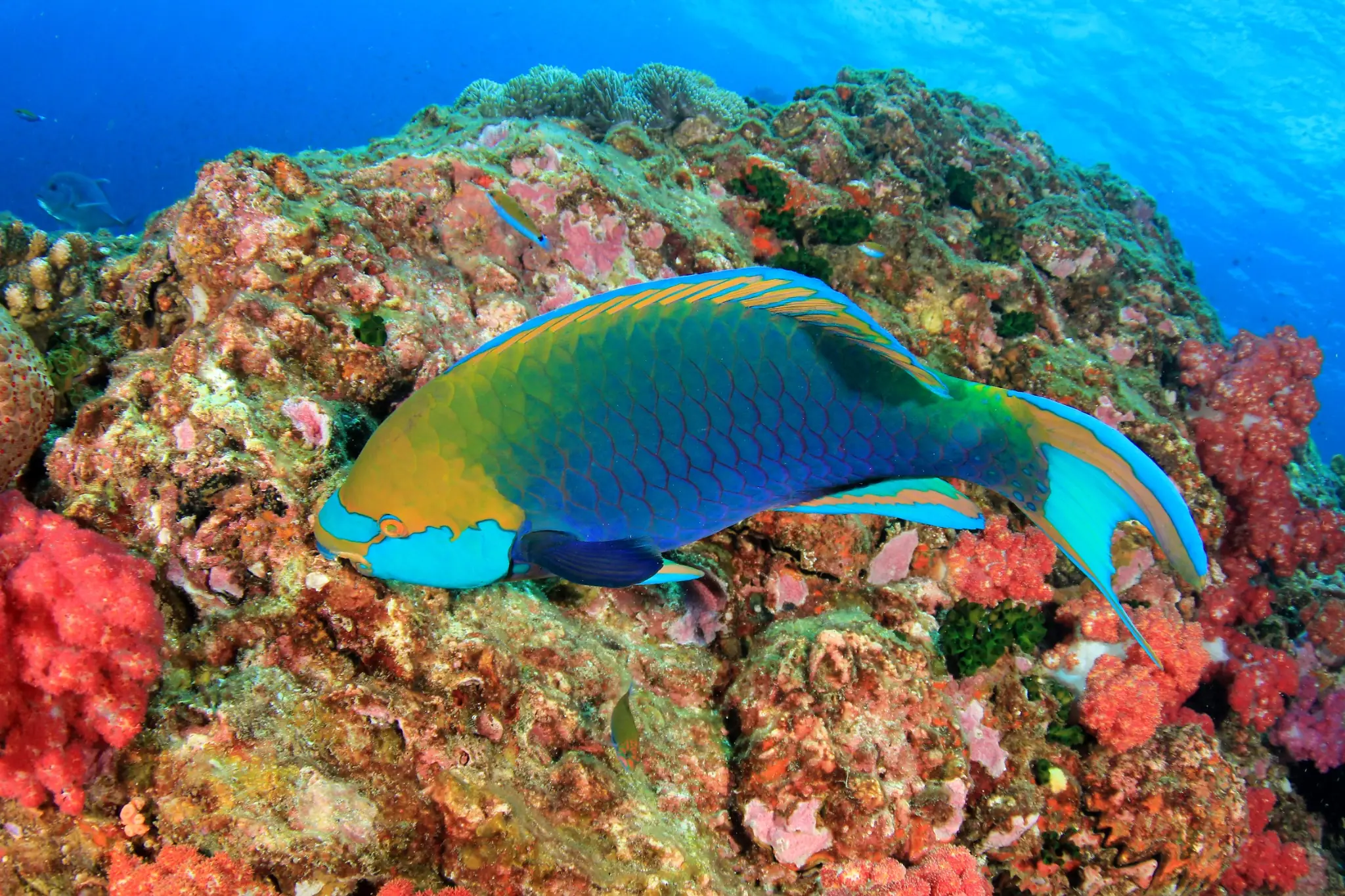
"A single large parrotfish produces up to 380 kilograms (840 pounds) of sand per year—directly creating and maintaining the tropical beaches across Caribbean and Pacific reef systems."
— Dr. Chris Perry, Coral Reef Geomorphology Research
Beak Feeding System
Fused Pharyngeal Crushing with 530 Newtons Bite Force
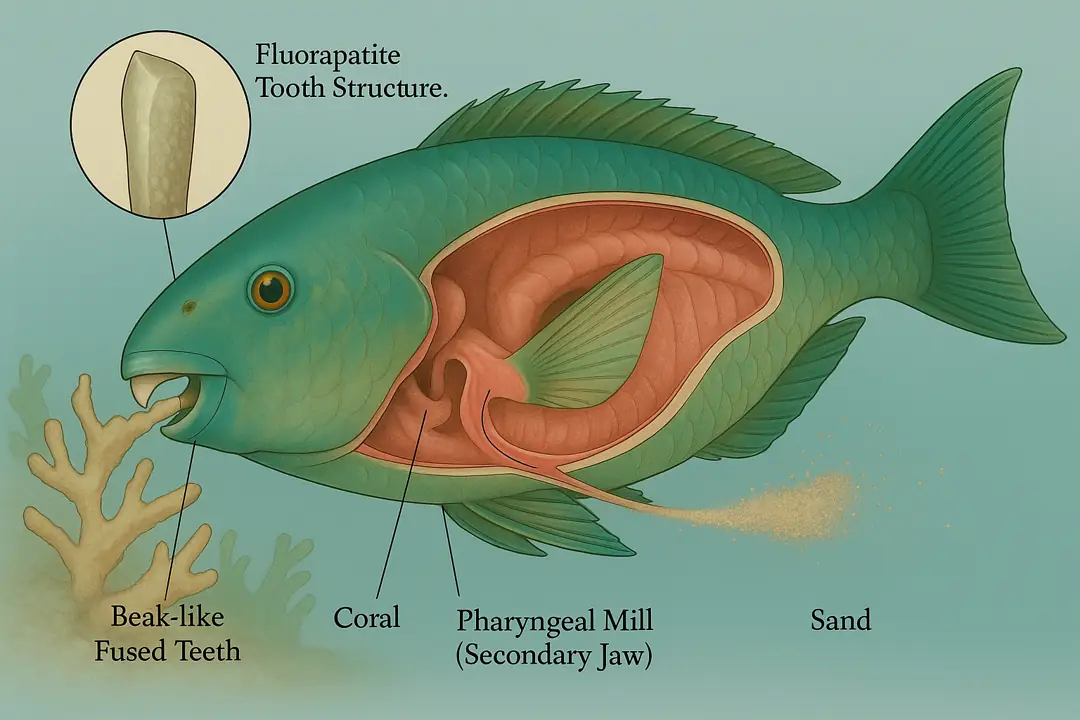
Fused teeth create powerful beak structures generating extreme bite force capable of scraping algae and biofilm from coral surfaces. These specialized dental plates composed of fluorapatite—harder than copper and similar to steel—continuously grow throughout lifetimes replacing worn surfaces.
Scientists call this "bioerosion"—mechanical coral processing releases calcium carbonate passing through pharyngeal mills grinding material into sand. This feeding mechanism controls algae while creating beach sediments fundamental to tropical island formation. Photo: Illustration.
Sand Production
5-6 Tons Annual Coral Processing Creating 70% of Beach Sand
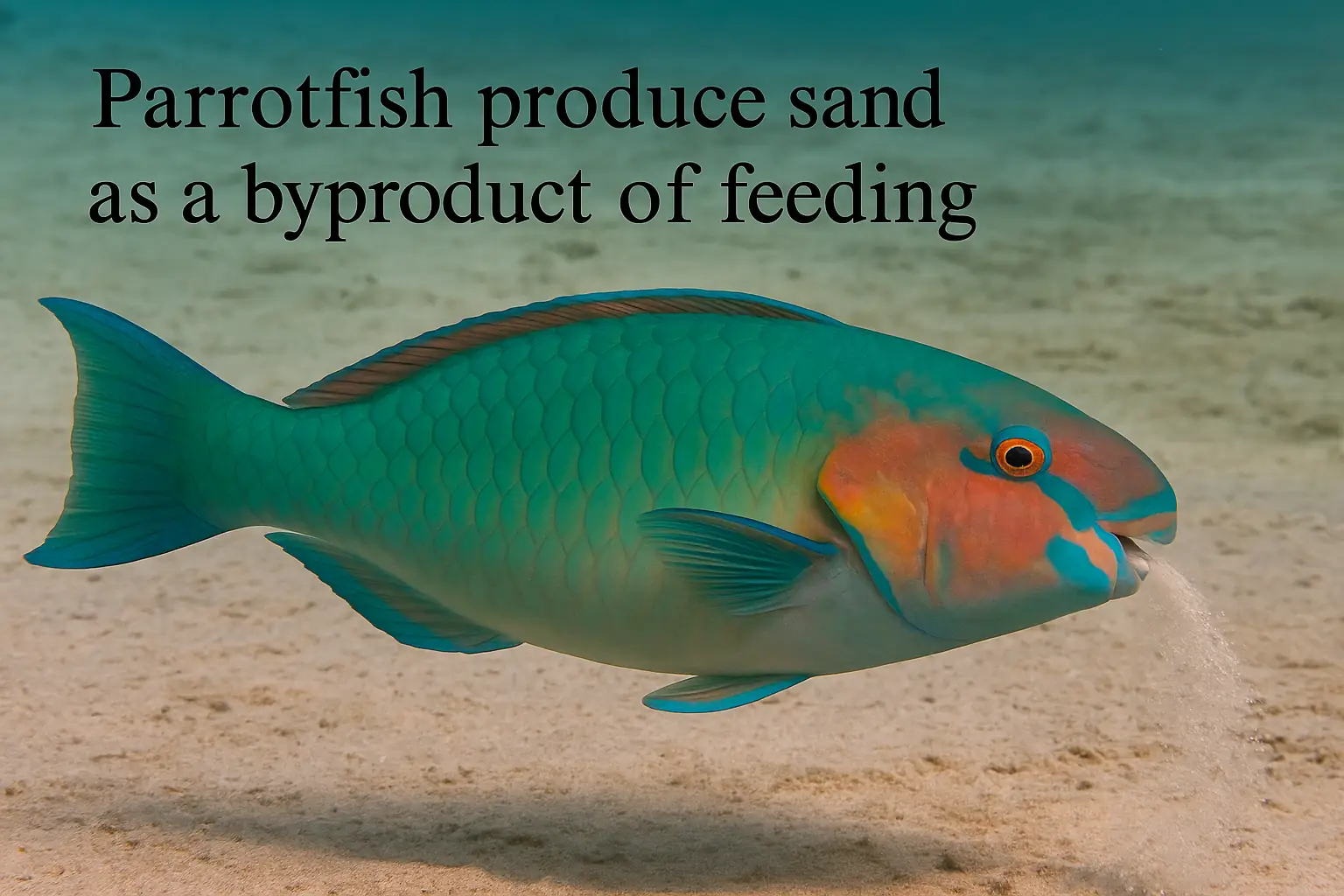
Large parrotfish consume 5-6 tons coral carbonate annually producing 380 kilograms (840 pounds) fine sand through digestive processing. This biological erosion creates 70% of tropical beach sand in many reef systems worldwide.
Scientists call this "bioerosion"—sand grain analysis reveals species-specific signatures enabling tracking of parrotfish contributions to beach formation. Research documents direct correlation between parrotfish abundance and beach width maintenance across Caribbean islands. Photo: Illustration.
"Parrotfish demonstrate sequential hermaphroditism—changing sex multiple times throughout their lives based on social dynamics and population needs for reproductive optimization."
— Dr. Rebecca Albright, Sequential Hermaphroditism Research
Algae Grazing Control
90% Algal Removal Across 100 Square Meters
Intensive grazing prevents algal overgrowth suffocating coral polyps by removing 90% algal growth from territories spanning 100 square meters of reef surface. This maintains optimal conditions for coral photosynthesis.
Scientists call this "ecosystem service"—feeding pressure creates coral recruitment space while maintaining optimal light penetration for photosynthetic symbionts. This function proves essential for coral recovery following bleaching events and storm damage. Photo: J.S. Lamy
Sequential Hermaphroditism
Flexible Sex Changes Optimizing Reproductive Success
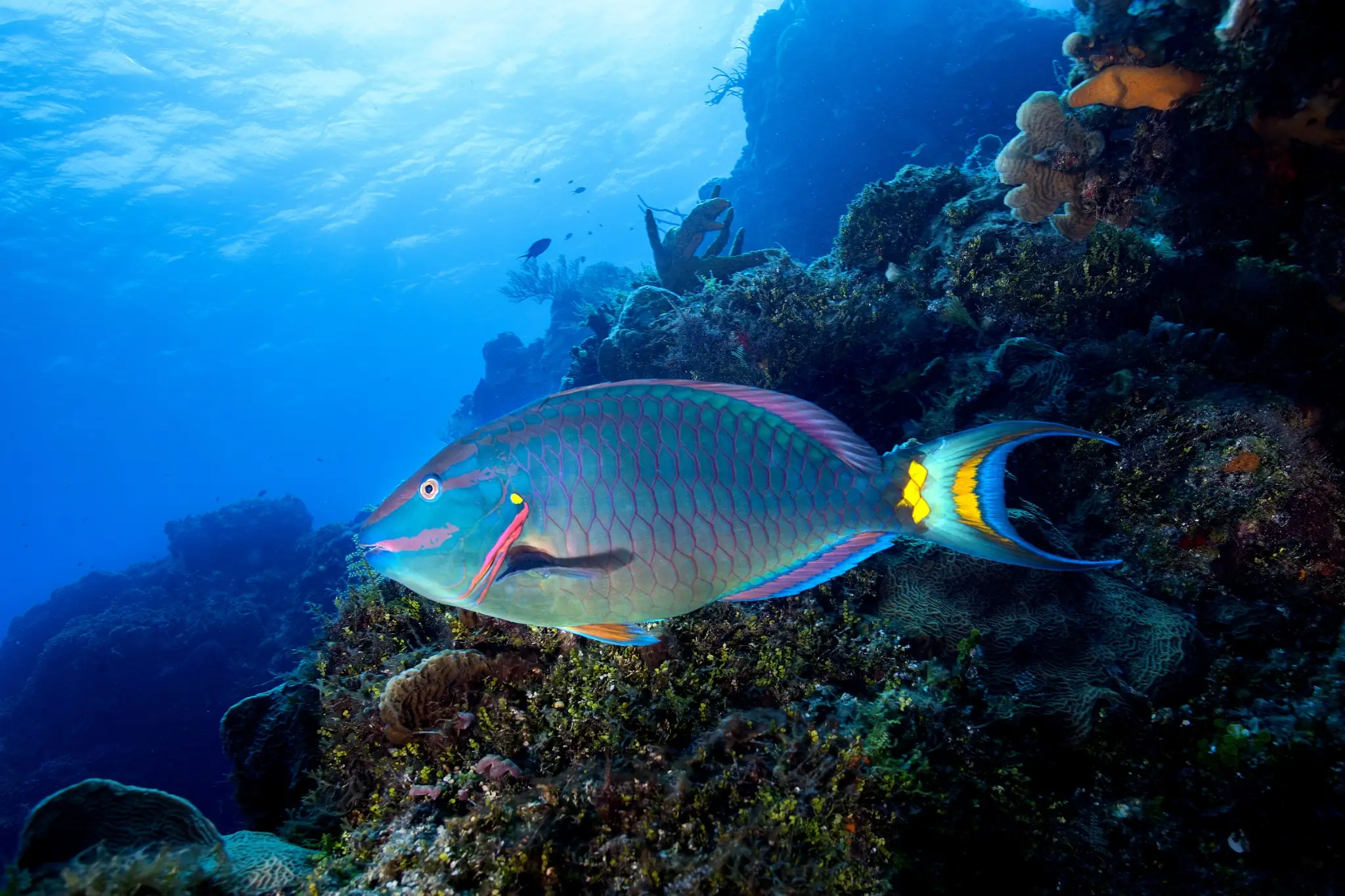
Most parrotfish begin life as females before transitioning to males based on social hierarchy and population dynamics. Dominant males control harems of females exhibiting brilliant coloration signaling reproductive status.
Scientists call this "protogynous hermaphroditism"—sex change occurs when social conditions favor male reproductive success. This flexibility maximizes population reproductive output by ensuring optimal male-to-female ratios across varying environmental conditions.. Photo: Focused Adventures.
Conservation Status
Vulnerable Populations with Critical Reef Protection Needs
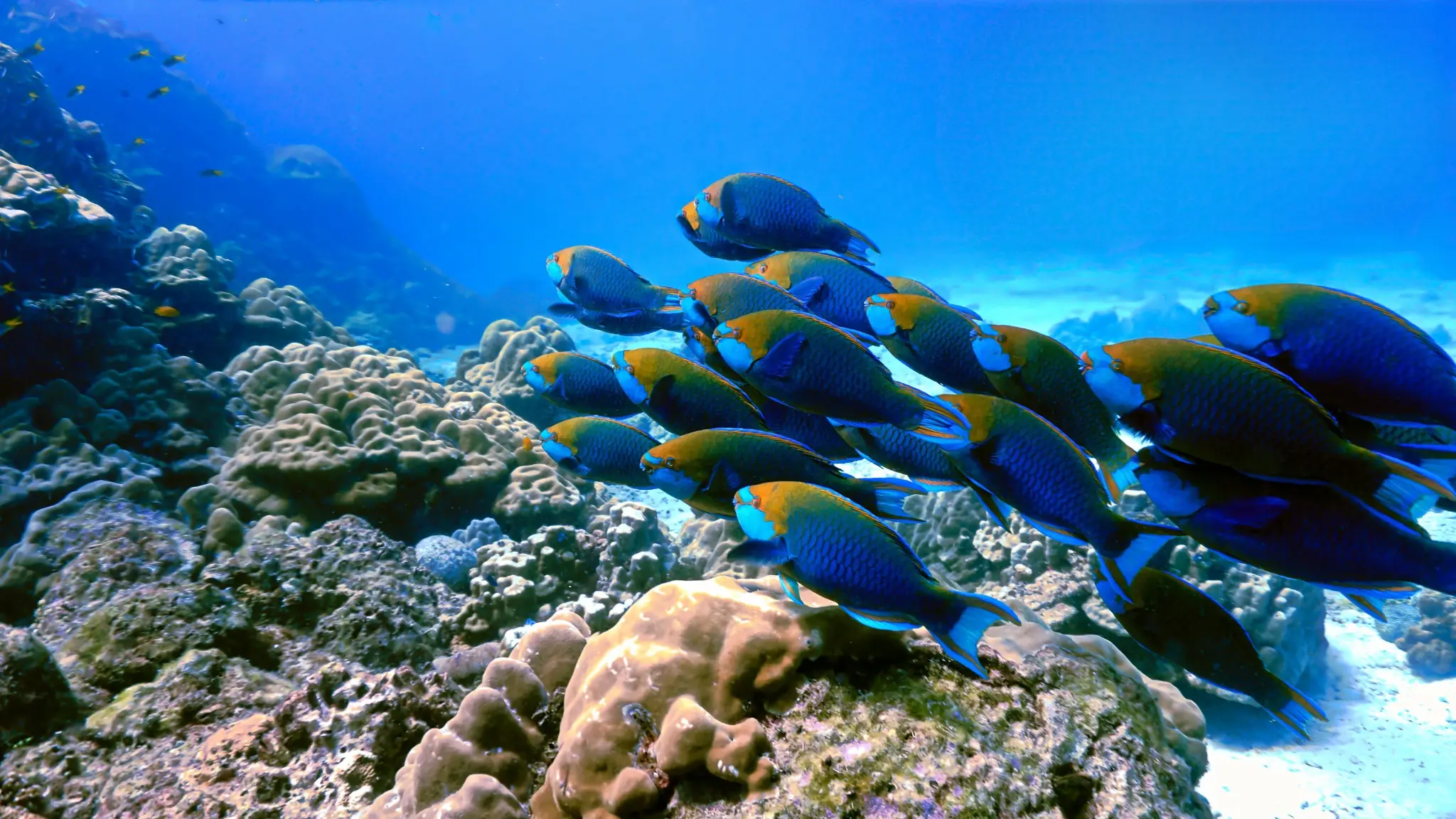
Multiple species face declining populations due to overfishing, habitat degradation, and reef loss. Their ecosystem engineering role makes population declines particularly damaging for overall reef health and resilience.
Protected areas implementing parrotfish fishing bans document dramatic reef recovery with increased coral recruitment and reduced algal coverage. Conservation efforts focus on establishing no-take zones and protecting critical spawning aggregations. Photo: Johan Holmdahl.
Science & Discovery
University of Exeter 2015 (Perry et al.) quantified large parrotfish producing 380 kilograms annual sand through coral processing—establishing parrotfish bioerosion creates 70% of Caribbean and Hawaiian beach sand determining island formation rates.
Dutch Caribbean Nature Alliance (DCNA) research documented parrotfish spending majority of daylight hours actively grazing—demonstrating intensive feeding behavior creates coral recruitment space by removing algae that would otherwise smother reef surfaces essential for coral settlement and growth.
Bermuda protected area studies (O'Farrell et al.) revealed parrotfish fishing bans increased parrotfish biomass by a factor of 3.72 within 5-6 years—demonstrating conservation effectiveness through population recovery creating enhanced herbivory pressure controlling macroalgae essential for reef resilience.
In our delightful oceans, large parrotfish produce 380 kilograms annual sand creating 70% of Caribbean and Hawaiian beach sand through coral processing. They spend 90% of their time grazing maintaining reef health by preventing algal suffocation. Fishing bans dramatically increase parrotfish populations demonstrating protection enables reef ecosystem recovery.