Ocean Sunfish
Ocean's Living Millstone
Mola mola
Meet the ocean's living millstone—ocean sunfish reaching 3 meters and up to 1,000 kilograms with truncated disc-shaped bodies ending where tails should begin. They produce up to 300 million eggs representing vertebrate reproduction records. Specialized cleaning partnerships and 600-meter diving abilities showcase Earth's most extreme 60-million-fold growth transformation from microscopic larvae to massive adults.
Meet the MillstoneWhat Makes Them Special
Record Reproduction
Produce up to 300 million eggs representing highest documented vertebrate reproductive output among bony fish species
Extreme Growth
Grow 60-million-fold from microscopic larvae to massive adults representing most extreme vertebrate size transformation
Heaviest Fish Family
Reach up to 1,000 kilograms from family Molidae, the world's heaviest bony fish
Deep Diving
Descend to 600 meters pursuing jellyfish through specialized thermal regulation maintaining function despite extreme temperature differences
Cleaning Partnerships
Visit surface stations where dozens of species remove parasites through symbiotic relationships creating oceanic health clinics
Conservation Recovery
Vulnerable status reflects threats with satellite tagging and marine protected areas enabling population monitoring
First Encounter
Family Molidae: Heaviest Bony Fish with 3-Meter (10-Foot) Disc Bodies
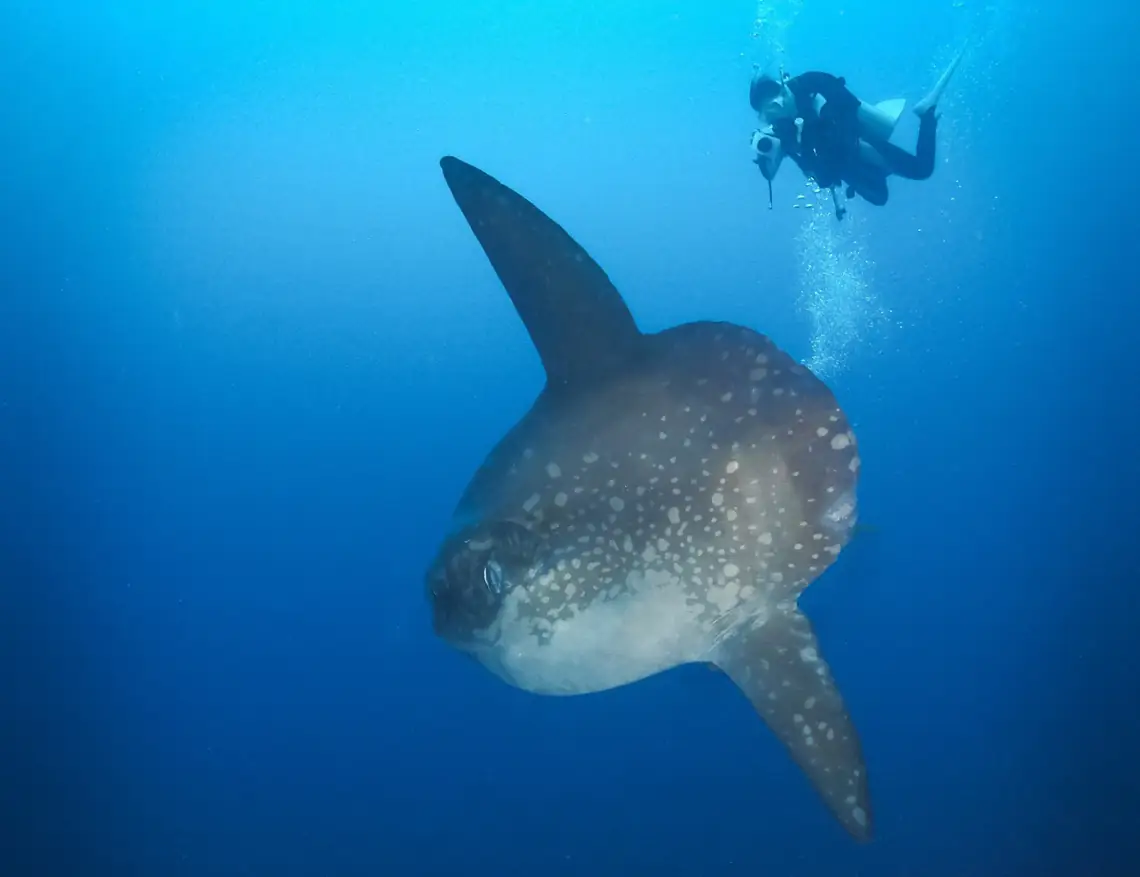
Ocean sunfish reach 3 meters in length and up to 1,000 kilograms with disc-shaped bodies ending abruptly where tails should begin. These massive swimming heads from family Molidae represent the heaviest bony fish through unique evolutionary adaptations.
Scientists call this "truncated body plan"—normal fish proportions replaced by flattened, oval forms that create nature's most unusual fish silhouette. Their laterally compressed bodies lack traditional caudal fins, creating distinctive millstone appearance. Photo: Somphob Boonlaim
"Ocean sunfish represent evolution's most radical experiment in fish design—achieving record body masses through completely reimagined skeletal architecture."
— Dr. Tierney Thys, Ocean Sunfish Research
Truncated Mystery Design
Clavus Steering Fins Replace Traditional Tails
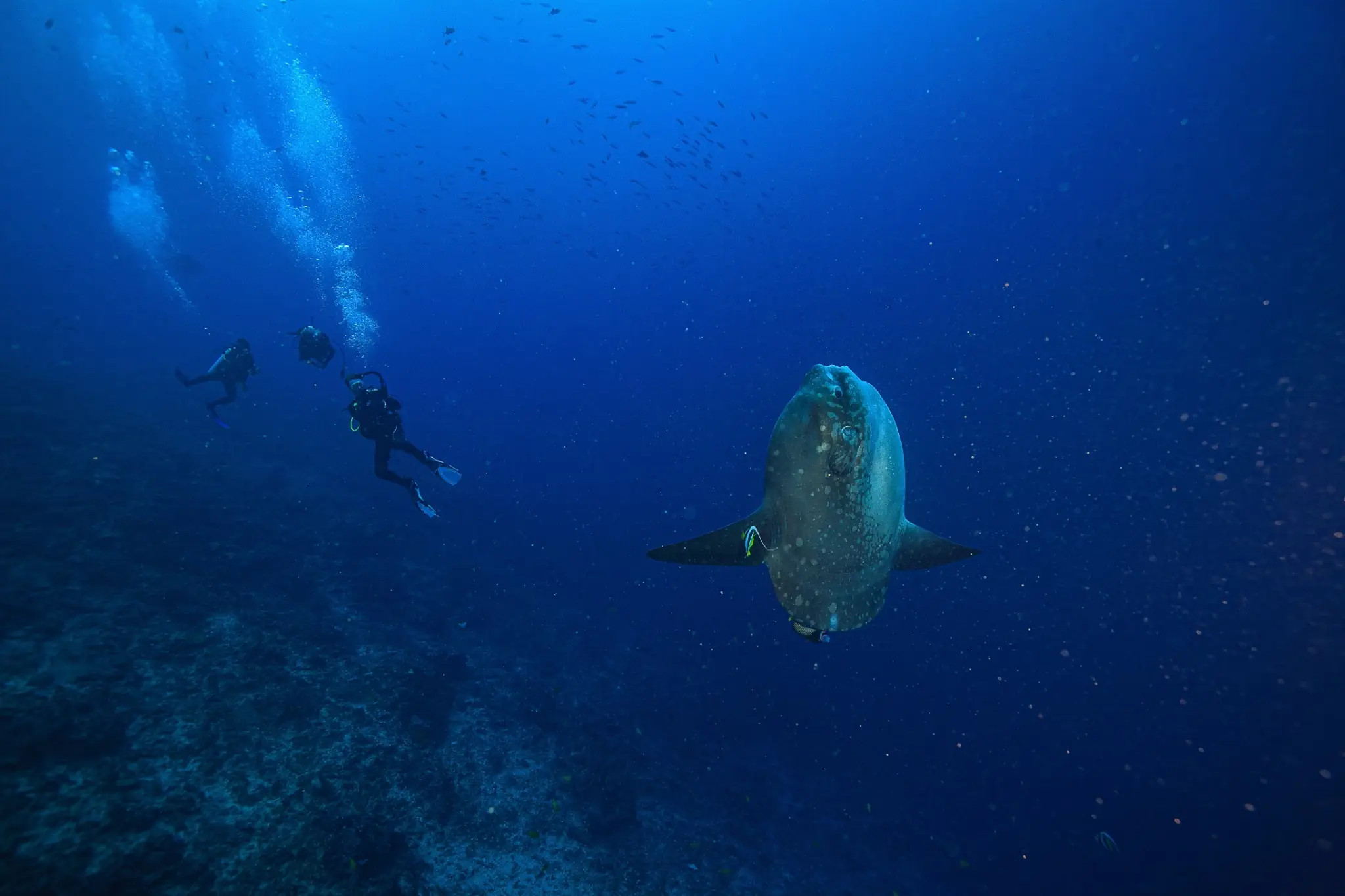
Ocean sunfish develop normal fish tails that fold into themselves during growth, creating rounded steering fins called clavus. This unique development replaces traditional swimming with gentle fin-waggling locomotion through specialized muscle arrangements.
Reduced bone calcification despite bony ancestry allows massive sizes impossible for other fish species. Their skeleton contains largely cartilaginous tissues lighter than bone enabling flexible body structure supporting extreme growth without structural failure. Photo: Somphob Boonlaim
300 Million Egg Reproduction
Vertebrate Record with 60-Million-Fold Growth Transformation
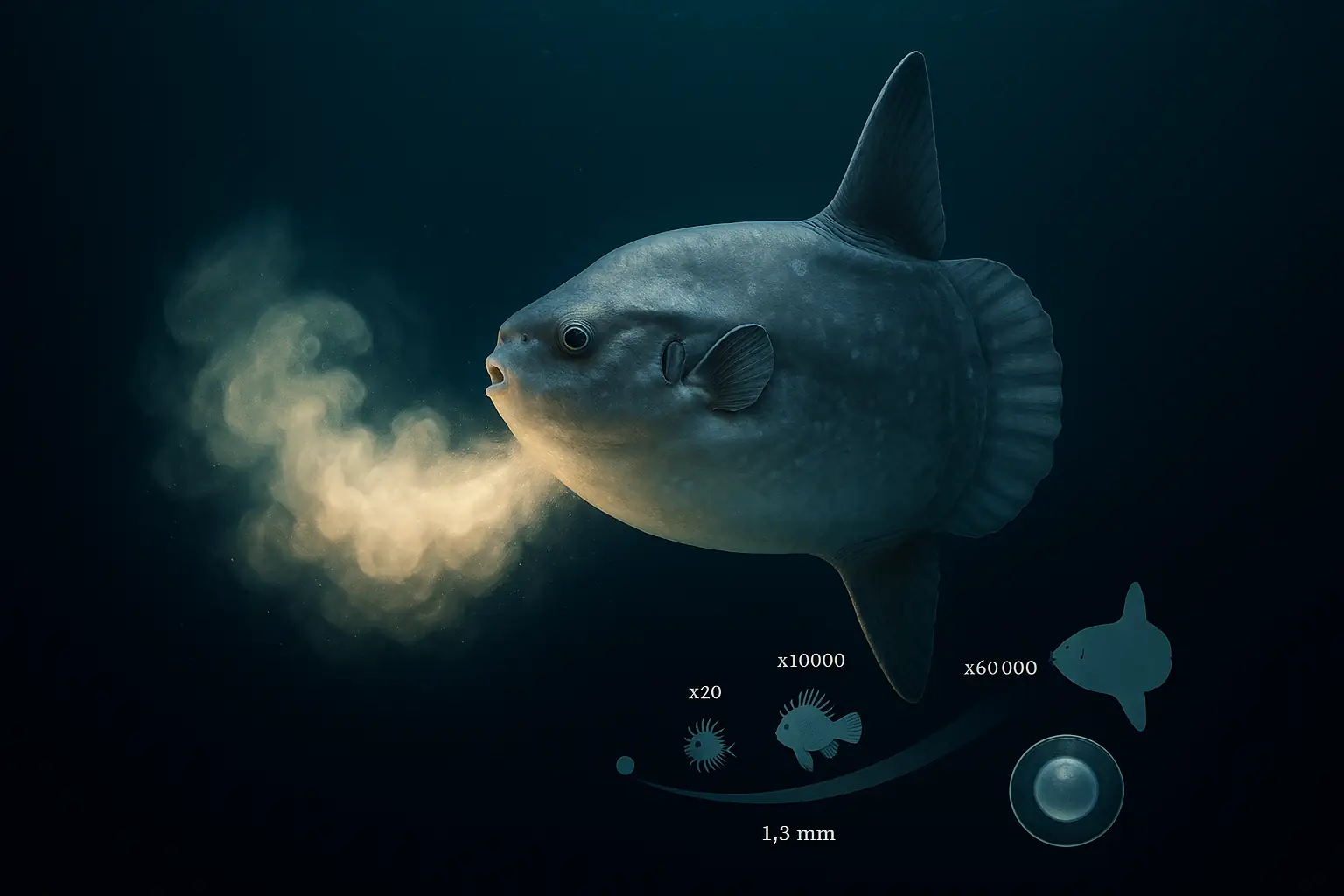
Female ocean sunfish release up to 300 million eggs at once—more than any known vertebrate species. From 2.5-millimeter larvae to massive adults represents 60-million-fold size increase during development.
Larval sunfish resemble spiky pufferfish with protective spines before transforming into smooth adults. Scientists call this "metamorphosis"—dramatic body plan changes create vertebrate growth records while enabling survival across different oceanic zones. Photo: Illustration.
"Ocean sunfish achieve the most extreme growth transformation in vertebrate history—scaling from grain-of-sand larvae to pickup truck-sized adults in a single lifetime."
— Marine Developmental Biology Research
Specialized Cleaning Stations
Multi-Species Partnerships with 54 Parasite Species Management
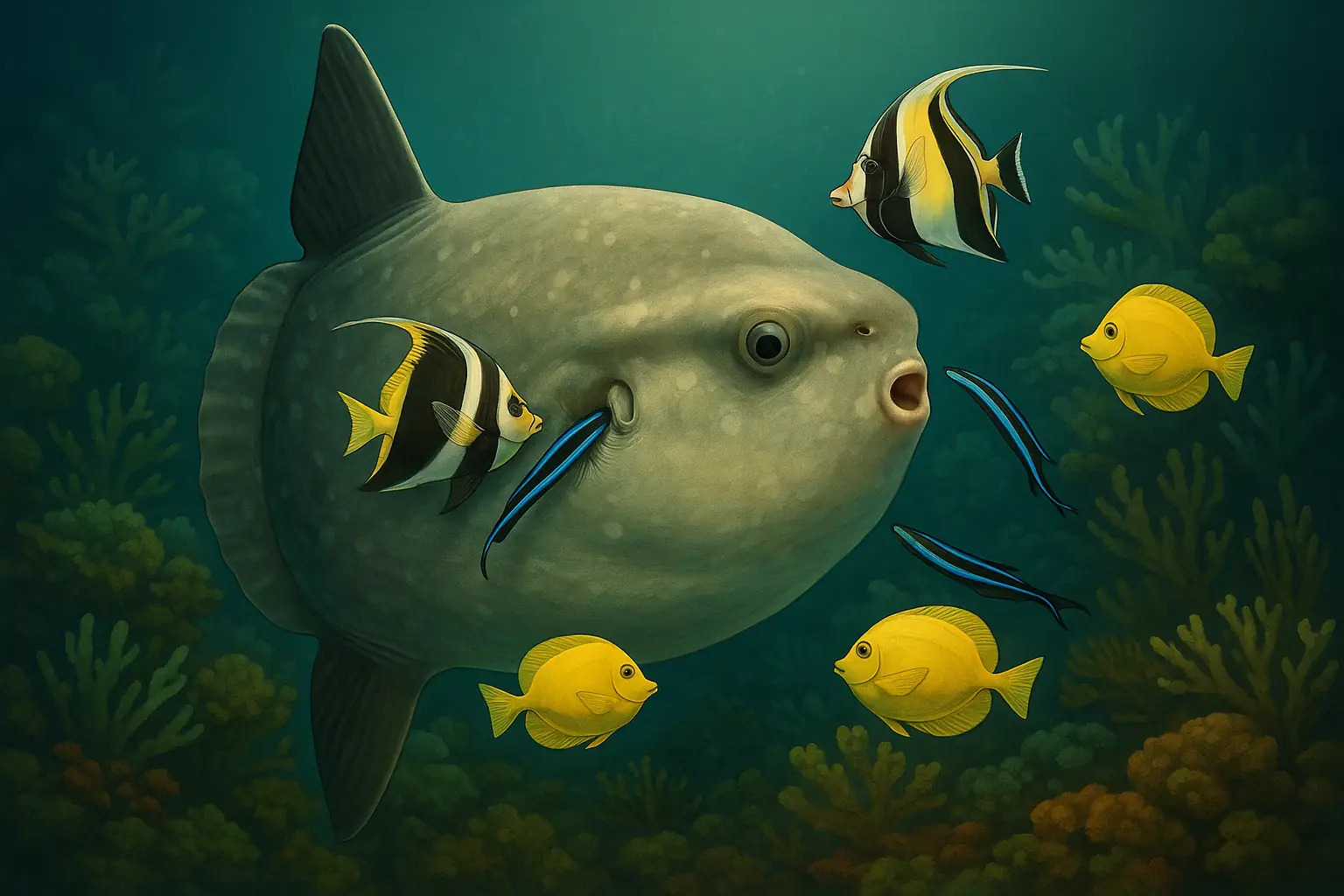
Ocean sunfish coordinate sophisticated cleaning partnerships where different fish species target specific body regions. Wrasse clean mouths, bannerfish heads, butterflyfish wounds, and angelfish work on clavus areas systematically.
Hosting over 40 documented parasite species motivates elaborate cleaning rituals both underwater and at surface. Sunfish survival depends on removing copepods lampreys and bacterial infections through these cooperative partnerships. Photo: Illustration.
Deep Diving & Jellyfish Hunting
600-Meter Dives Using Gelatinous Buoyancy Control
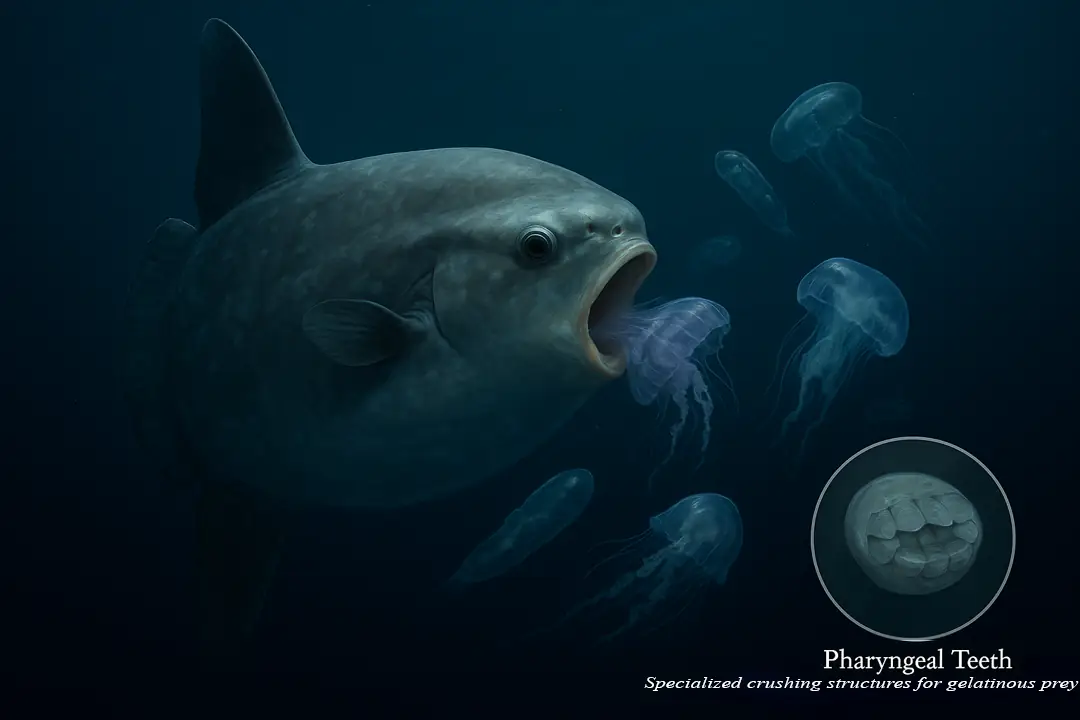
Ocean sunfish dive to 600-meter depths using subcutaneous collagen layers and lipid adjustments for buoyancy control instead of swim bladders. They spend 12 hours daily foraging across thermal layers for jellyfish prey.
Scientists call this "pharyngeal mill"—fused beak-like teeth process massive quantities of low-nutrition jellyfish. Surface basking between deep hunts regulates body temperature after cold-water foraging sessions lasting 4-6 hours continuously. Photo: Illustration.
Ocean Giants
Vulnerable Status with Global Protection Initiatives
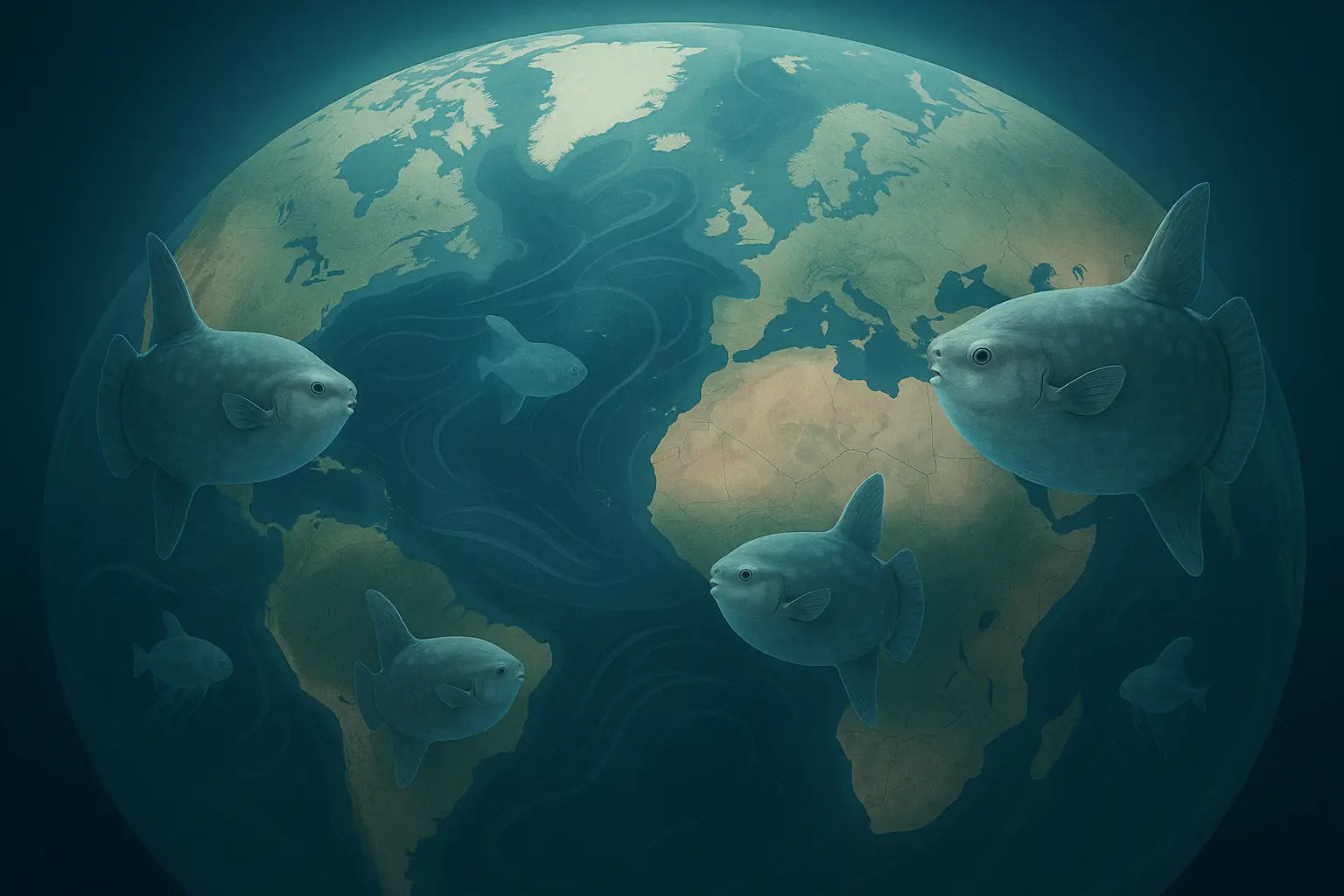
Ocean sunfish face threats from gillnet bycatch and plastic pollution resembling jellyfish prey. Their vulnerable status motivates global conservation efforts protecting vertebrate growth record holders through fisheries regulations.
Scientists track ocean sunfish through satellite tagging and abundance surveys revealing healthy populations in protected waters. Marine sanctuaries provide essential breeding areas while inspiring biomimicry research for engineering applications requiring extreme scaling solutions. Photo: Illustration.
Science & Discovery
University of Montpellier Dr. Tristan Rouyer recent satellite tagging documented substantial vertical movements revealing diel patterns with deeper dives during daylight hours suggesting foraging behaviors across different depth zones in Mediterranean waters.
Scientific Reports 2017 Northeast Atlantic aerial surveys documented 12,702 individuals in 300,000 square kilometers representing first comprehensive abundance estimates revealing year-round offshore presence supporting global population assessments.
Marine biology research quantified 60-million-fold growth transformation from microscopic larvae to record-breaking adults inspiring biomimicry applications for engineering flexible structures requiring extreme scaling solutions.
In our delightful oceans, ocean sunfish from Molidae, the heaviest bony fish family, produce 300 million eggs achieving 60-million-fold growth. Reduced calcification enables flexible skeletons supporting extreme scaling. Satellite tagging and protected areas preserve populations of 12,702 documented individuals.