Nurse Shark
Ocean's Benthic Suction Specialist
Ginglymostoma cirratum
Meet the ocean's benthic suction specialists—nurse sharks reaching 3 meters with tan to brown coloration whose powerful vacuum creates up to 0.97 atmospheres negative pressure extracting hidden prey from reef crevices. Whisker-like barbels detect buried invertebrates at up to 15-centimeter range combining chemical sensing with electroreception. Nocturnal foraging and daytime aggregations exceeding 40 individuals reveal complex social patterns.
Meet the Suction SpecialistWhat Makes Them Special
Powerful Suction Feeding
Generate up to 0.97 atmospheres negative pressure extracting buried invertebrates from reef crevices through specialized pharyngeal muscles
Barbel Electroreception
Paired whisker-like barbels detect bioelectric fields from hidden prey at up to 15-centimeter range in zero-visibility conditions
Nocturnal Hunters
Activate after sunset for systematic foraging while spending daylight hours resting motionless on sandy bottoms
Social Aggregations
Form resting groups typically 10-30 individuals with up to 40 documented in ideal habitats among largest bottom-dwelling shark assemblages
Benthic Body Plan
Reach 3 meters with tan to brown coloration and flattened bodies optimized for seafloor living throughout tropical waters
Conservation Status
Data Deficient classification requires expanded population monitoring though marine protected areas show aggregation site success
First Encounter
3-Meter Bottom Specialists with Barbel Sensory Systems
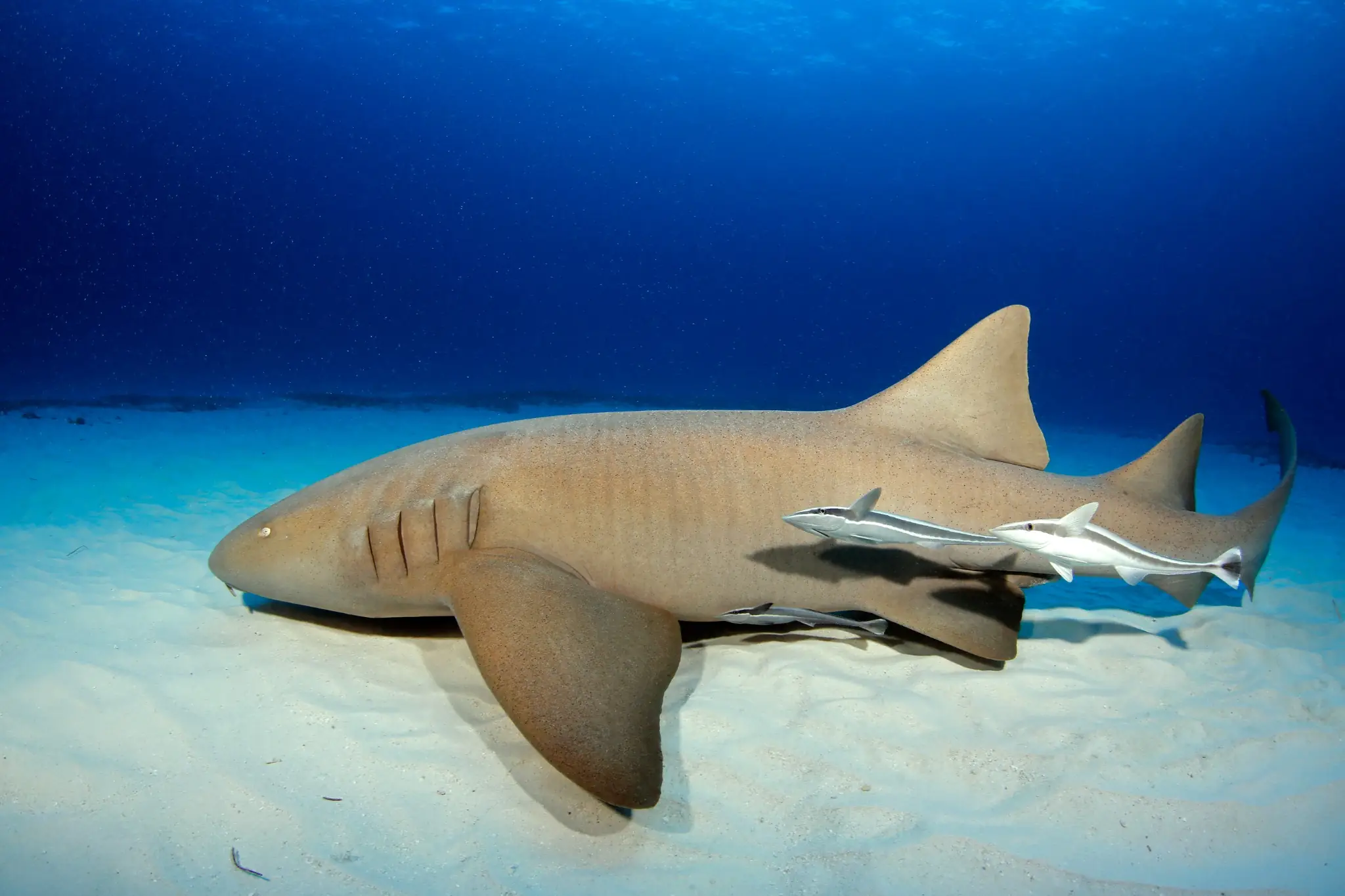
Nurse sharks reach 3 meters in length and 110 kilograms with tan to brown coloration and distinctive barbels extending from blunt snouts. These whisker-like sensory organs detect buried prey in sandy environments.
Unlike active-swimming shark species, nurse sharks spend daylight hours resting motionless on sandy bottoms. Scientists call this "benthic lifestyle"—specialized adaptations for bottom-feeding that include powerful suction capabilities and enhanced chemoreception. Photo: Daniel Lamborn.
"Nurse sharks possess one of nature's most sophisticated barbel sensory systems—detecting buried prey through combined chemical and electrical sensing that rivals any bottom-dwelling predator."
— Dr. Philip Motta, Marine Functional Morphology
Suction Feeding System
Vacuum-Powered Prey Extraction via Pharyngeal Muscles
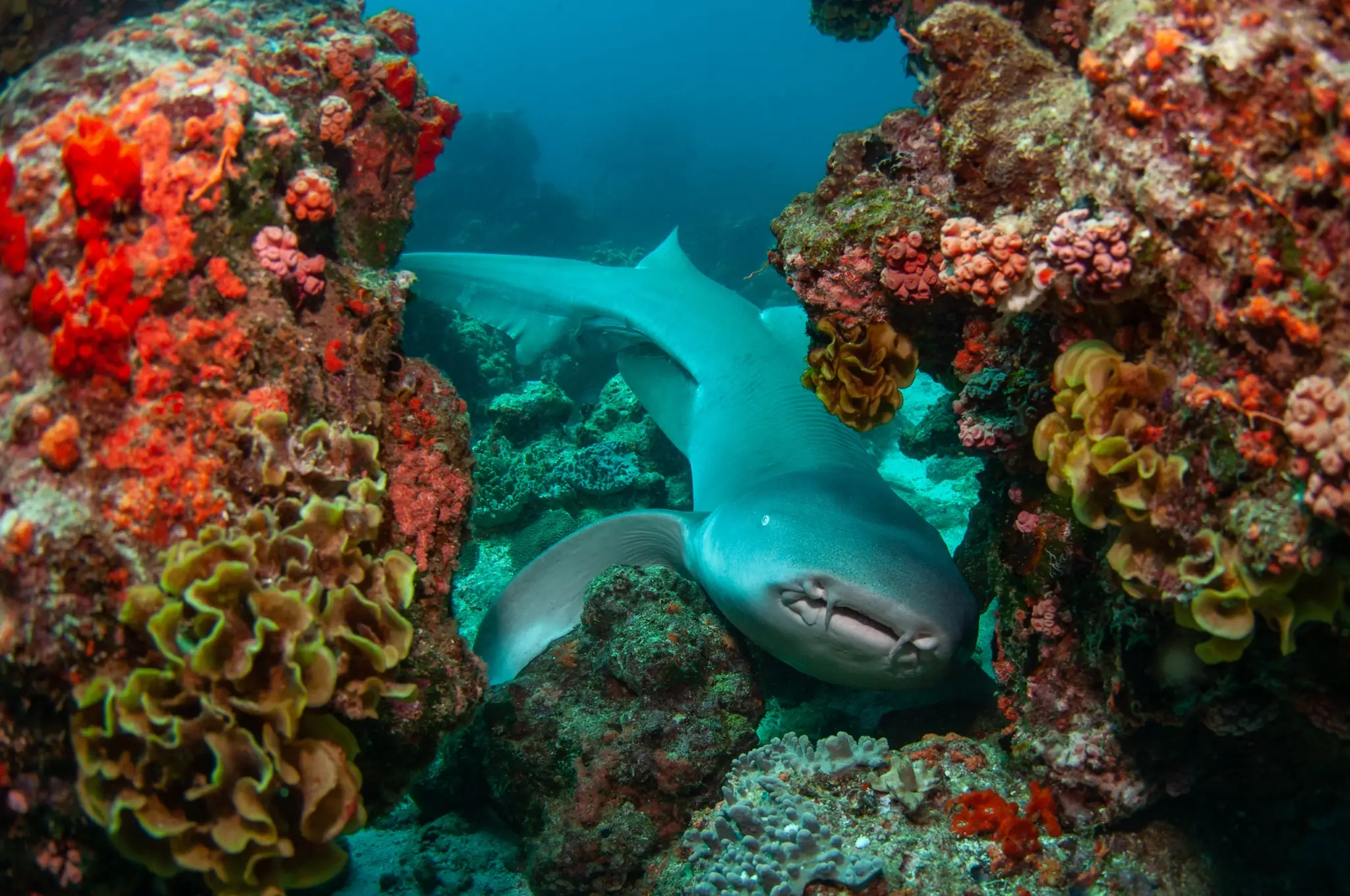
Specialized pharyngeal muscles create powerful vacuum forces by rapidly expanding throat cavities. This suction mechanism generates up to 0.97 atmospheres negative pressure extracting hidden invertebrates from reef crevices and sand burrows.
Research reveals coordinated gill arch movements amplify suction efficiency by 40% compared to related species. Small pharyngeal teeth process extracted prey while preventing escape during feeding sequences that last 2-4 seconds per capture. Photo: MartinRejzek.
Barbel Sensory System
Chemical Detection and 15-Centimeter Electroreception Range
Paired barbels contain dense concentrations of chemoreceptors detecting amino acids and chemical traces from buried prey. These whisker-like organs guide precise feeding movements in zero visibility conditions through active water sampling.
Term "electroreception" describes how barbel tissues detect bioelectric fields from hidden invertebrates at up to 15-centimeter range. This dual sensory system enables location of camouflaged prey including stingrays mollusks and crustaceans without visual cues. Photo: Andrea Izzotti
"Nurse sharks form resting aggregations of up to 40 individuals—the largest documented social groups among bottom-dwelling sharks worldwide."
— Dr. Samuel Gruber, Shark Social Behavior Research
Nocturnal Behavior
After-Dark Activation and Systematic Foraging Patterns
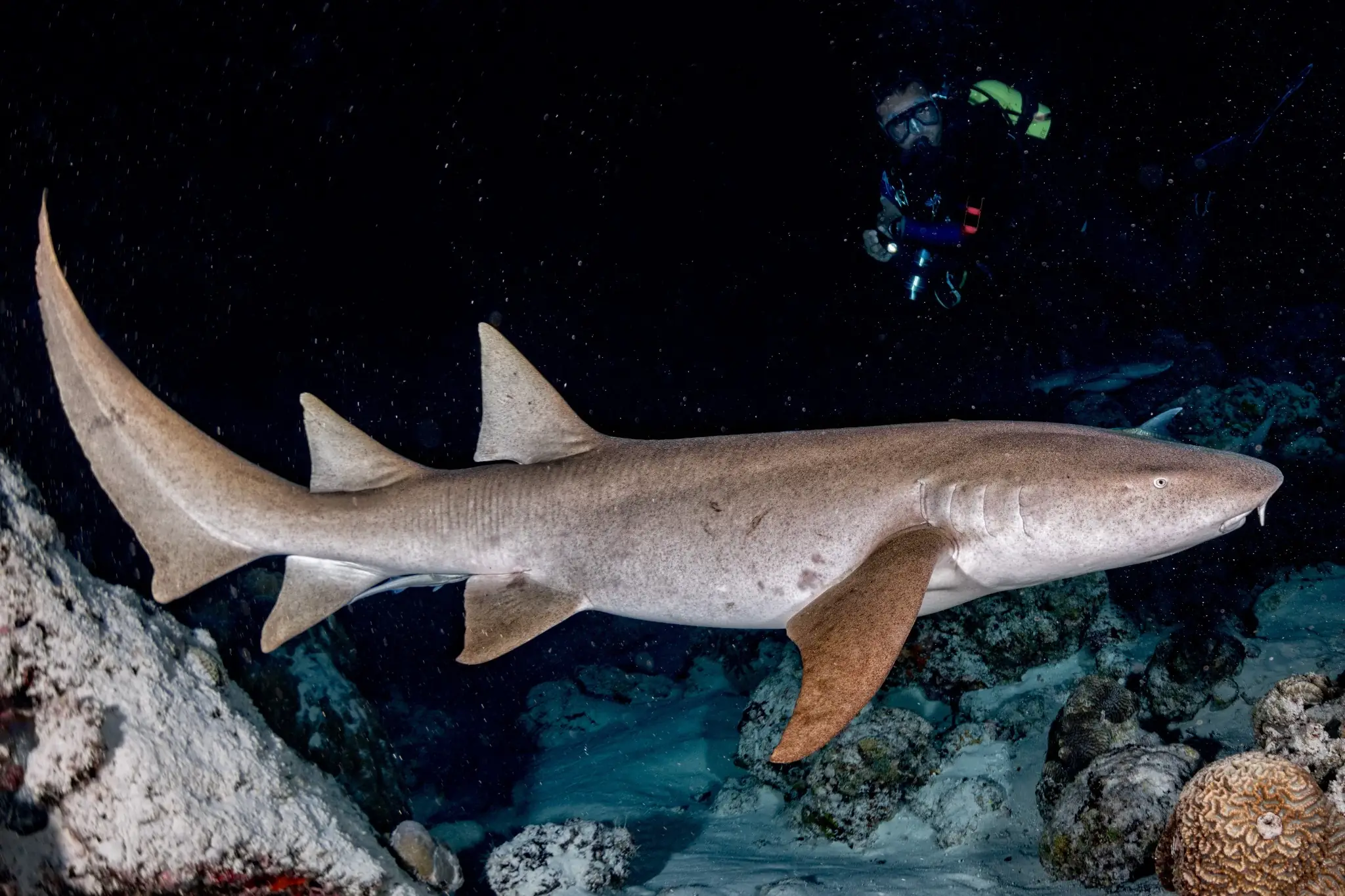
Activity patterns shift dramatically after sunset when nurse sharks begin systematic bottom searches. Tracking studies reveal 4-8 kilometer nightly movements along reef edges and seagrass beds targeting concentrated invertebrate populations.
This nocturnal timing exploits prey emergence behaviors while avoiding diurnal competitors. Enhanced chemoreception and electroreception compensate for reduced visibility enabling efficient foraging in complete darkness throughout tropical shallow-water habitats. Photo: Timothy Baxter.
Resting Aggregations
Social Groups Exceeding 40 Individuals in Cave Systems
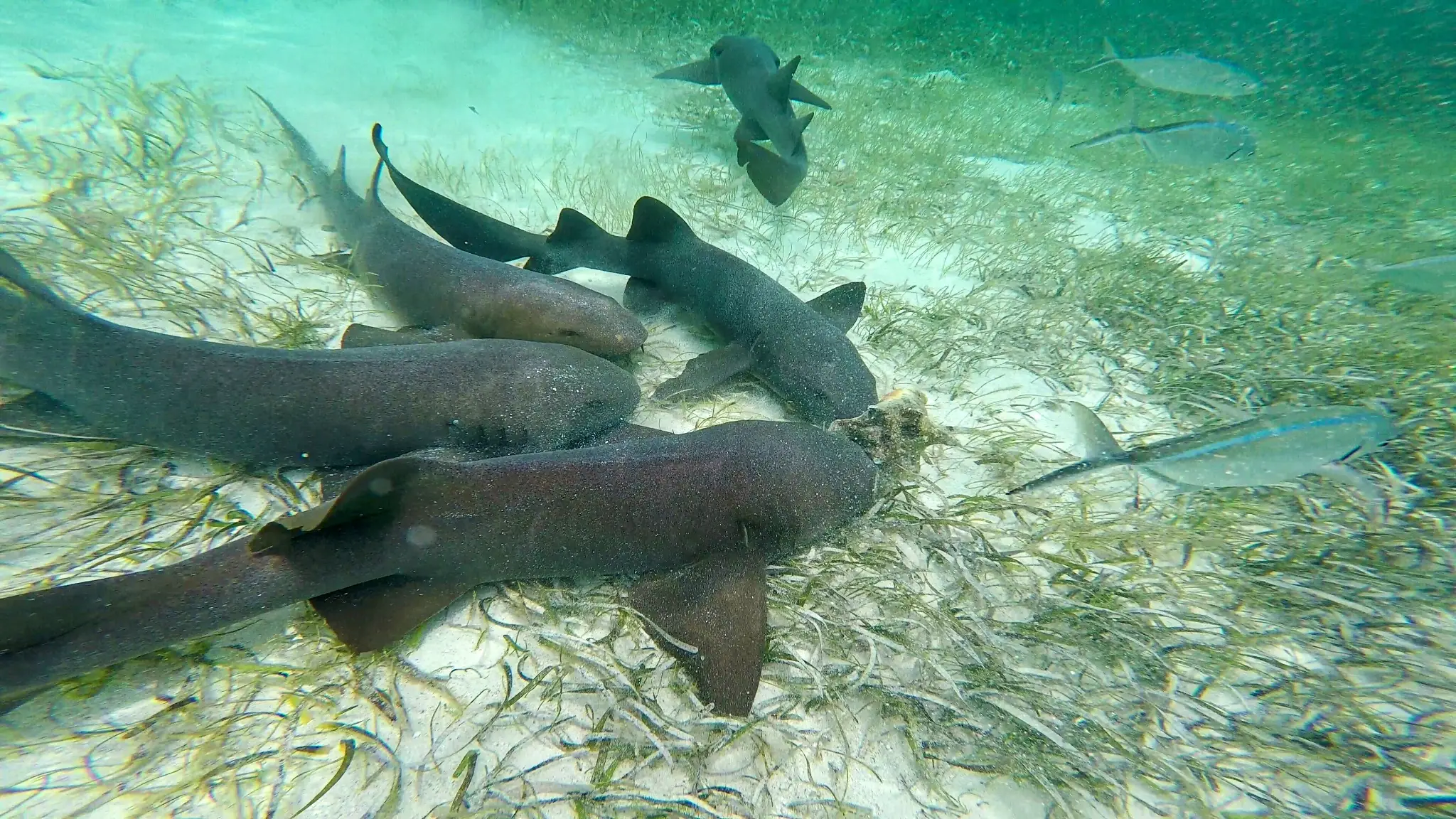
Daytime hours reveal remarkable social behavior as nurse sharks congregate in preferred shelters including underwater caves and reef overhangs. Aggregations typically contain 10-30 individuals with up to 40 documented in ideal habitats piling atop one another in layered formations.
Research indicates site fidelity spans decades with individuals returning to identical resting locations. These aggregations provide thermoregulation benefits and predator protection while potentially establishing social structures though hierarchical patterns remain under investigation. Photo: Lucie Petrikova
Conservation Status
Data Deficient Species with Marine Protected Area Success
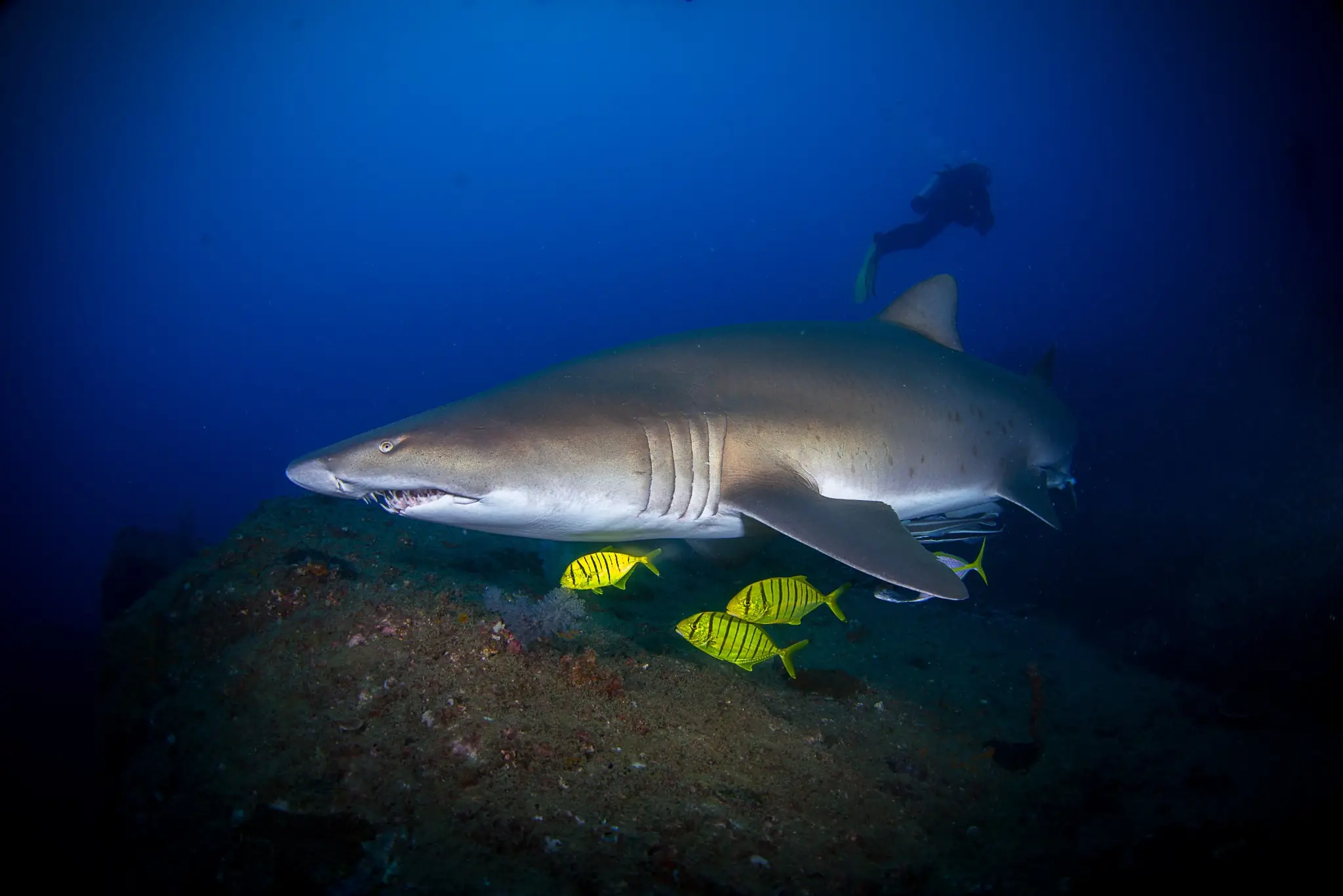
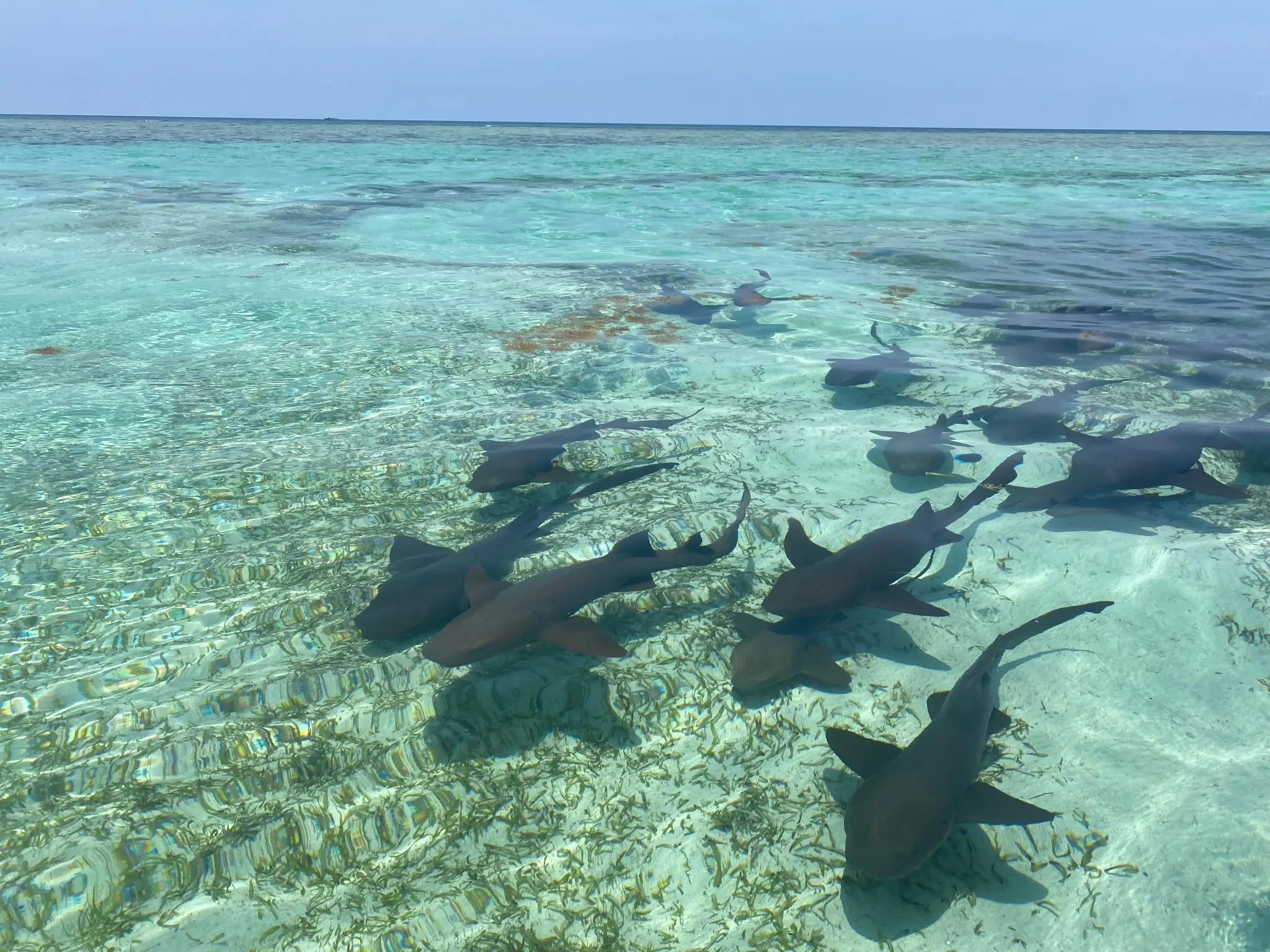
Listed as Data Deficient by IUCN due to limited population studies, though regional declines documented in heavily fished areas. Their docile nature and aggregation behavior make them vulnerable to capture and harassment.
Bahamas National Shark Sanctuary protects critical aggregation sites while research programs establish population baselines through acoustic tagging. Marine park regulations prohibit touching or harassment while promoting sustainable ecotourism viewing practices that support local economies. Photo: Lauren Eagle.
Science & Discovery
University of Miami Dr. Philip Motta 2023 high-speed videography quantified suction feeding revealing pharyngeal muscle contractions generate peak pressures 40% stronger than related carpet sharks enabling extraction of deeply embedded invertebrates.
Florida State University Dr. Dean Grubbs recent acoustic tracking documented site fidelity spanning 18 years with nurse sharks returning annually suggesting cultural transmission of resting locations through social learning.
Marine Biology Institute Dr. Tricia Meredith recent electroreception studies demonstrated barbel organs detect bioelectric fields at up to 15-centimeter range enabling successful foraging in zero-visibility environments including turbid waters and nighttime conditions.
In our delightful oceans, nurse sharks generate suction forces 40% stronger than related species through specialized pharyngeal muscles. Aggregations typically 10-30 individuals with up to 40 in ideal habitats demonstrate 18-year site fidelity suggesting social learning. Marine protected areas successfully preserve critical aggregation sites maintaining stable populations.