Great Barracuda
Speed-Strike Predator
Sphyraena barracuda
Meet ocean's torpedo-shaped speed hunters—1.8-meter (6-feet) silver predators reaching speeds up to 56 km/h (35 mph) with explosive acceleration. Their scissor-jaw mechanics generate a devastating bite, slicing through flesh and bone with incredible speed. Dual-row fang systems combine razor cutters with backward grippers. Patient ambush strategies and countershaded camouflage demonstrate evolutionary perfection in pursuit predation across tropical reefs.
Meet the Speed-Strike PredatorWhat Makes Them Special
56 km/h (35 mph) Burst Speed
Explosive acceleration reaching 35 mph in torpedo-shaped pursuit strikes
Scissor-Jaw Bite Force
Ram-biting mechanics with a scissor-jaw system that slices through prey with devastating efficiency
Dual-Row Fang System
Outer razor cutters and inner backward-grippers preventing prey escape
Visual Ambush Master
Acute vision detecting shiny flashes with countershaded camouflage creating minimal profiles
Tornado School Defense
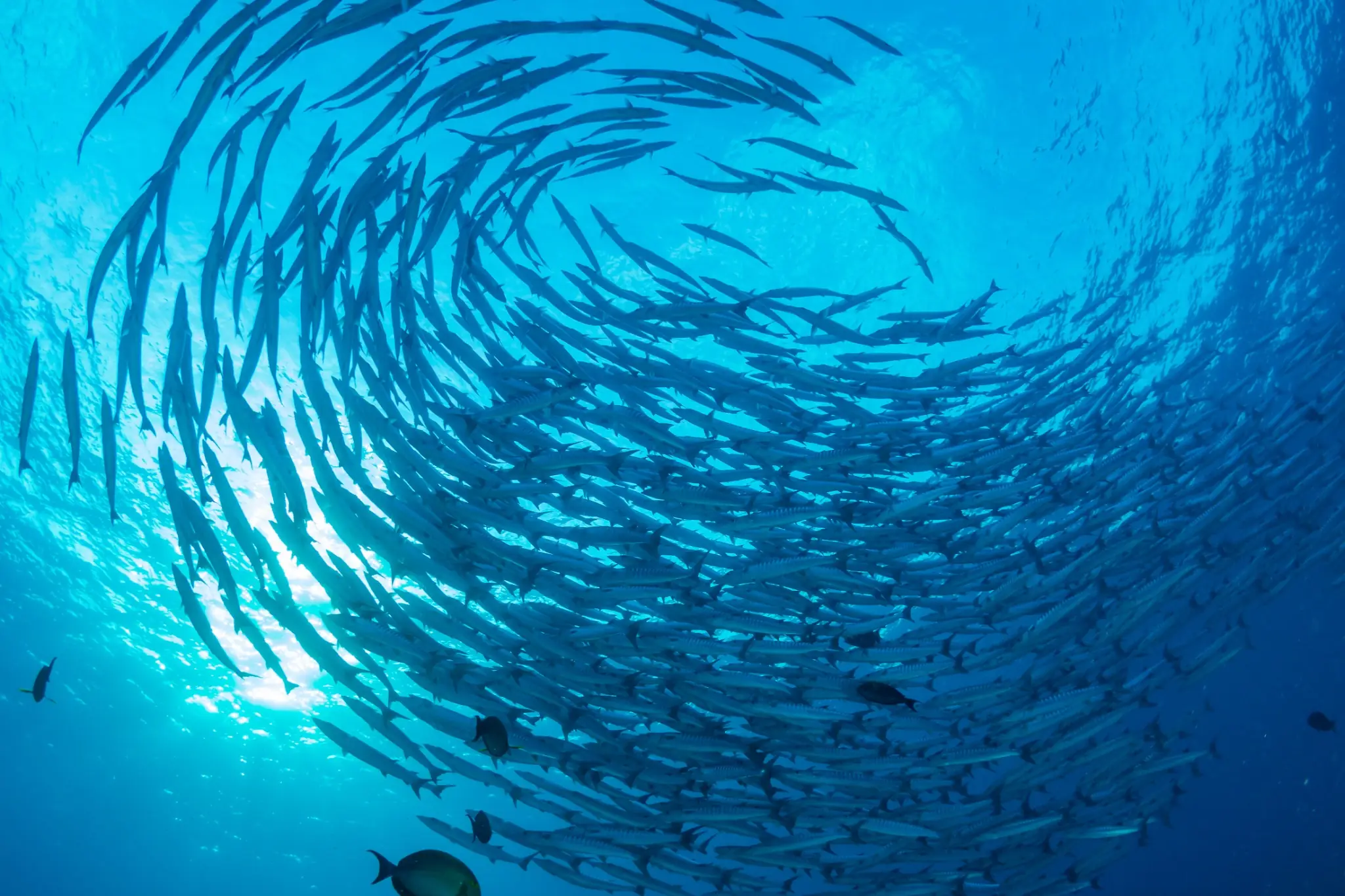
Juvenile aggregations forming spiral formations confusing predators through coordinated movements
Stable Populations
Least Concern status with sustainable management across tropical and subtropical ranges
First Encounter
Silver Torpedoes with Razor-Sharp Arsenal
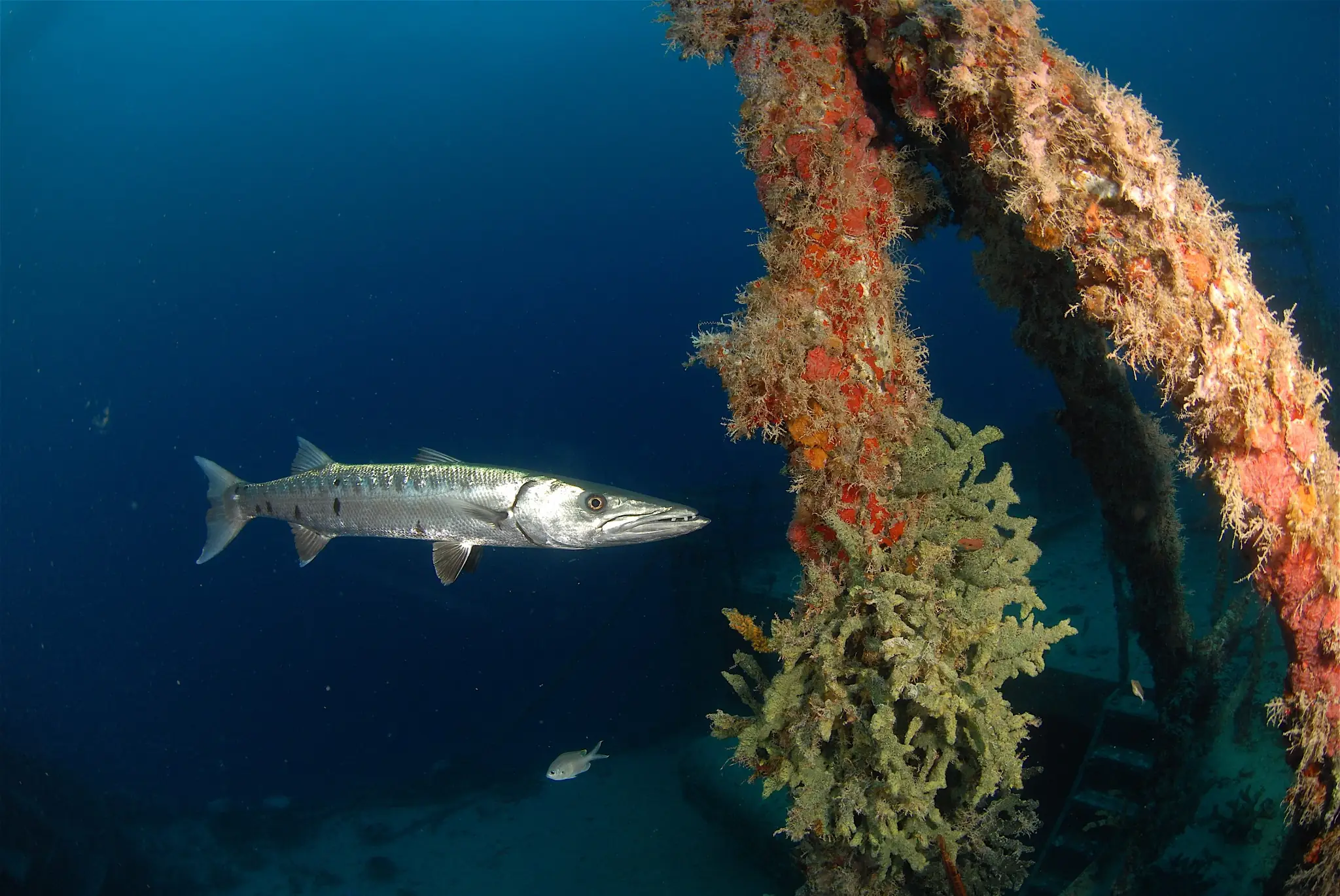
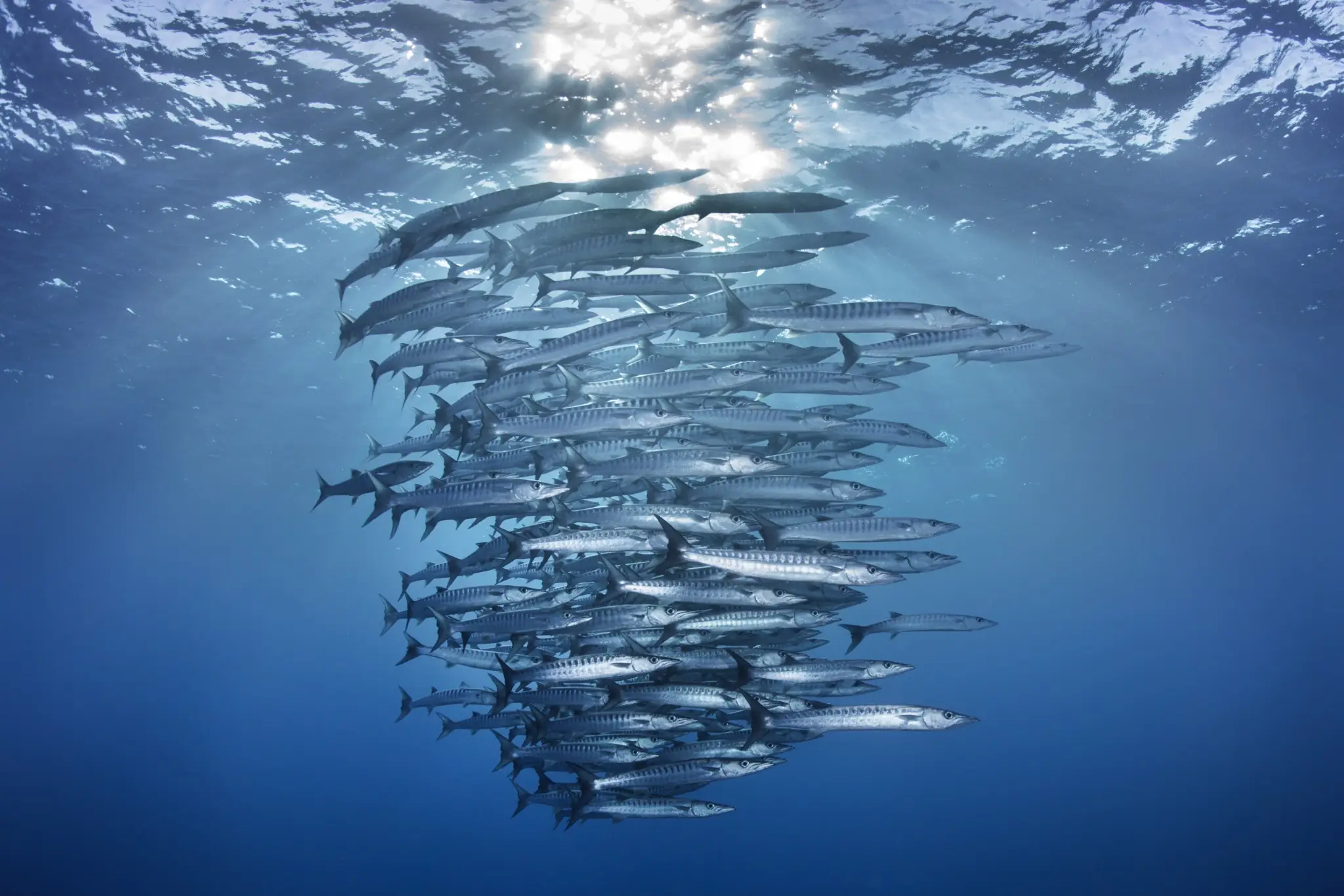
Great barracudas are streamlined silver torpedoes reaching 1.8 meters (6 feet) and weighing 50 kilograms. Their elongated bodies display distinctive black lower spots while powerful jaws bristle with rows of razor-sharp fangs gleaming like polished daggers.
These apex predators patrol coral reefs with countershaded camouflage displaying blue-gray backs blending to brilliant silver flanks. Torpedo-shaped design combined with muscular crescent tails generates explosive acceleration during ambush attacks making them perfectly engineered pursuit specialists. Photo: Jono Gaza
"Barracudas are the ultimate ambush predators. They can go from a dead stop to an explosive attack in an instant, using their streamlined bodies to reach incredible speeds before their prey even knows they're there."
— Dr. Philip Motta, University of South Florida
Ram-Biting Mechanics
Scissor-Jaw Engineering with Lightning-Fast Strikes
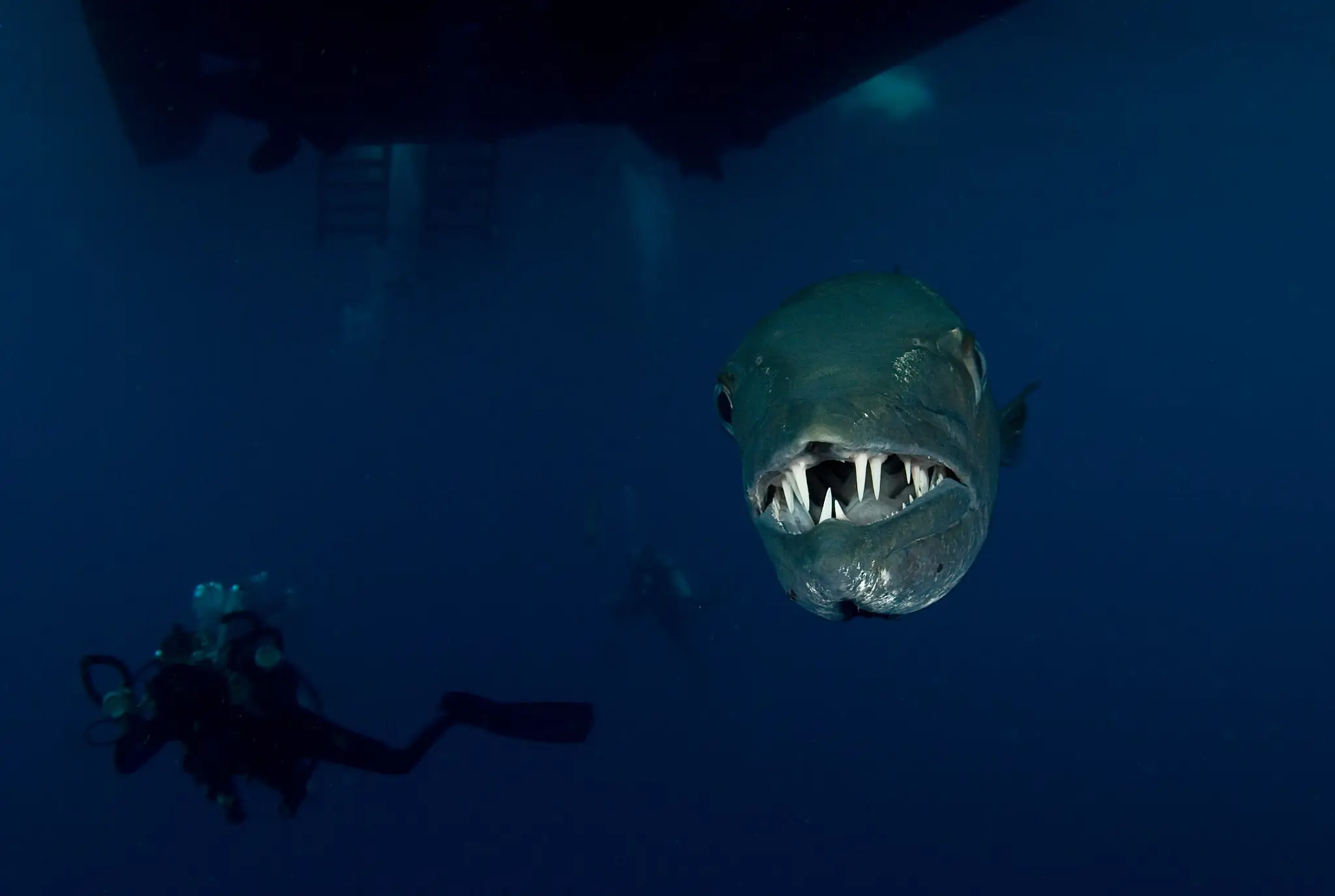
Barracudas employ specialized ram-biting where robust palatine bones armed with dagger-like teeth oppose serrated mandibles. This scissor mechanism generates tremendous pressure at the jaw corners, sufficient to slice cleanly through fish vertebrae and tough tissue.
High-speed videography reveals remarkably fast bite cycles. Dual-row fang systems feature outer razor cutters penetrating prey while inner backwards-pointing grippers prevent escape during rapid lateral headshakes that dismember large fish efficiently. Photo: Aquabluedreams
Burst Speed Acceleration
Explosive 56 km/h Torpedo Performance
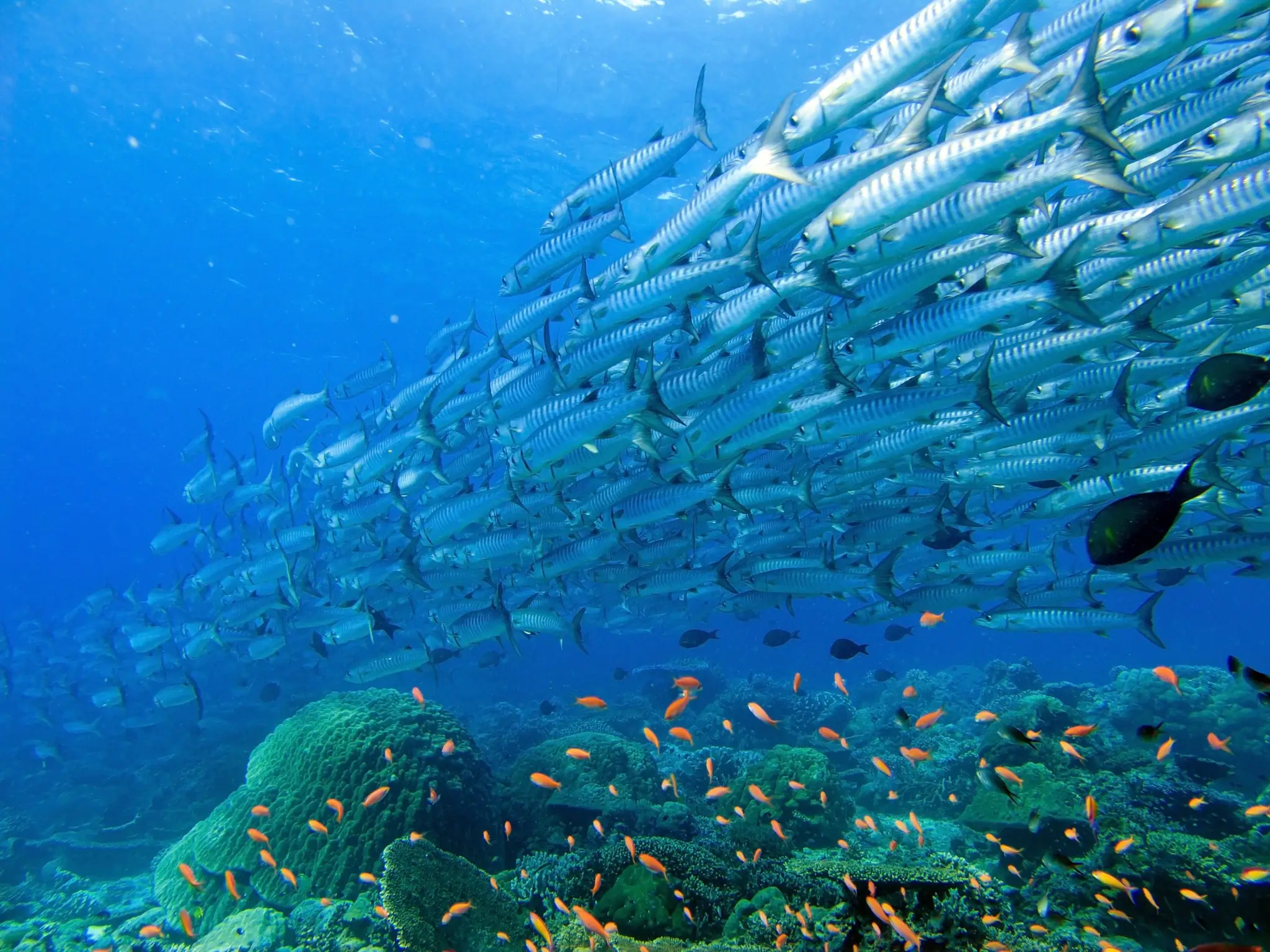
Barracudas achieve burst speeds up to 56 km/h (35 mph) through torpedo body design with posterior-positioned dorsal and anal fins. Muscular caudal peduncles combined with rigid crescent-shaped tails provide maximum thrust during pursuit attacks generating explosive acceleration.
Swimming speeds of 7.5-10 body lengths per second create substantial momentum during strikes. These short-duration sprints sacrifice maneuverability for overwhelming speed advantage enabling successful attacks before prey can react demonstrating millions of years of predatory refinement. Photo: kataleewanintarachote
"Juvenile barracudas form defensive 'tornado schools' of thousands that create confusing spirals when attacked—preventing predators from targeting individual fish through coordinated movement patterns that ripple like liquid metal."
— Dr. Marine Behavioral Ecologist, 2024 Schooling Dynamics Study
Ambush Hunting Strategy
Visual-Based Stealth with Countershaded Perfection
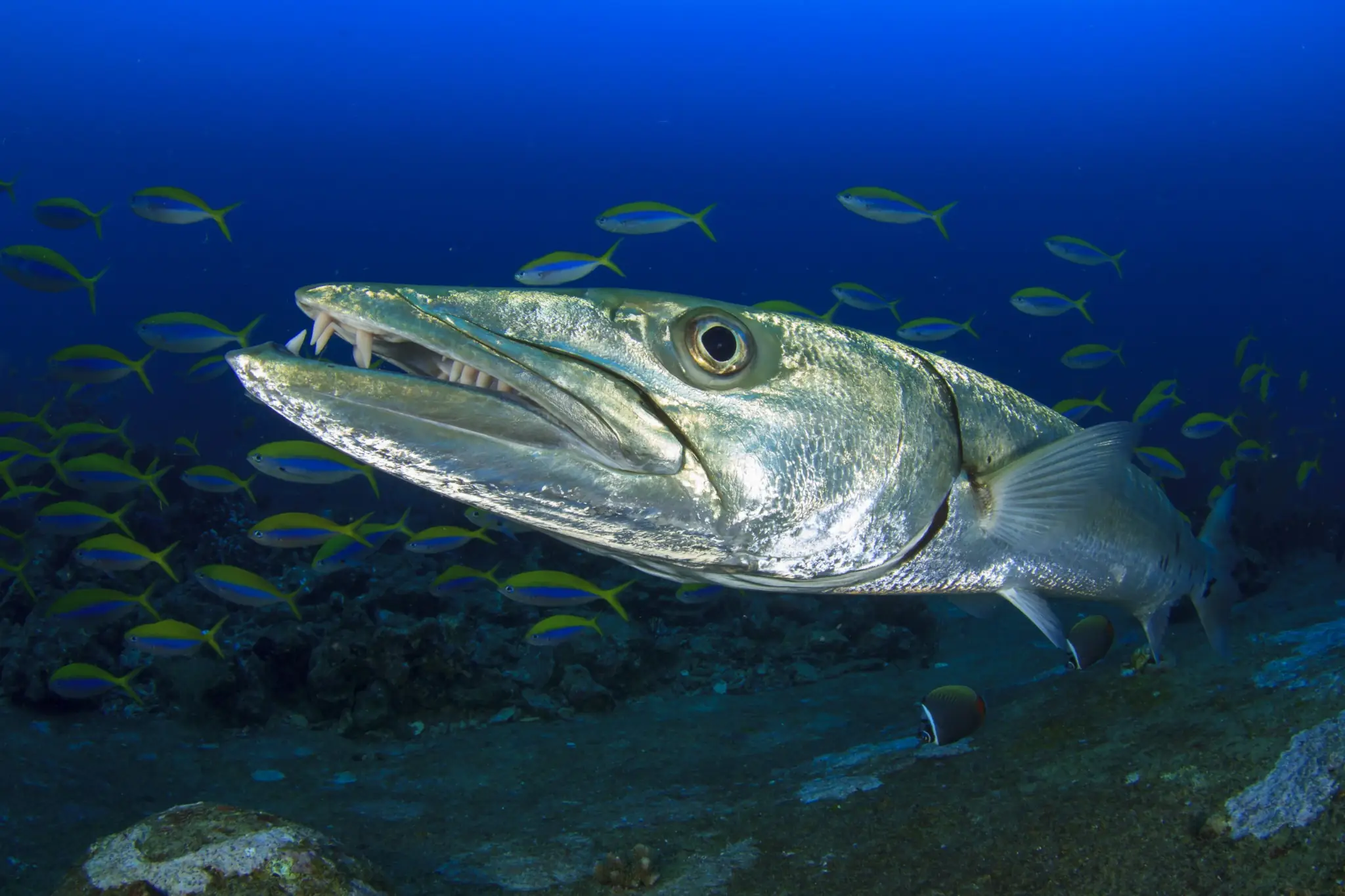
Barracudas employ acute visual systems to detect shiny flashes and unusual movements across reef territories. Countershaded camouflage creates minimal profiles when viewed head-on making these approaching predators virtually invisible against open water backgrounds.
Patient ambush behavior involves motionless hovering near coral structures followed by explosive pursuit strikes. Silver coloration and elongated bodies blend perfectly with dappled sunlight allowing barracudas to wait mere feet from prey schools undetected before launching devastating attacks. Photo: Rich Carey
Juvenile Schooling Behavior
Tornado Formation Defense in Massive Aggregations
Young barracudas aggregate in massive schools of hundreds to thousands creating protective tornado formations when threatened. Coordinated spiral movements confuse predators while maintaining group cohesion through visual cues and synchronized turning patterns.
Schooling provides cooperative hunting advantages and shared predator detection across mangrove nursery areas. Adults transition to solitary behavior around two years developing territorial tendencies in deeper reef environments where individual hunting strategies prove more effective than group cooperation. Photo: Richard Whitcombe
Conservation Status
Stable Populations with Sustainable Management
Great barracudas maintain Least Concern status under IUCN Red List assessment with stable global populations. While local fishing pressure creates regional declines particularly in heavily exploited Florida waters overall populations remain healthy across their tropical and subtropical range.
Marine protected areas throughout Caribbean and Indo-Pacific waters maintain robust barracuda populations through reef habitat preservation. Ciguatera toxin accumulation reduces commercial fishing pressure allowing sustainable recreational harvest levels while protecting these magnificent speed-strike hunters for future generations. Photo: Paul Tuazon
Science & Discovery
Field Museum 2023 biomechanical research documented barracuda ram-biting mechanics and scissor-jaw anatomy inspiring surgical cutting tool development and robotic gripper design for precise underwater manipulation applications.
MIT Ocean Engineering 2024 torpedo hull design studies analyzed barracuda hydrodynamics for autonomous underwater vehicle propulsion systems advancing burst-speed engineering capabilities in marine robotics.
Ocean engineering research analyzes barracuda hydrodynamics to inspire torpedo hull designs for autonomous underwater vehicles, advancing burst-speed capabilities in marine robotics through biomimicry.
In our delightful oceans, great barracudas achieve burst speeds up to 56 km/h (35 mph) through torpedo designs with scissor-jaw mechanics that deliver devastatingly efficient bites. Their countershaded ambush strategies demonstrate evolutionary perfection in pursuit predation. Marine protected areas throughout Caribbean and Indo-Pacific waters now preserve these speed-strike hunters maintaining stable Least Concern populations.