Blue Shark
Ocean's Globe-Spanning Voyager
Prionace glauca
Meet ocean's most widely traveled predator—sleek 4-meter (13-foot) indigo streamliners reaching 200 kilograms completing extraordinary 28,000-kilometer annual migrations. Counter-current heat exchange maintains core temperatures 8°C above surrounding water enabling global hunting. Wing-like pectoral fins generate 40 km/h burst speeds while specialized electroreceptors detect magnetic fields navigating entire ocean basins with GPS-like precision.
Meet the Globe-Spanning VoyagerWhat Makes Them Special
28,000-km Migrations
Longest documented shark migrations crossing entire ocean basins from California to Japan annually
40 km/h Burst Speed
Explosive acceleration using powerful tail thrust combined with wing-like pectoral fin gliding efficiency
Thermal Regulation
Counter-current heat exchange networks maintain core muscle temperature 8°C above surrounding water
Magnetic Navigation
Specialized electroreceptor cells detect Earth's magnetic field enabling GPS-like precision across featureless ocean
Deep-Diving Hunter
Vertical migrations to 600 meters connecting surface productivity with deep-sea ecosystems through predation
Near Threatened Status
ICCAT 2023 assessment projects recovery with coordinated international management across migratory corridors
First Encounter
Indigo Streamliners Built for Global Journeys
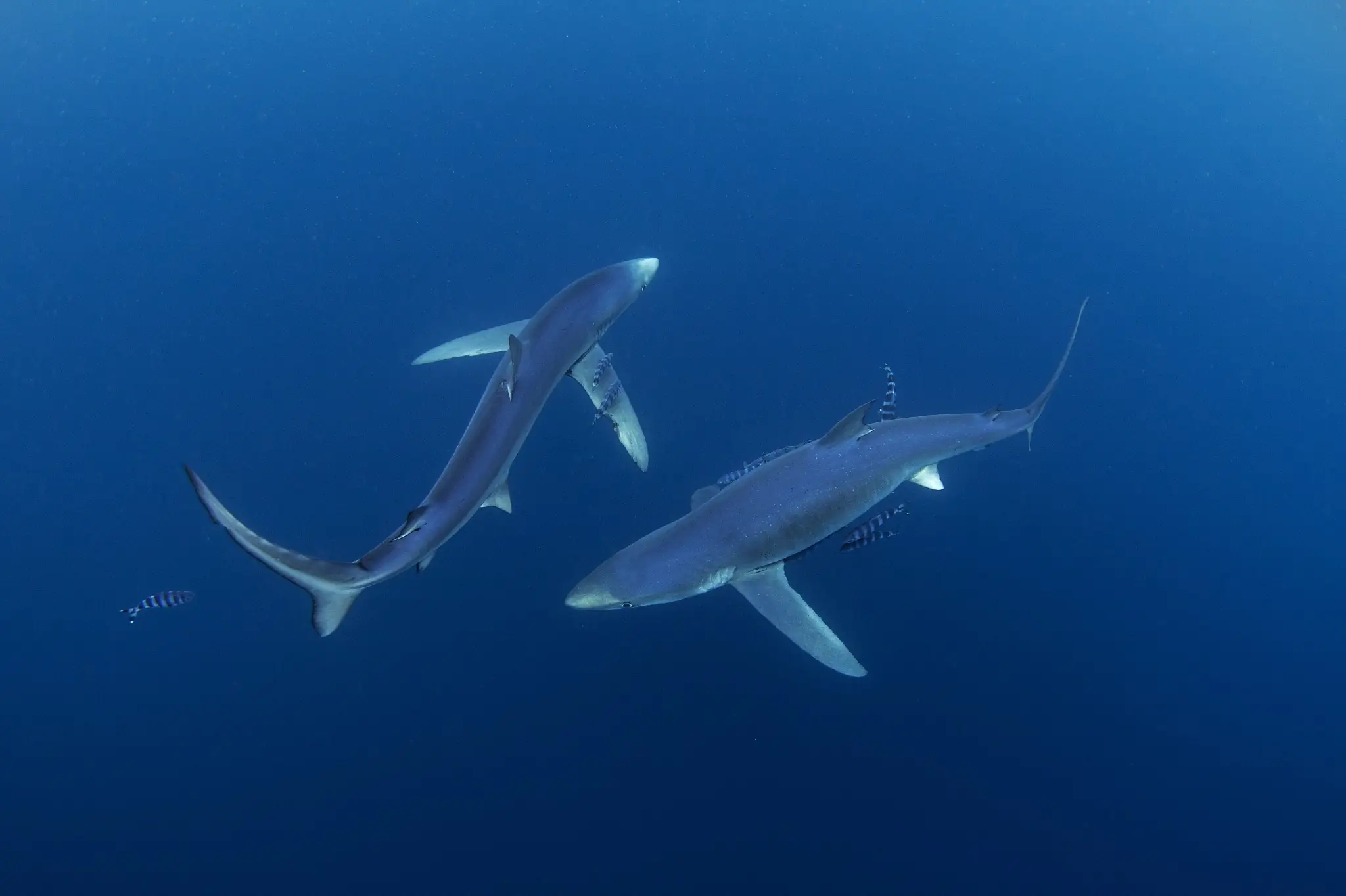
Blue sharks reach 4 meters (13 feet) with distinctive indigo-blue backs fading to white bellies. Elongated pectoral fins stretch like graceful wings while streamlined torpedo bodies weigh up to 200 kilograms.
Large black eyes provide exceptional vision throughout open ocean environments. Hydrodynamic bodies eliminate drag with remarkable efficiency enabling sustained swimming across entire ocean basins. Photo: Martin Prochazkacz.
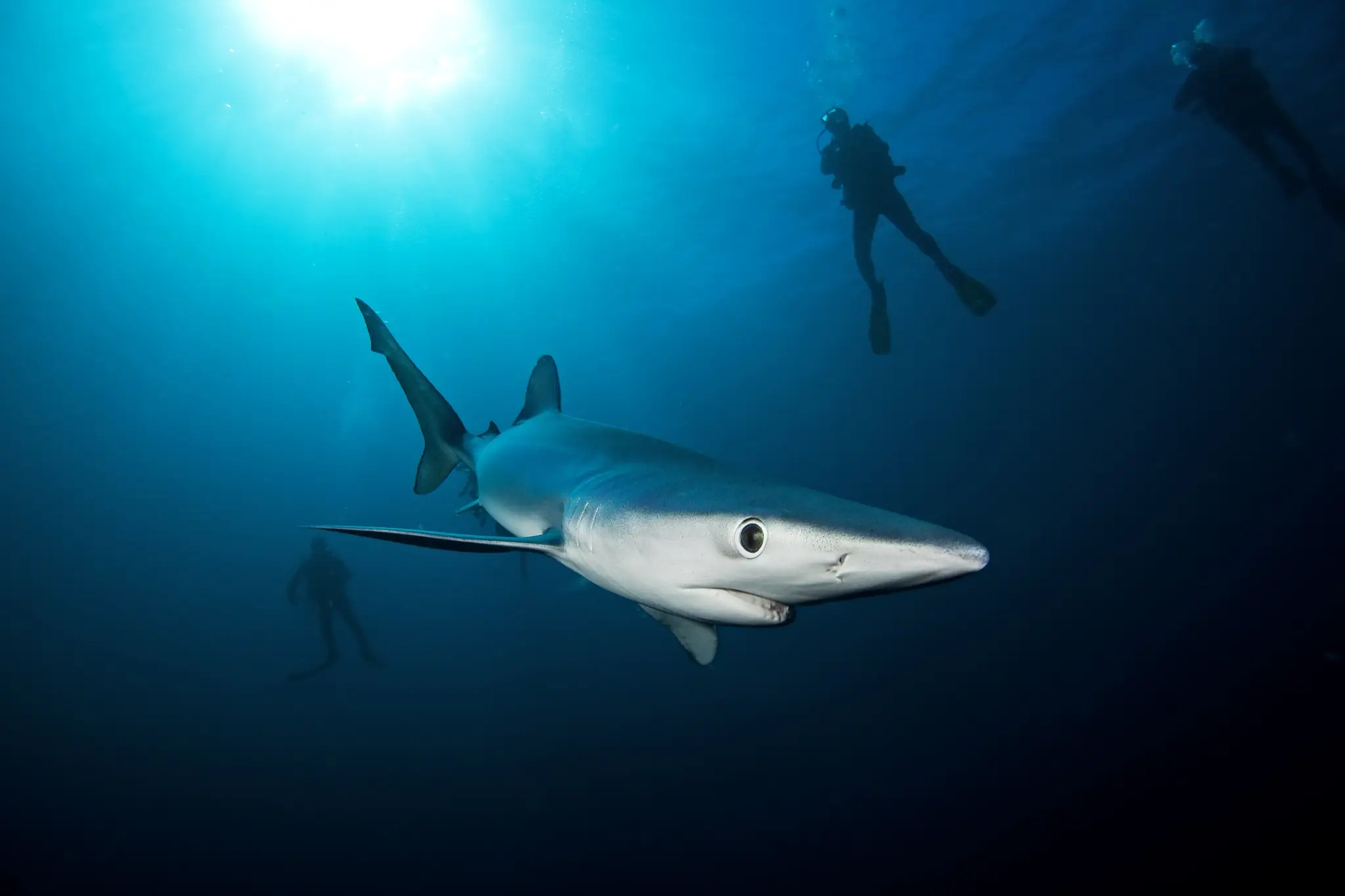
"Blue sharks complete the longest migrations of any shark species—individual fish crossing entire ocean basins in circular journeys spanning 28,000 kilometers annually, connecting distant feeding grounds and breeding areas across multiple continents."
— Dr. Barbara Block, Stanford Tagging Consortium
Global Migration System
Basin-Scale Connectivity Across 28,000 Kilometers
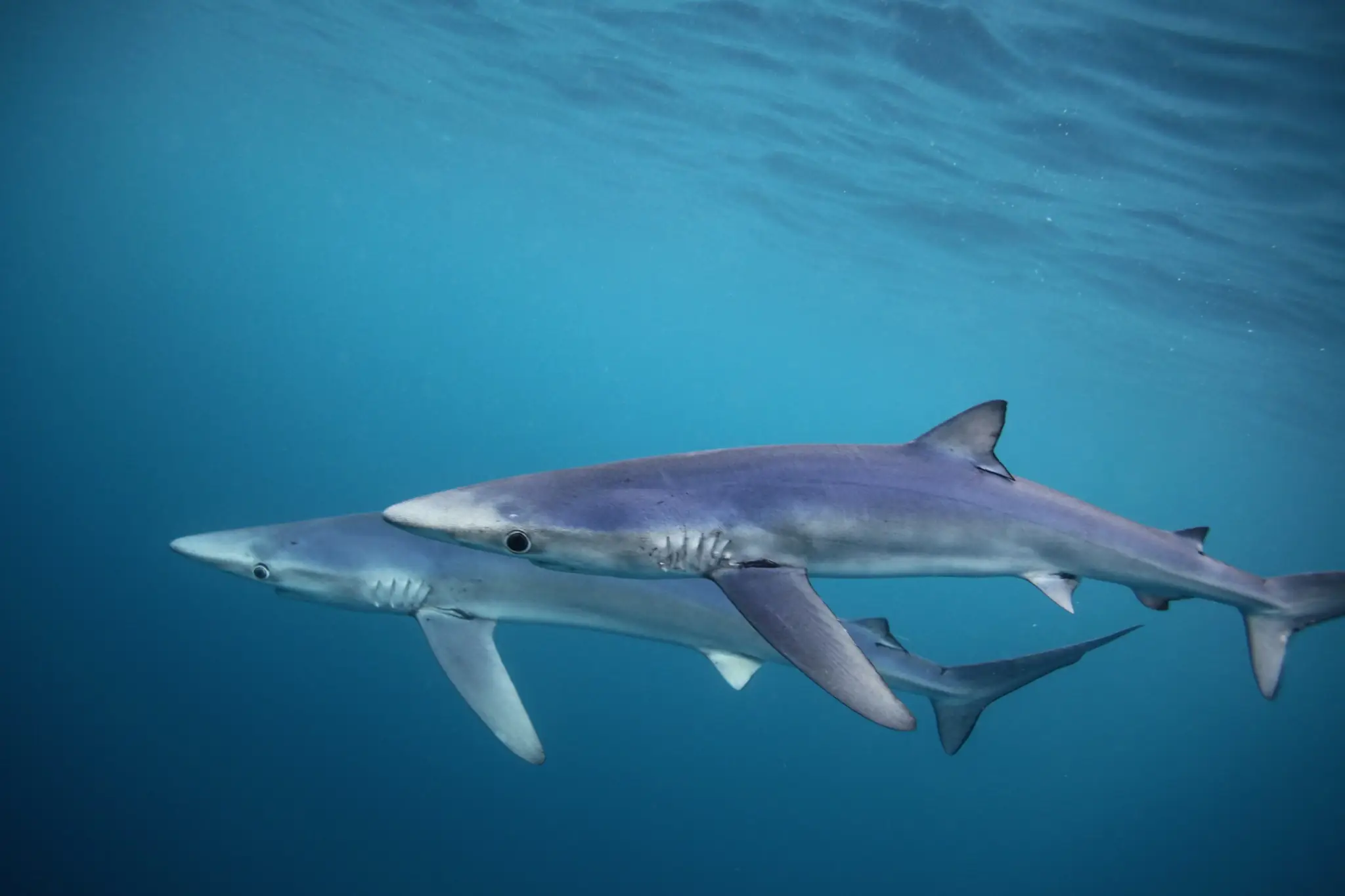
Satellite tracking reveals circular migration routes spanning entire ocean basins covering up to 28,000 kilometers annually. These extraordinary journeys connect breeding areas feeding grounds and nursery habitats across continents.
Scientists call this basin-scale connectivity as sharks tagged off California appear near Japan within months. Magnetic field detection through electroreceptor cells enables navigation with GPS-like precision. Photo: Alessandro De Maddalena.
Speed and Efficiency
Wing-Like Gliding with 40 km/h Acceleration
Blue sharks achieve burst speeds of 40 km/h using powerful tail propulsion combined with streamlined design. Extended pectoral fins function like airplane wings providing crucial lift during energy-conserving gliding.
Streamlined design significantly reduces hydrodynamic drag compared to coastal species. Sustained cruising at 2.5 km/h maintained effortlessly for months rivals engineered underwater vehicle efficiency. Photo: Alessandro De Maddalena.
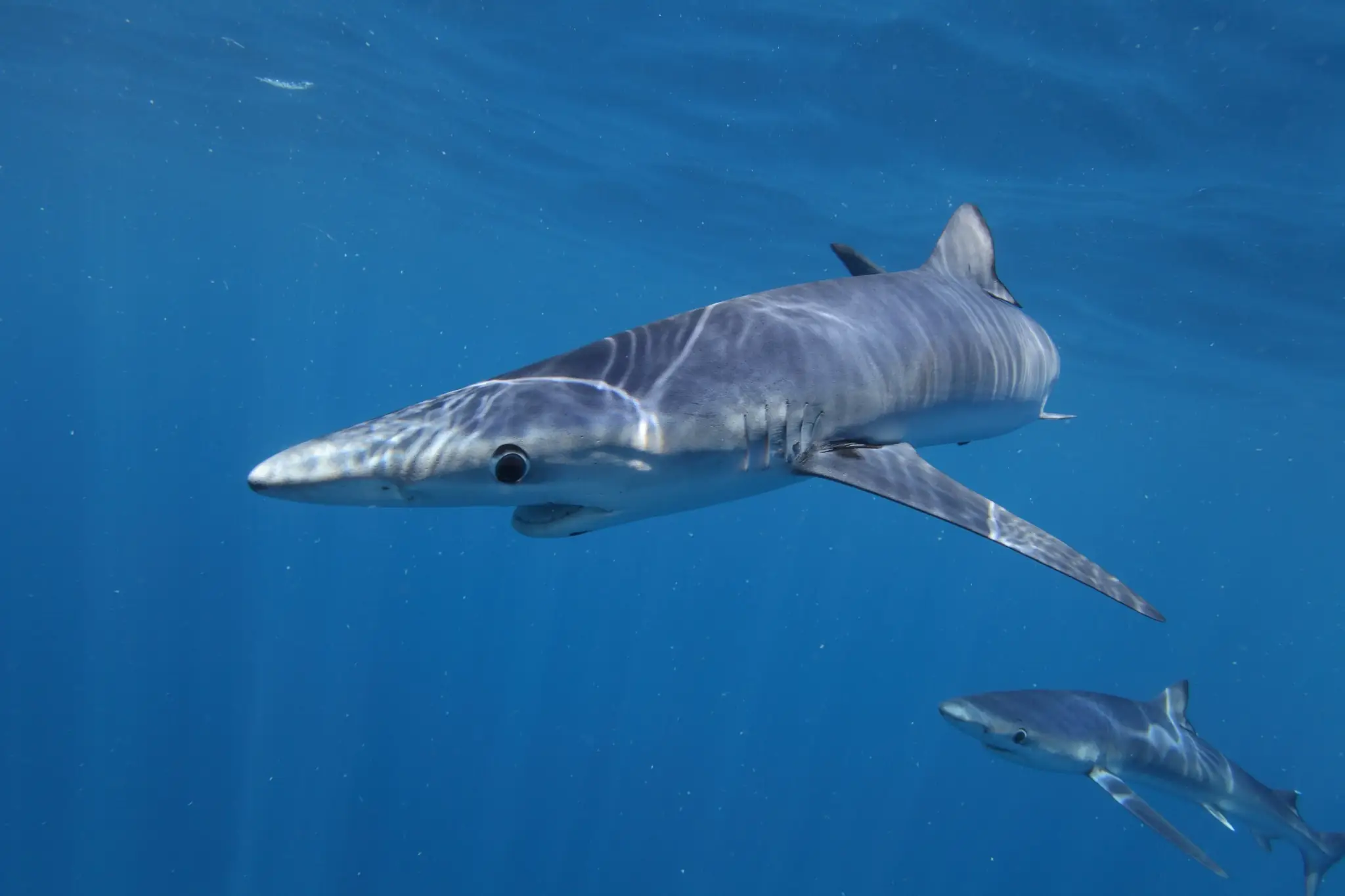
"Blue sharks demonstrate the ocean's most efficient locomotion system—maintaining steady speeds for months while traveling distances equivalent to halfway around Earth, showcasing evolutionary perfection in endurance swimming."
— Dr. Yannis Papastamatiou, Marine Locomotion Research
Thermal Adaptation
Multi-Zone Temperature Management Systems
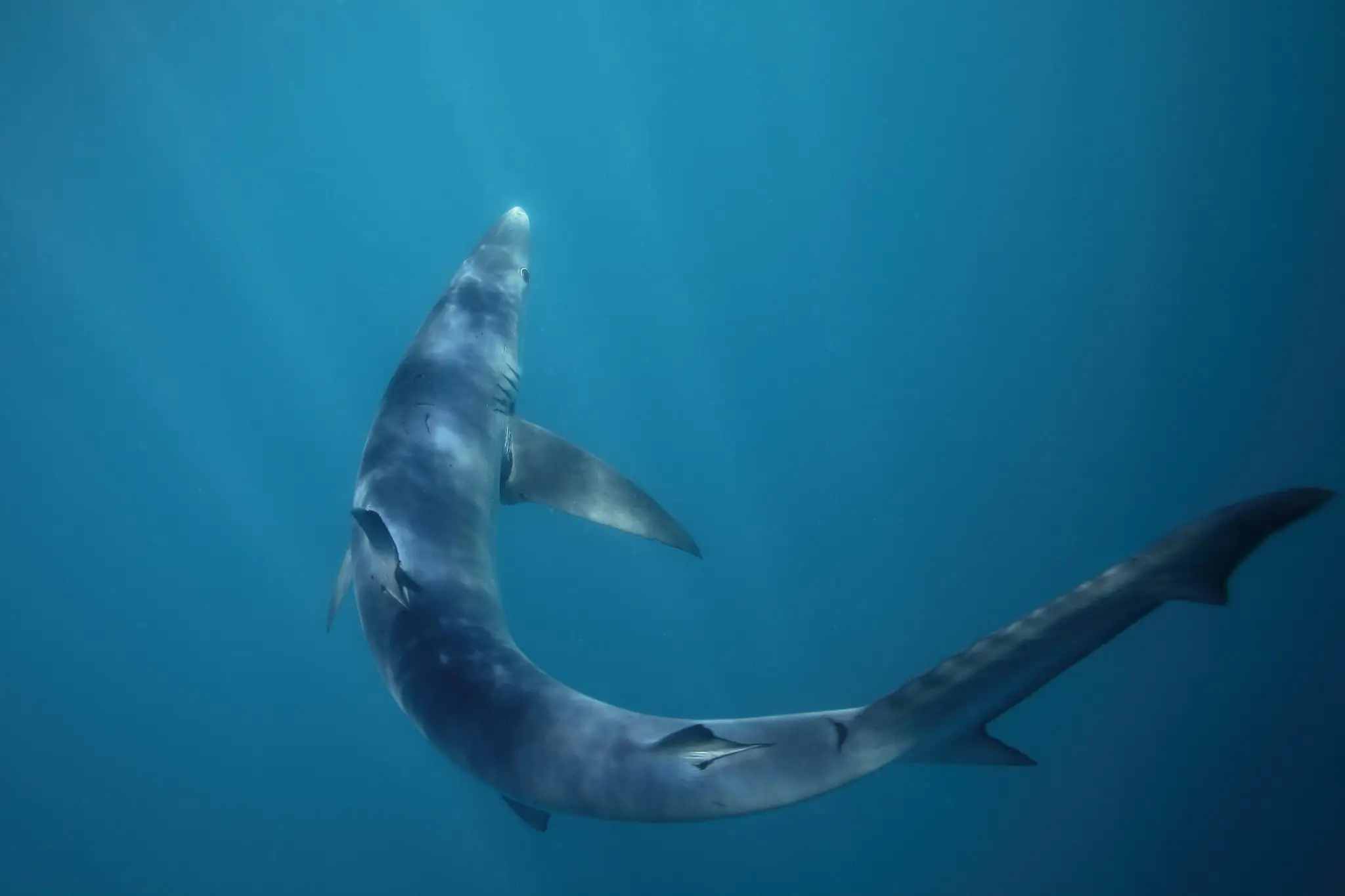
Sophisticated counter-current heat exchange networks maintain core muscle temperature 8°C above surrounding water. This remarkable thermal regulation enables hunting across extreme gradients from 5°C Arctic to 30°C tropical zones.
Behavioral thermoregulation includes strategic vertical migrations between warm surface waters and cool depths. Specialized blood vessel adaptations conserve metabolic heat generated by powerful red muscle fibers. Photo: Alessandro De Maddalena.
Open Ocean Predation
Opportunistic Hunters with Global Reach
Blue sharks target squid fish and seabirds throughout the water column using electroreception detecting bioelectric fields at 50-centimeter range. Large sensitive eyes enhance low-light vision during deep-diving expeditions.
Feeding aggregations form around fishing vessels and marine debris concentrations. Scavenging behaviors connect surface productivity with deep-sea ecosystems through vertical migrations reaching 600 meters. Photo: Alessandro De Maddalena.
Conservation Progress
Near Threatened with International Coordination
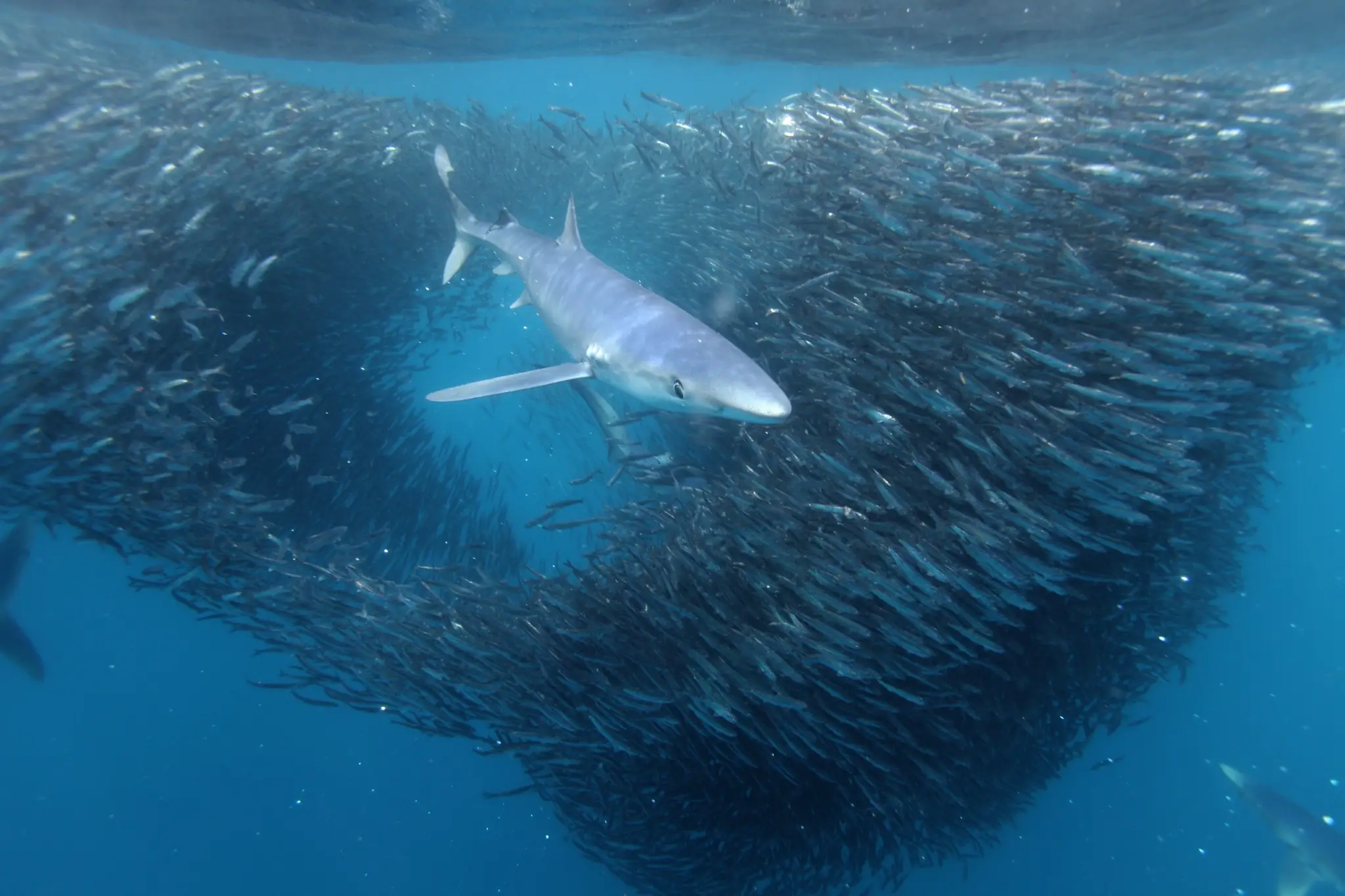
Blue sharks maintain Near Threatened status globally with Mediterranean population Critically Endangered under IUCN assessment. ICCAT 2023 stock assessment projects North Atlantic recovery with current catches of 23,500 tons annually.
Circle hook mandates implemented across ICCAT fleets since 2022 reduce at-vessel mortality by 10 percent. Satellite tracking identifies critical migration corridors enabling coordinated protection across international boundaries. Photo: Martin Prochazkacz.
Science & Discovery
Poisson et al. 2024 Western Mediterranean satellite tagging revealed blue sharks use geostrophic circulation for basin-scale movements demonstrating limited connectivity with Atlantic populations informing separate management strategies.
Leone et al. 2024 genome scan analyses documented genetic differentiation between Mediterranean and Northeast Atlantic populations establishing independent management units requiring coordinated international conservation approaches.
ICCAT 2023 gear modification research quantified circle hooks reduce at-vessel mortality by 10 percent advancing biomimetic engineering for autonomous underwater vehicles optimized for sustained ocean travel.
In our delightful oceans, blue sharks complete 28,000-kilometer migrations across entire ocean basins through counter-current heat exchange maintaining core temperatures 8°C above water. Circle hook mandates since 2022 reduce mortality by 10 percent across ICCAT fleets. Satellite tracking combined with genetic analyses now identify critical migration corridors enabling coordinated international protection spanning their vast pelagic realm.