Giant Grouper
Reef's Patient Titan
Epinephelus lanceolatus
Meet reef's patient titans—massive predators reaching 2.7 meters (9 feet) and 400 kilograms whose jaws expand with incredible speed generating massive suction forces in milliseconds. They achieve remarkably high hunting success through cryptic coloration and strategic positioning at cave entrances. Living over 40 years defending 500-square-meter territories, these sequential hermaphrodites transform from female to male around 1.2 meters inspiring biomechanical engineering advances.
Meet the Patient TitansWhat Makes Them Special
Reef Giants
Reach 2.7 meters and 400 kilograms, ranking them among the world's largest bony reef fish.
Jaw Power
Expand mouths with astonishing speed, creating powerful suction forces to engulf prey in milliseconds.
Ambush Masters
Achieve exceptionally high hunting success through patient waiting and strategic positioning at cleaning stations.
Territorial Knowledge
Display remarkable site fidelity, occupying the same large home ranges for over 20 years accumulating unmatched reef expertise.
Sex Change
Transform from females to males as they mature, triggered by social cues through protogynous hermaphroditism.
Ancient Lifespan
Live over 40 years with slow growth rates making them sensitive to fishing pressure.
First Encounter
World's Largest Bony Reef Fish
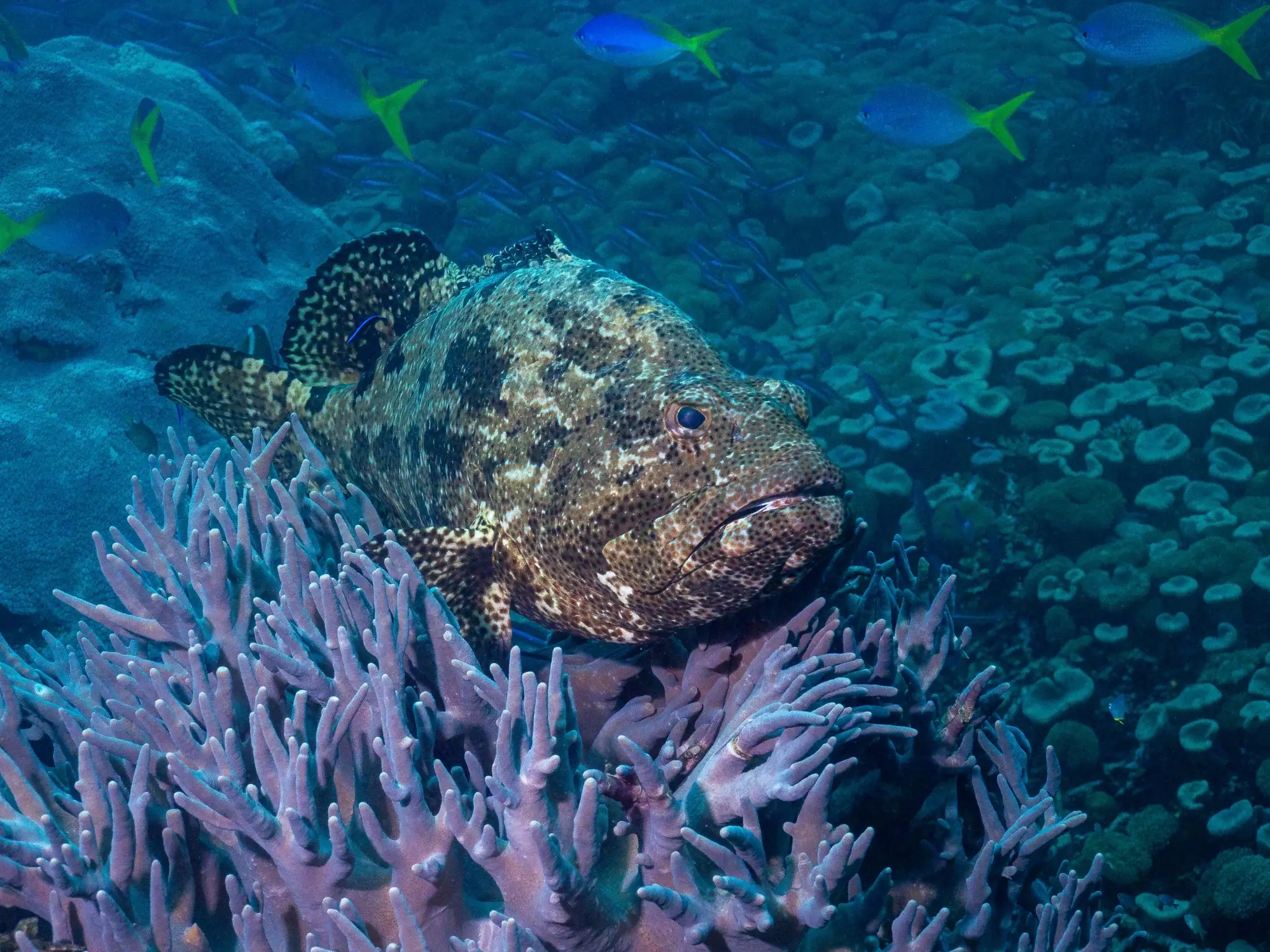
Giant groupers reach 2.7 meters (9 feet) and 400 kilograms—world's largest bony reef fish. These olive-brown titans lurk motionless among coral with cryptic coloration providing perfect camouflage against predator detection and prey awareness.
Massive heads house jaws engulfing prey half their body length. Age estimates exceed 40 years allowing territorial knowledge accumulation unmatched by any reef fish demonstrating decades of hunting expertise. Photo: Jesus Cobaleda.
"Giant groupers demonstrate nature's perfect ambush—their lightning-fast jaw expansion generates suction forces that make escape nearly impossible for prey."
— Dr. Mark Hixon, Predatory Fish Biomechanics
Massive Jaw Expansion
Rapid Volume Increase in Milliseconds
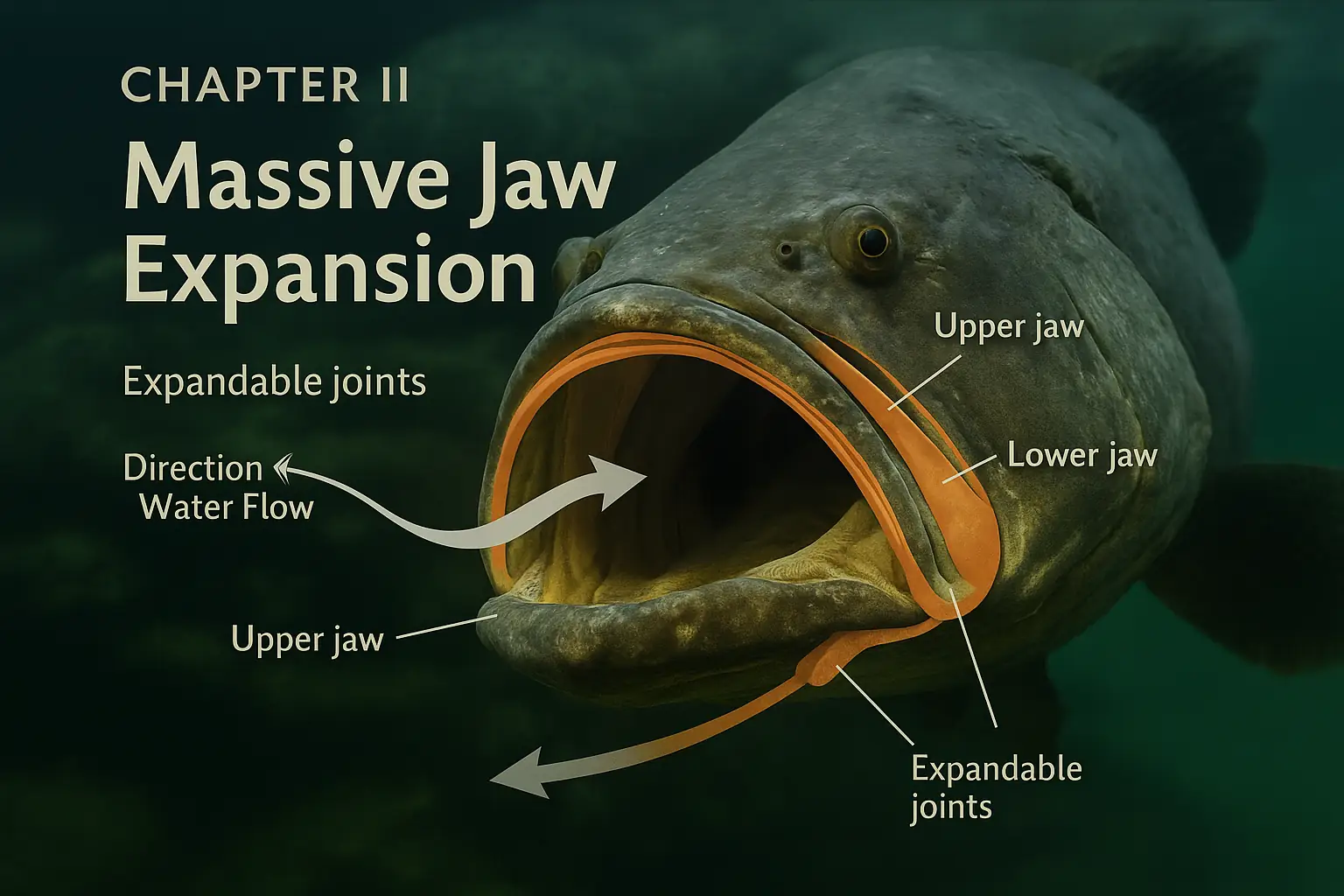
Specialized jaw mechanics enable rapid mouth expansion through coordinated cranial bone structures. Buccal cavity engineering involves dramatic hyoid drop while opercular bones flare creating massive negative pressure zones.
Expansion occurs within milliseconds generating inescapable suction from a considerable distance. Rapid deployment enables fast-prey capture before escape reactions demonstrating extreme biomechanical efficiency during predation events. Photo: Illustration.
Ambush Hunting Strategy
Exceptional Success Rate Through Patient Waiting
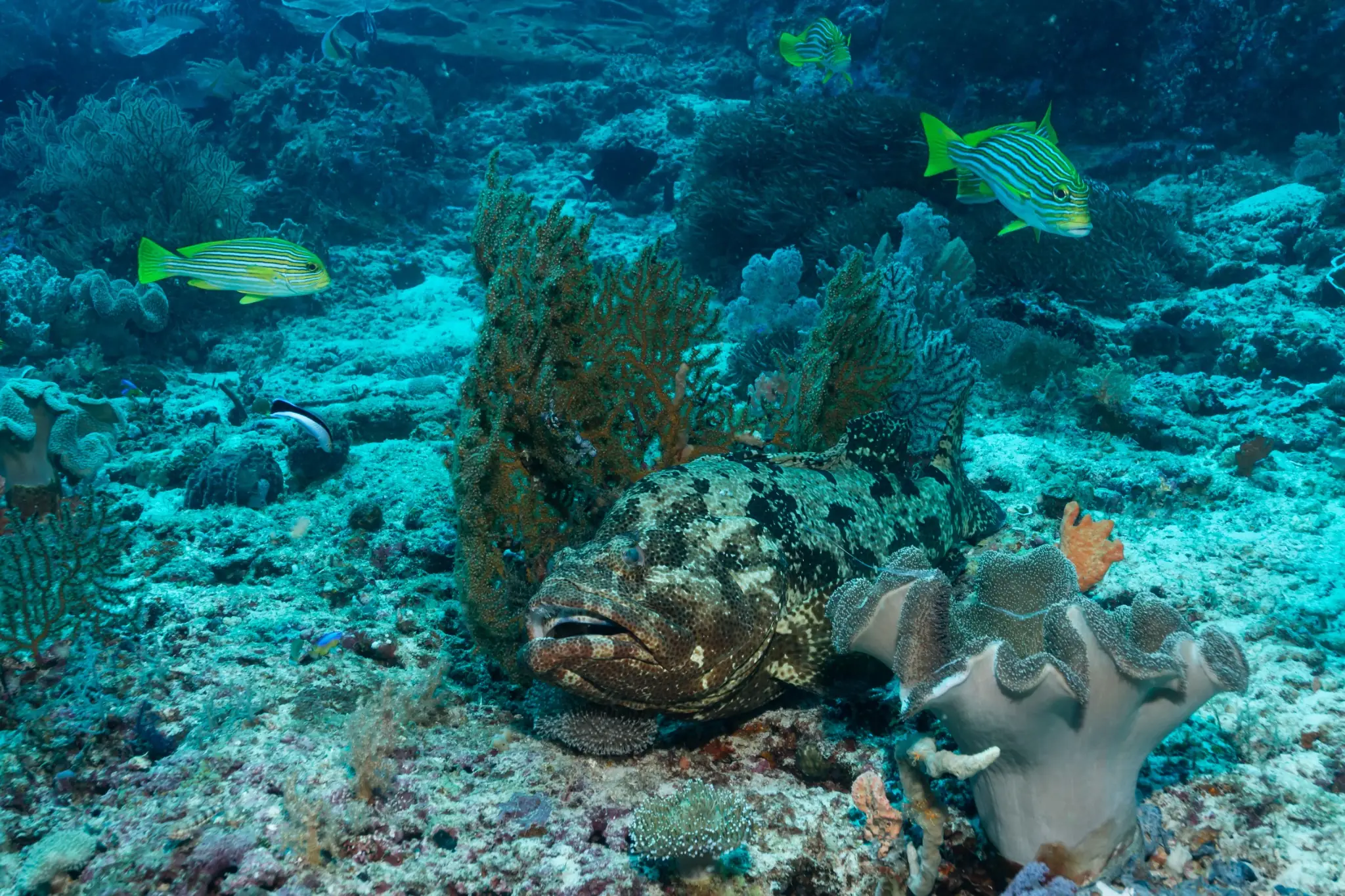
Giant groupers remain motionless for hours using cryptic coloration and strategic positioning among coral. Prey approach unaware until lightning-fast suction attacks engulf entire fish in milliseconds demonstrating remarkable patience.
Hunting success ranks among the reef's highest predator rates. Preferred ambush sites include cave entrances ledge overhangs and cleaning stations where prey concentrate predictably maximizing energy efficiency. Photo: kaschibo.
"Giant groupers maintain same territories over 20 years—creating reef 'libraries' of precise ambush knowledge."
— Dr. Yvonne Sadovy, Grouper Behavior Research
Territorial Dominance
40-Year Site Fidelity and Knowledge Accumulation
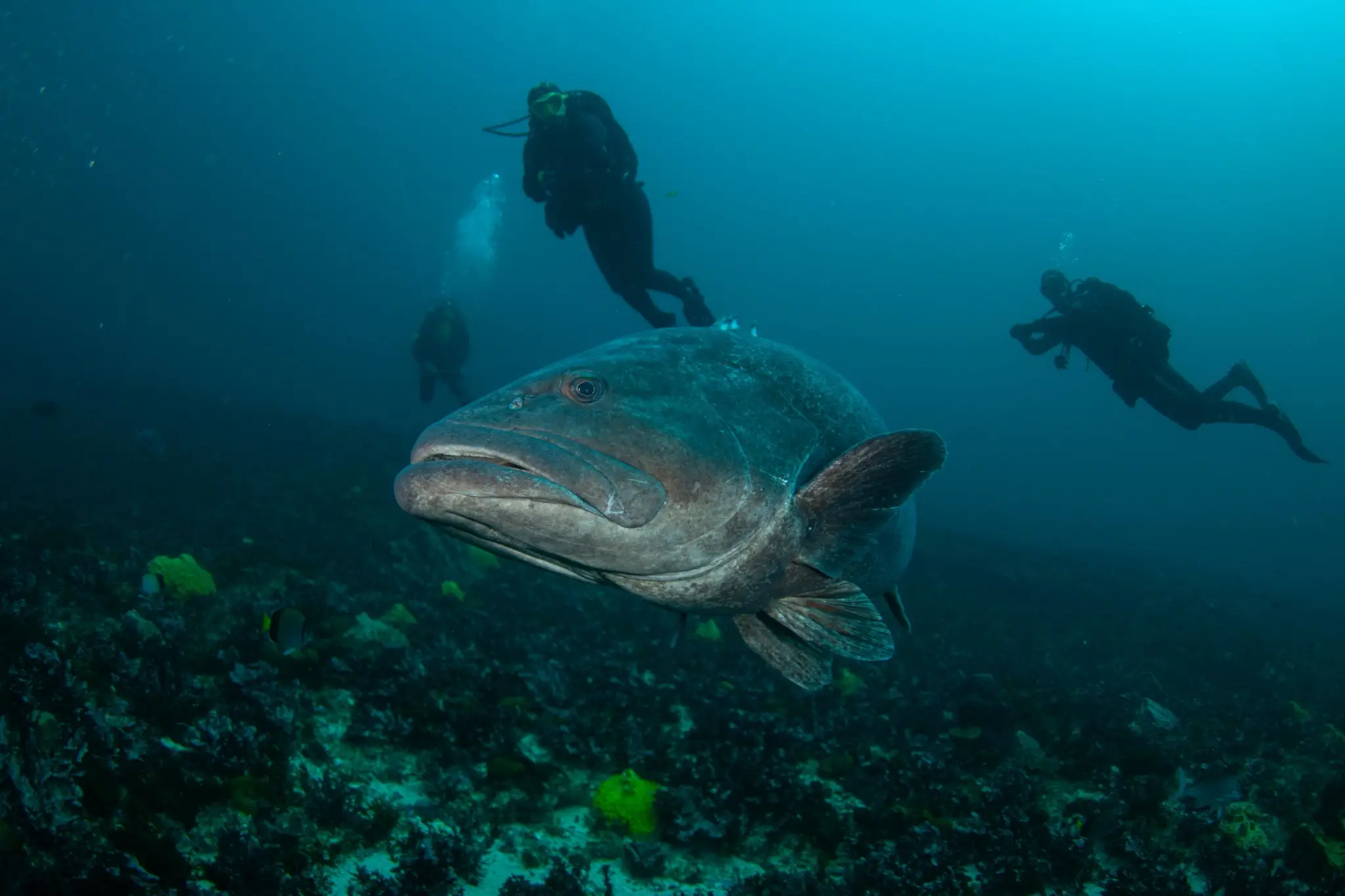
Establish territories spanning 500 square meters across 40-year lifespans. Size-based dominance ensures optimal hunting locations while decades of experience create unmatched reef ecosystem knowledge enabling superior predatory success.
Territorial displays include body darkening and intimidating approaches rarely escalating to physical contact. Site fidelity creates detailed prey movement knowledge and optimal ambush positioning younger fish cannot match. Photo: Martin Prochazkacz.
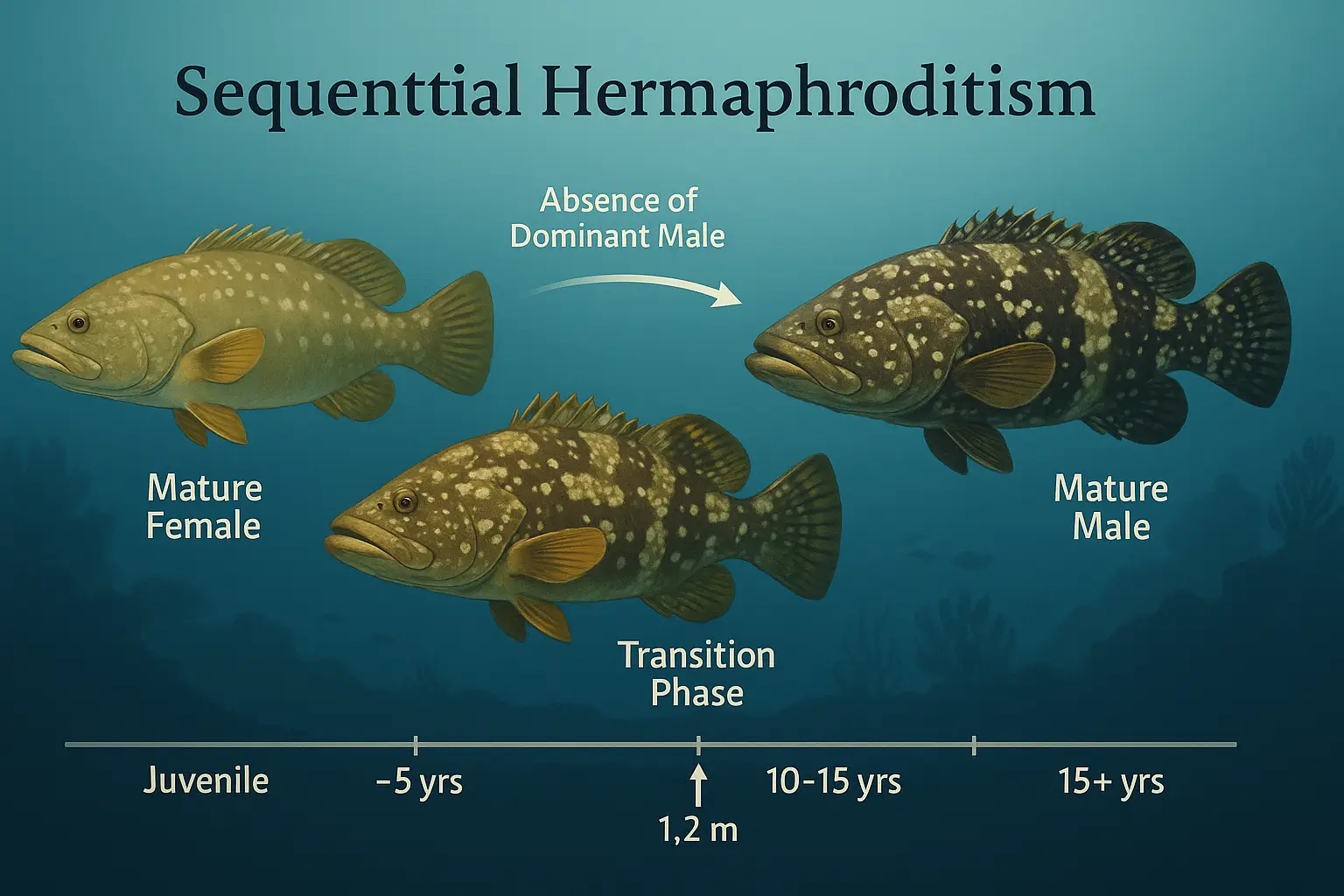
Sequential Hermaphroditism
Female to Male Transformation Triggered by Social Cues
All giant groupers begin as females before transitioning to males around 10-15 years reaching 1.2 meters. Protogynous sex change is primarily triggered by social dynamics, such as the absence of a dominant male.
Male transformation involves behavioral and physiological changes including increased aggression territory expansion and reproductive organ development. This system ensures optimal reproductive success under varying population conditions. Photo: Illustration.
Conservation Success
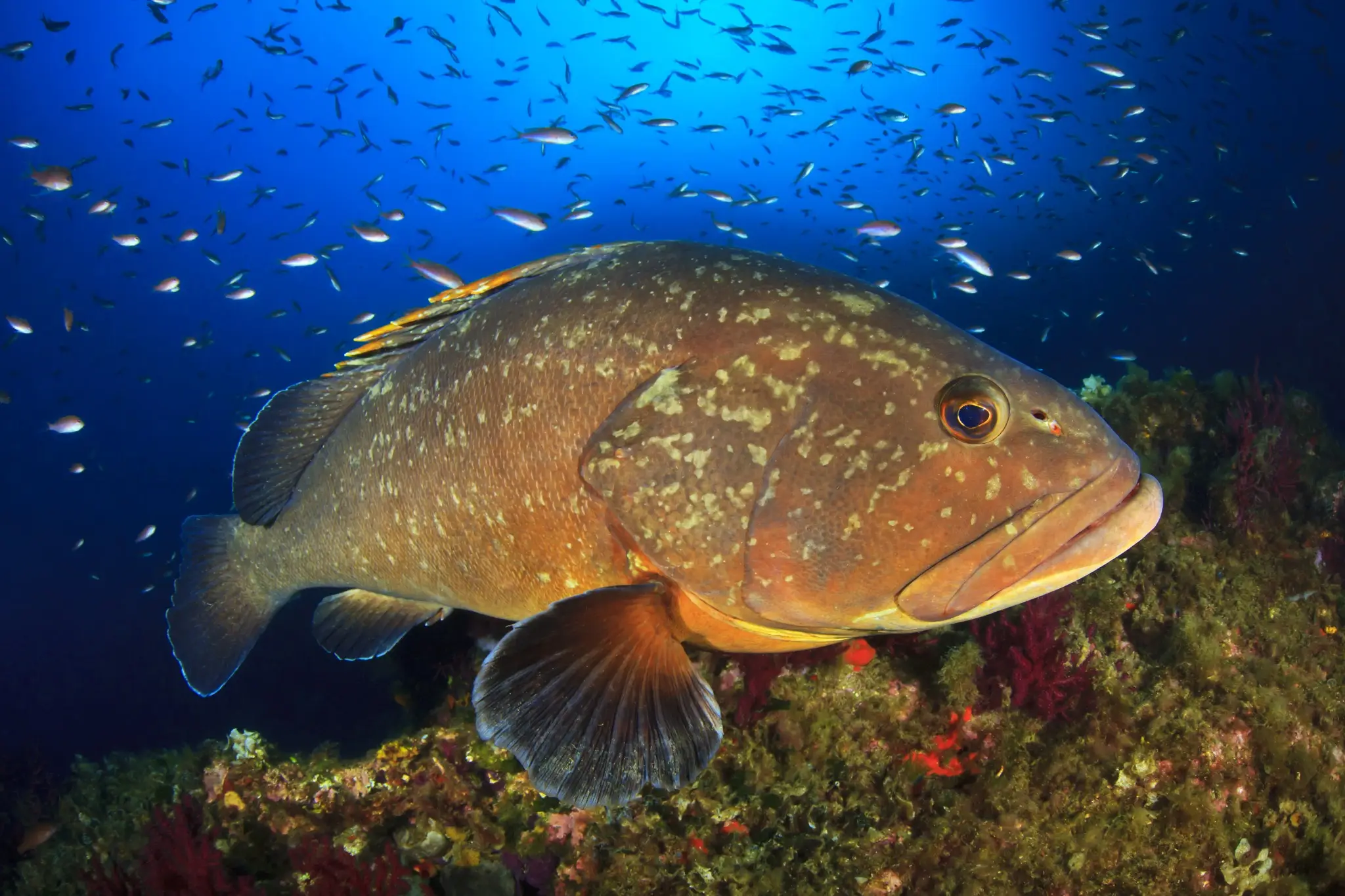
Significant Population Recovery in Protected Areas
Listed as Data Deficient despite regional protections giant groupers respond dramatically to protection measures. Slow growth and late sexual maturity make populations extremely sensitive to fishing pressure particularly at spawning aggregations.
Some studies have documented population rebounds of over 250% in well-managed marine reserves. Similar successes in Philippines marine reserves demonstrate rapid recovery potential when territorial knowledge accumulates. Photo: David Carbo.
Science & Discovery
MIT engineers have developed hydraulic systems inspired by giant grouper jaw mechanics, demonstrating significant efficiency improvements in underwater robotics rapid deployment mechanisms and biomimetic suction technologies.
Australian Institute of Marine Science 2024 uses giant grouper territorial behavior patterns optimizing marine protected area design enhancing conservation effectiveness through incorporation of site fidelity knowledge.
University of Hong Kong 2024 research on grouper sex change mechanisms reveals hormonal pathways informing reproductive biology across 500+ marine species exhibiting sequential hermaphroditism.
In our delightful oceans, giant groupers achieve exceptional hunting success through rapid jaw expansion and strategic ambush positioning demonstrating patience perfecting predation. Territories maintained 40 years accumulate irreplaceable reef knowledge. Great Barrier Reef Marine Park protections produced substantial population recovery in 15 years proving no-take zones enable territorial wisdom restoration when fishing pressure removed.