Emperor Penguin
Antarctic's Ultimate Survivor
Aptenodytes forsteri
Meet Antarctic's ultimate survivors—1.2-meter (4-foot) diving champions reaching 565 meters with 22-minute breath-holds exceeding all other birds. Males produce 59% protein crop milk sustaining chicks during 64-day fasts. Thermal huddling maintains ~38°C core body temperature in warmer huddle microclimates within 5,000-individual aggregations during blizzards dropping to -40°C with specialized circulation enabling survival at Earth's harshest extremes.
Discover the SurvivorWhat Makes Them Special
Tallest Penguin Species
Reach 1.2 meters in height—Earth's tallest penguin
Record-Breaking Diving
Dive to 565 meters holding breath for 22 minutes
Crop Milk Production
Males produce 59% protein secretion sustaining chicks during extended fasts
Extreme Cold Tolerance
Survive -40°C through specialized feather layers and circulation
Thermal Huddling
Form 5,000-individual groups creating 37°C internal temperatures
Vocal Recognition
Identify mates and chicks through unique call signatures among thousands
First Encounter
Antarctic Giants Thriving at -40°C
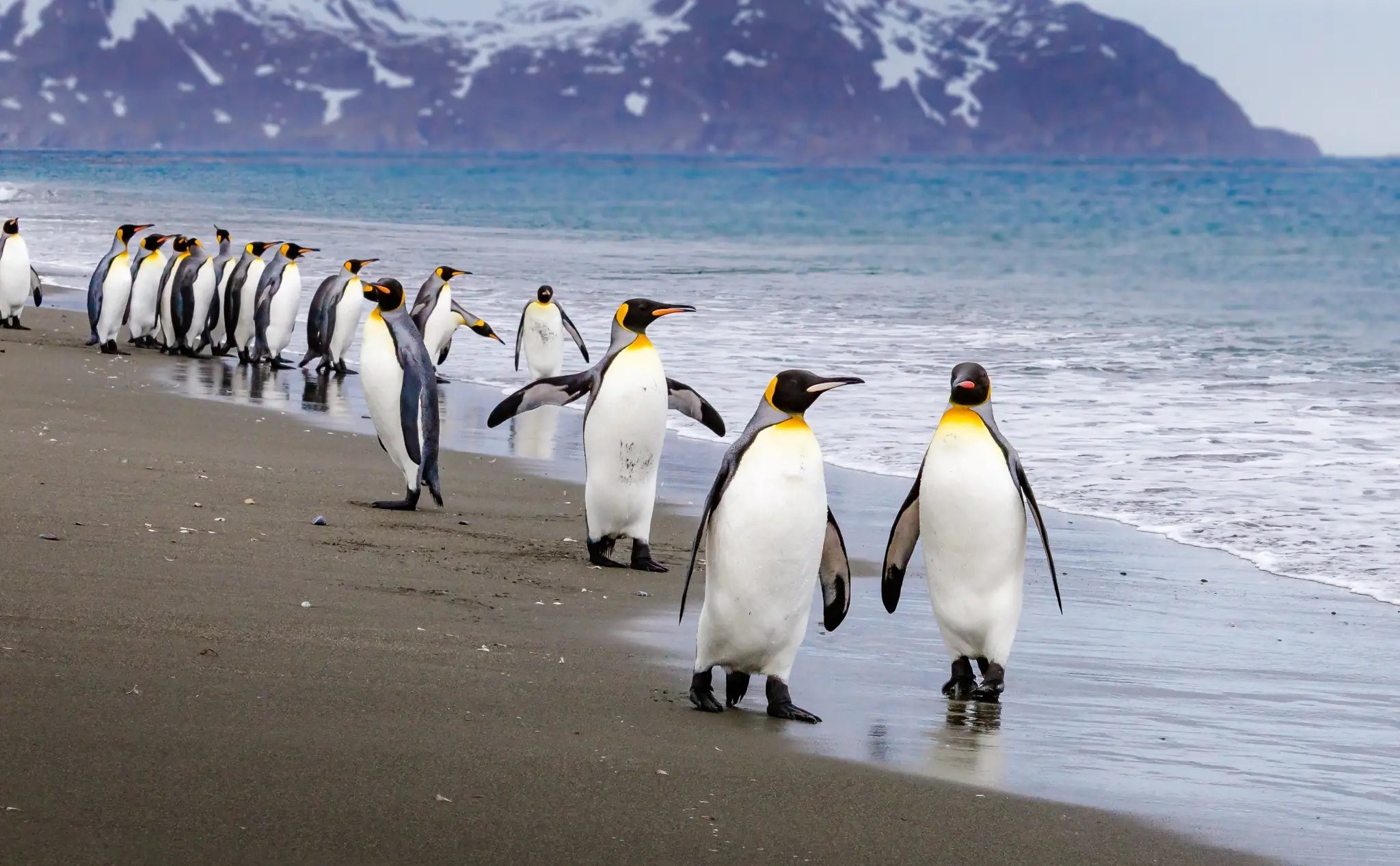
Emperor penguins reach 1.2 meters in height and weigh 22-45 kilograms—Earth's tallest penguin species. Distinctive golden-orange neck patches contrast against elegant black and white plumage creating unmistakable Antarctic silhouettes across 54 known colonies.
These Antarctic specialists thrive in temperatures reaching -40°C with wind chills dropping to -60°C. Dense feather layers numbering about 100 per square inch plus specialized blood circulation enable survival where few vertebrates persist. Photo: Jo Crebbin.
"Emperor penguins represent evolution's most successful response to extreme environments—demonstrating how life adapts to conditions at the very limits of vertebrate survival."
— Dr. Gerald Kooyman, Scripps Institution Diving Physiology Research
Deep Diving Capacity
565-Meter Descents with 22-Minute Breath-Hold Duration
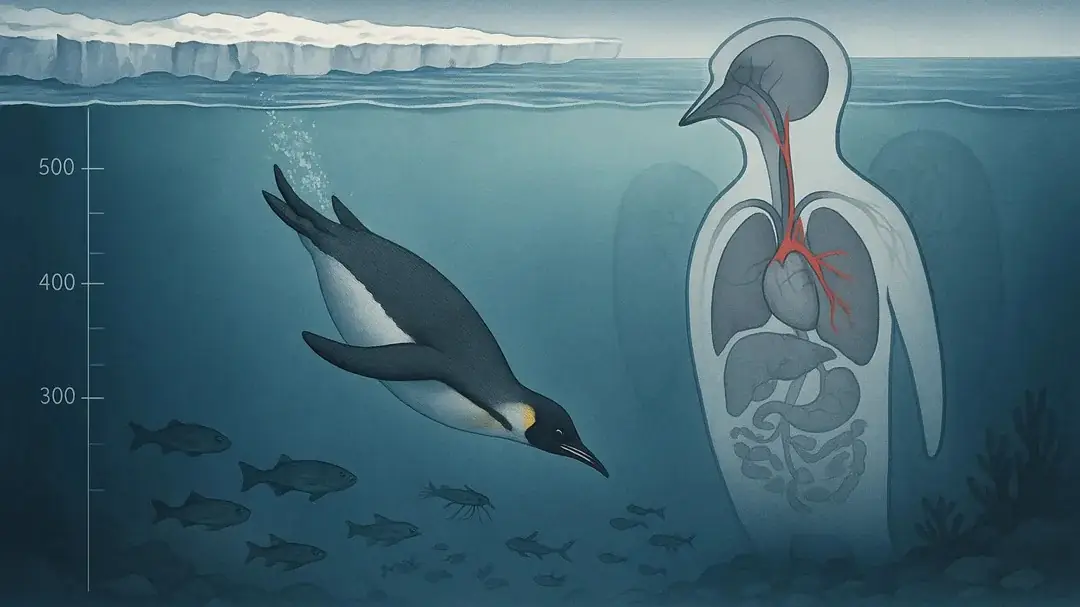
Emperor penguins achieve maximum depths of 565 meters while holding breath for 22 minutes—exceeding all other diving birds. Specialized hemoglobin stores 40% more oxygen while solid bones resist crushing pressure forces enabling metabolic depression.
Heart rate drops from 180 beats per minute to just 20 during dives conserving oxygen through selective blood flow to brain and heart. This pressure resistance adaptation provides exclusive deep-water fish access beneath Antarctic ice. Photo: Illustration.
Crop Milk Production
59% Protein Esophageal Secretion for Chick Survival
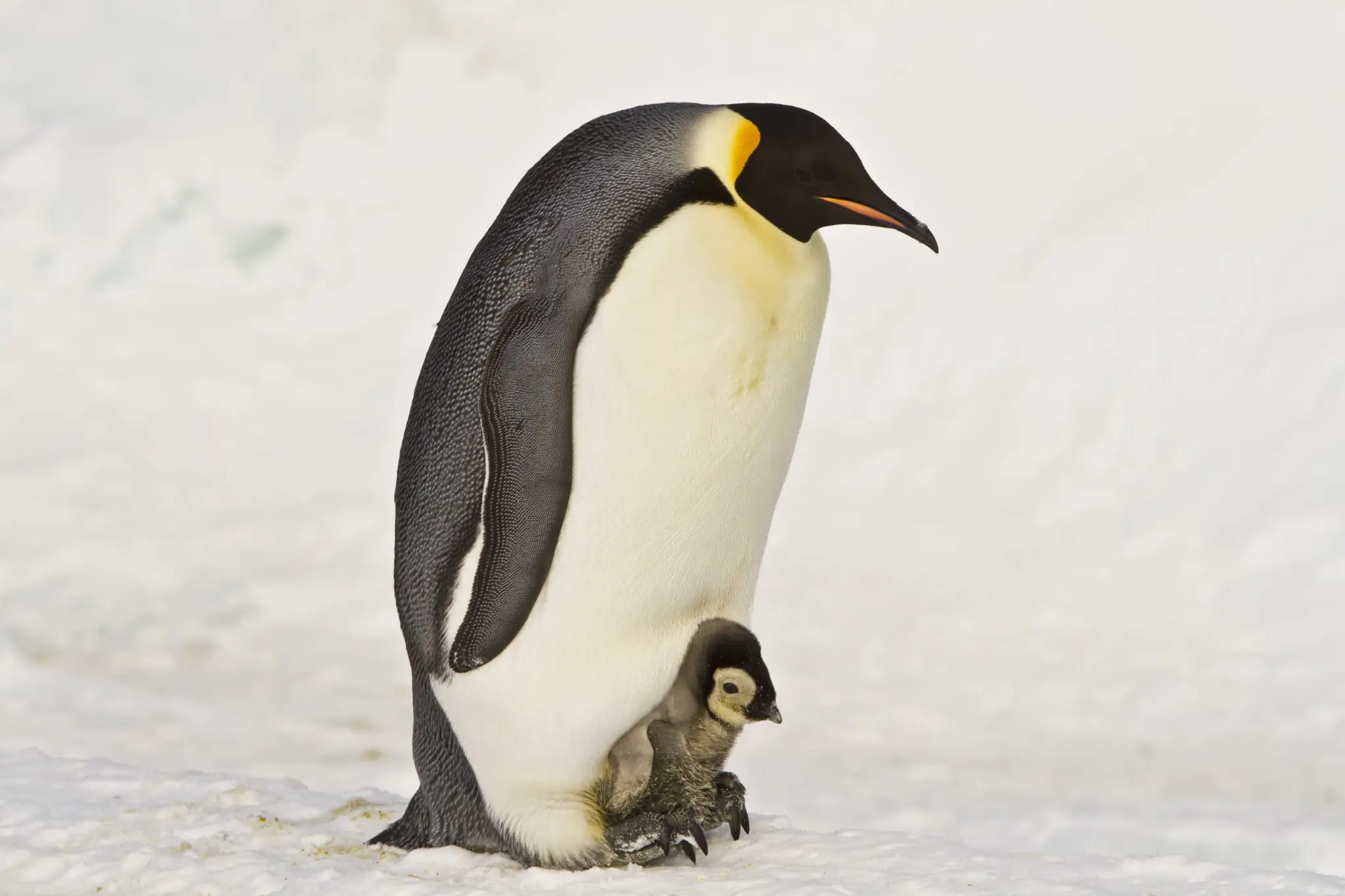
Male emperor penguins produce crop milk—a 59% protein, 28% lipid secretion from specialized esophageal glands during 64-day incubation periods. This nutrient-dense substance sustains newly hatched chicks when females remain at sea feeding during extended foraging trips.
Only pigeons, flamingos, and emperor penguins produce milk among bird species worldwide. This remarkable adaptation ensures chick survival during fasting periods reaching 120 days for males—demonstrating convergent evolution of mammalian-like parental care. Photo: Sergey 402.
"Emperor penguin crop milk production represents convergent evolution's remarkable solution—independent development of mammalian-like parental care strategies in polar bird species."
— Dr. Caroline Gilbert, University of Strasbourg Antarctic Biology Research
Thermal Huddling Behavior
Coordinated Heat Exchange in 5,000-Individual Aggregations
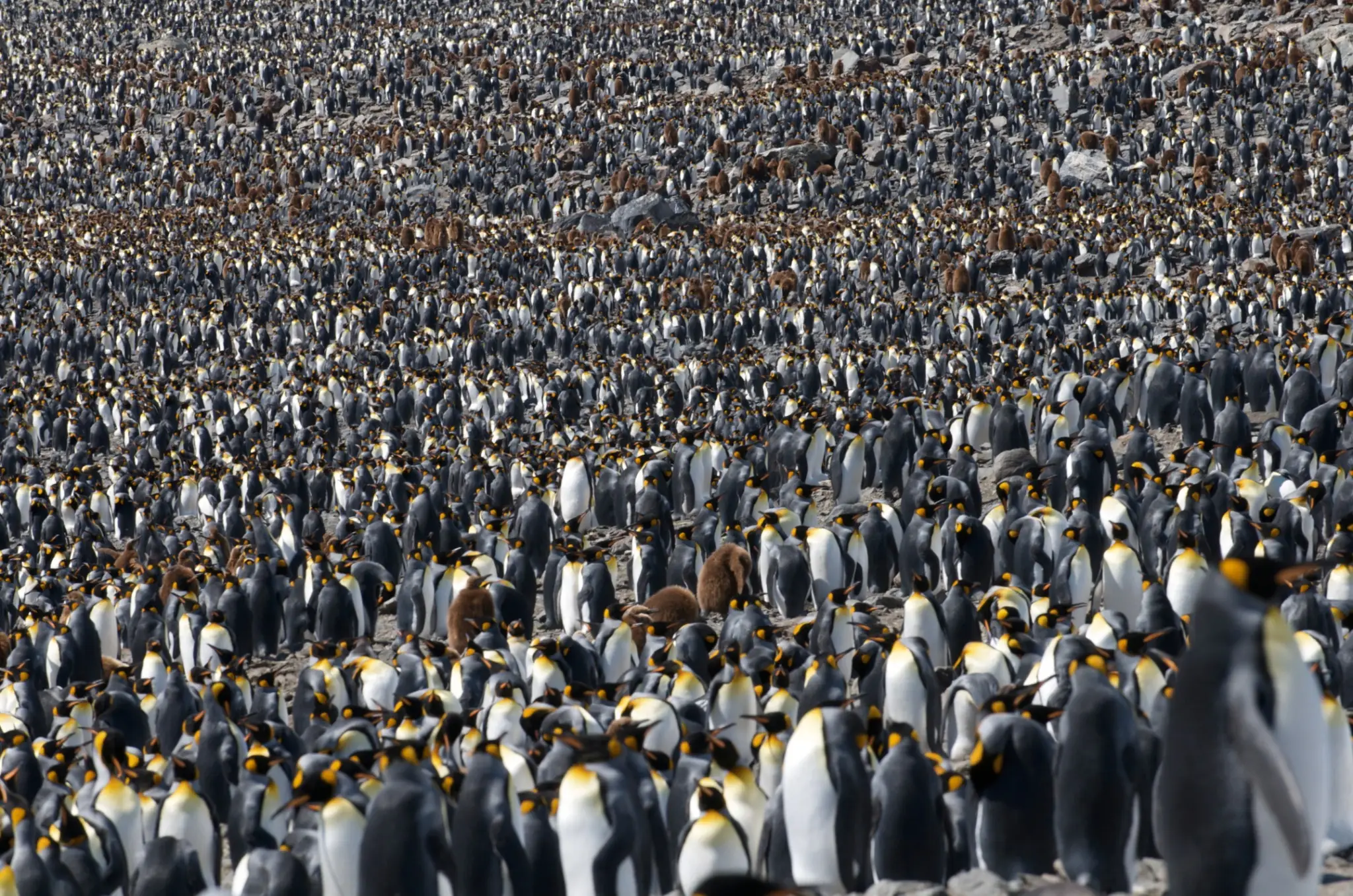
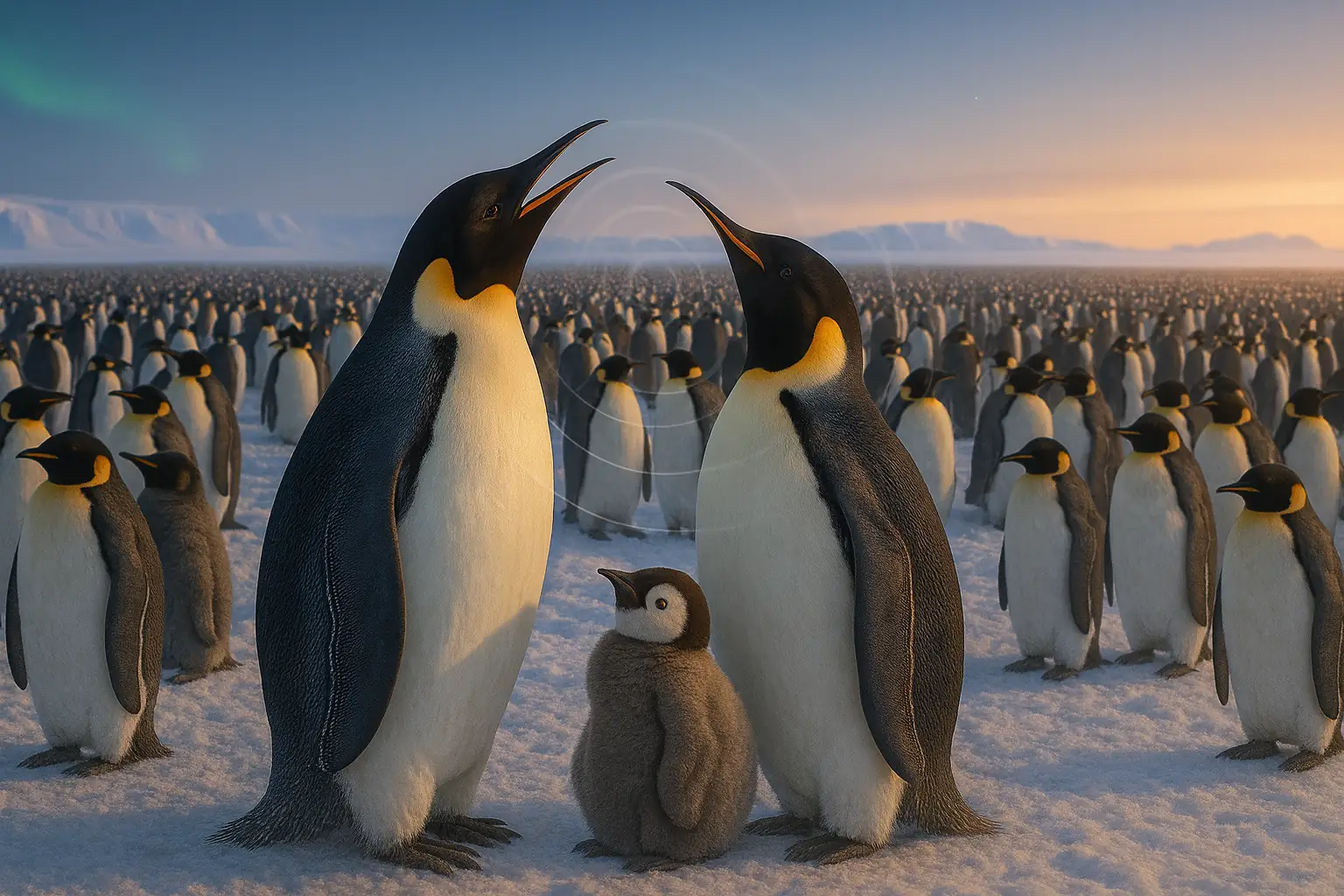
Emperor penguins form huddling groups reaching 5,000 individuals, maintaining their core body temperature of ~38°C and creating a much warmer microclimate within the huddle during -17°C blizzards. Coordinated movements rotate positions every 30-60 seconds ensuring equitable heat distribution reducing metabolic costs by 50%.
Wave-like patterns ripple through huddles as outer penguins shuffle inward while warmed individuals cycle outward—collective thermoregulation enabling winter breeding when Antarctic temperatures plummet to lethal levels for isolated individuals. Photo: Wirestock Creators.
Vocal Recognition Systems
Unique Call Signatures Among Thousands
Emperor penguins produce two-voiced calls using specialized syrinx anatomy enabling simultaneous frequency generation. Adults identify mates and chicks through unique acoustic signatures distinguishable among thousands of nearly identical individuals across crowded breeding colonies.
Returning females navigate massive colonies broadcasting specific calls while listening for chick responses. This sophisticated vocal recognition operates reliably despite 90-decibel background noise—acoustic processing rivaling human speech recognition capabilities. Photo: Illustration
Climate Vulnerability
Sea Ice Dependence in Rapidly Warming Antarctic
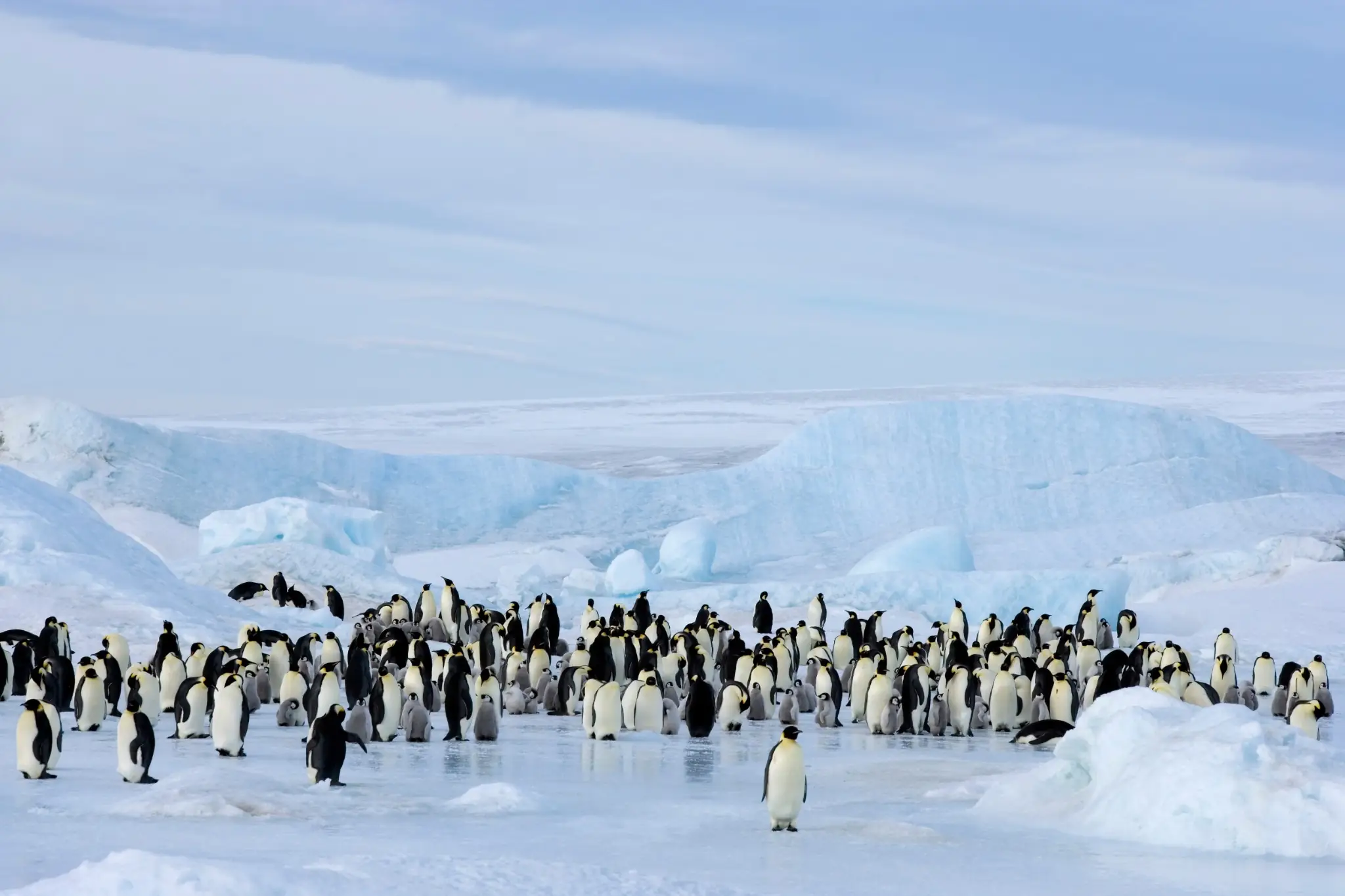
Some Emperor penguin populations have declined by over 20% in recent decades, with one major study citing a 22% overall decline in a key region between 2009 and 2023 with 42% of 54 colonies experiencing catastrophic breeding failures during 2018-2022 record ice loss. Climate models project 81-100% population declines by 2100 under current warming trajectories threatening all colonies.
Antarctic Treaty protections preserve critical habitat while WWF advocates for Specially Protected Species designation strengthening international safeguards. Conservation strategies focus on identifying climate-resilient breeding locations—protecting these survivors requires immediate global climate action reducing emissions. Photo: Robert Harding Video.
Science & Discovery
Scripps Institution 2024 blood oxygen research revealed emperor penguins dynamically switch between muscle oxygen starvation and selective blood flow during dives enabling extreme depths inspiring surgical anesthesia improvements and tissue preservation techniques.
Nature 2025 satellite analysis documented 22% population decline over 15 years quantifying climate impact across Bellingshausen and Weddell Sea colonies advancing Antarctic ecosystem health monitoring through penguin populations as sentinel species indicators.
Antarctic Science Platform research identifies emperor penguins as climate change vulnerability indicators with specialized hemoglobin mutations evolved over 40 million years informing conservation strategies and Antarctic Treaty protection proposals for Specially Protected Species designation.
In our delightful oceans, emperor penguins survived 40 million years through specialized hemoglobin enabling 565-meter dives yet populations declined 22% from 2009-2023 with 42% of colonies experiencing breeding failures. Males produce 59% protein crop milk sustaining chicks during 120-day fasts. Antarctic Treaty protections and proposed Specially Protected Species designation now address climate threats projected to cause 81-100% declines by 2100.