Clownfish
Ocean's Symbiotic Partner
Amphiprion ocellaris
Meet ocean's symbiotic partners—vibrant orange fish reaching 7-11 centimeters (3-4 inches) among 30+ species possessing immunity to sea anemone toxins through specialized mucus layers. Their three-step acclimation enables life within stinging tentacles. Sequential hermaphroditism allows dominant males to transform into females when breeding pairs are disrupted.
Discover Their PartnershipWhat Makes Them Special
Compact & Colorful
Reaching only 7-11 centimeters with brilliant orange bodies and distinctive white bands outlined in black
Anemone Immunity
Specialized mucus coating provides immunity to anemone nematocysts enabling symbiotic partnership protecting both species
Sex Transformation
All born male with dominant individuals transforming into females ensuring reproduction continues when breeding females die
Fierce Defenders
Despite small size clownfish aggressively attack intruders including divers protecting anemone homes with remarkable courage
Conservation Awareness
Finding Nemo sparked interest generating threats and protection while captive breeding now supplies over 90% of aquarium trade
Research Models
Providing insights into symbiosis, sex change mechanisms, and social hierarchy through accessible observation of complex biological processes
First Encounter
Living Among Stinging Tentacles
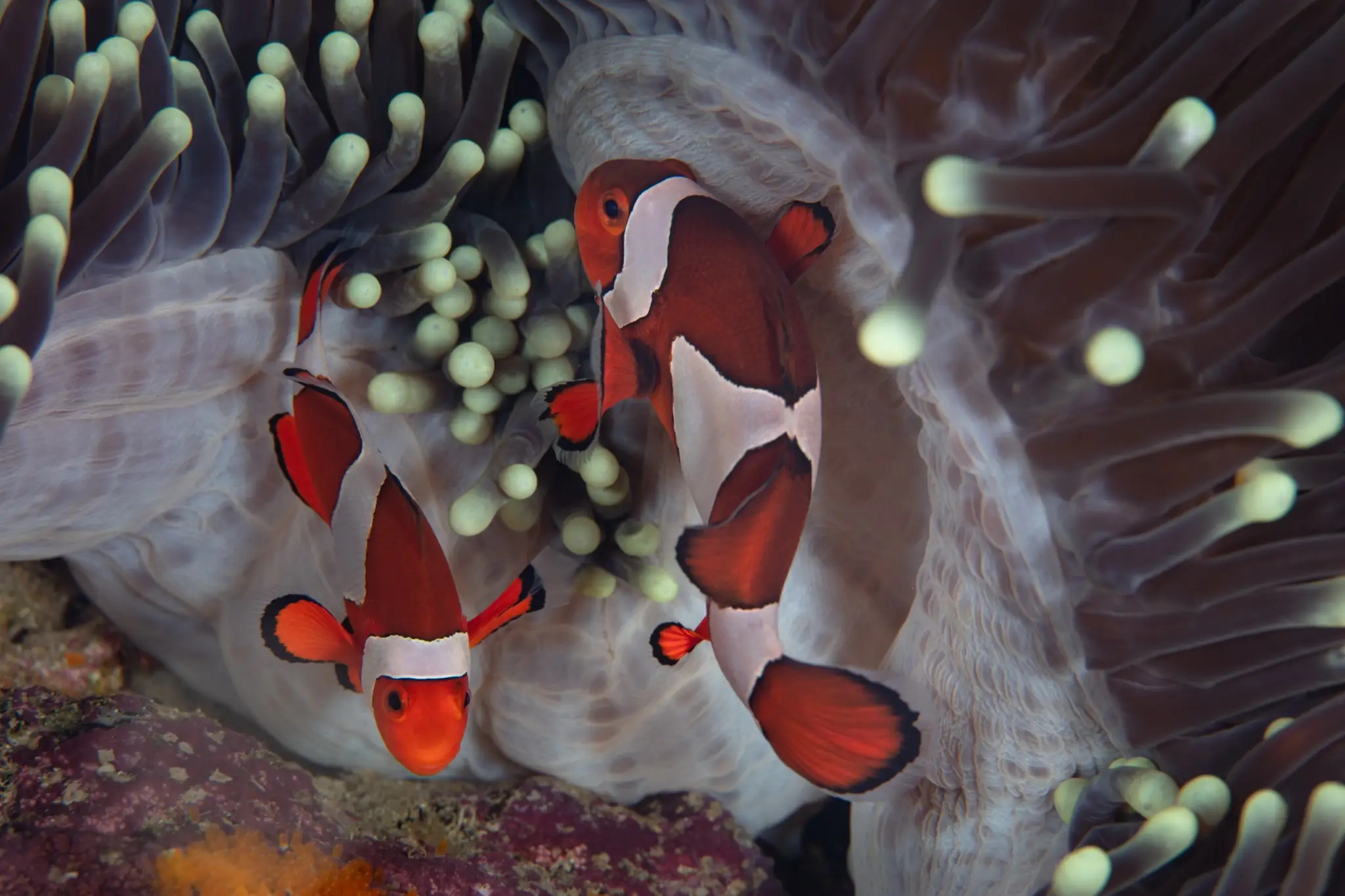
Brilliant orange fish with three vertical white bands edged in black dart among sea anemone tentacles. Clownfish reach just 7-11 centimeters (3-4 inches), their compact bodies perfectly adapted for navigating dense tentacle forests.
These small fish display surprisingly bold behavior, venturing from anemone homes only briefly before retreating to safety. Groups consist of a breeding pair and juveniles maintaining strict hierarchies within this iconic symbiotic partnership. Photo: Oksana Golubeva.
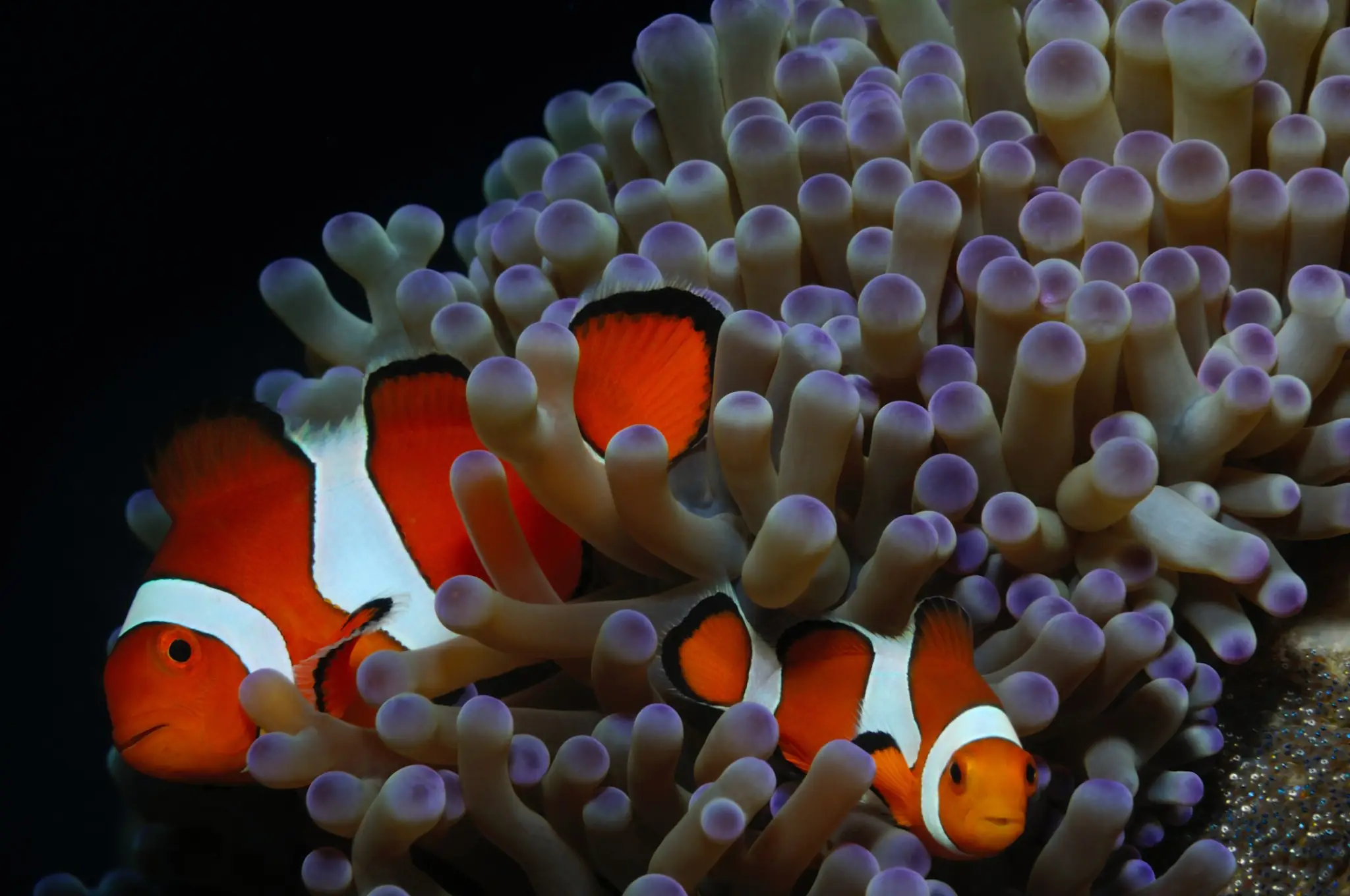
"Watching clownfish nestle fearlessly into anemone tentacles that would sting any other fish reveals nature's ingenuity—two entirely different species evolving perfect partnership through chemistry, behavior, and mutual protection spanning millions of years."
— Dr. Daphne Fautin, Marine Biologist & Anemone Specialist
Anemone Immunity
Chemical Protection Mechanisms
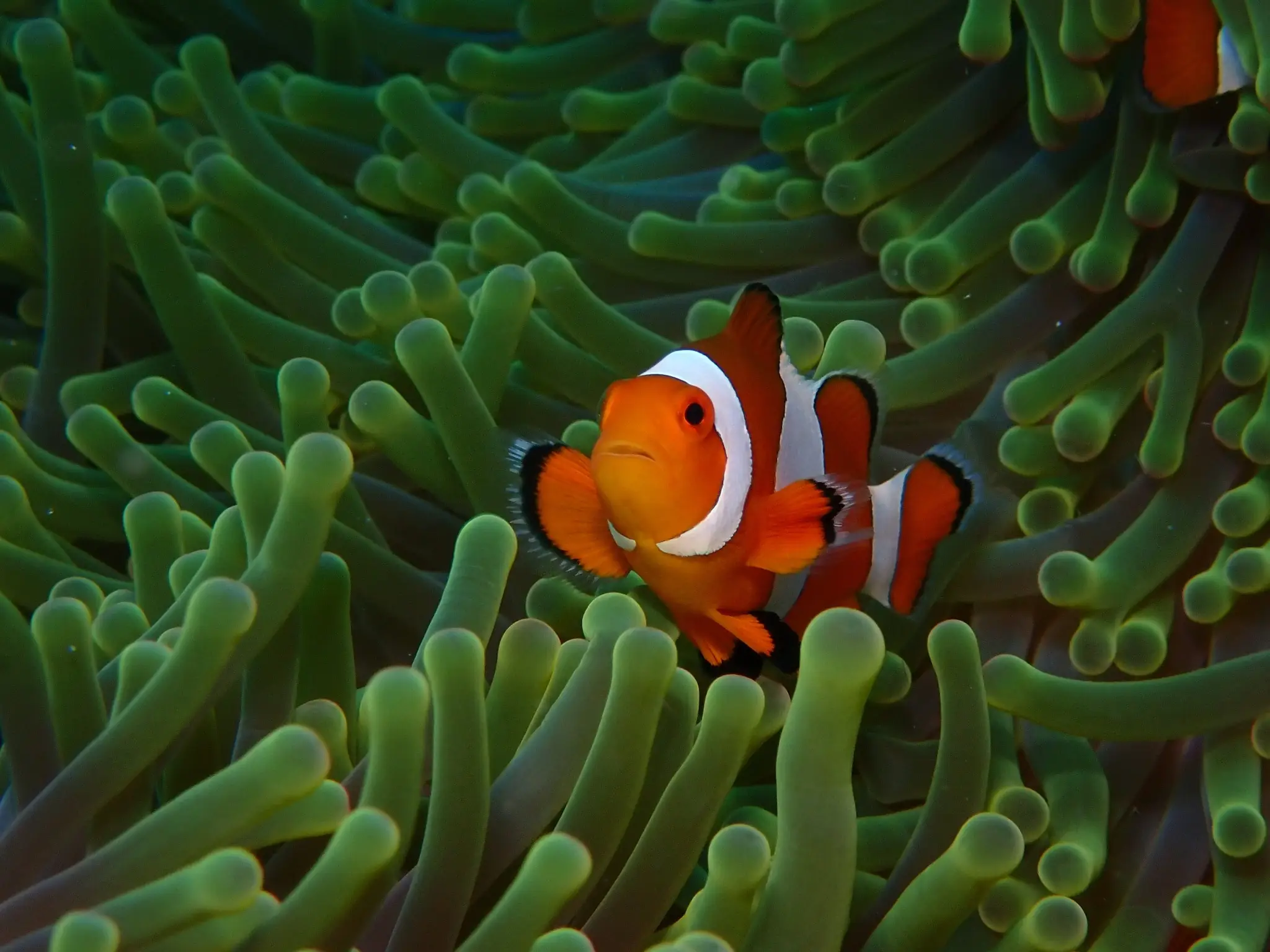
Clownfish possess specialized mucus coating preventing anemone nematocysts from firing. Each of the 30+ clownfish species partners with specific anemones like Heteractis magnifica or Stichodactyla gigantea. This immunity develops through careful three-step acclimation where fish gradually incorporate anemone-derived compounds into their mucus layer over several hours.
This chemical camouflage provides sanctuary from predators while clownfish remove parasites, improve circulation, and defend hosts from butterflyfish. Research shows this mutualism demonstrates how biochemical innovation enables intimate partnerships between vastly different organisms. Photo: Rezki Idhil.
Sequential Hermaphroditism
Strategic Sex Changes
All clownfish hatch as males living in strict hierarchies within single anemones. The largest individual functions as breeding female. When she dies, the breeding male transforms into female within weeks while the largest juvenile matures into new breeding male.
This protandry ensures reproductive continuity without searching for mates across dangerous open water. After hatching, larvae spend 7-10 days in planktonic phase before settling on reefs. The transformation involves hormonal shifts triggering gonad reorganization converting testes into ovaries, demonstrating remarkable plasticity where anemone scarcity makes site fidelity more valuable. Photo: Kurit afshen. Photo: Kurit afshen.
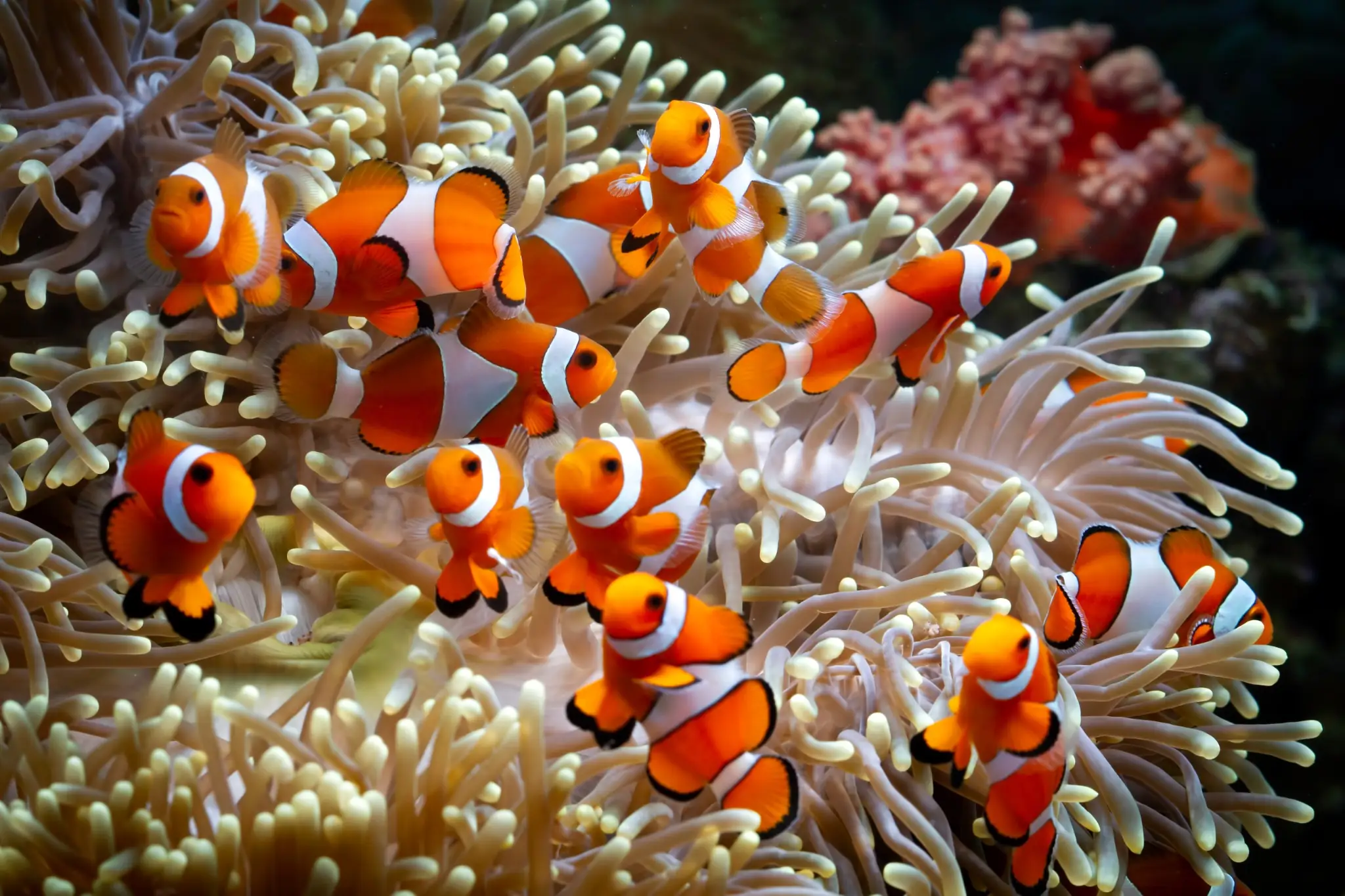
"Finding Nemo got the biology backwards—Nemo's father wouldn't search for his son. Instead, he would transform into Nemo's mother and breed with his former rival. Nature's solution to anemone scarcity is far stranger than fiction."
— Dr. Justin Rhodes, Marine Ecologist
Territorial Aggression
Fierce Defense Despite Size
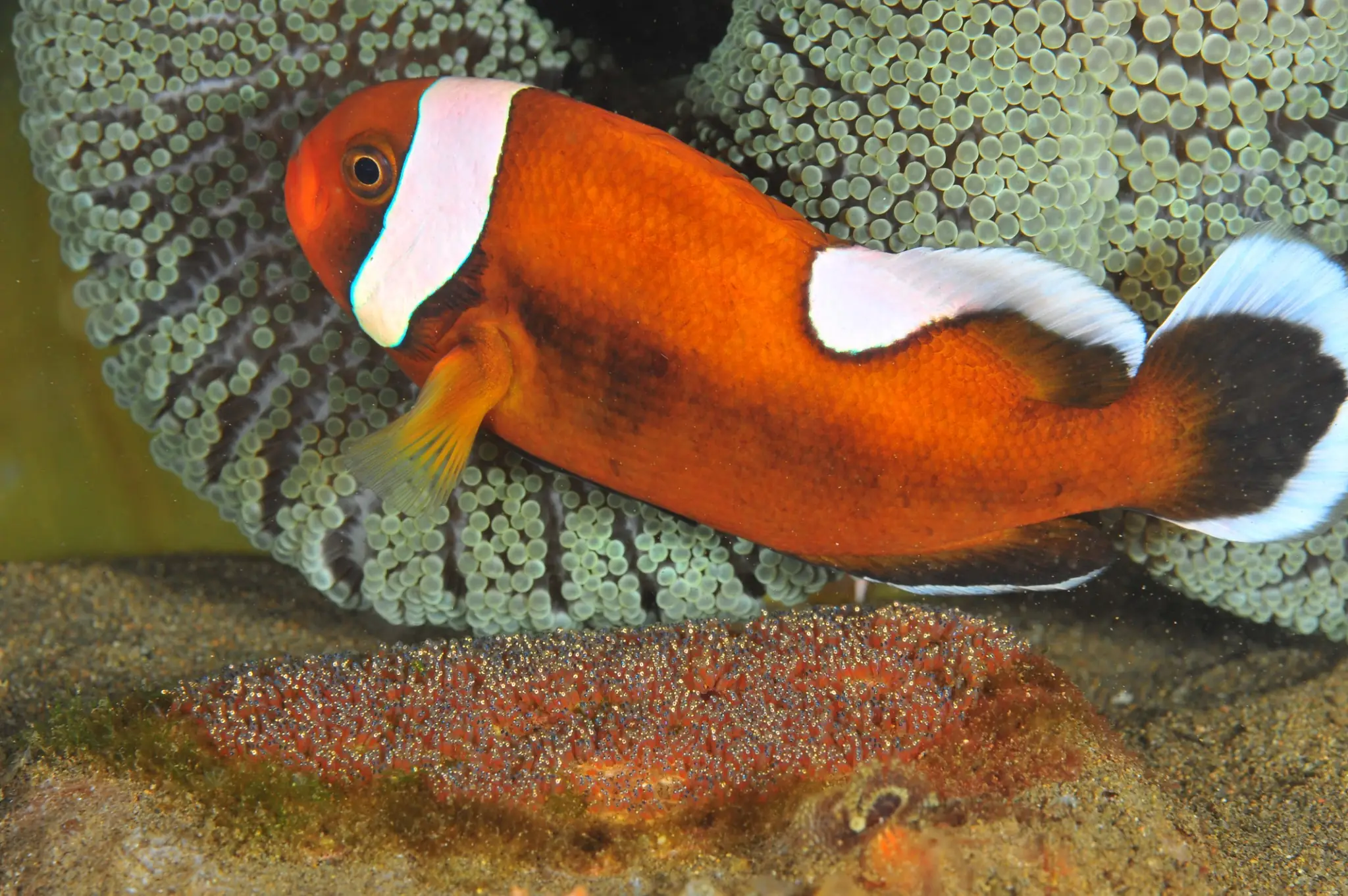
Despite measuring under 11 centimeters, clownfish exhibit remarkable aggression defending anemone territories. They fearlessly attack fish many times their size using rapid darting movements, with confidence stemming from their sanctuary where instant retreat into protective tentacles enables striking from safety.
Studies show they recognize individual neighbors displaying reduced aggression toward familiar territory holders while attacking strangers immediately. This "dear enemy" phenomenon suggests cognitive abilities enabling individual recognition protecting anemone hosts from predators while securing exclusive partnership benefits. Photo: Simon Shin kwangsig.
Communication Systems
Sounds and Social Signals
Clownfish produce distinctive popping and chirping sounds through rapid jaw movements that snap specialized teeth together. These acoustic signals communicate aggression during disputes, submission within hierarchies, and possibly courtship, with dominant fish producing louder, more frequent sounds.
Visual displays complement acoustic communication through head shaking, body quivering, and color intensification during interactions. This multimodal system maintains stable social structures within confined anemone spaces, minimizing conflict while coordinating reproduction and territorial defense for both partners. Photo: Ethan Daniels.
Conservation & Legacy
Balancing Fame and Protection
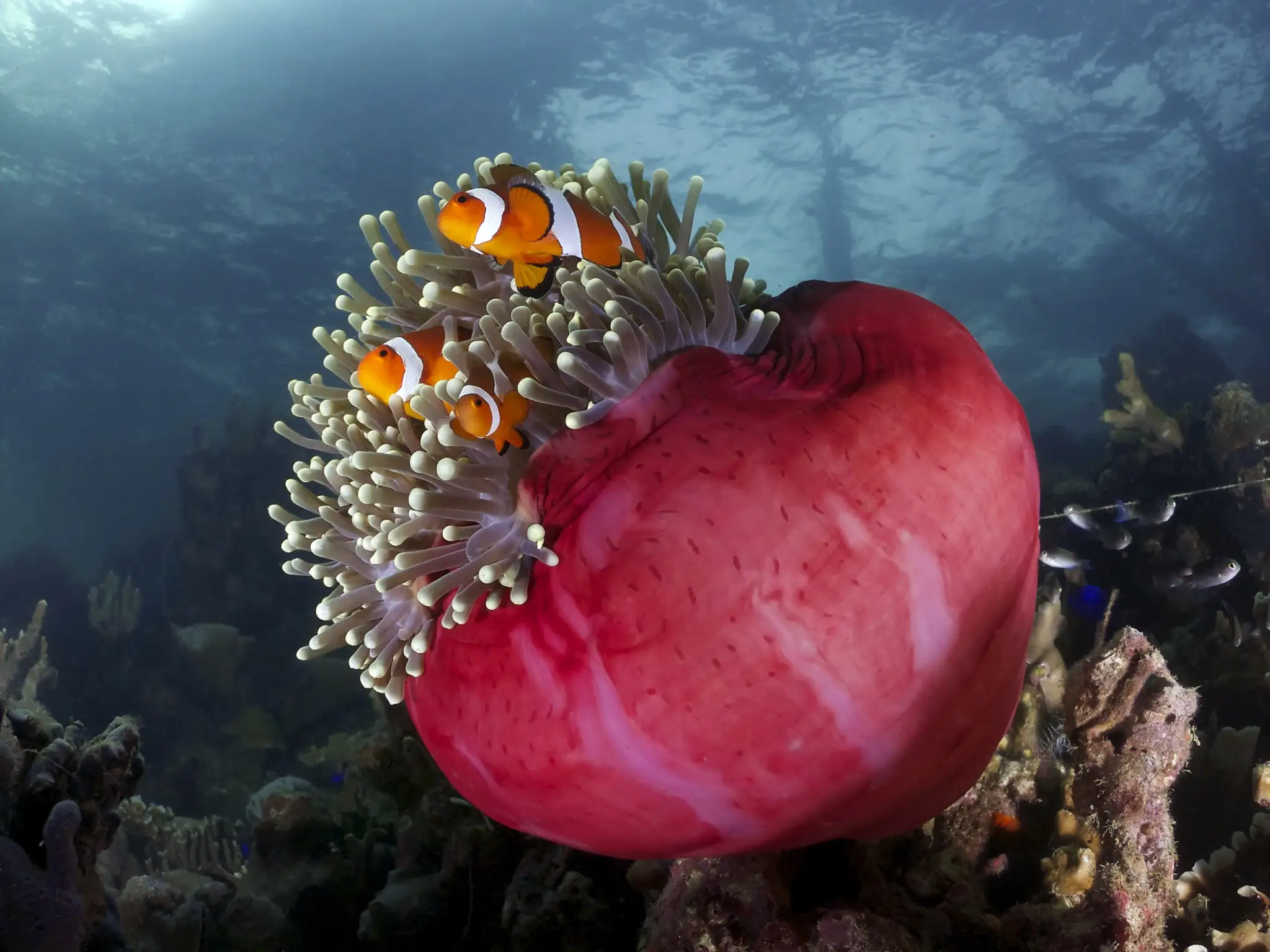
Finding Nemo created explosive aquarium demand spurring destructive collection practices. However, successful captive breeding programs now supply over 90% of aquarium clownfish dramatically reducing wild collection pressure. Climate change threatens reef ecosystems through coral bleaching and ocean acidification.
Anemone vulnerability particularly concerns conservationists since clownfish depend entirely on these partnerships. Marine protected areas in Indonesia, Philippines, and Great Barrier Reef safeguard critical populations while clownfish serve as charismatic ambassadors for broader reef ecosystem protection. Photo: Yusran Abdul Rahman.
Science & Discovery
Molecular research reveals mucus immunity involves specific glycoproteins preventing nematocyst discharge while clownfish incorporate anemone-derived molecules creating chemical camouflage enabling them to smell like their hosts preventing defensive responses.
Genomic studies tracking sex change reveal hormonal cascades triggering rapid gonad transformation with cortisol spikes suppressing male functions while activating ovarian development completing within 14-21 days depending on species and conditions, demonstrating remarkable physiological plasticity.
Climate research shows elevated temperatures disrupt clownfish olfactory abilities impairing capacity to locate suitable anemone hosts while larvae exposed to acidified water display reduced survival and difficulty recognizing anemone chemical cues.
In our delightful oceans, clownfish captive breeding programs now supply over 90% of aquarium trade dramatically reducing wild collection pressure across 30+ species. Dominant males transform into breeding females within 14-21 days when breeding pairs are disrupted ensuring reproductive continuity. Marine protected areas and anemone conservation now safeguard these specific symbiotic partnerships demonstrating reef ecosystem interdependence.