California Sea Lion
Ocean's Acrobatic Genius
Zalophus californianus
Meet ocean's acrobatic geniuses whose primate-rivaling cognition in specific domains, hydrodynamic-trail-detecting whiskers, 40-kilometer-per-hour speeds, and remarkable recovery from fewer than 1,000 to over 250,000 individuals make them coastal waters' intelligent adaptable predators.
Dive into Their WorldWhat Makes Them Special
Sexual Dimorphism
Males reach 2.4 meters and 300 kilograms while females average 1.8 meters and 100 kilograms reflecting polygynous breeding
Cognitive Excellence
Problem-solving abilities comparable to dogs understanding symbolic logic, recognizing patterns, and learning through observation surpassing most marine mammals
Speed Champions
Swimming speeds exceeding 40 kilometers per hour with porpoising technique leaping clear of water reducing drag during pursuits
Whisker Navigation
Mystacial vibrissae detect minute water disturbances from fish trails hours old enabling hunting in darkness or murky waters
Thermal Mastery
Flippers function as radiators releasing heat through vasodilation enabling survival from cold California waters to tropical Galápagos
Conservation Success
Populations recovered from fewer than 1,000 individuals in 1950s to over 250,000 today demonstrating effective marine mammal protection, though some regional populations face ongoing threats
First Encounter
Masters of Two Worlds
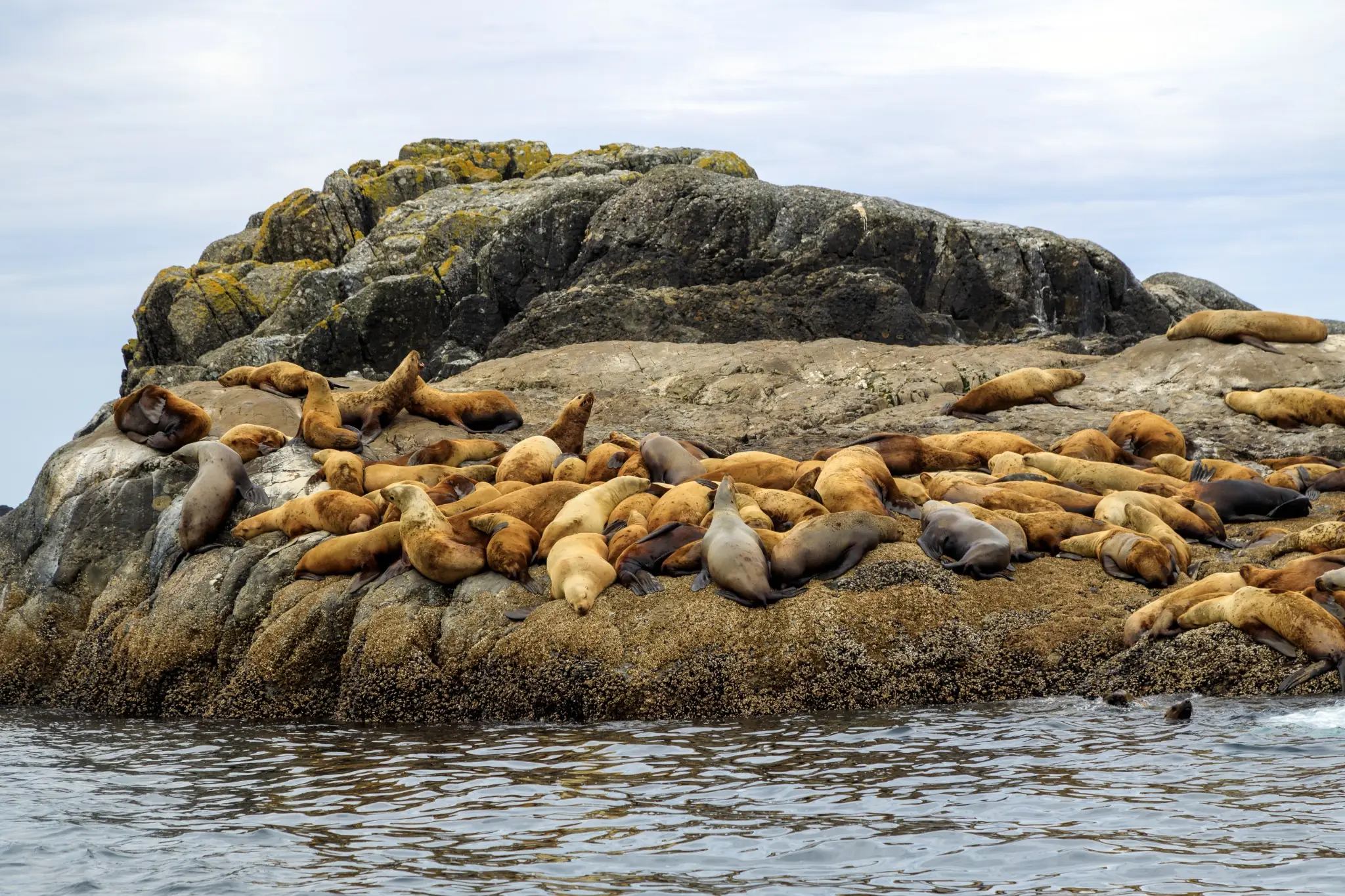
Sleek brown forms haul onto rocky Pacific shores barking raucously. Males reaching 2.4 meters (8 feet) and 300 kilograms dwarf females averaging 1.8 meters and 100 kilograms. External ear flaps and rotating rear flippers enable agile terrestrial locomotion.
Underwater, torpedo-shaped bodies slice through water with remarkable grace. Long fore-flippers function as wings propelling through three-dimensional space. Colonies occupy islands and rocky headlands from California to Mexico. Intelligence shines through curious behaviors and complex social interactions. Photo: Nalidsa.
"Working with California sea lions revealed cognitive abilities that astonished us. They grasp abstract concepts, understand cause and effect, and can learn behaviors faster than many terrestrial mammals. Their intelligence has been dramatically underestimated."
— Dr. Colleen Reichmuth, Director of Pinniped Cognition & Sensory Systems Laboratory
Underwater Acrobatics
Speed and Maneuverability
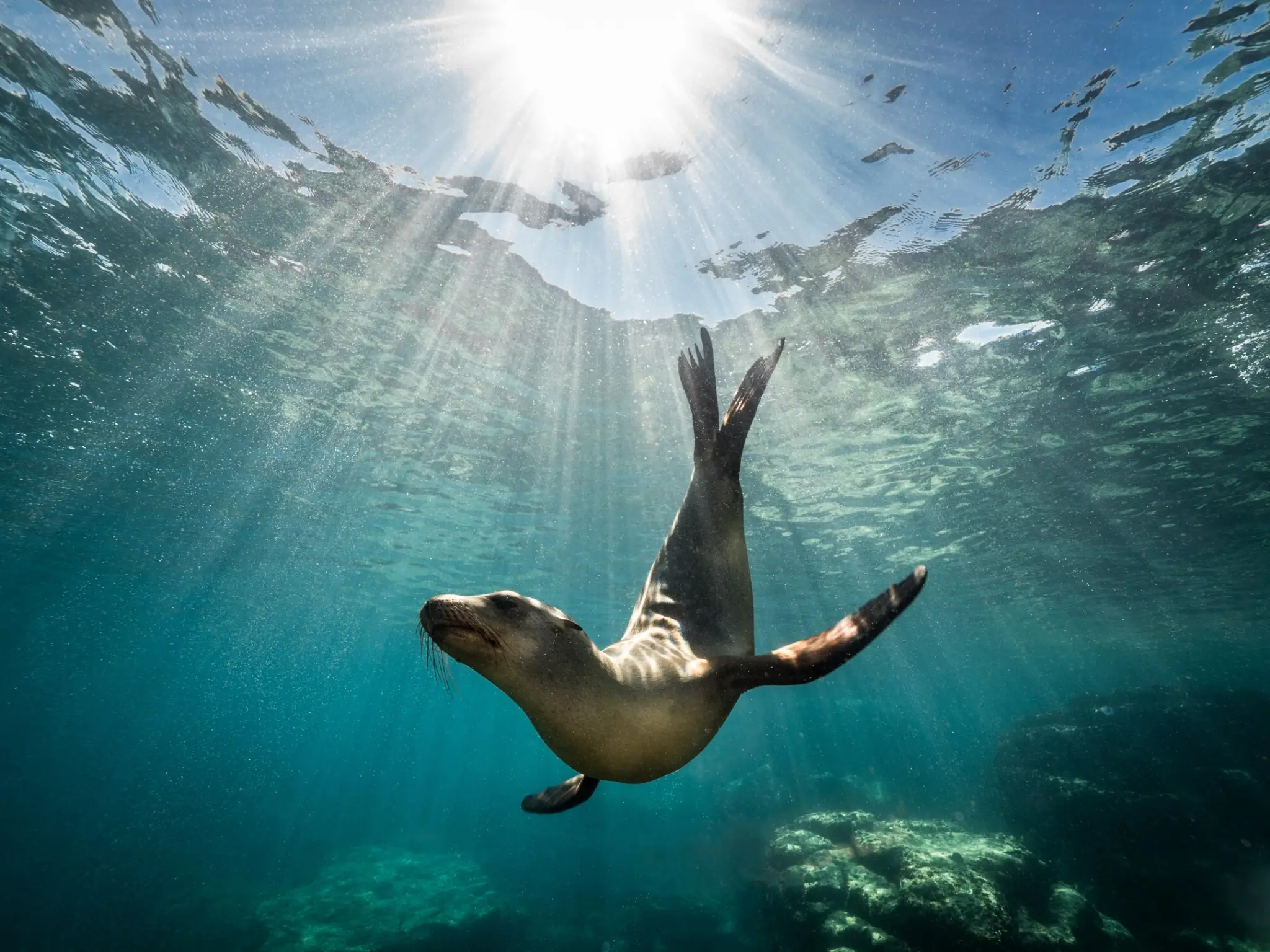
Swimming speeds exceed 40 kilometers per hour powered by fore-flipper strokes. Streamlined bodies minimize drag enabling tight turns. During high-speed chases they employ porpoising. Dives typically reach 80-100 meters but can exceed 300 meters lasting 10+ minutes.
Fusiform bodies channel water smoothly along streamlined contours. Rear flippers function as rudders enabling barrel rolls and instant direction changes. This speed-agility combination makes them formidable hunters of sardines, anchovies, and squid forming dense schools along California's coastline. Photo: Wirestock Creators.
Cognitive Mastery
Intelligence and Learning
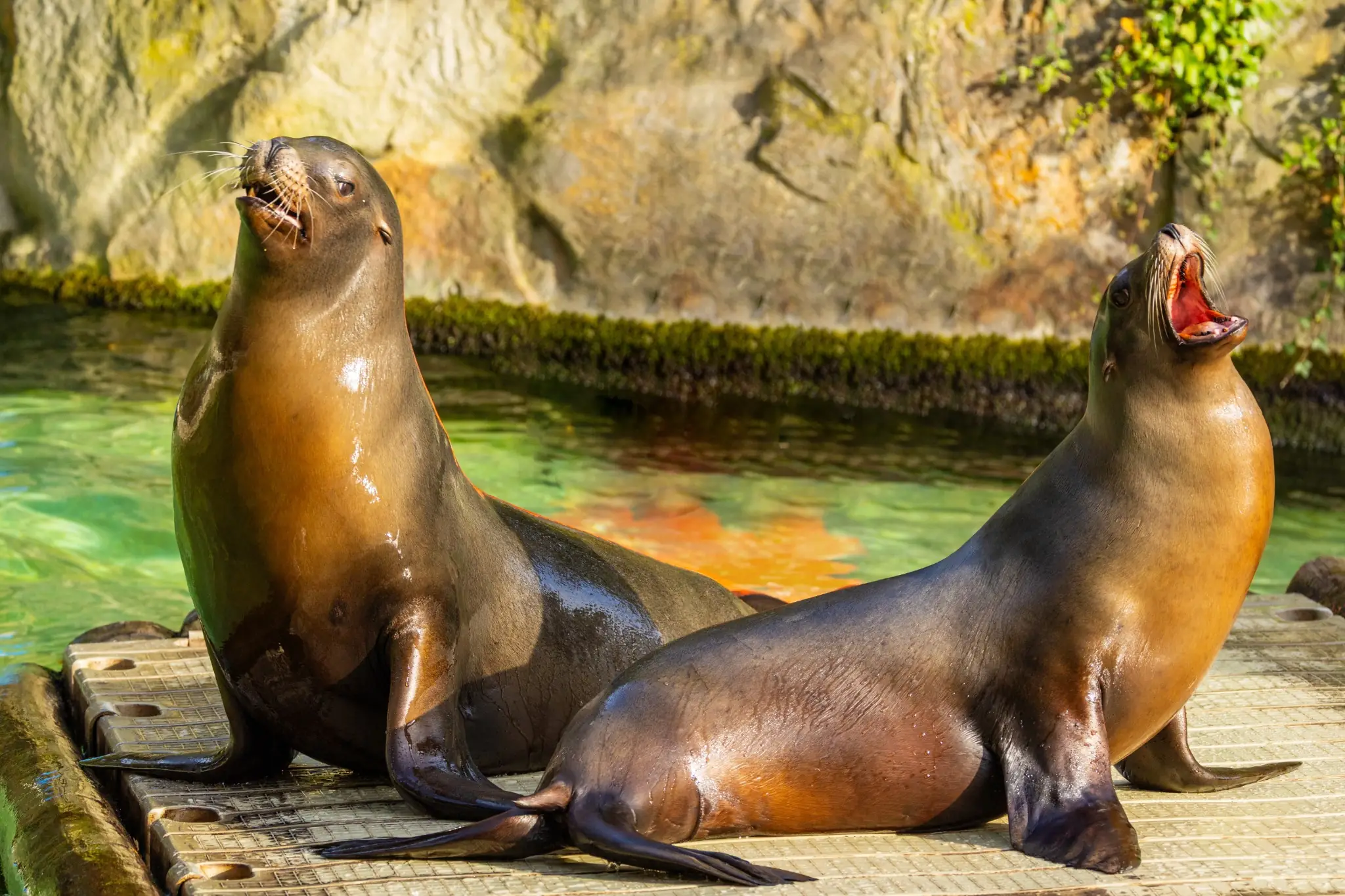
Cognitive abilities rival great apes in specific domains. Laboratory studies show they understand equivalence relationships—abstract logical reasoning beyond most mammals. They learn through observation copying behaviors without trial-and-error. Memory tests reveal recognition after 10+ years without practice.
Intelligence finds application in U.S. Navy programs where trained sea lions locate underwater mines and detect unauthorized divers. This trainability stems from cognitive sophistication required for complex social navigation and hunting coordination. Wild sea lions display innovation using tools and adapting hunting strategies. Photo: Elen Marlen.
"When a sea lion named Rio understood symbolic logic without explicit training, it challenged our assumptions about intelligence evolution. These are not simple creatures responding to stimuliâ€"they're thinking, reasoning animals."
— Dr. Ronald Schusterman, Pioneer in Marine Mammal Cognition Research
Whisker Navigation
Hydrodynamic Tracking
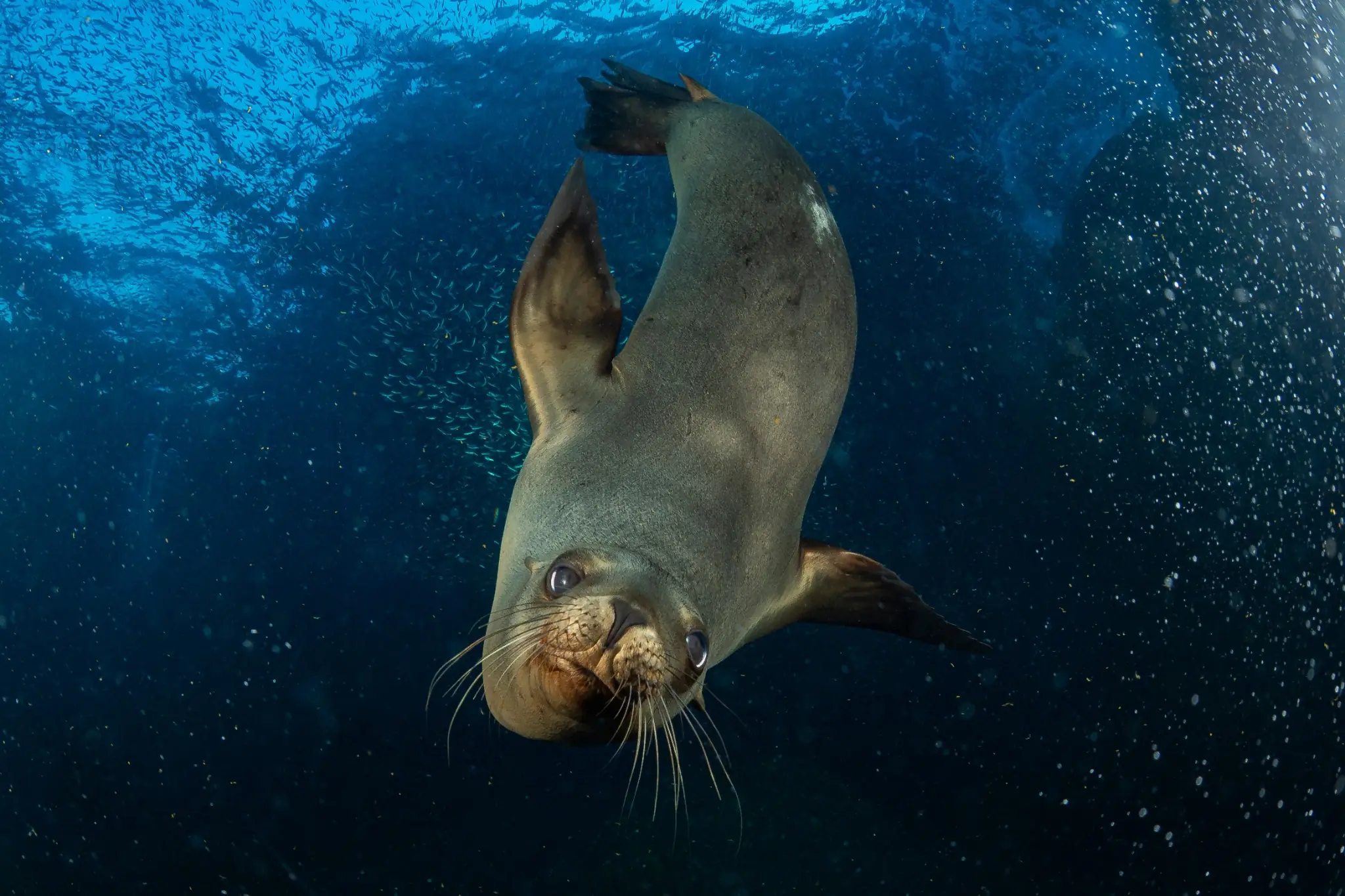
California sea lions possess mystacial vibrissae—specialized whiskers containing thousands of nerve endings detecting minute water movements. These structures track hydrodynamic trails left by swimming fish persisting hours after prey passage. Each whisker moves independently sampling different water layers simultaneously.
This capability proves critical for deep-water hunting where darkness renders vision useless below 200 meters. Whiskers detect pressure waves from fleeing prey enabling precise strikes. The system works across frequency ranges—low frequencies for distant detection, high frequencies for precision. Understanding this inspires biomimetic underwater sensors. Photo: Jesus Cobaleda.
Thermoregulation Engineering
Temperature Control Systems
California sea lions maintain 37°C body temperatures across environments ranging from 10°C California waters to 25°C tropical seas. Flippers function as sophisticated radiators through counter-current heat exchange. Blubber thickness varies seasonally building insulation before winter while thinning during breeding.
Behavioral thermoregulation complements physiological mechanisms. Sea lions porpoise during transit generating metabolic heat while minimizing cold exposure. They cluster on haul-outs during storms sharing body heat. This temperature control enables range expansion from Vancouver Island to Galápagos Islands spanning 50 degrees latitude. Photo: Patricia VanOver.
Conservation & Coexistence
Recovery and Challenges
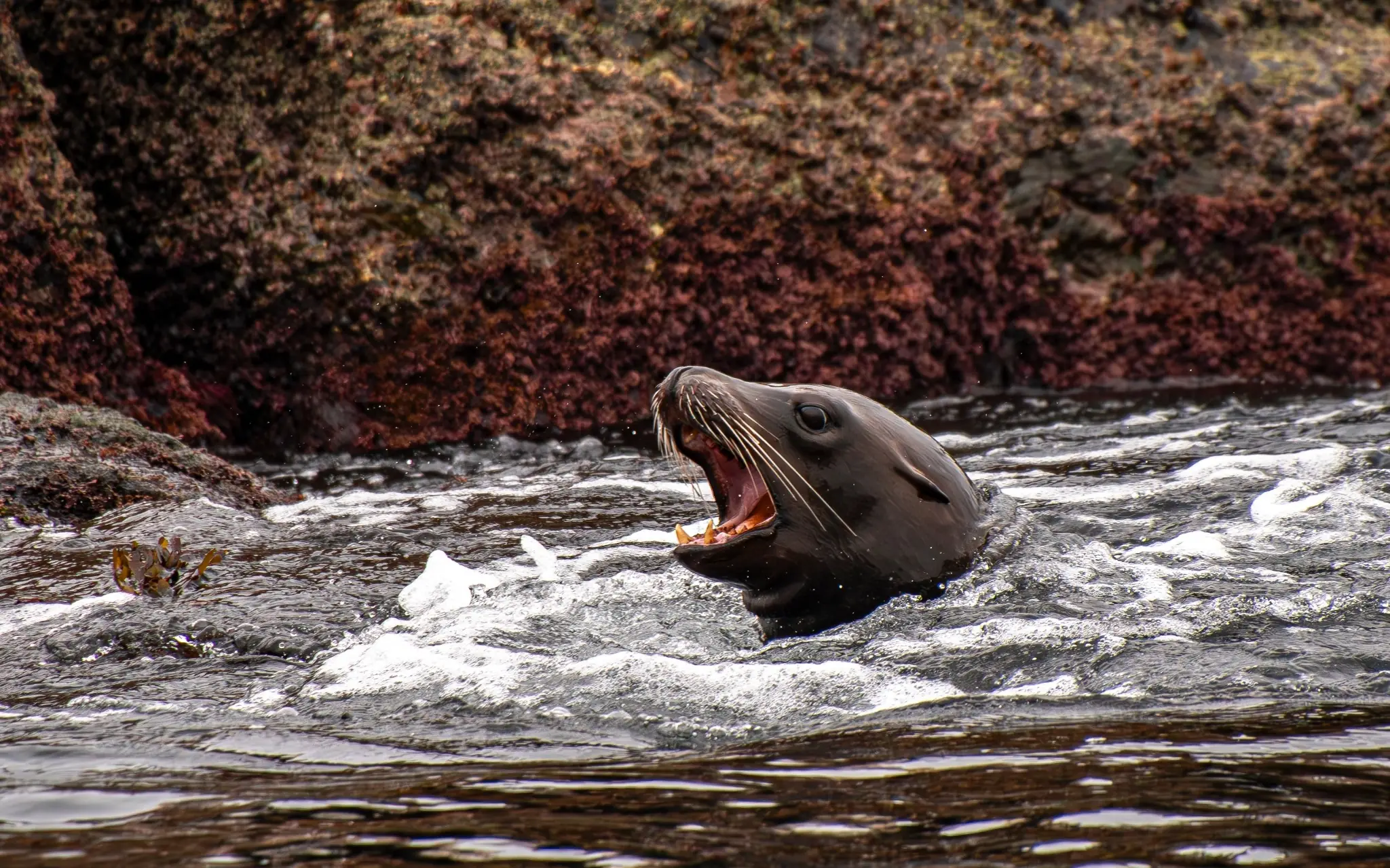
Populations recovered from fewer than 1,000 individuals in 1950s to over 250,000 today following Marine Mammal Protection Act—a conservation success. They now face challenges: fishery conflicts, domoic acid poisoning from harmful algal blooms, and climate-driven prey shifts. While the overall population is healthy, some regional stocks face different conservation statuses.
Sea lions serve as sentinels for ocean health with population trends reflecting broader ecosystem changes. Research on their cognitive abilities, sensory systems, and adaptability informs marine mammal conservation globally. Effective coexistence requires understanding their biology, respecting ecological roles, and protecting both marine mammals and fisheries. Photo: Kelly vandellen.
Science & Discovery
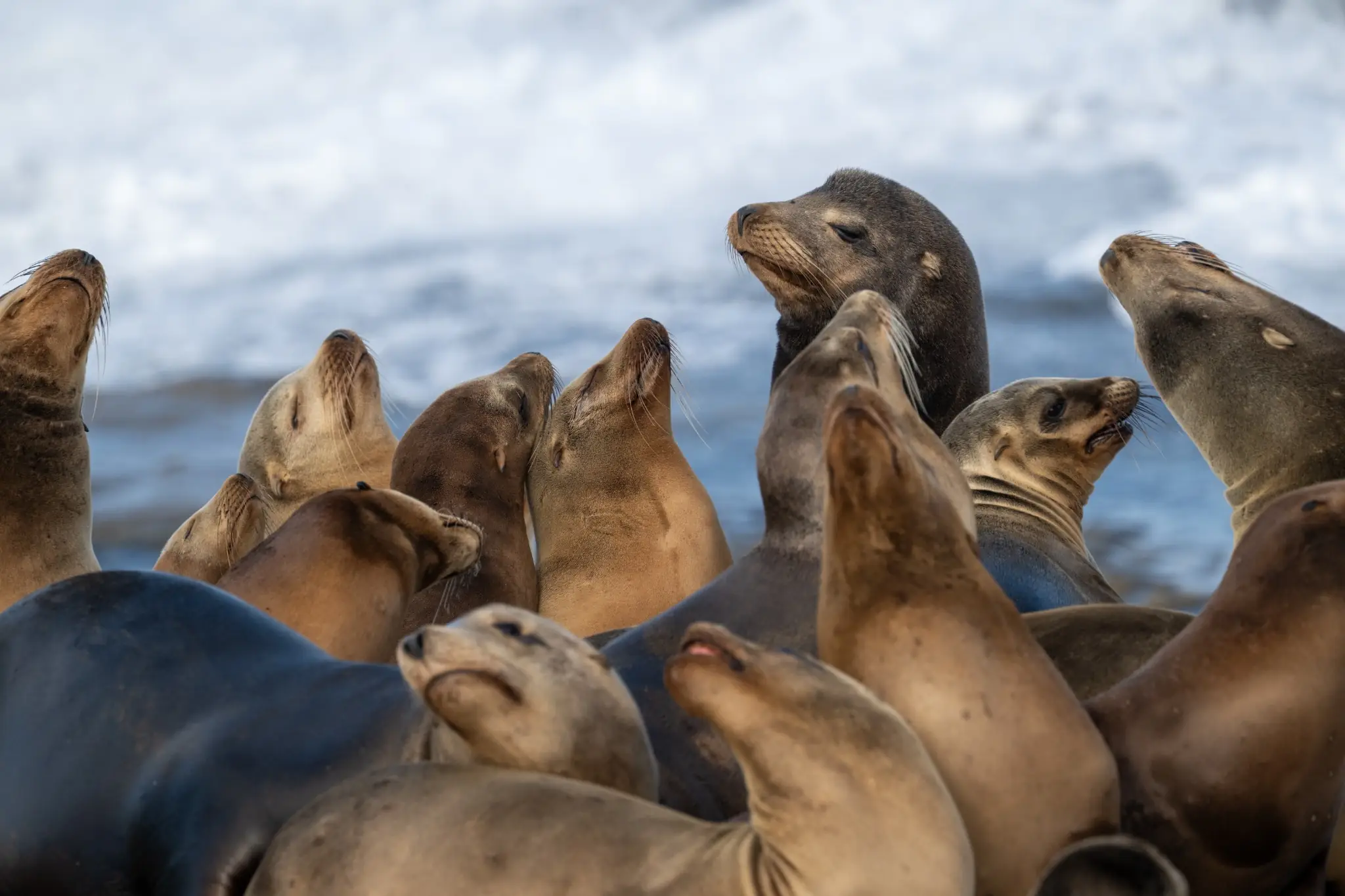
Genetic analysis reveals California sea lions diverged from other species approximately 3 million years ago. Population structure shows distinct breeding colonies maintaining genetic identity. Females exhibit natal site fidelity while males disperse widely creating gene flow patterns.
Satellite tagging reveals diving patterns shift with prey availability. Sea lions adjust foraging strategies within days responding to oceanographic changes demonstrating behavioral plasticity. Individual specialization emerges—some focus on benthic prey while others target pelagic fish.
Neurological research shows sea lion brains possess highly developed regions for spatial navigation, memory, and sensory integration. Hippocampal formation rivals primates in relative size explaining exceptional spatial memory. Domoic acid poisoning studies advance understanding of memory-controlling brain regions.
In our delightful oceans, California sea lions demonstrate that intelligence and acrobatics enable mastery of terrestrial and marine environments, that specialized whiskers provide sensory solutions to hunting challenges, and that conservation success requires balancing population recovery with sustainable coexistence in crowded coastal ecosystems.