Surgeonfish
Ocean's Reef Maintenance Crew
Acanthuridae family
Meet the ocean's reef maintenance crew—herbivorous surgeons reaching 30 centimeters whose razor-sharp tail spines deploy like retractable scalpels generating 2,000 PSI cutting pressure. Their rasping teeth execute 20,000 daily grazing bites removing 95% of algae within 48 hours preventing coral smothering. Coordinated schools of 500 individuals perform lunar-synchronized spawning migrations spanning several kilometers.
Meet the Reef Maintenance CrewWhat Makes Them Special
Scalpel Spines
Razor-sharp retractable tail spines generating 2,000 PSI cutting pressure during defensive tail-slapping motions.
Rasping Teeth
Specialized continuously-growing teeth functioning like biological files enabling 20,000 daily grazing bites.
Mass Schooling
Coordinated groups of 100-500 individuals systematically grazing reef areas through synchronized feeding patterns.
Lunar Spawning
Lunar-synchronized spawning aggregations with migrations of several kilometers to traditional reproductive sites
Reef Engineers
Remove 95% of algae within 48 hours preventing overgrowth that smothers coral polyps
Compact Size
30-centimeter (12-inch) streamlined bodies optimized for constant reef maintenance activities across tropical systems.
First Encounter
30-Centimeter Bodies with Surgical Precision Design
Surgeonfish achieve 30-centimeter (12-inch) lengths with streamlined oval bodies optimized for constant reef grazing activities. Their distinctive common name derives from razor-sharp spines near tail bases—defensive weapons resembling surgical scalpels.
Over 80 species demonstrate remarkable diversity across tropical reef systems worldwide. Scientists describe their body plan as perfectly adapted—representing specialized evolution for herbivorous reef maintenance through precise algae control mechanisms. Photo: Glebantiy
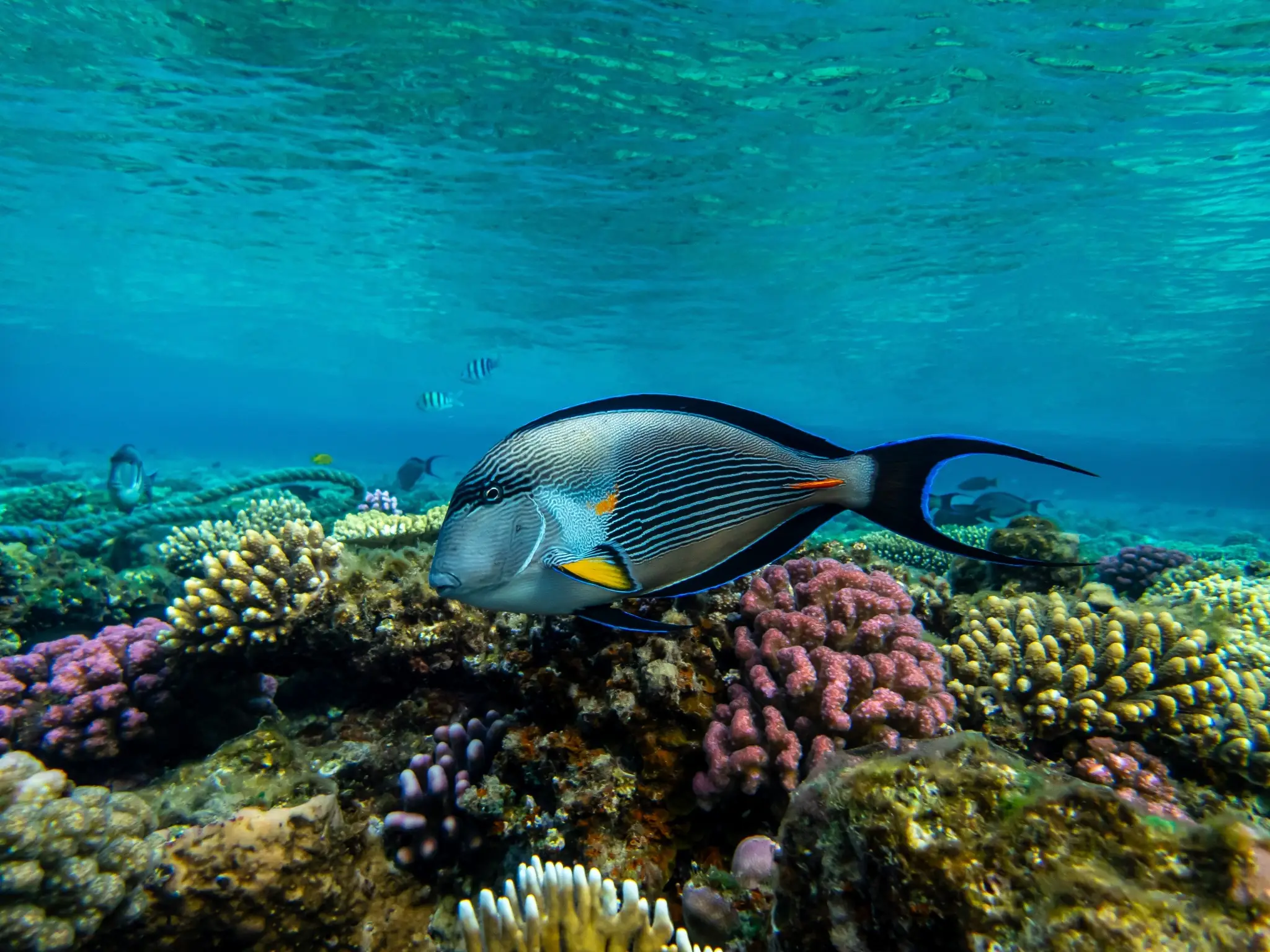
"Surgeonfish scalpel spines can inflict wounds requiring medical attention—yet these defensive weapons are so precisely engineered they fold flush against the body during normal swimming, deploying only when needed."
— Dr. John Randall, Ichthyology Defense Systems Specialist
Scalpel Defense System
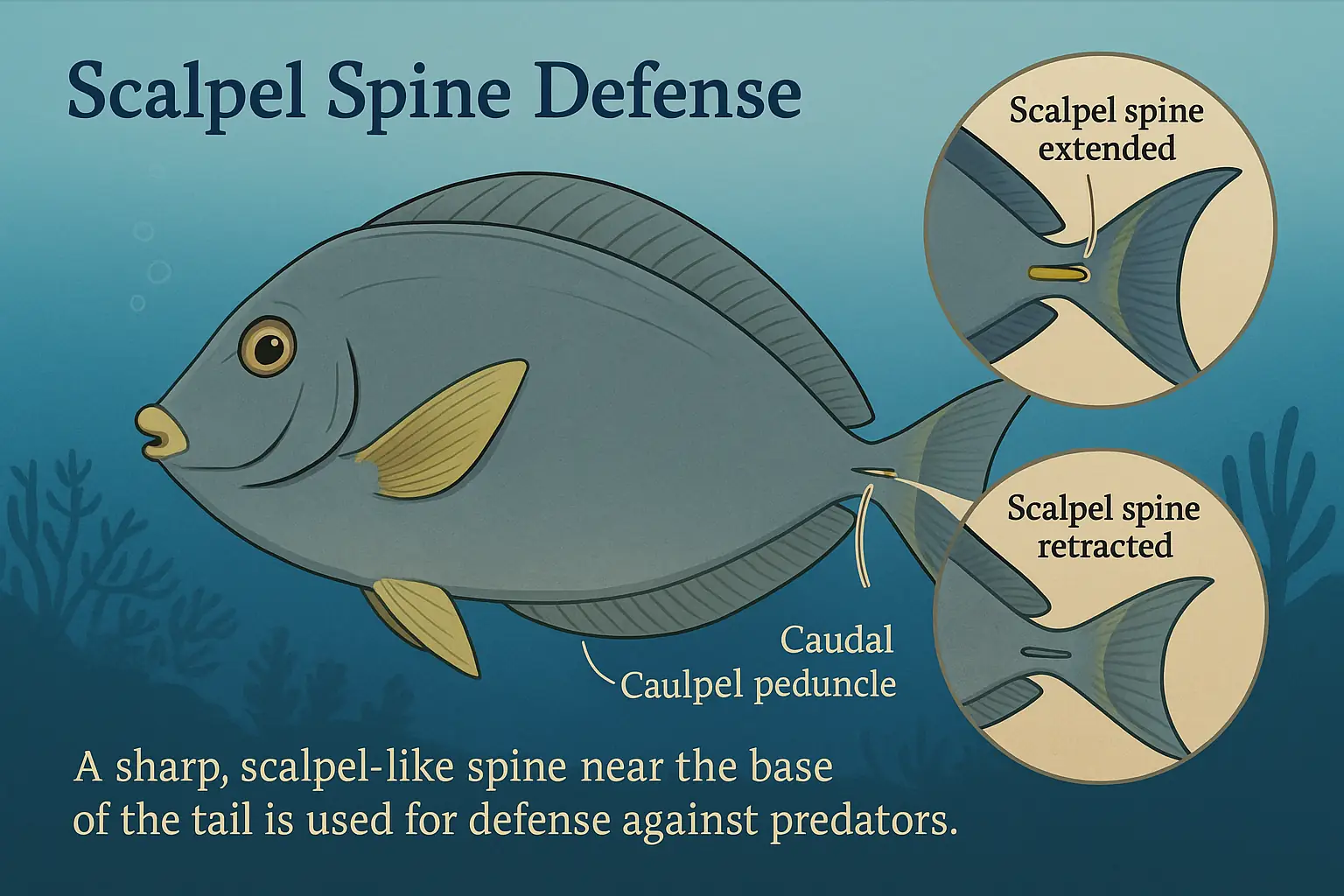
Retractable Razor Spines with 2,000 PSI Pressure
Sharp retractable spines on caudal peduncles extend during territorial disputes or predator encounters. These scalpels generate cutting pressures exceeding 2,000 PSI through rapid tail-slapping motions targeting threats with surgical precision.
Biomechanical studies reveal specialized keratin structures maintaining razor-sharp edges despite constant use. Retraction mechanisms protect the weapon during normal activities while ensuring instant deployment when territorial boundaries are challenged. Photo: Illustration.
Grazing Technology
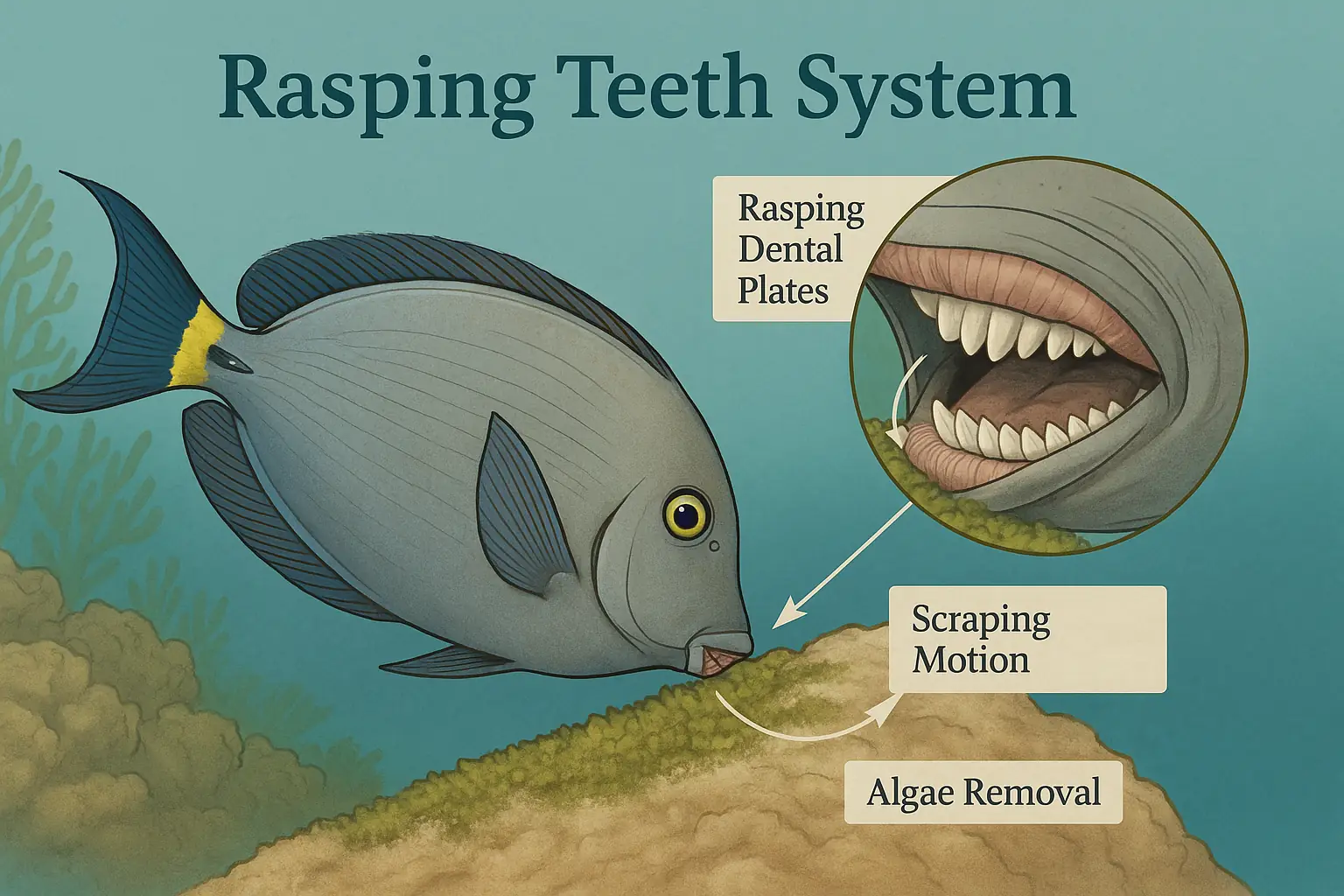
20,000 Daily Bites with Precision Algae Scraping
Specialized rasping teeth function like biological files, scraping algae from hard surfaces with remarkable efficiency. Feeding rates reach 20,000 bites per day, with continuously growing teeth maintaining sharp edges despite constant abrasive contact.
Each grazing bite removes precise amounts of algae while avoiding damage to underlying coral tissue. This selective feeding maintains optimal algae thickness for reef health, preventing overgrowth that would smother coral polyps. Photo: Illustration.
"Research reveals surgeonfish schools can remove 95% of algae from reef areas within 48 hours—then precisely regulate regrowth to maintain optimal ecosystem balance for coral health."
— Dr. Gareth Williams, Reef Grazing Ecology Researcher
Coordinated Schooling
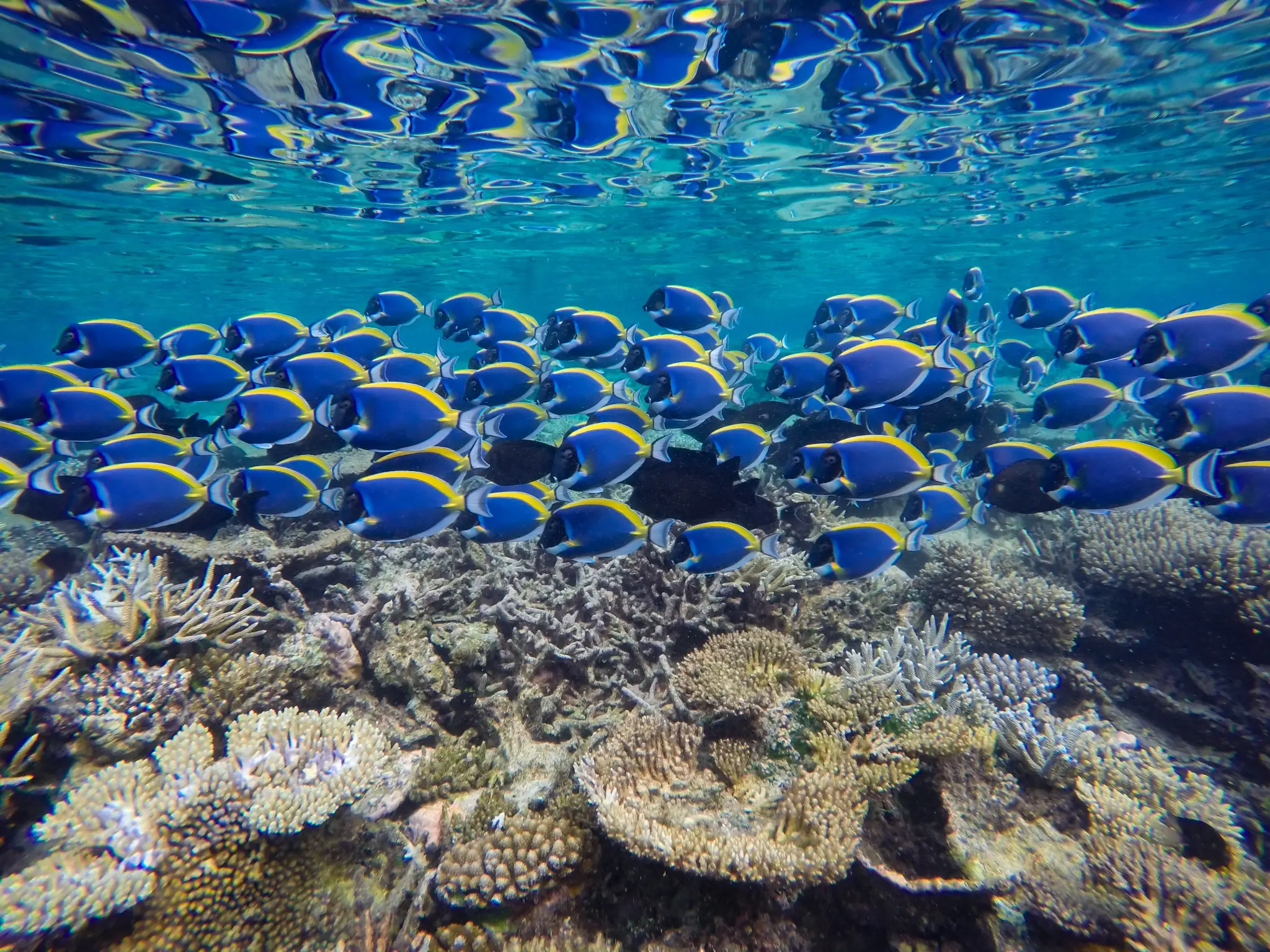
500-Individual Schools with Systematic Reef Coverage
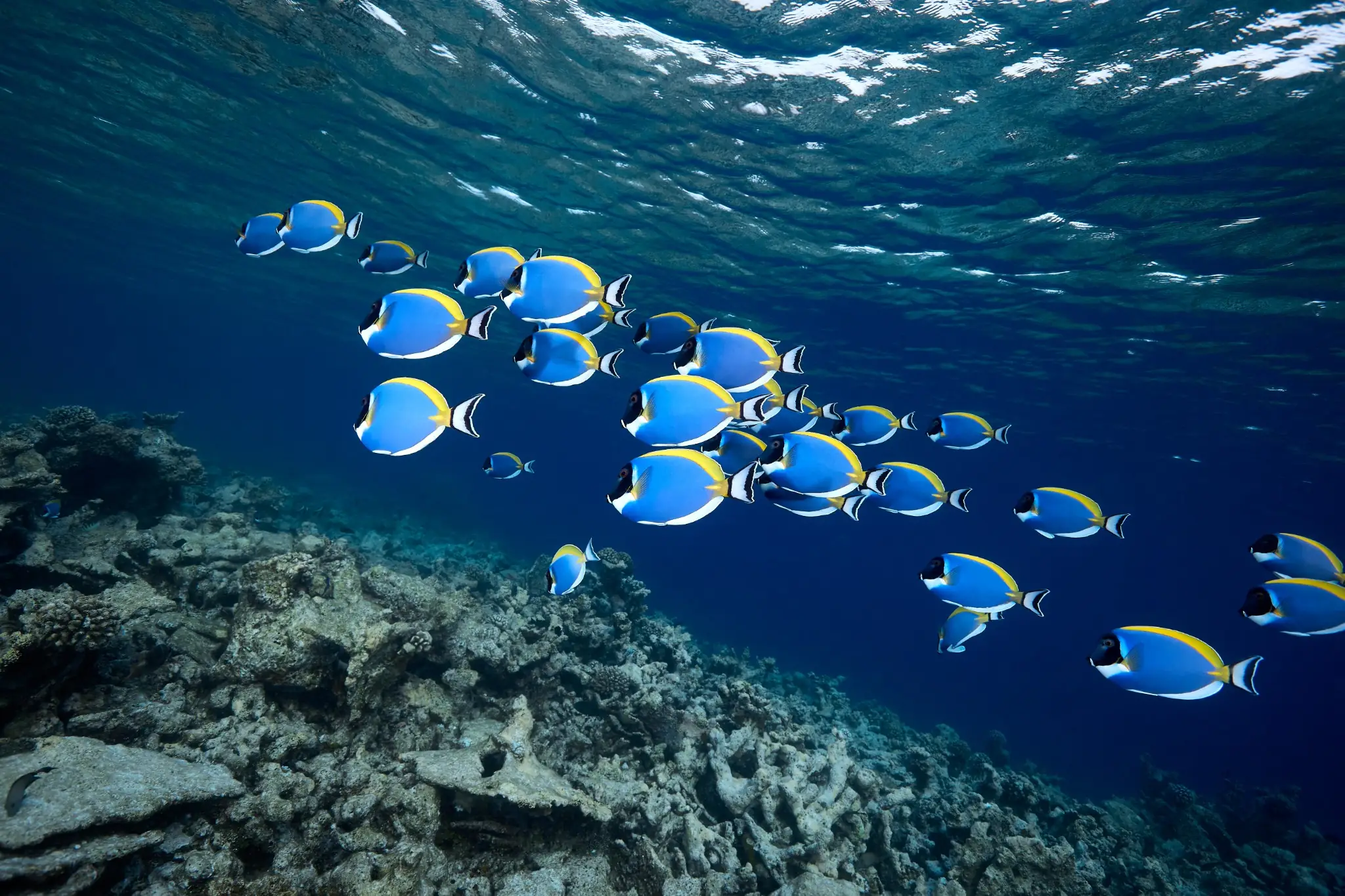
Large schools of 100-500 individuals move systematically across reef areas, creating intensive grazing pressure preventing algal overgrowth. Coordinated feeding maximizes efficiency while providing collective predator protection through group vigilance.
Schooling behavior follows seasonal patterns with aggregations forming during peak algae growth periods. Individual fish rotate feeding positions ensuring comprehensive coverage while maintaining group cohesion through visual cues and chemical signals. Photo: Oksana Stock.
Spawning Aggregations
Lunar-Synchronized Reproductive Gatherings
Massive spawning aggregations form during specific lunar phases with thousands of individuals gathering at traditional sites. These migrations involve fish traveling over 50 kilometers (31 miles) from feeding territories to reproductive grounds.
Synchronized spawning releases millions of eggs into currents during optimal tidal conditions. Site fidelity studies document identical locations used across multiple decades, creating predictable reproductive events essential for population maintenance and recruitment. Photo: Tetsuo Arada.
Conservation Management
Spawning Site Protection with Population Recovery
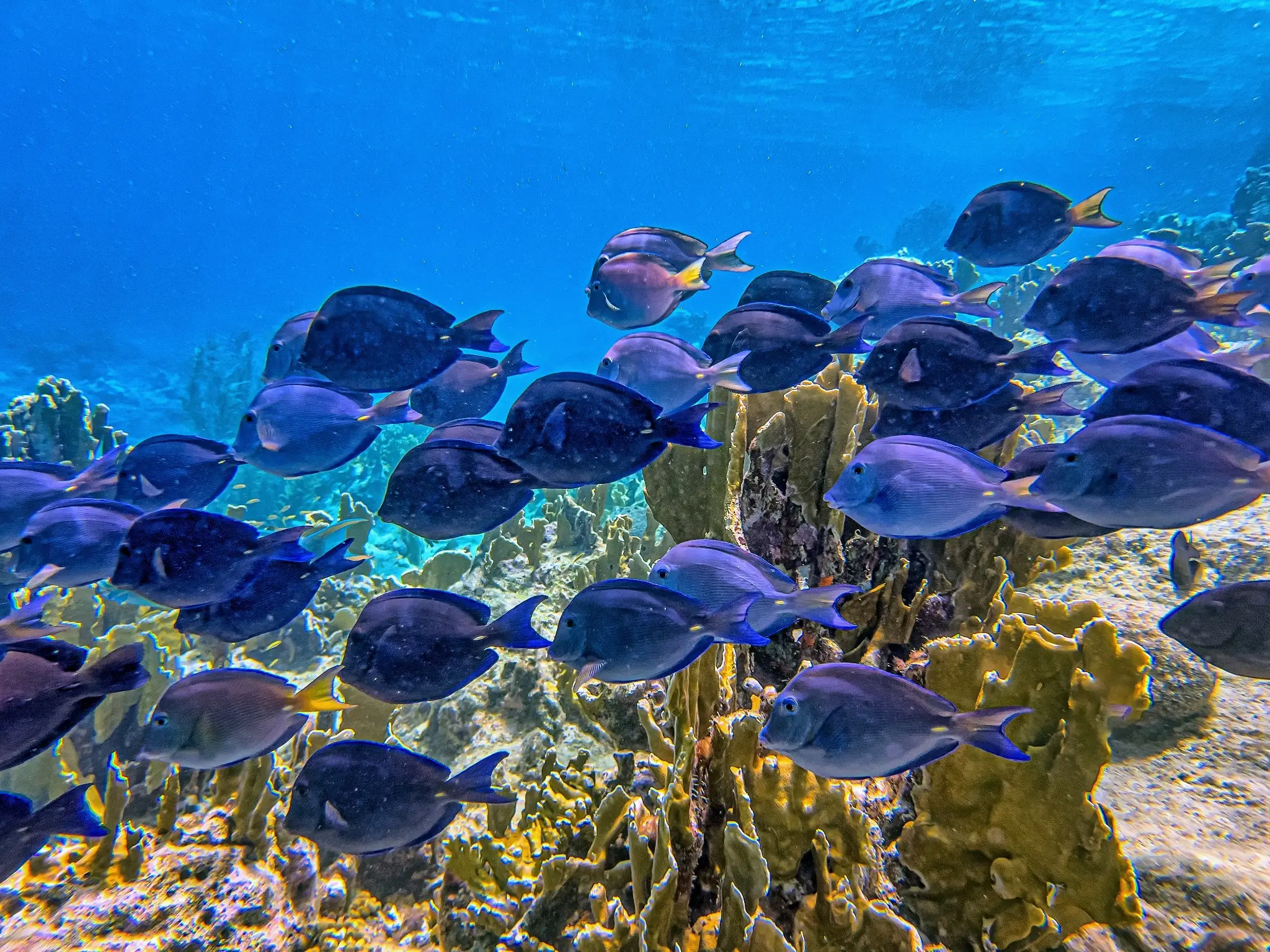
Most species maintain stable populations though spawning aggregations face fishing pressure during vulnerable reproductive periods. Targeted harvesting at aggregation sites has reduced some Pacific populations by 60% over two decades.
Palau's spawning aggregation sites receive seasonal fishing closures protecting 80% of reproductive events. Similar temporal protections across Micronesia demonstrate 40% recovery in aggregation sizes while maintaining sustainable fisheries for local communities. Photo: John A. Anderson.
Science & Discovery
Georgia Tech 2023 biomechanical analysis revealed surgeonfish teeth wear patterns inspire industrial surface treatment technologies demonstrating biological solutions to abrasion resistance challenges facing manufacturing sectors through self-sharpening edge maintenance.
Nature Conservancy 2024 reef restoration projects documented 40% coral recovery rates when surgeonfish populations maintain natural densities inspiring managed herbivore reintroduction protocols for degraded reef systems worldwide.
University of Hawaii 2023 satellite tagging documented spawning migrations of several kilometers connecting feeding and reproductive territories informing temporal fishing closures protecting vulnerable aggregations during critical reproductive periods.
In our delightful oceans, surgeonfish remove 95% of algae within 48 hours through 20,000 daily bites preventing coral smothering. Coordinated schools of 500 maximize feeding efficiency across reef territories. Restoration programs achieved 40% coral recovery through managed herbivore reintroduction.