Pygmy Seahorse
Ocean's Master of Disguise
Hippocampus bargibanti & relatives
Meet the ocean's master of disguise—miniature marvels reaching only 1.4 centimeters among the world's smallest seahorses whose tubercle camouflage precisely replicates coral polyp architecture. Post-settlement color adaptation transforms generic juveniles into perfect mimics across multiple coral genera. Single gill openings and trunk-based brood pouches enable extreme miniaturization across seven to eight species partnering with gorgonian corals.
Meet the Master of DisguiseWhat Makes Them Special
Record Miniaturization
Among world's smallest seahorses at 1.4-2.7 centimeters achieving extreme size reduction through revolutionary anatomical adaptations
Tubercle Camouflage
Calcium-rich tubercles precisely replicate coral polyp morphology creating three-dimensional structural mimicry with mathematical precision
Adaptive Coloration
Post-settlement color matching across multiple coral genera through chromatophore adjustment transforming juveniles into perfect mimics
Obligate Partnerships
Lifetime dependencies on specific gorgonian corals rarely surviving relocation in wild when host corals die or bleach
Trunk Reproduction
Males carry eggs in trunk pouches with 11-14 day gestation producing 6-34 offspring per clutch
Recent Discoveries
Seven to eight known species with most discovered since 2000 highlighting cryptic biodiversity in coral reef ecosystems
Miniature Engineering
1.4-Centimeter Bodies with Revolutionary Anatomical Adaptations
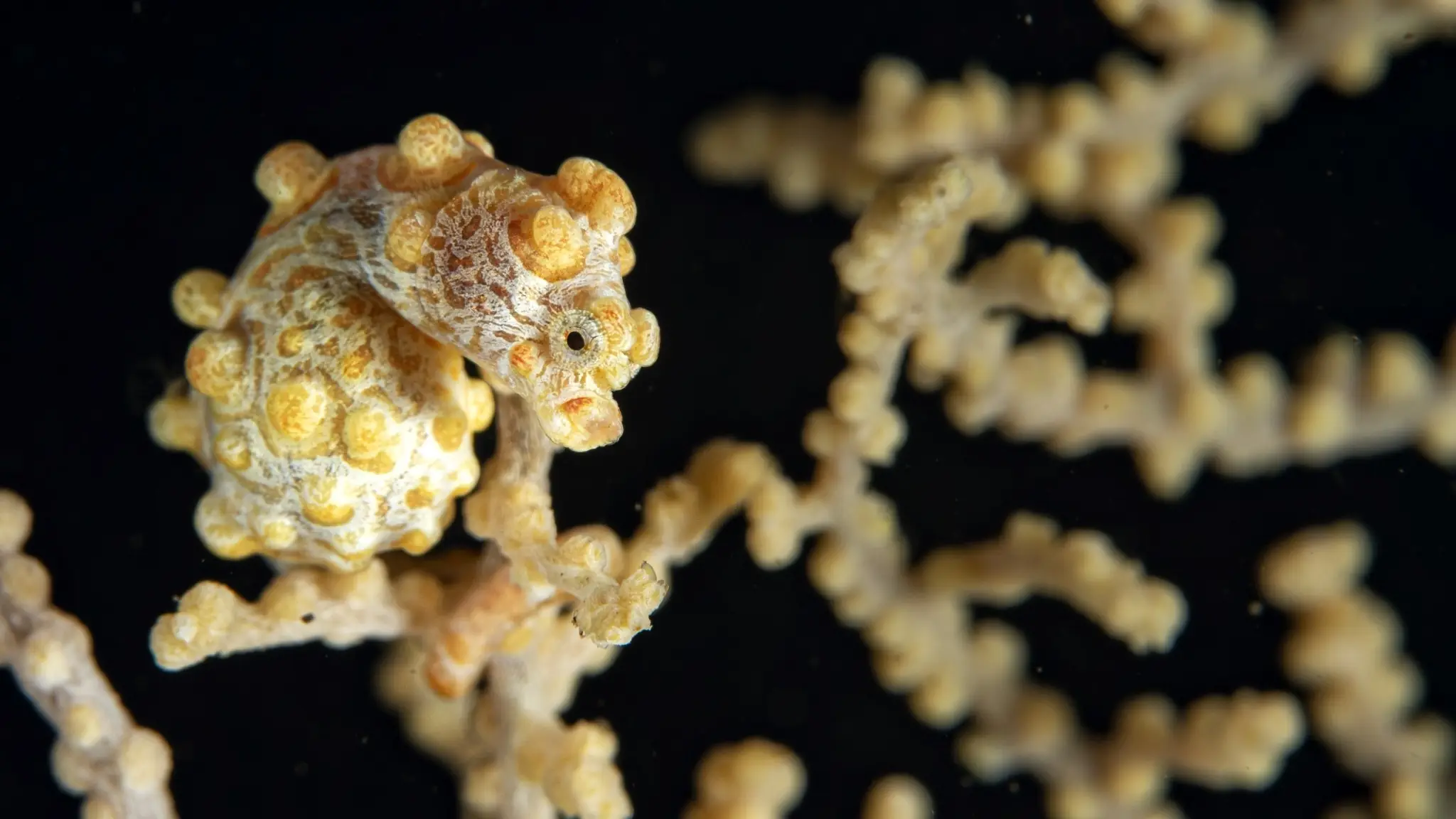
Pygmy seahorses achieve record miniaturization at 1.4-2.7 centimeters (0.6-1.1 inches)—among world's smallest seahorses. Revolutionary adaptations include single gill openings and trunk-based brood pouches accommodating extreme size constraints.
These adaptations enable size reduction through organ compression and structure elimination. Seven to eight species discovered primarily since 2000 represent recent evolutionary radiation demonstrating cryptic biodiversity in threatened reef ecosystems. Photo: Andrea Izzotti
"Pygmy seahorses remained invisible to science for decades because their camouflage is so perfect—Georges Bargibant only discovered the first species in 1969 when coral specimens 'moved' in his laboratory."
— Dr. Richard Smith, Pygmy Seahorse Research Specialist
Tubercle Camouflage
Calcium-Rich Bumps Perfectly Mimicking Coral Polyp Architecture
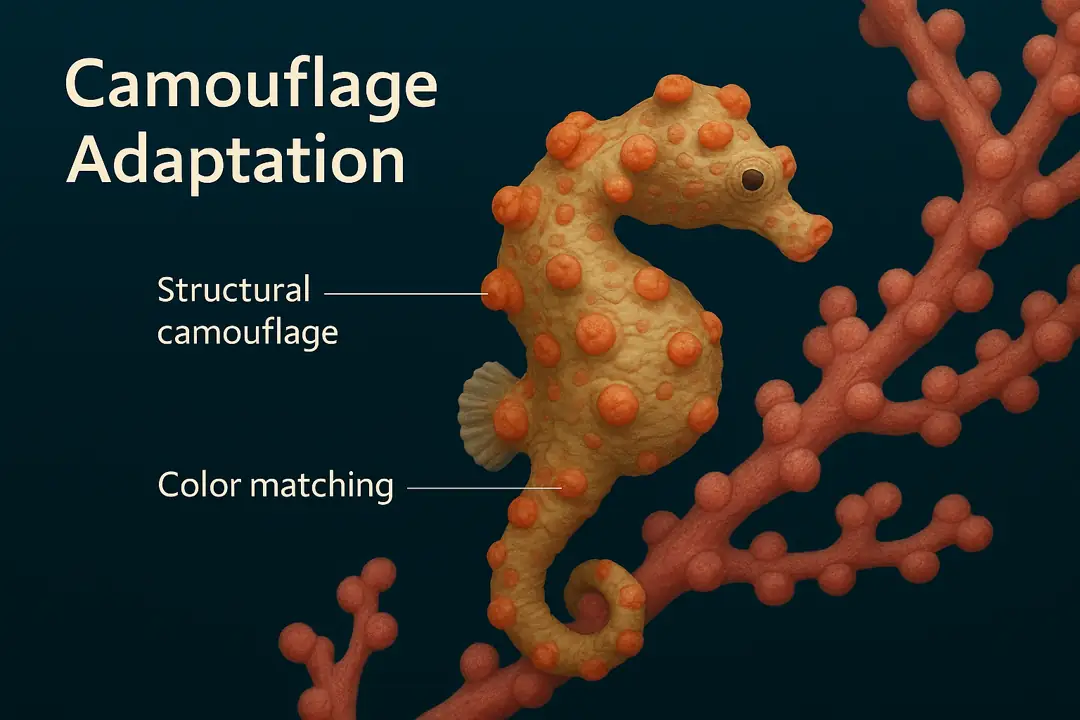
Pygmy seahorses develop tubercles—calcium-rich protrusions precisely replicating coral polyp morphology through three-dimensional mimicry. These bumps match host coral texture and spacing with mathematical precision creating nearly invisible camouflage.
Tubercle formation occurs after juvenile settlement through environmental cues triggering morphological development. This "morphological plasticity"—body structure modification based on habitat—enables species-specific coral camouflage systems unmatched in marine environments. Photo: Illustration.
Adaptive Coloration
Post-Settlement Color Matching Across Ten Coral Genera
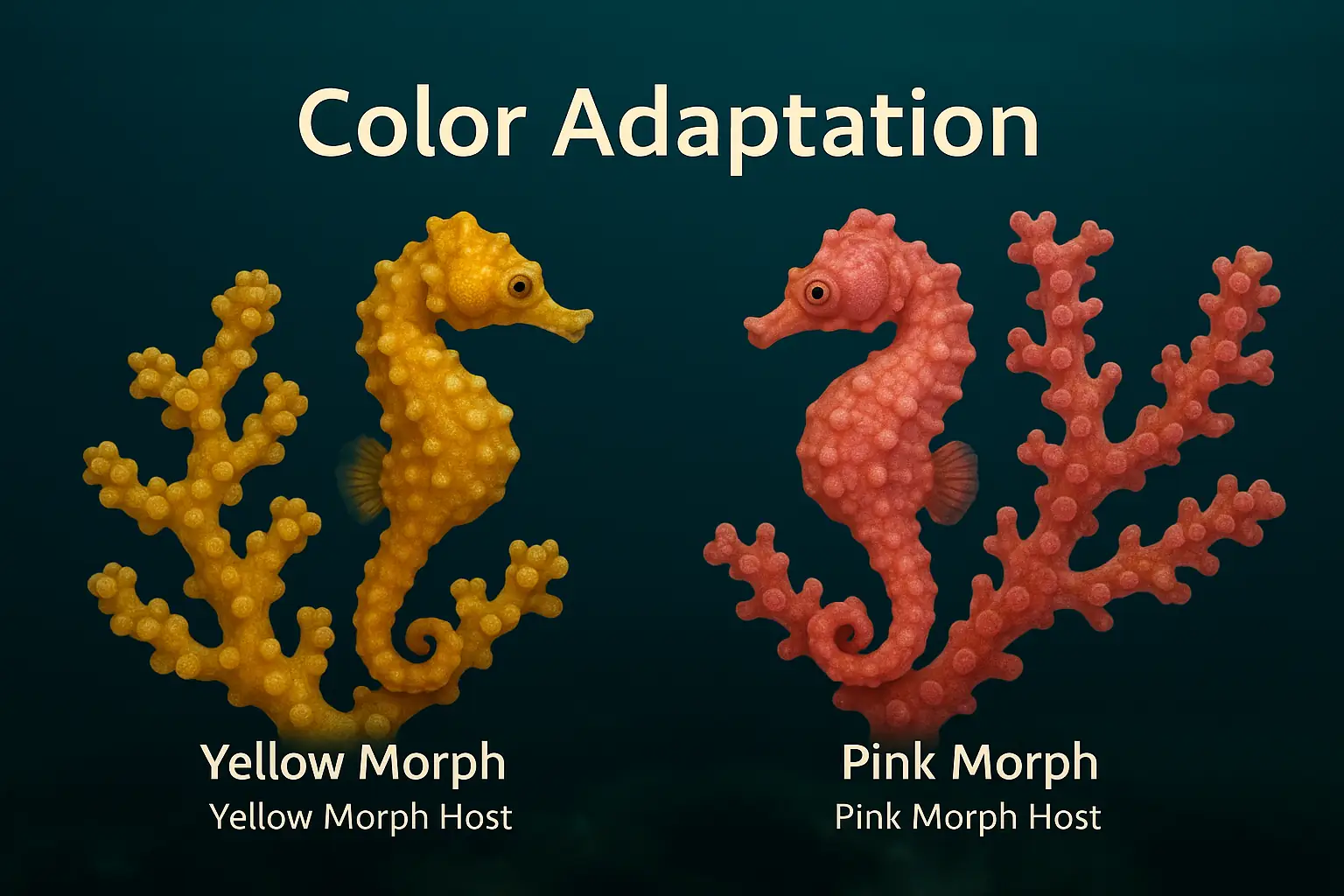
Denise's pygmy seahorses demonstrate color adaptation across multiple coral genera from orange to purple morphs. Individual seahorses match host coloration through chromatophore adjustment after settlement transforming juveniles into perfect mimics within days.
California Academy research revealed juveniles change color after birth rather than inheriting specific morphs. Two primary morphs correspond to Muricella coral species demonstrating genetic flexibility enabling rapid environmental adaptation critical for survival. Photo: Illustration.
"Pygmy seahorses transform from generic juveniles into perfect coral mimics after settlement—a remarkable example of phenotypic plasticity enabling species survival through environmental adaptation."
— Matt Wandell, California Academy Steinhart Aquarium
Obligate Partnerships
Lifetime Gorgonian Dependencies with Specialized Host Relationships
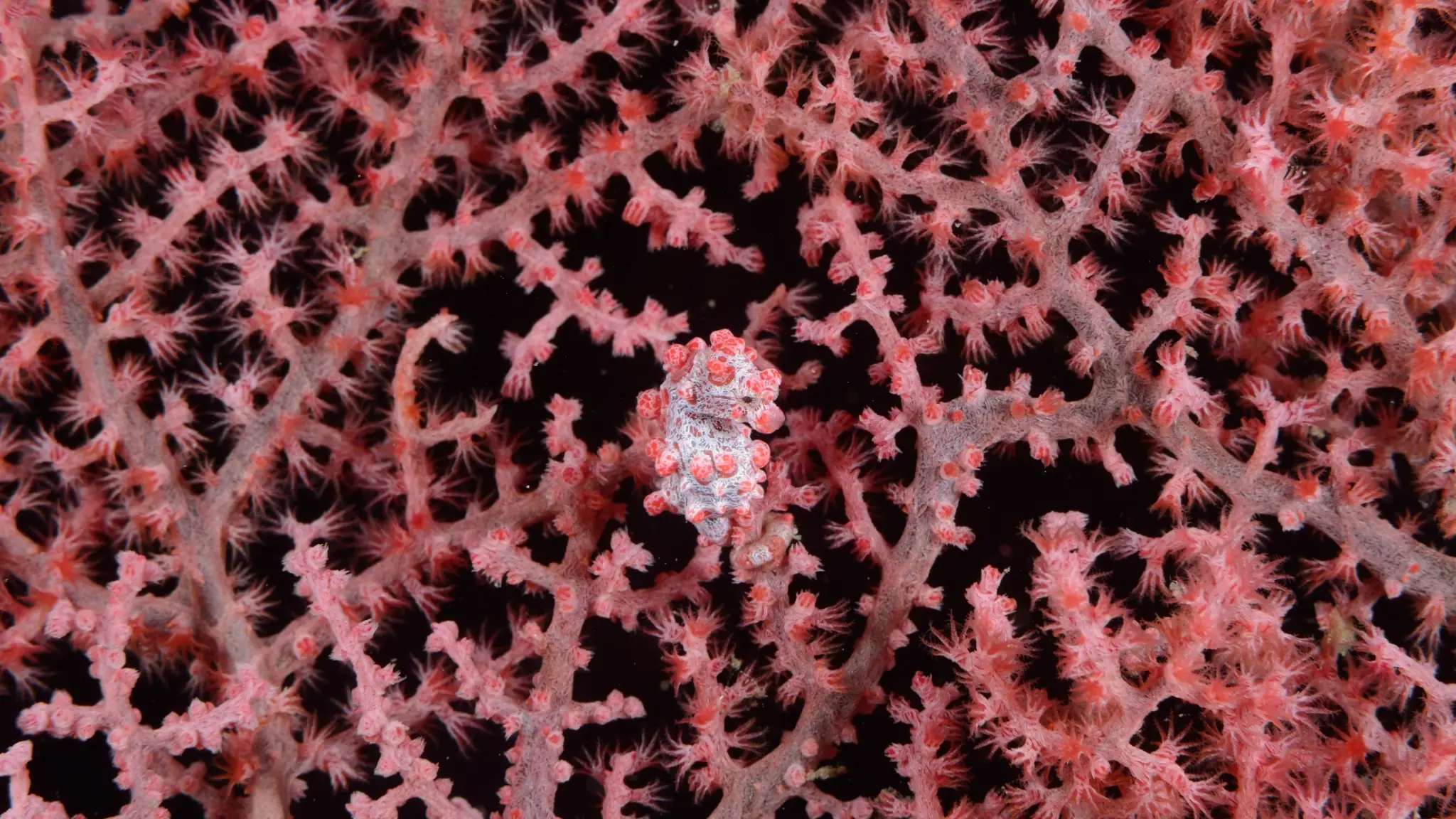
Bargibant's pygmy seahorses exhibit obligate relationships with Muricella gorgonian corals remaining attached throughout adult lifespans using prehensile tails. When hosts die from bleaching dependent seahorses rarely survive relocation in wild demonstrating extreme ecological specialization.
This obligate dependence makes pygmy seahorses sensitive indicators of coral reef health and climate vulnerability across Indo-Pacific systems. Their presence assesses gorgonian conservation status while monitoring population declines from rising temperatures and acidification. Photo: Chanwit Polpakdee.
Trunk Reproduction
Miniaturized Male Pregnancy with 11-14 Day Development
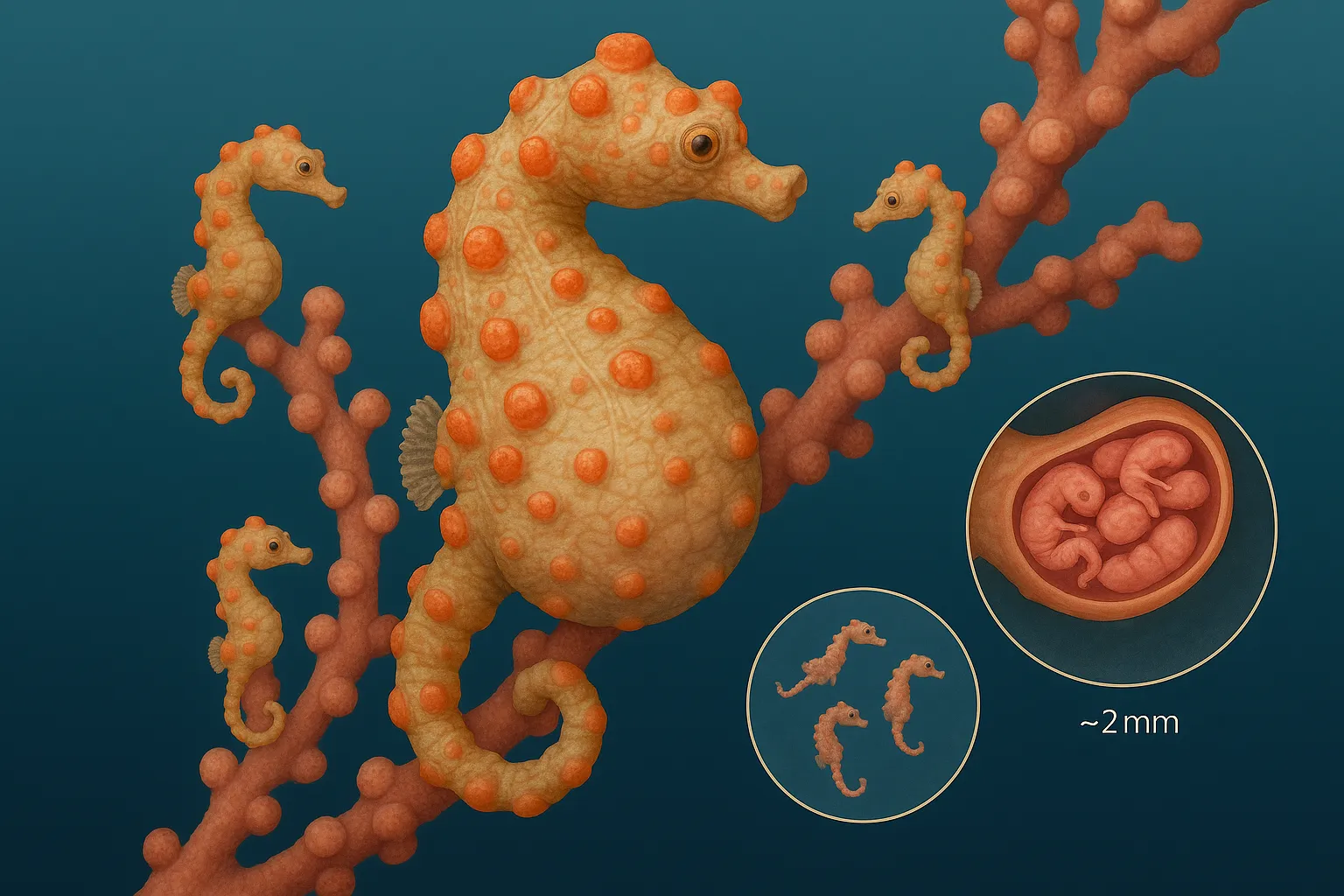
Male pygmy seahorses carry eggs in trunk pouches rather than tail pouches accommodating extreme miniaturization. Gestation lasts 11-14 days producing 6-34 offspring per clutch through internal fertilization and paternal nutrient provisioning.
Males mate repeatedly throughout one-year lifespans maximizing reproductive output despite size constraints and limited densities on coral hosts. This efficiency compensates for high predation from wrasses and groupers while maintaining genetic diversity. Photo: Illustration.
Conservation Challenges
Data Deficient Status with Climate Vulnerability Indicators
Most pygmy seahorse species remain Data Deficient due to limited research and recent discoveries since 2000. Population studies reveal naturally low densities—lowest among unexploited seahorses making abundance assessments challenging for conservation management.
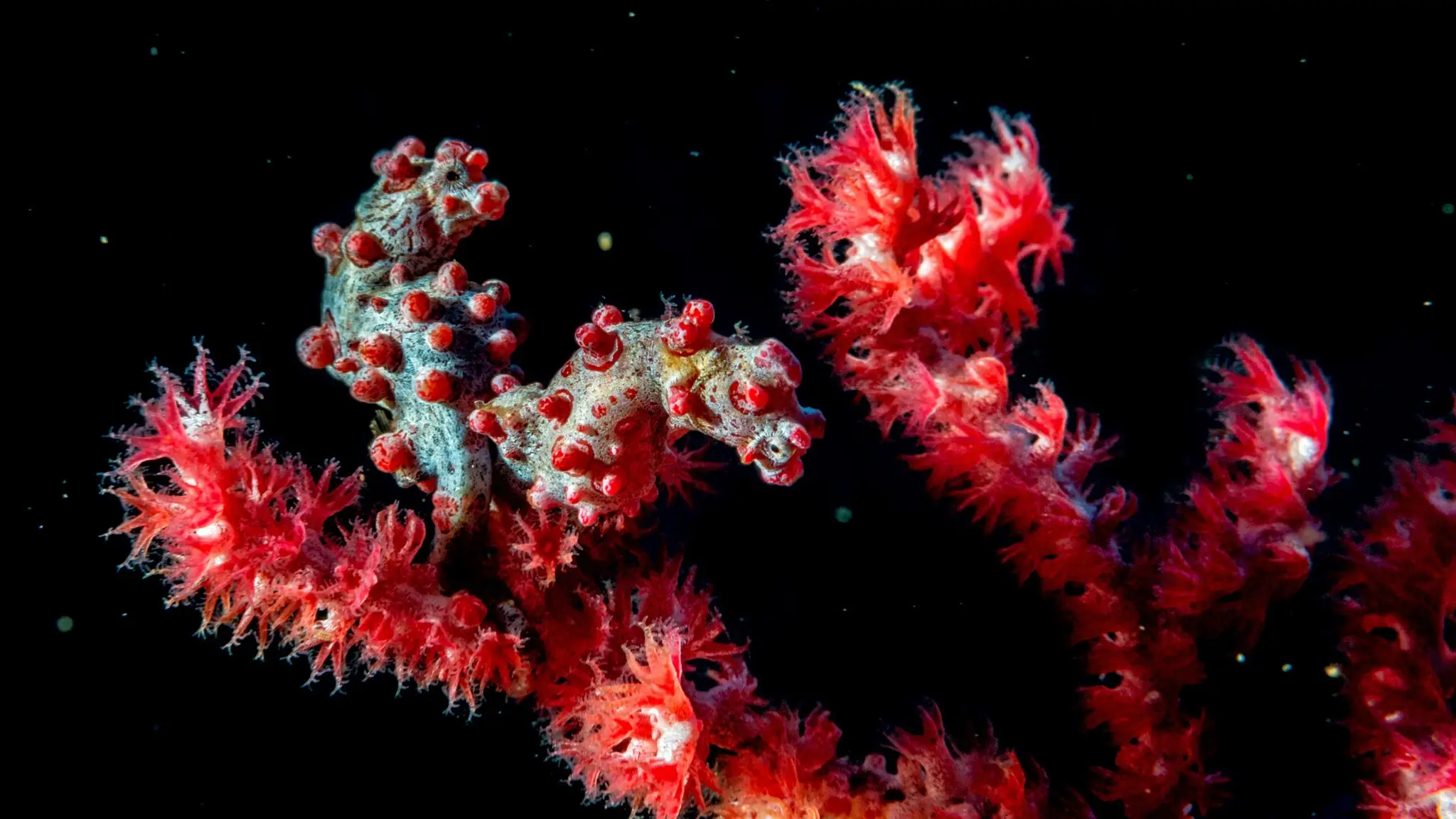
Climate change threatens survival through coral bleaching and acidification affecting gorgonian hosts. The Walea pygmy seahorse achieved Critically Endangered status—first seahorse classified based on habitat loss demonstrating urgent need for reef protection and climate action. Photo: Andrea Izzotti.
Science & Discovery
Naval Research Laboratory biomimetic studies analyze tubercle morphological plasticity inspiring adaptive camouflage materials responding to environmental cues for military and robotics applications requiring rapid visual transformation.
University of Queensland 2020 coral dependency research tracked population responses to bleaching events revealing gorgonian resilience thresholds informing marine protected area design across Indo-Pacific reef systems.
California Academy of Sciences 2008 discovery of Denise's pygmy seahorse color morphs highlighted cryptic reef biodiversity demonstrating urgent need for comprehensive surveys before habitat loss eliminates undiscovered species.
In our delightful oceans, pygmy seahorses demonstrate extreme miniaturization at 1.4 centimeters across seven to eight species with most discovered since 2000. Tubercle camouflage precisely replicates coral polyp morphology while post-settlement chromatophores enable perfect color matching. Marine protected areas and ex-situ breeding programs now preserve these cryptic specialists threatened by coral bleaching.