Humpback Whale
Ocean's Musical Voyager
Megaptera novaeangliae
Meet the ocean's musical voyagers—gentle giants reaching 16 meters and 40 tonnes with 5-meter pectoral fins enabling acrobatic breaches. Their 30-minute songs travel 1,600 kilometers underwater. Cooperative bubble-net feeding significantly increases prey capture while 25,000-kilometer migrations demonstrate complex communication and cultural learning through Earth's magnetic field navigation.
Meet the Musical VoyagerWhat Makes Them Special
Complex Songs
Produce elaborate 30-minute compositions with repeated themes traveling up to 1,600 kilometers underwater
Longest Fins
Pectoral fins reach 5 meters—longest relative to body size in animal kingdom
Cooperative Feeding
Create bubble nets trapping prey collaboratively, dramatically increasing feeding efficiency through coordinated teamwork
Epic Migrations
Complete annual round-trip journeys of 25,000 kilometers—longest migrations of any mammal species
Rescue Behaviors
Actively protect other marine species from predators with documented interventions showing remarkable interspecies awareness
Conservation Success
Recovered from 5,000 individuals in 1960s to over 135,000 today—a 27-fold increase
First Encounter
5-Meter Pectoral Fins—Longest in the Animal Kingdom
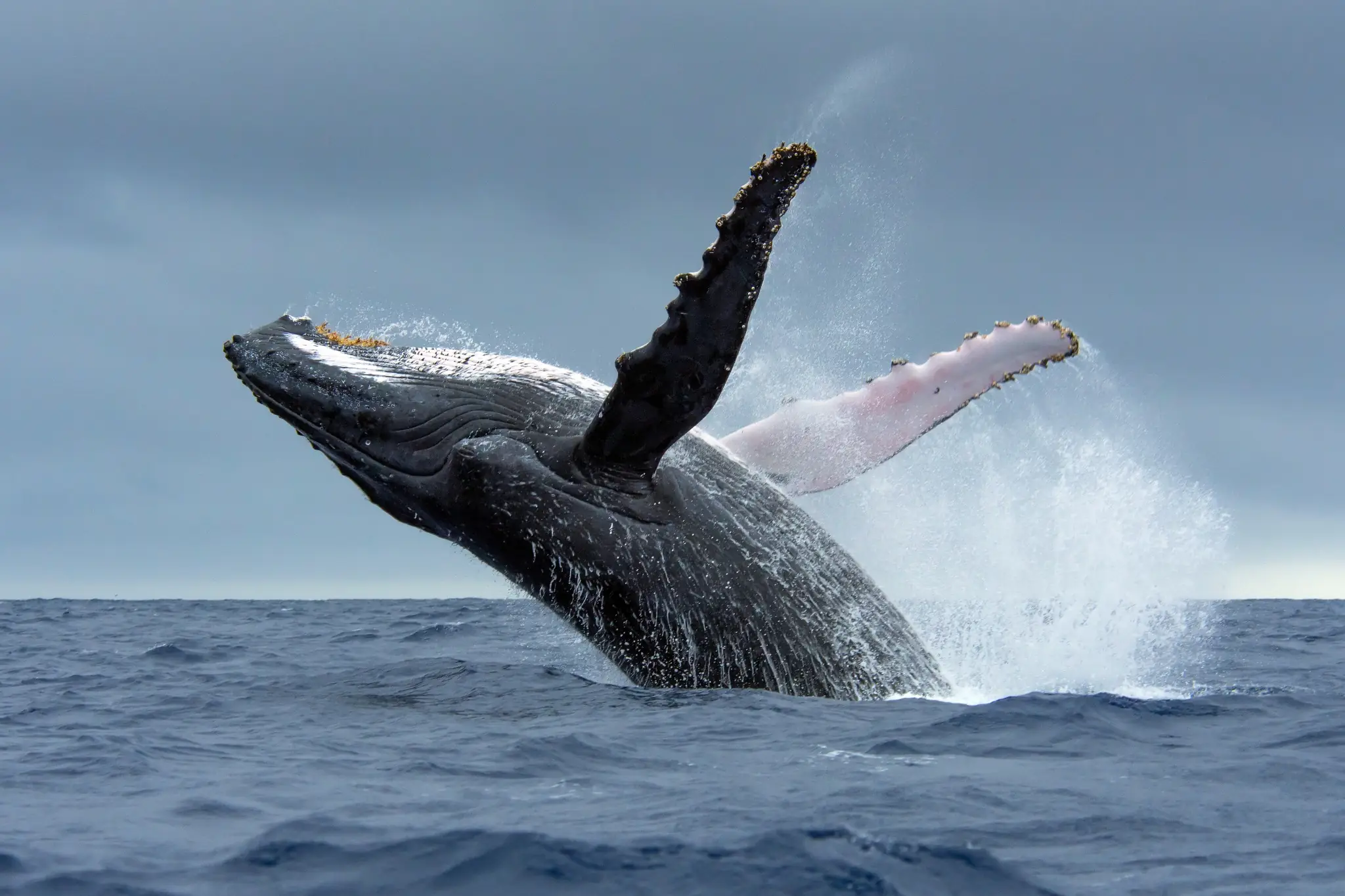
Humpback whales display the longest pectoral fins relative to body size of any animal reaching 5 meters in length. These massive fins contain tubercles improving water flow and maneuverability allowing 40-tonne whales to perform acrobatic breaches.
Their distinctive knobbly heads and pleated throat pouches enable precise feeding control while flexible fins provide steering precision impossible for other large whales making humpbacks the ocean's most agile giants. Photo: Tomas Kotouc
"Humpback whale songs follow similar hierarchical patterns to human language—revealing that complex communication evolved independently in two completely different species."
— Dr. Ellen Garland, Whale Communication Research
Complex Songs
30-Minute Compositions Heard 1,000 Miles Away
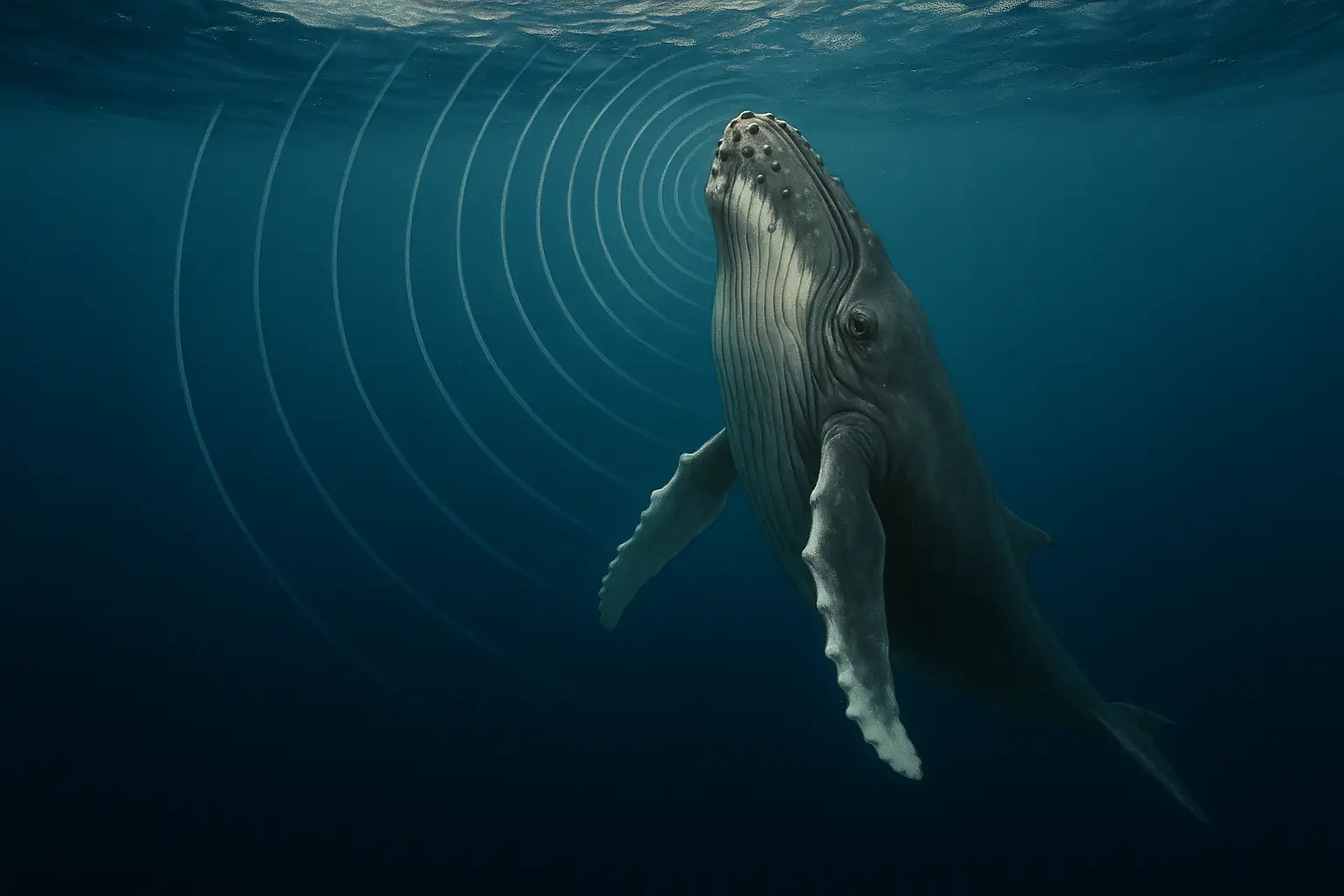
Male humpbacks produce elaborate 30-minute songs with repeated themes phrases and verses—musical compositions heard up to 1,600 kilometers away. These acoustic displays represent each whale's unique vocal signature.
Songs change annually as new musical elements spread through populations like cultural trends. Complex vocalizations follow mathematical patterns similar to human language structure suggesting sophisticated communication systems in marine mammals. Photo: Illustration.
Protective Behaviors
Rescue Heroes Defending Other Marine Species
Humpback whales actively protect other marine mammals from predator attacks including seals sea lions and even other whale species threatened by orcas. These rescue behaviors occur across all ocean basins where humpbacks live.
Scientists document numerous protective interventions suggesting these gentle giants recognize distress calls from other species. This altruistic behavior demonstrates remarkable intelligence and interspecies awareness previously unknown in marine mammals. Photo: Tory Kallman.
"Humpback bubble-net feeding creates underwater tools that dramatically increase prey capture efficiency—demonstrating advanced problem-solving and cooperative behavior."
— Dr. Lars Bejder, Marine Mammal Institute
Bubble-Net Feeding
Underwater Tool Construction Dramatically Increasing Prey Capture
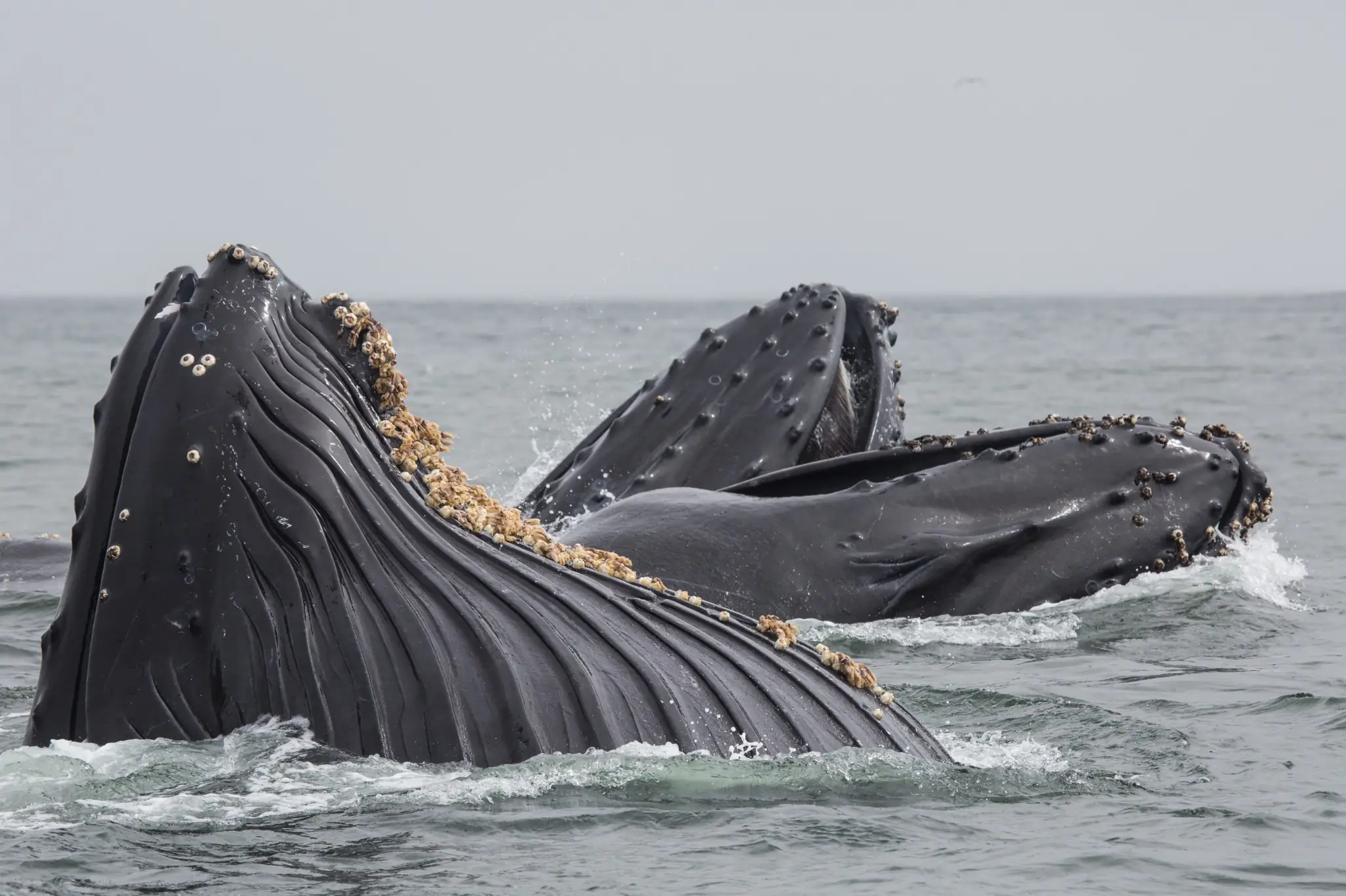
Groups of humpbacks create bubble nets—cylindrical walls of bubbles that trap schools of fish and krill. These underwater tools dramatically increase feeding efficiency compared to individual hunting making it among nature's most effective cooperative strategies.
Each whale has a specialized role: one creates the bubble net others dive below to herd prey upward while the group coordinates through specific calls. This learned behavior spreads through populations like shared knowledge. Photo: Andrea Izzotti.
Epic Migrations
25,000-Kilometer Annual Journeys Using Magnetic Navigation
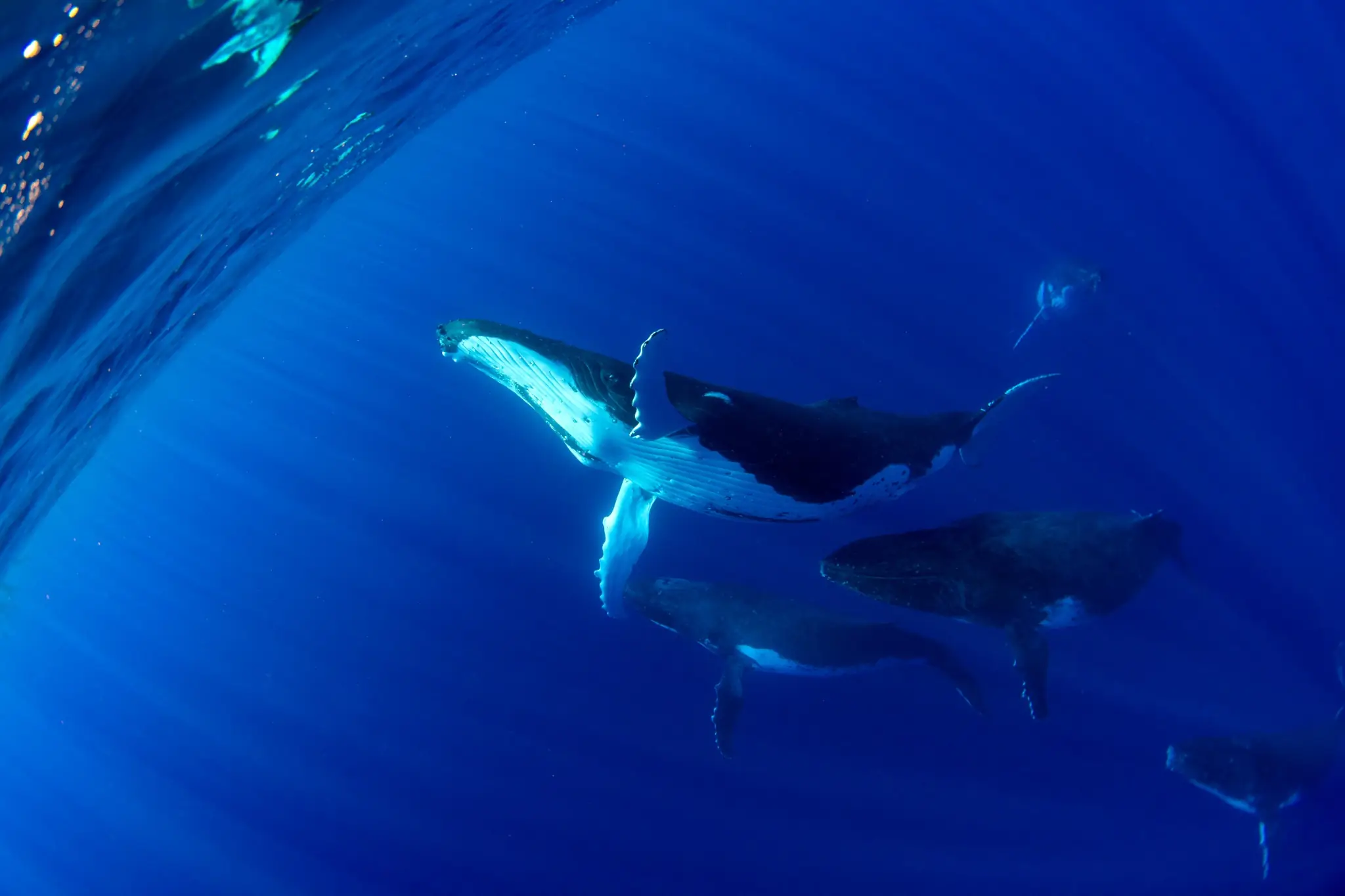
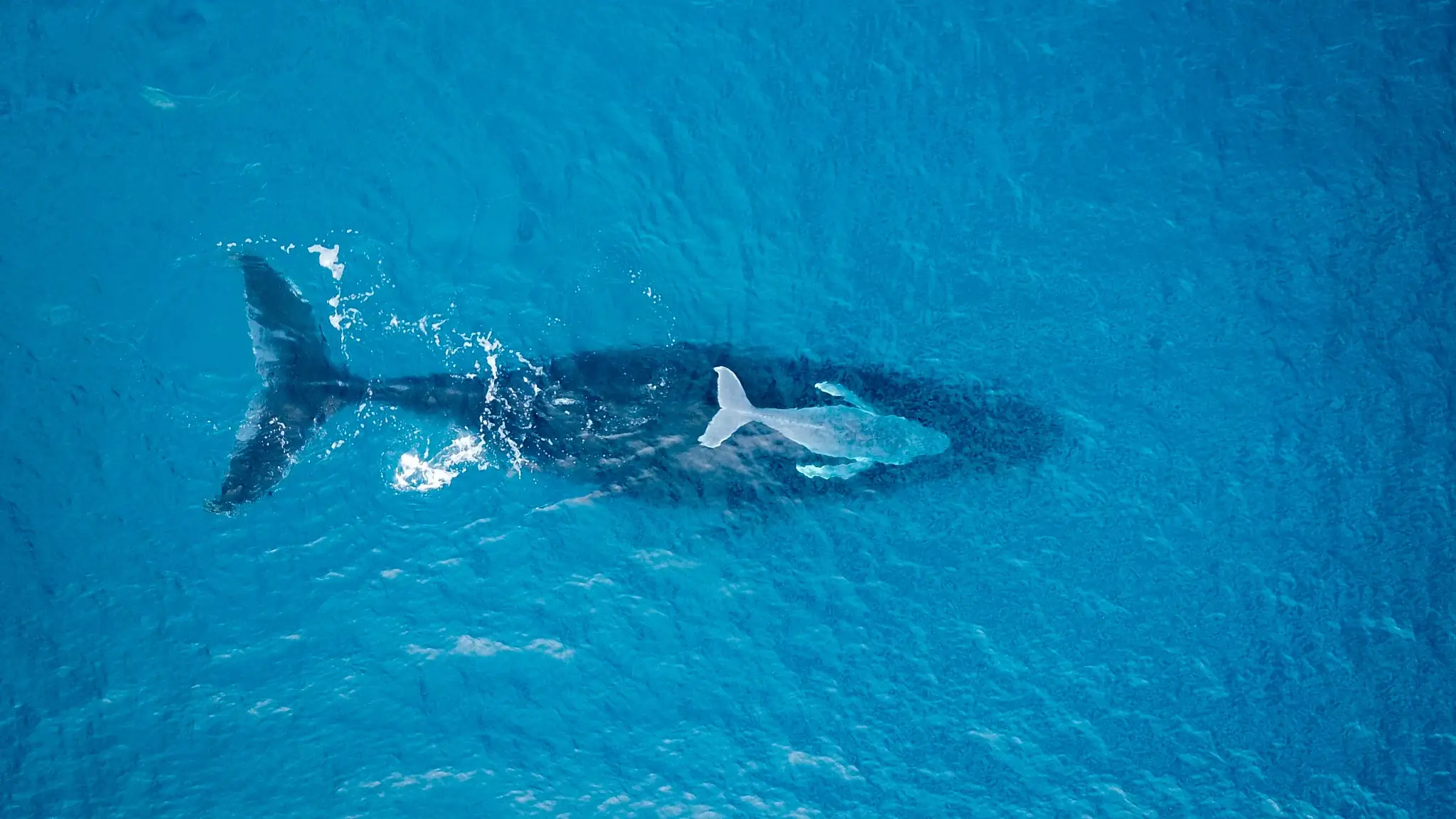
Humpbacks complete the longest migrations of any mammal—annual round trips of 25,000 kilometers between polar feeding grounds and tropical breeding areas. They navigate using Earth's magnetic field like a natural GPS system.
Individual whales maintain social bonds across vast distances with mothers and calves staying together for up to a year. Multi-generational knowledge guides these epic journeys through seemingly featureless ocean expanses. Photo:Mathias Sehnke.
Conservation Success
Remarkable Recovery from 5,000 to 135,000 Individuals
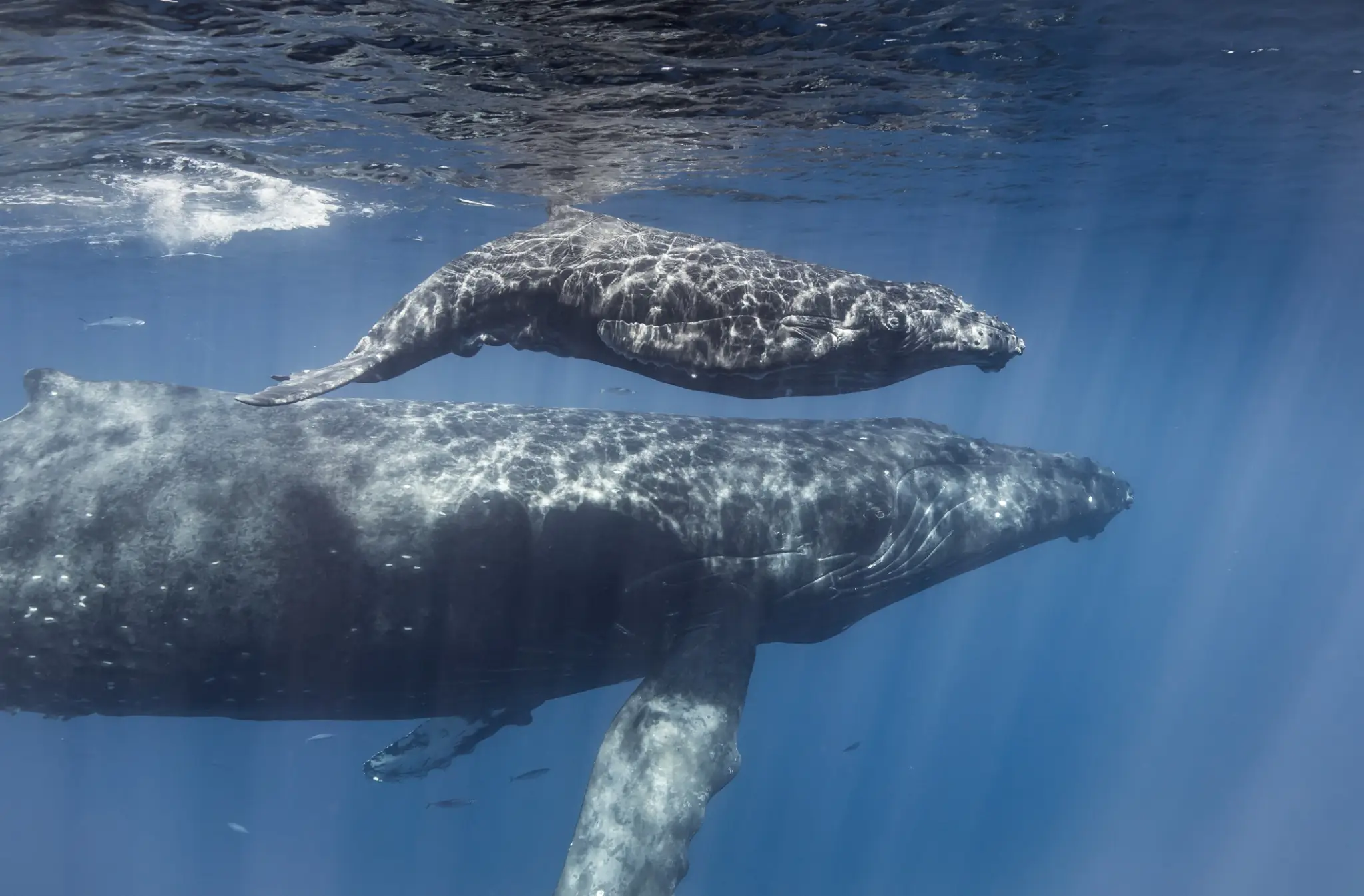
Commercial whaling reduced global humpback populations to just 5,000 individuals by the 1960s bringing them to the brink of extinction. International protection efforts and whaling moratoriums enabled one of conservation's greatest success stories.
Current populations exceed 135,000 individuals—a remarkable 27-fold increase over 60 years. Marine sanctuaries protect critical feeding areas while shipping lane modifications reduce vessel strikes demonstrating that dedicated conservation can restore even severely depleted marine populations. Photo: Maui Topical Images.
Science & Discovery
University of Queensland Dr. Ellen Garland 2023 analysis revealed humpback songs follow hierarchical syntax rules similar to human language with whales creating new phrases by recombining existing words demonstrating compositional communication previously thought unique to humans.
Harvard University Fish biomimicry research showed tubercles on humpback fins reduce drag by 32% and improve lift efficiency leading to WhalePower wind turbine designs that increase energy output by 20% while operating in lower wind speeds.
Woods Hole Oceanographic Institution recent studies documented bubble-net feeding coordination requiring individual role specialization and real-time acoustic communication revealing cognitive complexity comparable to primates in cooperative problem-solving tasks.
In our delightful oceans, humpbacks demonstrate sophisticated cooperative behaviors through bubble-net feeding coordination. Their 30-minute songs follow hierarchical patterns traveling 1,600 kilometers underwater. Recovery from 5,000 to 135,000 individuals proves dedicated conservation restores severely depleted populations.