Giant Pacific Octopus
Ocean's Intelligent Shapeshifter
Enteroctopus dofleini
Meet ocean's intelligent shapeshifters—cephalopods reaching 9 meters (30 feet) with 500 million neurons distributed across a central brain and eight autonomous nerve centers in its arms. Their skin transforms in 0.3 seconds using 200,000 chromatophores creating instant camouflage despite colorblindness. They squeeze through openings matching their beak size and guard 100,000 eggs for six months without eating, redefining intelligence beyond the backbone.
Meet the Intelligent ShapeshifterWhat Makes Them Special
Massive Invertebrates
Reach 9.1 meters arm span and 272 kilograms making them world's largest octopus species
Distributed Intelligence
Possess 500 million neurons—a central brain and eight arm ganglia—enabling independent arm decision-making and complex coordination
Instant Camouflage
Transform color and texture in 0.3 seconds using 200,000 chromatophores despite being colorblind
Escape Artists
Compress 272-kilogram bodies through 5-centimeter openings—any space larger than their rigid beak
Maternal Sacrifice
Guard up to 100,000 eggs for six months without eating dying shortly after hatching
Cognitive Complexity
Demonstrate tool use maze-solving observational learning and REM-like sleep patterns similar to mammals
First Encounter
World's Largest Octopus Species
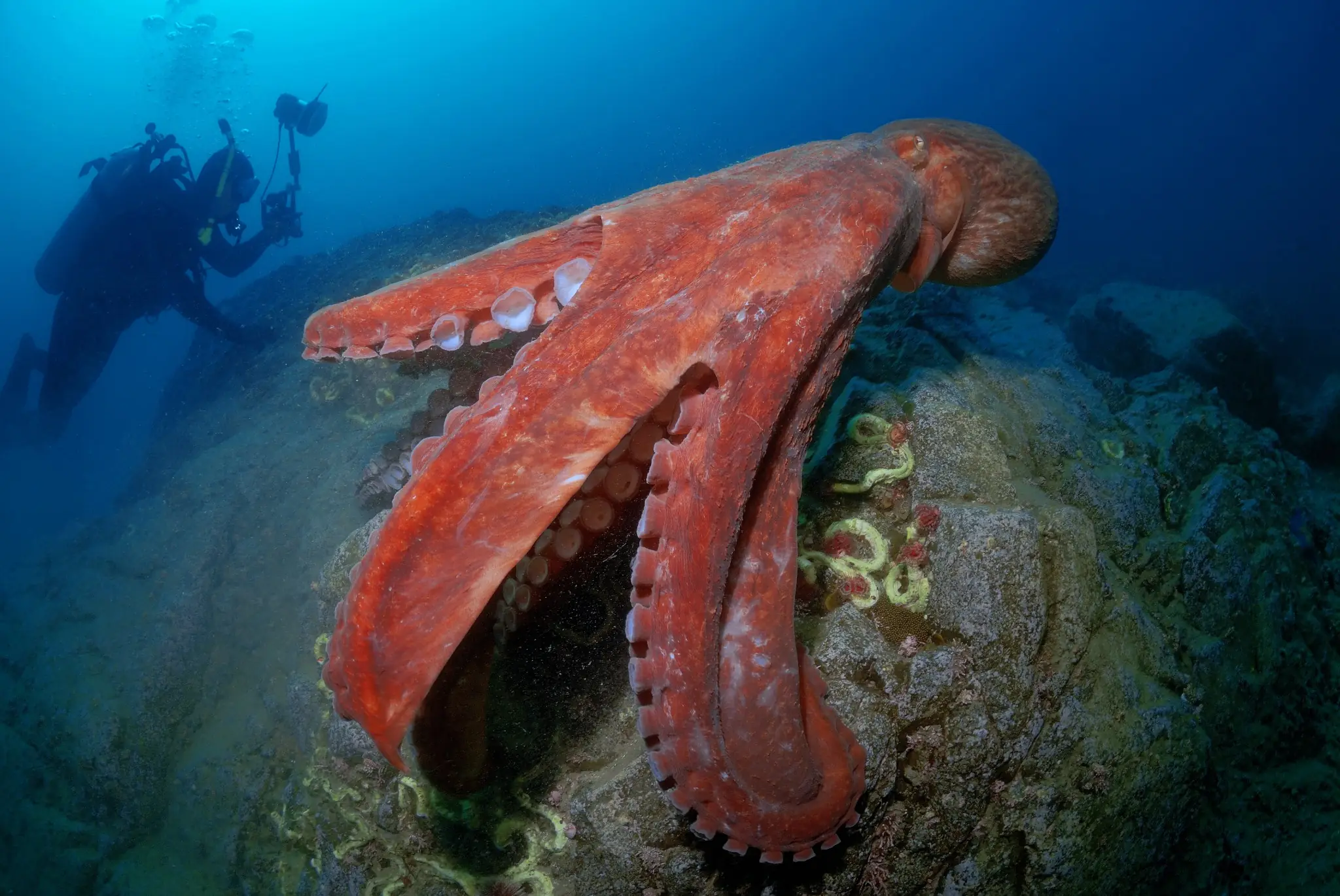
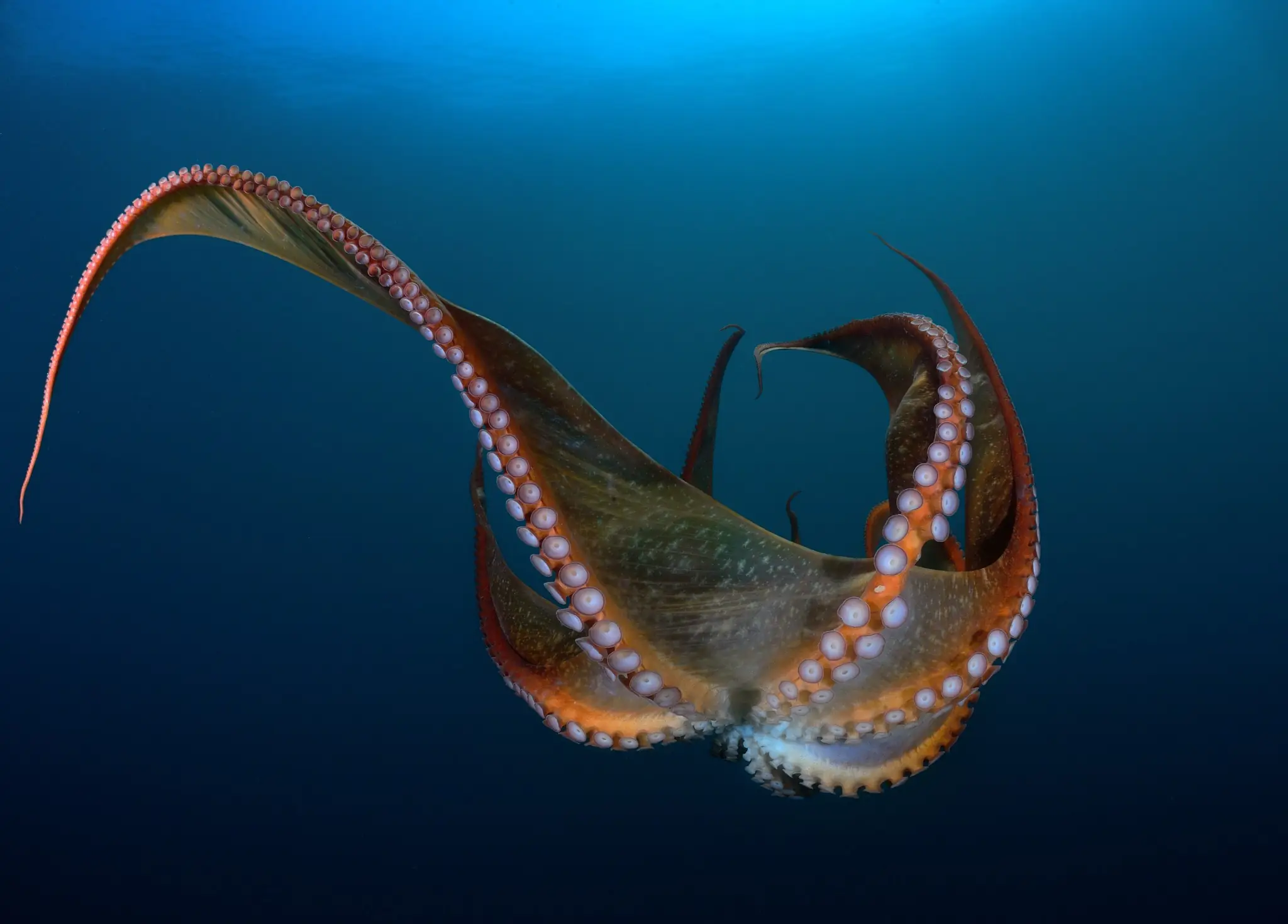
Giant Pacific octopuses reach 9.1 meters arm span and 272 kilograms—making them world's largest octopus species. Eight muscular arms equipped with 2,000 suction cups provide extraordinary sensory input through chemotactile receptors.
Their distinctive bulbous heads house 500 million neurons—more than dogs possess. These remarkable cephalopods live 3-5 years across North Pacific waters with females growing significantly larger than males. Photo: Shpatak.
"Giant Pacific octopuses represent evolution's boldest experiment in intelligence—distributed cognition challenging our understanding of consciousness."
— Dr. Jennifer Mather, Octopus Intelligence Research
Instant Camouflage Mastery
0.3-Second Color Transformation Using 200,000 Chromatophores
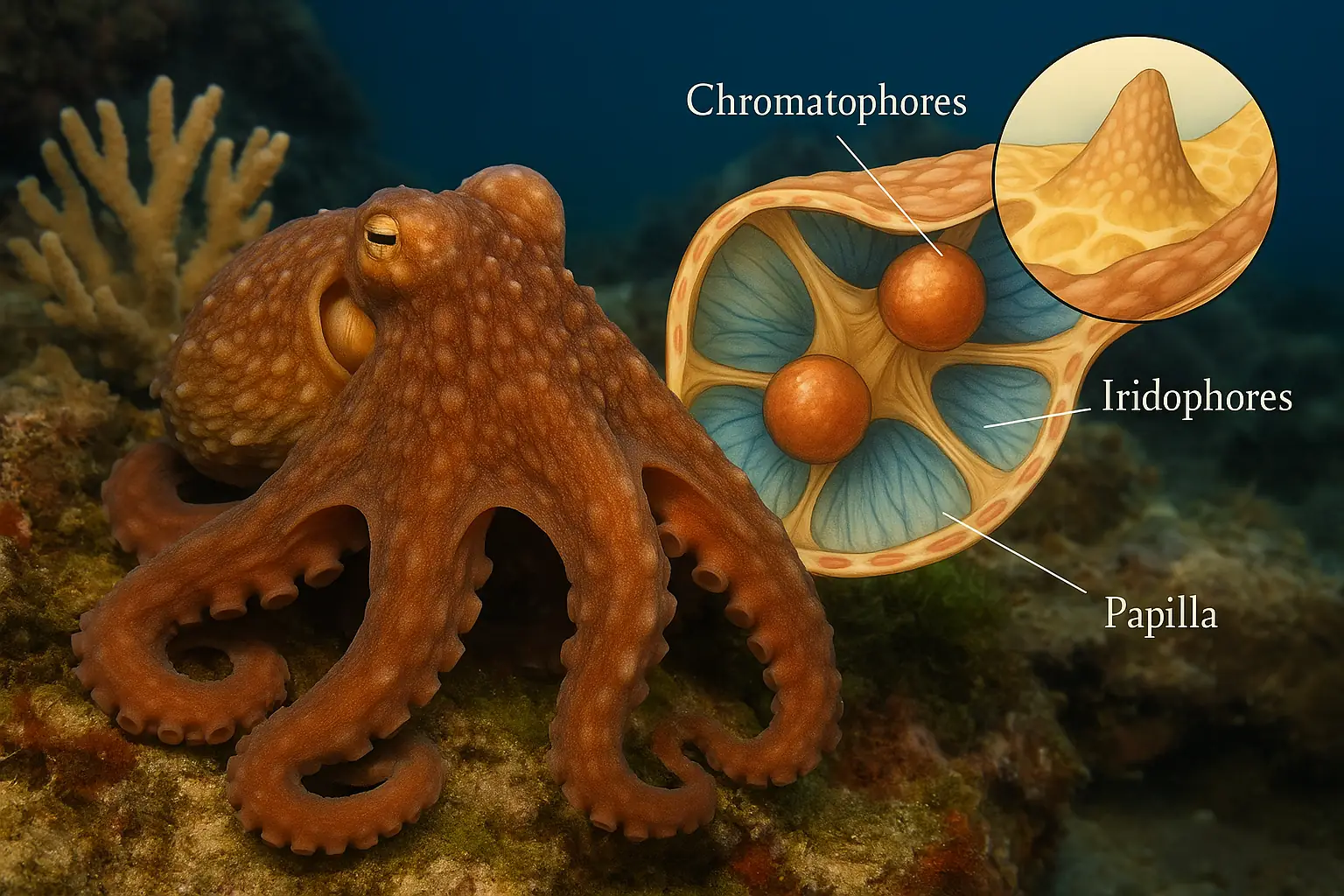
Giant Pacific octopuses achieve complete camouflage in 0.3 seconds using 200,000 chromatophores—color-changing cells controlled by direct neural connections. Each chromatophore functions like biological pixels creating dynamic skin displays.
Despite being colorblind, they achieve perfect color matching through a mechanism that is not fully understood, potentially using light-sensing proteins in their skin. Papillae create three-dimensional texture changes enabling mimicry of coral rock surfaces and kelp structures. Photo: Illustration.
Escape Artist Intelligence
272-Kilogram Bodies Through 5-Centimeter Openings
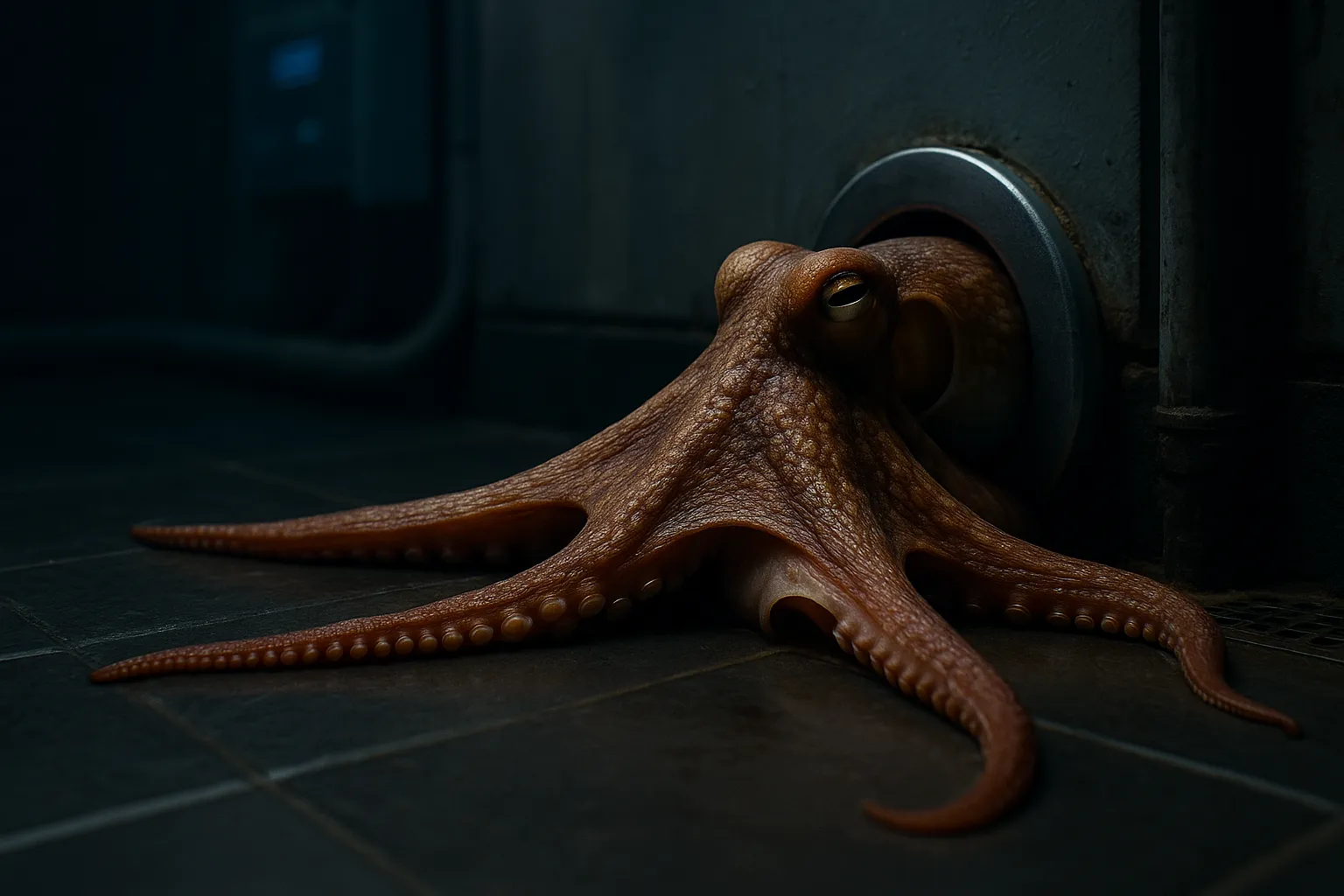
Giant Pacific octopuses compress 272-kilogram bodies through openings as small as 5 centimeters—any space larger than their rigid beak. Their hydrostatic skeleton enables extreme body deformation while maintaining muscle function.
These escape artists demonstrate tool use problem-solving abilities and individual human recognition. Laboratory studies show maze-solving capabilities and observational learning—cognitive abilities previously thought exclusive to vertebrates. Photo: Illustration.
"Watching octopuses solve problems reveals intelligence emerging from completely different neural architectures—proving consciousness has multiple evolutionary pathways."
— Dr. Peter Godfrey-Smith, Philosophy of Mind
Ultimate Maternal Sacrifice
Six-Month Vigil Guarding 100,000 Eggs Without Feeding
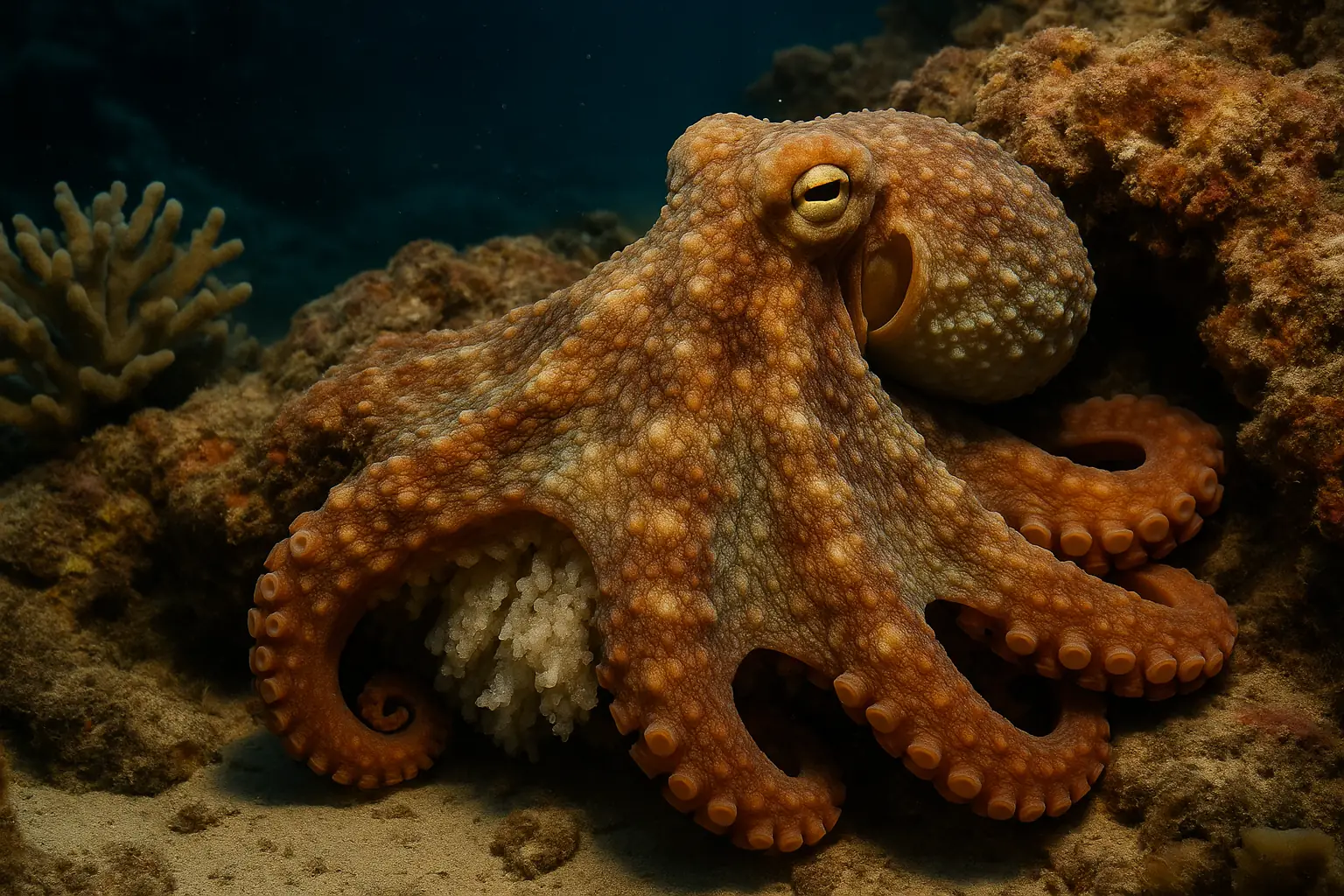
Female Giant Pacific octopuses lay up to 100,000 rice-sized eggs then guard them for six months without eating. They continuously clean eggs with their arms and provide fresh water circulation through gentle movements.
This maternal dedication represents nature's most extreme sacrifices. Mothers slowly starve while ensuring egg survival dying shortly after hatching. This behavior ensures maximum offspring survival through complete parental investment. Photo: Illustration.
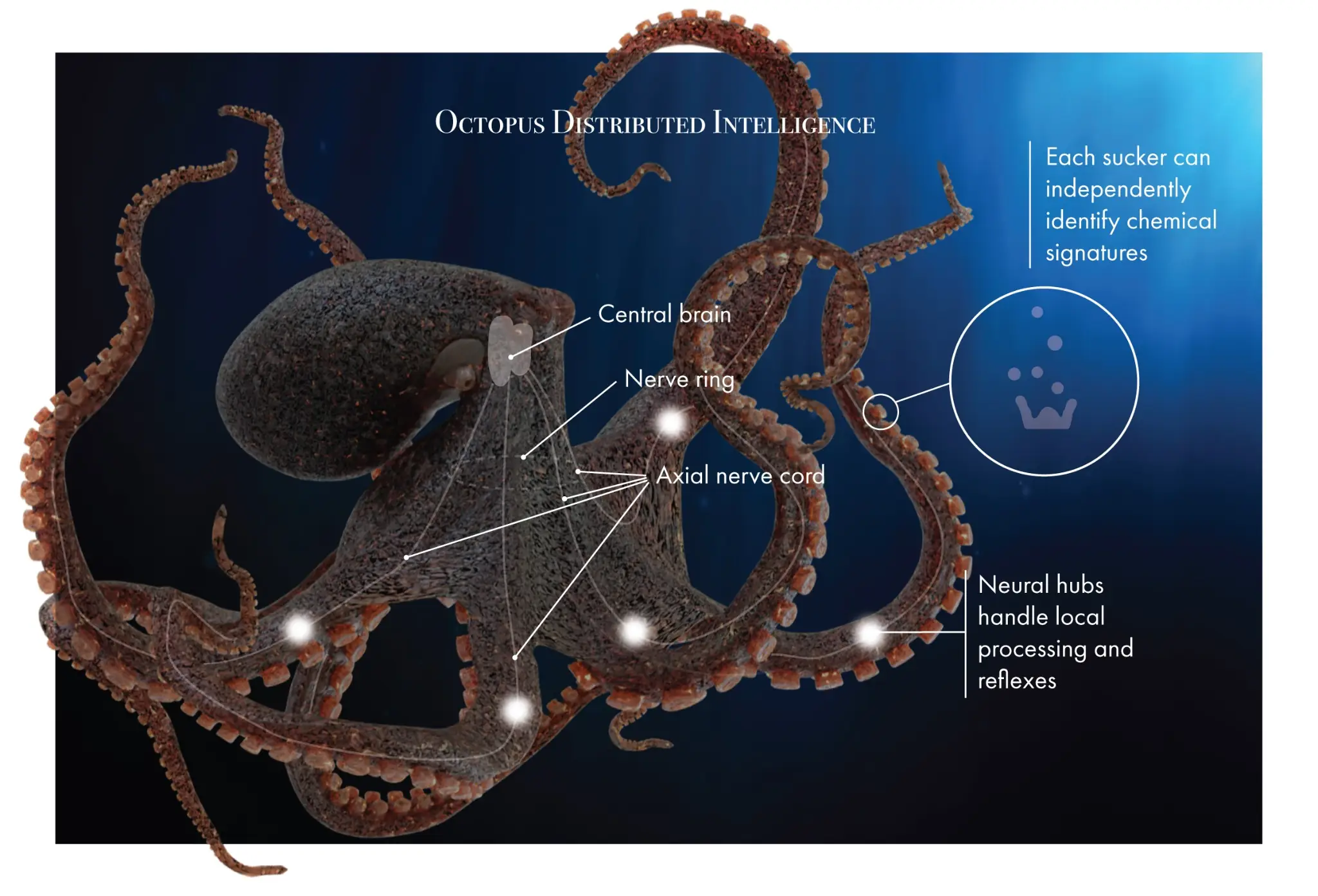
Distributed Brain Network
Central Brain with Eight Autonomous Nerve Centers
Giant Pacific octopuses operate through a central brain and eight autonomous nerve centers (ganglia)—one in each arm. Two-thirds of their 500 million neurons reside in arms enabling independent decision-making.
2023 research revealed brain wave patterns similar to mammalian REM sleep suggesting complex memory processing. This distributed cognition represents intelligence emerging from decentralized neural networks unlike any vertebrate system. Photo: Illustration.
Conservation and Research Ethics
Protecting Ocean Intelligence Through Ethical Science
Giant Pacific octopuses are not currently endangered and have stable populations in many areas, but they face growing threats from ocean warming and plastic pollution. Their complex intelligence raises important ethical questions about research practices.
Marine protected areas in Alaska and British Columbia preserve critical denning habitats. Recognition of octopus consciousness leads to enhanced welfare standards in research facilities while inspiring biomimetic technologies. Photo: Shpatak.
Science & Discovery
A 2023 study in Nature revealed brain wave patterns in octopuses (e.g., Octopus insularis) during rest that match mammalian REM sleep cycles suggesting complex memory consolidation and convergent evolution of two-stage sleep across 550 million years.
MIT researchers developed adaptive camouflage materials inspired by octopus chromatophore mechanics creating color-changing fabrics responding to environmental stimuli in under one second for military applications.
NOAA Alaska research demonstrated vast majority of giant Pacific octopus survive capture and release from pot fishing allowing managers to protect stocks while keeping fisheries open through evidence-based bycatch limits.
In our delightful oceans, Giant Pacific octopuses demonstrate intelligence emerging through distributed neural networks—a central brain with eight autonomous nerve centers—confirmed by 2023 REM-like sleep research. Their 0.3-second chromatophore transformations inspire adaptive camouflage materials revolutionizing military technology. NOAA research shows vast majority survive capture enabling sustainable bycatch management protecting these consciousness pioneers.